
To protect your child’s respiratory health indoors, focus on reducing pollutants like mold, VOCs, and allergens from pet dander and dust. Good ventilation, using HEPA filters, and keeping humidity between 30-50% help prevent mold and dust mites. Regular cleaning with non-toxic products also matters. By controlling indoor air quality, you can help your child breathe safer, healthier air—keep exploring to discover more ways to create a safe environment for them.
Key Takeaways
- Indoor pollutants like mold, VOCs, and pet dander can impair children’s lung development and trigger asthma.
- Proper ventilation, humidity control, and regular cleaning reduce indoor allergens and toxins.
- Using HEPA filters and air quality sensors helps monitor and improve indoor air, protecting respiratory health.
- Avoiding indoor smoking and chemical use minimizes exposure to harmful airborne substances.
- Recognizing symptoms and maintaining optimal indoor air quality supports healthy respiratory development in children.
Understanding Indoor Air Pollutants and Their Sources
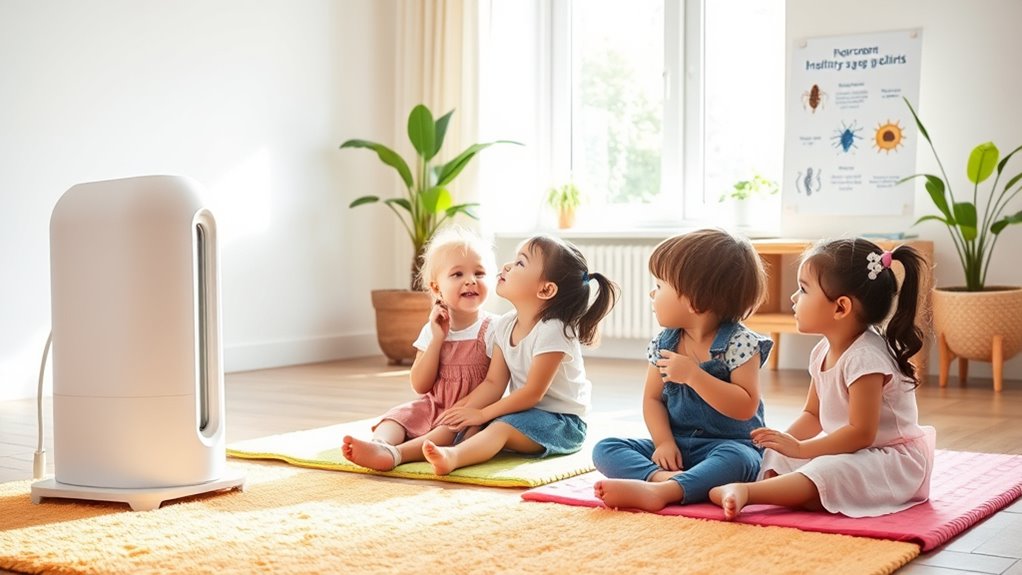
Indoor air pollutants come from a variety of sources, both natural and human-made. You might not realize it, but indoor mold can develop in damp areas like bathrooms or basements, releasing spores and mycotoxins that affect air quality. Volatile organic compounds (VOCs) are another common pollutant, emitted by household products such as paints, cleaning supplies, and air fresheners. These chemicals often linger in the air, creating a toxic environment for children. Poor ventilation can trap these pollutants inside, making it harder for your child to breathe comfortably. Identifying sources like mold and VOCs is essential for reducing indoor air pollution. Regular cleaning, fixing leaks, and choosing low-VOC products can notably improve your indoor air quality and protect your child’s respiratory health.
How Poor Air Quality Affects Children’s Respiratory Development

When children breathe polluted air regularly, their developing respiratory systems can be profoundly impacted. Indoor air toxins like volatile organic compounds, tobacco smoke, and mold spores can interfere with respiratory development, leading to long-term health issues. Exposure to these pollutants during critical growth periods can cause inflammation, reduced lung function, and increased susceptibility to asthma. Poor air quality hampers the natural expansion and strengthening of lung tissue, which may stunt respiratory growth. Children’s lungs are especially vulnerable because their immune systems are still maturing, making it harder for their bodies to fight off harmful indoor air toxins. As a result, ongoing exposure can have lasting effects on their ability to breathe freely and develop strong respiratory health over time. Additionally, indoor air quality can vary significantly depending on factors like ventilation and the presence of pollutants, further influencing respiratory outcomes.
Common Indoor Allergens and Their Impact on Kids’ Lungs

Children’s respiratory health can be considerably affected by common indoor allergens that linger in our living spaces. Pet dander and mold spores are two of the most prevalent, triggering allergic reactions and respiratory issues. To minimize their impact, you should:
- Regularly clean and vacuum to reduce pet dander buildup.
- Use HEPA filters to trap airborne mold spores and allergens.
- Control humidity levels to prevent mold growth.
- Keep pets out of bedrooms and frequently wash bedding.
- Choose porcelain toilets with smooth, non-porous surfaces that are easier to clean and less likely to harbor allergens.
Recognizing Symptoms of Indoor Air Quality-Related Respiratory Issues
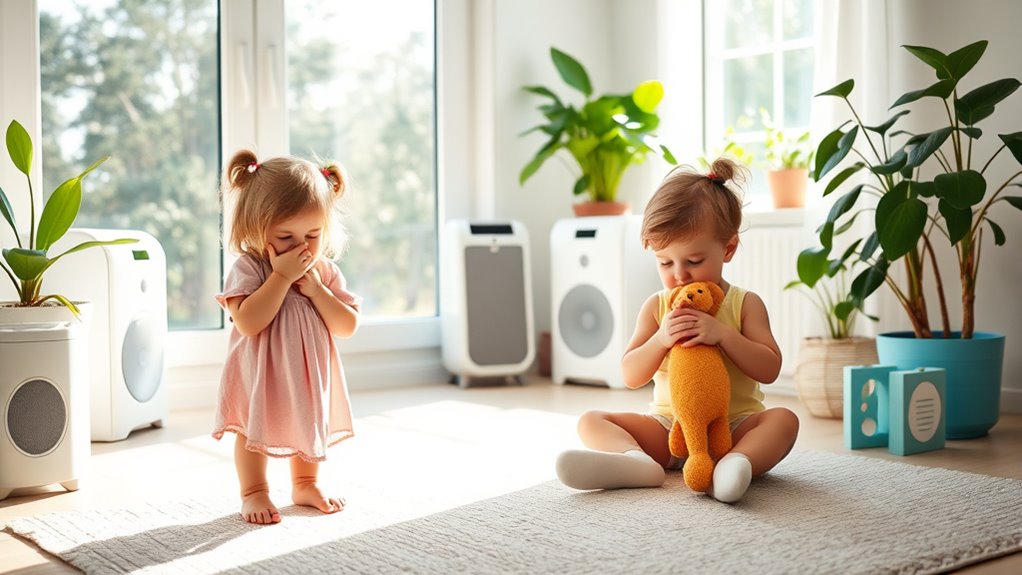
You should pay close attention to your child’s breathing and overall comfort at home. Watch for common symptoms like persistent coughing, wheezing, or shortness of breath. Recognizing these signs can help you identify when indoor air quality might be affecting their respiratory health. Additionally, being aware of angel numbers related to health and well-being can offer spiritual guidance and reassurance during this process.
Common Respiratory Symptoms
Indoor air quality issues can cause a range of respiratory symptoms that may be easy to overlook, especially in children. You might notice signs like:
- Frequent coughing or wheezing, often worse at night
- Persistent nasal congestion or runny nose
- Shortness of breath or tightness in the chest
- Increased sneezing, often linked to dust mites or mold spores
These symptoms can stem from exposure to allergens such as dust mites and mold spores commonly found indoors. Recognizing these signs early is vital, as they often indicate poor indoor air quality. If your child experiences these symptoms regularly, it’s a sign that the indoor environment may need attention to improve air purity and reduce allergen levels. Additionally, automation technologies are increasingly being used to monitor and enhance indoor air quality, helping to create healthier living environments.
Indicators of Poor Air Quality
Recognizing the signs of poor indoor air quality can help you identify potential health issues early. If you notice persistent coughing, sneezing, or respiratory discomfort in children, it may indicate indoor pollutants exceeding air quality standards. Look for visible signs like mold growth, dust accumulation, or strong odors, which suggest pollutant thresholds are being surpassed. Frequent headaches or itchy eyes can also signal that indoor air isn’t clean enough. Monitoring these indicators helps you take action before health problems worsen. Be aware that indoor pollutant levels often fluctuate; understanding these symptoms can guide you to improve ventilation or reduce sources of pollution. Additionally, incorporating devices that measure air quality metrics can provide a more comprehensive assessment of your indoor environment. Staying alert to these signs ensures you can maintain a healthier environment and protect your children’s respiratory health.
Practical Tips for Improving Indoor Air Quality at Home

Improving indoor air quality at home is essential for children’s respiratory health, and simple changes can make a substantial difference. Start with these practical steps:
- Use air filtration systems, like HEPA filters, to remove airborne pollutants and allergens.
- Control humidity levels to between 30-50%, reducing mold growth and dust mites.
- Keep your home clean by regularly dusting and vacuuming with a HEPA filter vacuum.
- Avoid smoking indoors and limit exposure to indoor pollutants from household products.
Implementing these tips can markedly enhance indoor air quality. Proper air filtration helps eliminate harmful particles, while humidity control prevents mold and dust mites that aggravate respiratory issues. Small, consistent adjustments can create a healthier environment for your children.
The Role of Ventilation and Air Purifiers in Protecting Children’s Health

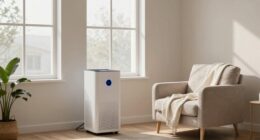
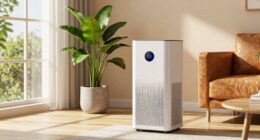
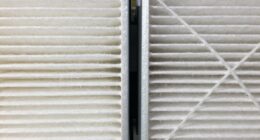
Effective ventilation and air purifiers play a crucial role in safeguarding children’s respiratory health by continuously removing pollutants and freshening the air they breathe. Proper air exchange ensures that stale indoor air is replaced with cleaner outdoor air, reducing indoor pollutants like dust, allergens, and VOCs. Using an air purifier with a HEPA filter can notably cut down airborne particles, making the environment safer for kids. To keep these devices effective, regular purifier maintenance is essential—clean or replace filters as recommended. Proper ventilation helps prevent the buildup of irritants, while well-maintained air purifiers provide consistent filtration. Incorporating filter replacement indicators and auto functions can further optimize air quality management. Together, these strategies create a healthier indoor environment, supporting your child’s respiratory development and reducing the risk of respiratory issues.
Creating a Safe Environment: Reducing Exposure to Indoor Toxins

Creating a safe indoor environment involves actively reducing your child’s exposure to harmful toxins that can affect their respiratory health. To minimize risks, focus on:
Creating a healthy home by reducing exposure to indoor toxins supports your child’s respiratory well-being.
- Using non-toxic, fragrance-free cleaning products during indoor cleaning to reduce chemical exposure.
- Ensuring proper ventilation when cleaning to disperse airborne chemicals.
- Regularly dusting and vacuuming with a HEPA filter to eliminate dust, mold, and allergens.
- Keeping your home free of cigarette smoke and controlling indoor humidity to prevent mold growth.
Monitoring Indoor Air Quality for a Healthier Childhood

Using air quality sensors helps you keep track of pollutants in your home. Regular monitoring practices make certain you catch issues early and maintain a healthier environment for your children. Staying proactive with these tools makes a real difference in their respiratory health.
Air Quality Sensors
Monitoring indoor air quality with sensors has become vital in safeguarding children’s respiratory health. These devices provide real-time data, helping you identify pollutants early. To guarantee accuracy, proper sensor calibration is essential; it maintains reliable readings over time. Advanced data analytics interpret the collected information, revealing patterns and potential risks. When choosing air quality sensors, consider these factors:
- Sensor calibration procedures for precise measurements
- Integration with data analytics platforms for comprehensive insights
- Sensitivity to common indoor pollutants like VOCs and particulate matter
- Ease of use and real-time alert capabilities
– Ensuring consistent testing practices aligns with key traits of successful quality assurance in the development and maintenance of monitoring systems.
Regular Monitoring Practices
Regularly checking indoor air quality guarantees that children breathe safe, healthy air every day. By maintaining proper monitoring frequency, you can ensure your home meets air quality standards that protect respiratory health. Regular assessments help identify pollutants like dust, VOCs, or mold before they become harmful. Keep track of measurements consistently—monthly or quarterly—to stay ahead of potential issues. Using reliable air quality sensors and monitoring practices allows you to take timely action, such as improving ventilation or reducing sources of indoor pollution. Staying vigilant with your monitoring efforts helps create a safer environment for children, reducing the risk of respiratory problems caused by poor indoor air quality. Proper monitoring frequency is essential for maintaining a healthy home environment. Consistent monitoring is key to fostering a healthier, safer space for your family.
Frequently Asked Questions
How Often Should I Test My Home’s Indoor Air Quality?
You should perform air quality monitoring regularly to guarantee a safe environment. Testing frequency depends on your home’s location, recent renovations, or if you notice symptoms like allergies or odors. Generally, testing every 3 to 6 months is recommended for ongoing air quality assessment. If you detect issues or have concerns about pollutants, increase testing frequency. Staying proactive helps you maintain a healthier indoor space for everyone.
Are There Specific Indoor Plants That Improve Air Quality for Children?
Imagine your home as a lush, green sanctuary where air purifying plants act like silent guardians, filtering out toxins and revitalizing the space. Some plants, like snake plants and pothos, are great air purifiers and pose minimal toxic plant risks when kept out of reach of children. Avoid high-risk plants like dieffenbachia. Choosing the right air purifying plants helps create a safer, healthier environment for your kids to breathe easy.
Can Pets Influence Indoor Air Pollutant Levels Affecting Kids’ Health?
Pets can influence indoor air pollutant levels by releasing pet dander and indoor allergens into your home. These particles can become airborne and irritate your child’s respiratory system, especially if they have allergies or asthma. To minimize this, you should regularly clean, vacuum, and groom your pets. Using HEPA filters also helps trap airborne allergens, creating a safer environment for your child’s respiratory health.
What Are the Long-Term Effects of Poor Indoor Air Quality on Children?
Poor indoor air quality can have serious long-term effects on you. It may hinder neurological development, leading to learning difficulties and behavioral issues. You might also develop chronic respiratory diseases like asthma or allergies that persist into adulthood. Exposure to pollutants over time can weaken your lung function and increase vulnerability to infections. To protect yourself, make certain of good ventilation, reduce indoor pollutants, and maintain a clean environment.
How Do Temperature and Humidity Levels Impact Indoor Air Pollutants?
Temperature regulation and humidity control are essential for managing indoor air pollutants. When you maintain ideal temperature, you limit the buildup of airborne particles. Proper humidity levels prevent mold growth and dust mites, both of which worsen air quality. By controlling humidity and temperature, you reduce allergens, decrease pollutant concentrations, and create a healthier environment. Prioritizing humidity control and temperature regulation helps you keep indoor air safer and improve overall air quality.
Conclusion
By taking these simple steps, you’re clearing the air like a gentle breeze, giving your children a safe haven to breathe and grow. Think of your home as a sanctuary where crisp, clean air flows freely, shielding little lungs from invisible threats. When you prioritize indoor air quality, you’re nurturing a healthier future—transforming your space into a gust of fresh air amid life’s chaos. Your efforts turn your home into a haven of wellness and vitality.