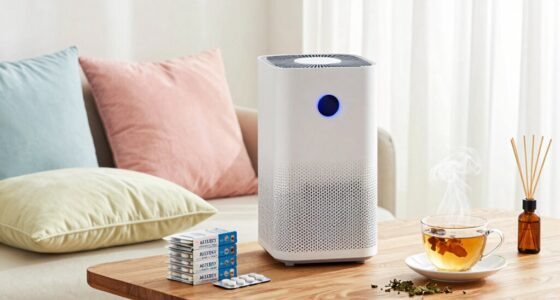
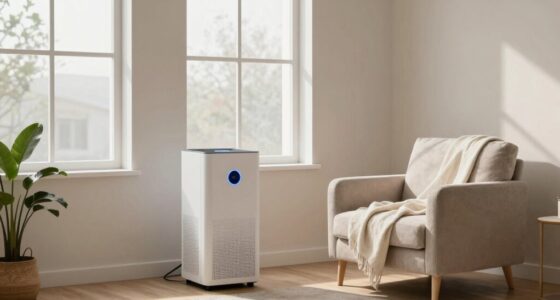
If you neglect your bedroom’s air quality, your snoring can worsen. Poor air circulation, dust, allergens, and stale air irritate your airways and cause inflammation. This makes breathing during sleep harder and increases airway resistance, leading to louder, more disruptive snoring. Keeping the air fresh and reducing irritants can make a big difference. If you want to discover simple ways to improve your sleep and reduce snoring, there’s more to explore below.
Key Takeaways
- Poor ventilation allows stale, allergen-laden air to accumulate, increasing airway irritation and snoring severity.
- Using heavily scented products or pet dander can worsen airway inflammation, leading to louder snoring.
- Inadequate airflow causes buildup of indoor pollutants that irritate respiratory passages and aggravate snoring.
- Neglecting to improve air circulation can result in increased airway resistance during sleep.
- Failing to reduce indoor allergens and pollutants can perpetuate respiratory discomfort and sleep disturbances.

Many people unknowingly make a common mistake that can profoundly affect their sleep quality: neglecting the quality of the air in their bedroom. Your sleep environment isn’t just about the mattress or pillows; it also depends heavily on the air you breathe while you rest. Poor air quality can worsen snoring and make sleep less restful overall. When you ignore how clean or fresh your bedroom air is, you might find yourself waking up feeling more tired and groggy, even if you’ve had enough hours of sleep.
Neglecting bedroom air quality can lead to poor sleep and increased grogginess, even with enough rest.
The air in your bedroom can contain dust, allergens, pollutants, and even mold, all of which can irritate your respiratory system. This irritation tends to cause inflammation in your airways, making it harder to breathe smoothly during sleep. When your air quality is compromised, your body works harder to get enough oxygen, which can lead to increased snoring. Essentially, the less pure the air, the more likely your airway is to become partially blocked, intensifying the snoring that disturbs your sleep and your partner’s.
Your sleep environment plays an indispensable role in this process. If your bedroom air isn’t well-ventilated or if you rely on heating or cooling systems that circulate stale air, your chances of breathing in irritants increase. Even small changes, like keeping pets in the room or using heavily scented products, can add to indoor air pollution. These factors can all contribute to a stuffy or allergen-rich environment that aggravates snoring. When you breathe in contaminated air, your body responds by trying to clear out the irritants, which often results in airway constriction and louder snoring. Improving indoor air quality by reducing sources of pollutants can significantly contribute to a healthier sleep environment. Additionally, ensuring proper ventilation helps to dilute and remove airborne irritants more effectively, further supporting better sleep. Maintaining adequate air circulation can also help prevent the buildup of indoor pollutants and allergens, promoting a fresher breathing space during the night.

LEVOIT Air Purifiers for Bedroom Home Dorm, AHAM VERIFIDE, 3-in-1 Filter Cleaner With Aroma Pad, Filters Smoke, Allergens, Pet Dander, Odor, Dust, Office, Desktop, Core Mini-P, White
𝗪𝗛𝗬 𝗖𝗛𝗢𝗢𝗦𝗘 𝗔𝗛𝗔𝗠 𝗩𝗘𝗥𝗜𝗙𝗜𝗗𝗘 𝗔𝗜𝗥 𝗣𝗨𝗥𝗜𝗙𝗜𝗘𝗥𝗦: AHAM (Association of Home Appliance Manufacturers) is an ANSI-accredited organization that sets…
As an affiliate, we earn on qualifying purchases.
As an affiliate, we earn on qualifying purchases.
Frequently Asked Questions
Can Certain Scents in Air Mists Trigger Allergies or Asthma?
Yes, certain scents in air mists can trigger allergies or asthma, especially if you have scent sensitivity. Strong fragrances or artificial additives may act as allergy triggers, irritating your respiratory system. You might notice increased coughing, sneezing, or difficulty breathing. To stay safe, opt for unscented or naturally scented air mists, and always check ingredient labels to avoid potential allergy triggers that could worsen your symptoms.
Are Natural or Synthetic Air Mists Safer for Sleep?
Synthetic fragrances often contain chemicals that might irritate your respiratory system, making it less safe for sleep. Essential oils, on the other hand, are natural and generally safer if you choose high-quality, pure varieties. However, some essential oils can still trigger allergies. Always opt for natural options, and test them first to see how your body reacts. Avoid synthetic fragrances if you’re sensitive or prone to respiratory issues for better sleep quality.
How Often Should I Replace or Refill My Bedroom Air Mist?
You should refill or replace your bedroom air mist every one to two weeks to maintain good air quality. Regularly doing so guarantees the scent stays fresh and consistent, helping you breathe easier and avoid buildup of bacteria or mold. Pay attention to your scent preferences—if you notice the aroma fading or becoming less effective, it’s time for a refill. Keeping your air mist fresh supports better sleep and a healthier environment.
Do Air Mists Impact Sleep Quality or Duration?
Air mists can positively impact your sleep environment, but they also pose potential problems. If not used carefully, they might cause sleep disruption through overwhelming scents or moisture, leading to discomfort or congestion. Properly managing your mist use helps create a calm, cozy sleep environment, promoting longer, more restful sleep. However, excessive or poorly chosen mists can disturb your sleep quality, so moderation and mindful selection are key to a peaceful slumber.
Can Air Mist Misuse Cause Long-Term Health Issues?
Misusing air mists can harm your indoor air quality and respiratory health over time. If you use too much or choose the wrong type, you might trigger allergies, asthma, or other breathing issues. Prolonged exposure to irritants in air mists can cause long-term health problems. To protect yourself, use natural, hypoallergenic mists and maintain good ventilation. Always follow product instructions to minimize risks and support healthier indoor air.

KHEOED Built-in Register Booster Fan with Cover for Air Heat Vent with Fan,Fits 4"x10" Duct/Ceiling/Floor Vents, Improves AC & Heating/Cooling,Quiet 10-Speed Household/Bedroom Ventilation,smart,Bronze
Whole House Improved Airflow: Solve weak airflow issues in your HVAC system to maintain comfort with solutions that…
As an affiliate, we earn on qualifying purchases.
As an affiliate, we earn on qualifying purchases.
Conclusion
Remember, your bedroom’s air quality is like a gentle stream shaping your sleep. If you ignore the subtle currents of dust and dryness, your nights will feel like a storm, stirring snoring and unrest. By tending to this quiet stream—ventilating and humidifying—you create a peaceful lake where restful sleep can flourish. Keep the air pure, and watch how serenity flows into your nights, turning turbulence into tranquil waters.

Amazon Basics 14x20x1 Air Filter, MERV 8 AC Furnace Filters, Allergy Control, Electrostatic, Removes Dust Pollen and Lint, 6-Pack (Actual Size: 13.75" x 19.75" x 0.75")
ENHANCED AIR QUALITY: Merv 8 rating air filters effectively captures household irritants like lint, dust, and pollen, to…
As an affiliate, we earn on qualifying purchases.
As an affiliate, we earn on qualifying purchases.

16 in 1 Air Quality Monitor Indoor 7" Large Display 9 AQI+7 Alerts, CO2 Monitor Air Quality Tester for CO2, TVOC, PM2.5 PM1.0 PM10, HCHO Temperature Humidity AQI & Time Air Quality Meter for Home
【16-in-1 Air Quality Monitor Indoor】Experience the ultimate indoor air quality monitoring with our 16-in-1 Air Quality Monitor, offering…
As an affiliate, we earn on qualifying purchases.
As an affiliate, we earn on qualifying purchases.