If your basement has a persistent musty smell, hidden moisture sources might be behind it. Common causes include unseen water seepage through foundation cracks, condensation on cold surfaces, or moisture beneath floors. Poor drainage, soil moisture, and inadequate ventilation also trap humidity and foster mold growth. Use moisture meters, infrared cameras, or hygrometers to spot issues you can’t see. Keep exploring to uncover the full list of hidden moisture sources and solutions that can eliminate odors for good.
Key Takeaways
- Hidden foundation cracks and porous wall materials allow water seepage, causing persistent moisture and musty odors.
- Poor exterior grading and clogged drainage systems direct water toward the basement, increasing dampness.
- High indoor humidity and condensation on cold surfaces trap moisture, fostering mold growth and odors.
- Subsurface water accumulation beneath flooring or behind walls can go unnoticed, contributing to dampness.
- Inadequate ventilation prevents moisture evaporation, trapping humidity and exacerbating musty smells.
Why Moisture Causes Basement Odors
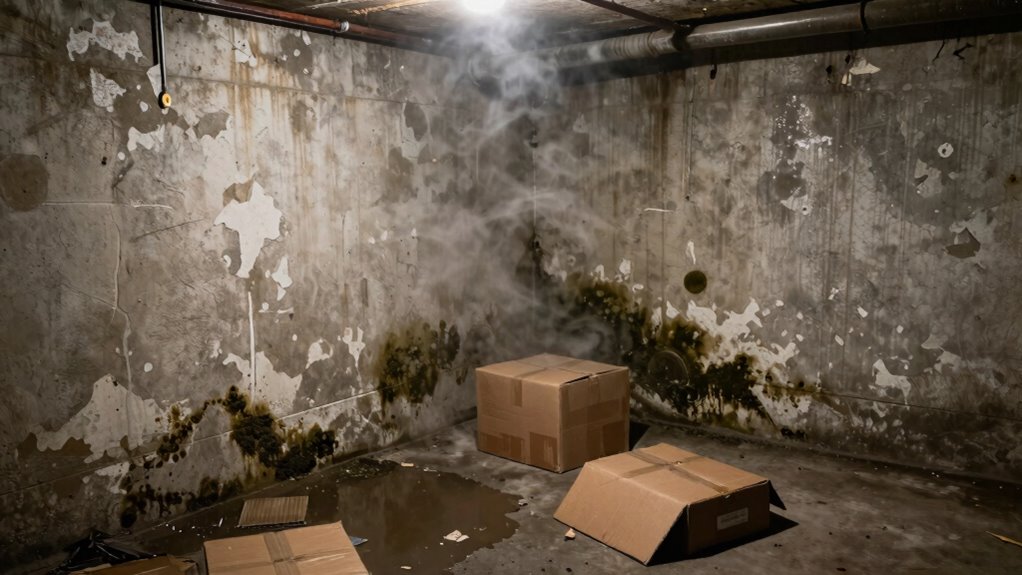
Moisture in your basement creates the ideal environment for mold and mildew to thrive, which are the main causes of musty smells. To combat this, improving ventilation is essential. Ventilation improvements help circulate air, reducing humidity levels that feed mold growth. You can install exhaust fans, use vents, or open windows regularly to promote airflow. Additionally, odor prevention techniques like using dehumidifiers or air purifiers can help control moisture and eliminate lingering smells. Sealing cracks and ensuring proper drainage also prevent excess water from seeping in. Incorporating moisture control measures such as sump pumps or waterproof coatings can further reduce excess water intrusion. Properly maintaining ventilation systems like fans and vents ensures consistent airflow and moisture reduction. Regular maintenance of ventilation equipment ensures optimal performance and prevents moisture buildup. Establishing effective drainage solutions around your basement can significantly reduce water entry and dampness. Implementing moisture monitoring methods allows for early detection of humidity issues, helping maintain a dry environment. By focusing on proper ventilation and odor prevention techniques, you create an environment less hospitable to mold and mildew, effectively reducing the musty smell that often plagues basements.
How Poor Ventilation Traps Humidity and Creates Musty Smells
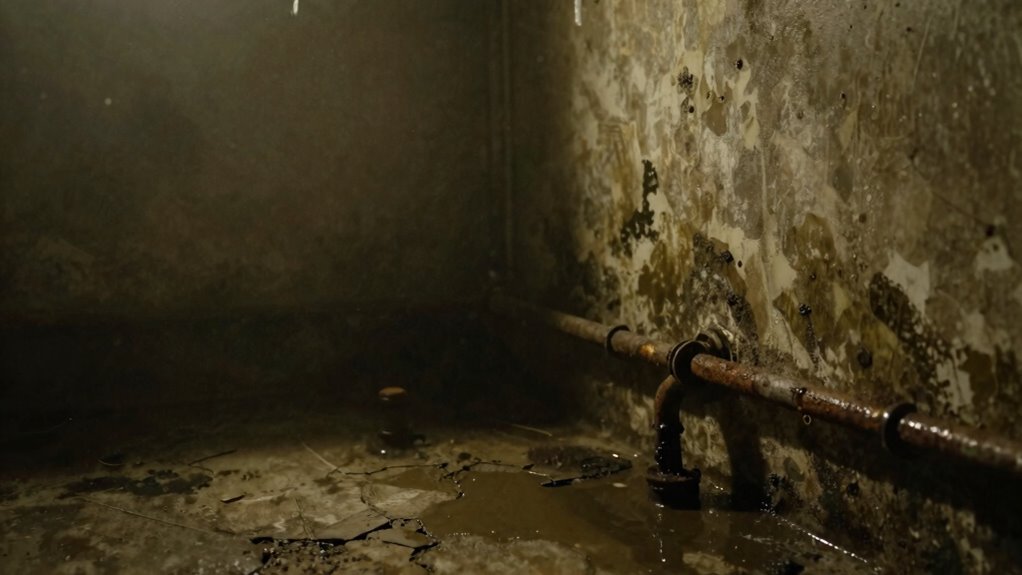
When ventilation isn’t adequate, humidity levels in your basement can quickly rise, creating a perfect environment for mold and mildew to flourish. Poor air circulation traps moisture, leading to persistent musty smells. Without proper venting solutions, humid air stays stagnant, preventing evaporation and drying. Improving ventilation helps remove excess moisture and freshens the air. Consider these options:
| Venting Solution | Benefits | Best Use Case |
|---|---|---|
| Exhaust Fans | Remove moist air | Small basements |
| Air Vents | Promote airflow | Existing openings |
| Dehumidifiers | Reduce humidity | Constant moisture issues |
Additionally, ensuring proper ventilation systems are in place can significantly decrease humidity buildup and prevent musty odors from recurring. Properly maintained smart ventilation devices can also optimize airflow and humidity control automatically.
Can Foundation Cracks Leak Water Into Your Basement?
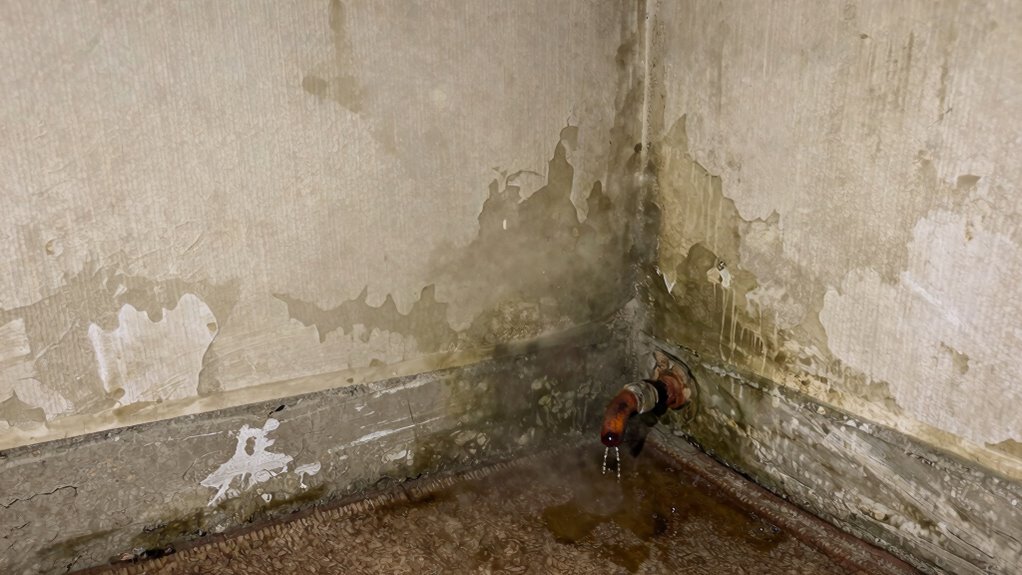
Foundation cracks can allow water to seep into your basement, especially during heavy rains or rapid snowmelt. These cracks create pathways for water intrusion, bypassing your regular drainage systems. Even small, unnoticed cracks can lead to significant moisture problems over time. When water enters through foundation cracks, it can cause damp walls, staining, and promote mold growth, contributing to that musty smell. You might not see the water directly but notice the effects, like peeling paint or warped flooring. Addressing foundation cracks early is vital to prevent ongoing water intrusion. Sealing these cracks with proper waterproofing techniques can stop moisture from entering your basement, reducing humidity and helping keep your space dry and odor-free. Regular inspections for foundation cracks can help catch issues before they cause major damage. Additionally, understanding how moisture sources like groundwater or surface runoff contribute to basement dampness can help you implement more effective waterproofing strategies. Incorporating hydrotherapy principles, such as proper drainage and moisture barriers, can further protect your basement from water intrusion. Furthermore, using drainage systems like sump pumps and French drains can effectively divert water away from your foundation, minimizing the risk of moisture buildup.
What Hidden Water Sources Are in Basement Walls and Floors?

Hidden water sources within basement walls and floors can quietly cause problems that are easy to overlook. You might not notice moisture seeping through tiny cracks or porous spots in your basement wall, but it can lead to persistent dampness and mold. Hidden water can also accumulate beneath flooring materials, creating a moist environment that promotes musty odors. Sometimes, condensation forms on cold surfaces, trapping moisture inside the wall or floor structure. These hidden water sources often go unnoticed until significant damage or odor develops. Regularly inspecting your basement walls for signs of moisture, especially around joints or areas with previous cracks, is vital. Addressing these concealed water issues early prevents long-term damage and keeps your basement dry and odor-free. Additionally, understanding moisture control techniques can help prevent future water intrusion problems. Implementing proper drainage systems around your property can significantly reduce groundwater infiltration, further protecting your basement. Being aware of moisture migration is also crucial, as it can transport water from one area to another within the basement structure. Recognizing hidden water pathways can help you identify sources of moisture that are not immediately visible.
Is Your Sump Pump or Drainage System Contributing to Basement Moisture?
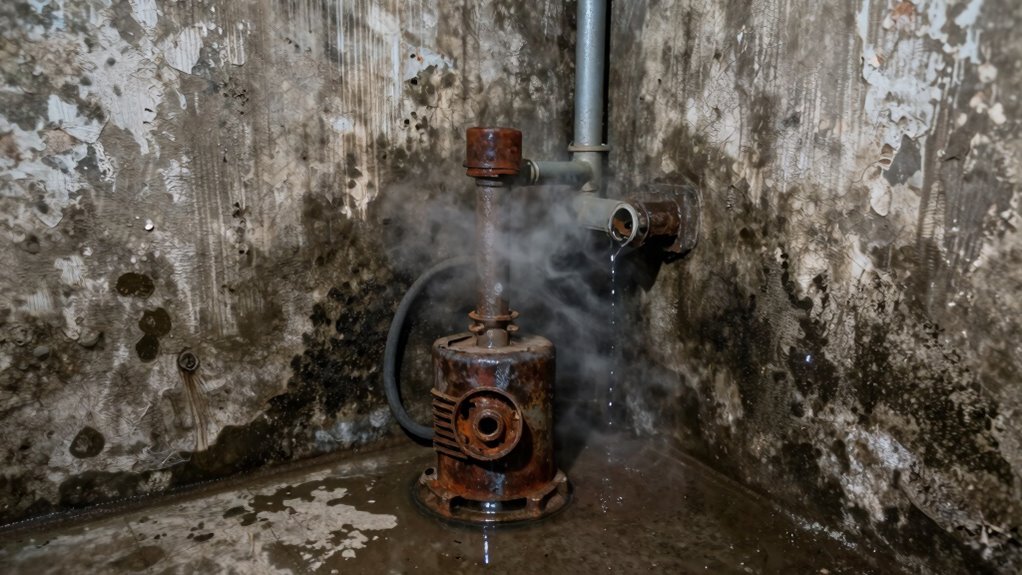
Your sump pump or drainage system could be adding to your basement’s moisture issues if it leaks or becomes blocked. Leaking pumps can seep water into walls and floors, while blockages can cause water to back up or overflow. Checking these systems regularly helps prevent excess moisture and keeps your basement dry. Additionally, using proper backup gear like reliable sump pumps and drainage components can reduce the risk of water damage during power outages or system failures. Ensuring that your moisture control methods are effective can also help mitigate basement humidity issues and protect your foundation. Regular maintenance of water management systems can also identify potential issues before they cause significant moisture problems. Incorporating proper drainage techniques is essential for directing water away from your foundation and reducing overall basement humidity. Implementing effective water diversion strategies can further enhance your home’s moisture management.
Sump Pump Leaks
A leaking sump pump or drainage system can silently contribute to basement moisture issues. Sump pump leaks often go unnoticed but can cause persistent dampness and promote mold growth. Leaks occur when seals wear out or connections loosen, allowing water to escape. Even small leaks add up over time, increasing humidity levels and dampening basement walls. Additionally, drainage system blockages can cause water to back up and leak from the sump pump or pipes. If your sump pump isn’t functioning properly or if debris clogs the drainage system, it can lead to excess moisture that fosters a musty smell. Regularly inspecting your moisture control systems helps prevent leaks and keeps basement moisture levels in check, reducing the chances of mold and mustiness. Proper maintenance of moisture management systems is essential for preventing basement dampness and eliminating musty odors.
Drainage System Blockages
Drainage system blockages can substantially contribute to basement moisture problems when they prevent proper water flow away from your home. When drainage pipes are clogged, rainwater and groundwater can back up, leading to excess moisture seeping into the basement. These clogged pipes hinder your sump pump’s ability to drain water effectively, increasing the risk of flooding and dampness. Regularly inspect and clear any debris or obstructions in your drainage system to guarantee water moves freely. If you notice standing water or persistent dampness, it’s a sign that drainage blockages may be present. Addressing these clogs promptly helps prevent moisture buildup and reduces the likelihood of mold, mildew, and that musty basement smell. Proper drainage maintenance is essential to keep your basement dry and healthy.
How Temperature Fluctuations Lead to Basement Condensation
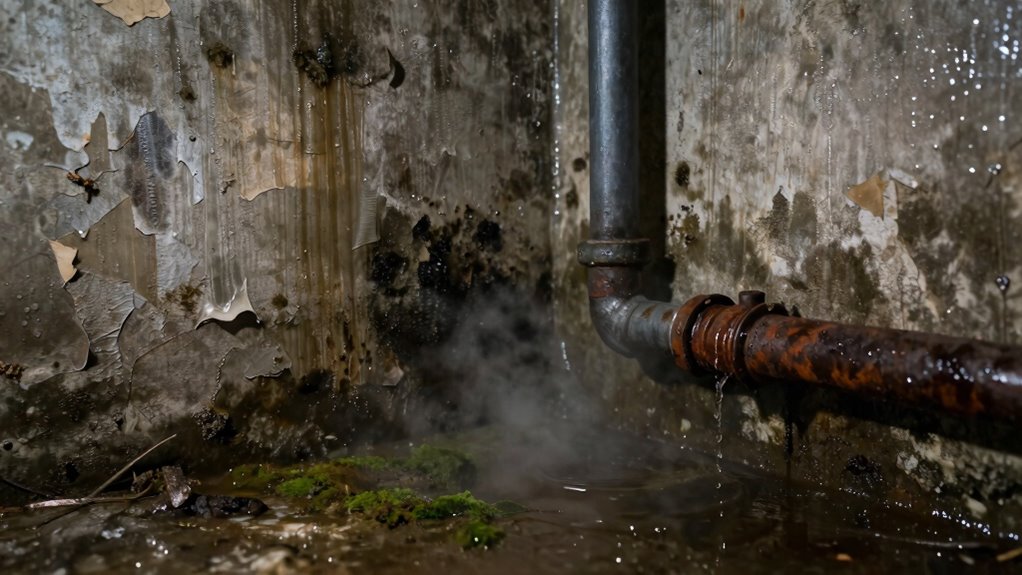
When outdoor temperatures fluctuate, they cause the air inside your basement to change as well. As it cools at night and warms during the day, this temperature shift impacts the moisture levels in the air. If insulation gaps exist, they allow warm, moist air to contact cold surfaces like walls and floors, leading to condensation. Poor air circulation worsens this problem because stagnant air traps humidity, giving moisture more opportunity to settle. When warm air hits a cold surface, it releases its moisture as condensation—creating damp spots and promoting mold growth. To prevent this, seal insulation gaps and improve air circulation. Maintaining a consistent temperature reduces the chances of condensation forming, helping you keep your basement dry and free of that musty smell.
How Soil Moisture and Poor Grading Increase Basement Humidity
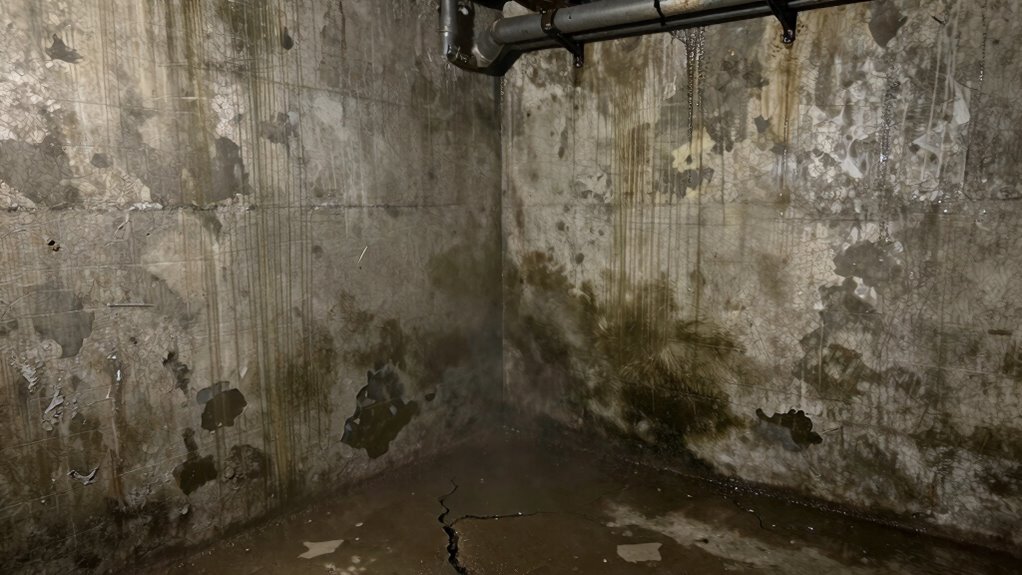
Soil moisture levels around your home directly influence basement humidity, especially if the grading doesn’t direct water away from the foundation. Poor soil drainage causes water to pool near your basement walls, increasing moisture infiltration. Grading issues, like slopes that direct water toward your house instead of away, worsen this problem. When the ground around your foundation retains water, it creates a moist environment that seeps through cracks or porous materials. Over time, this constant moisture raises humidity levels inside your basement, leading to dampness and mold growth. Addressing these issues involves improving soil drainage and regrading your yard to guarantee water flows away from your foundation. Proper grading and drainage are essential steps in reducing basement moisture and preventing that musty smell.
What Tools Help Detect Hidden Moisture Problems?

To identify hidden moisture issues, you can use tools like moisture meters and sensors that detect elevated humidity levels. Infrared cameras help spot cold spots and water intrusion without damage, while hygrometers and dew point meters measure air moisture content precisely. These tools make it easier to locate moisture problems before they cause more damage.
Moisture Meters and Sensors
Moisture meters and sensors are essential tools for identifying hidden water problems that can cause a musty basement smell. They help you monitor humidity levels and detect moisture intrusion before it becomes visible. Moisture sensors, often embedded in walls or floors, alert you to hidden dampness. Using these tools, you can pinpoint trouble spots and take action early. Here’s a quick overview:
| Tool Type | Use | Advantage |
|---|---|---|
| Pin-Type Moisture Meter | Measures moisture in materials | Precise spot readings |
| Relative Humidity Meter | Tracks humidity levels | Detects excess moisture buildup |
| Embedded Moisture Sensors | Continuous monitoring | Alerts you to hidden issues |
| Digital Moisture Meter | Digital readings for accuracy | Quick assessment |
| Wireless Sensors | Remote monitoring | Convenient, real-time alerts |
These tools empower you to maintain a dry, healthy basement environment.
Infrared Camera Inspections
Infrared camera inspections are a powerful way to uncover hidden moisture issues that might be causing a musty basement smell. Using thermal imaging, you can see temperature differences on walls, floors, and ceilings that indicate moisture presence. These cameras detect variations in heat flow, revealing cold spots where moisture may have accumulated behind surfaces. Moisture detection with infrared technology allows you to identify problem areas without invasive measures, saving time and effort. By pinpointing concealed leaks, condensation issues, or hidden water intrusion, infrared inspections help you target repairs accurately. This proactive approach guarantees you don’t miss moisture sources lurking behind drywall, paneling, or insulation, ultimately helping you eliminate the root cause of the musty smell and protect your basement’s integrity.
Hygrometer and Dew Point
Ever wondered how to detect hidden moisture without invasive methods? A hygrometer helps you do that by measuring humidity levels accurately. To verify reliable readings, it’s important to perform hygrometer calibration regularly. This way, you can trust the data when evaluating moisture problems in your basement. Dew point measurement is another valuable tool; it indicates the temperature at which moisture begins to condense. When the dew point is close to or below your basement’s temperature, condensation and mold growth become likely. By monitoring both humidity and dew point, you can identify hidden moisture sources before they cause serious damage. Using these tools gives you a non-invasive way to detect and manage moisture issues effectively, helping eliminate that musty smell and improve your basement’s air quality.
How to Identify and Fix Hidden Moisture Sources
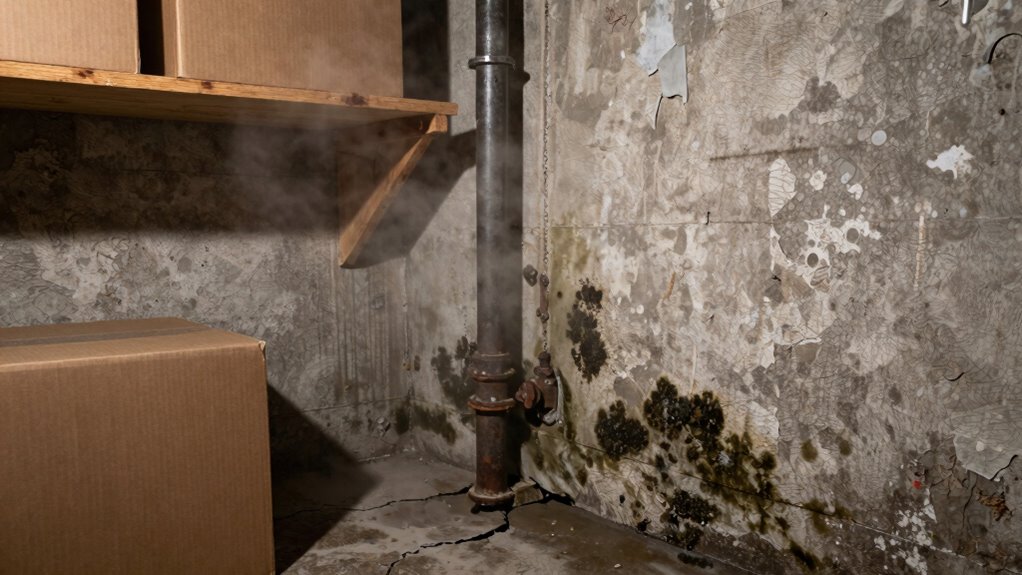
Hidden moisture sources can be tricky to spot because they often aren’t visible to the naked eye. To identify them, start by checking areas with poor air circulation, such as corners and behind furniture, where dampness can hide unnoticed. Use a moisture meter or hygrometer to detect elevated moisture levels in walls, floors, and corners. Pay attention to subtle signs like peeling paint or mold growth. Fix these hidden sources by improving air circulation through vents or fans, which helps dry out damp areas. Dehumidification is also essential; running a dehumidifier reduces overall moisture in the air, preventing hidden dampness from lingering or spreading. Regular inspections and maintaining proper ventilation are key to uncovering and fixing these sneaky moisture sources before they cause further damage.
Practical Steps to Eliminate Basement Odors Caused by Hidden Moisture
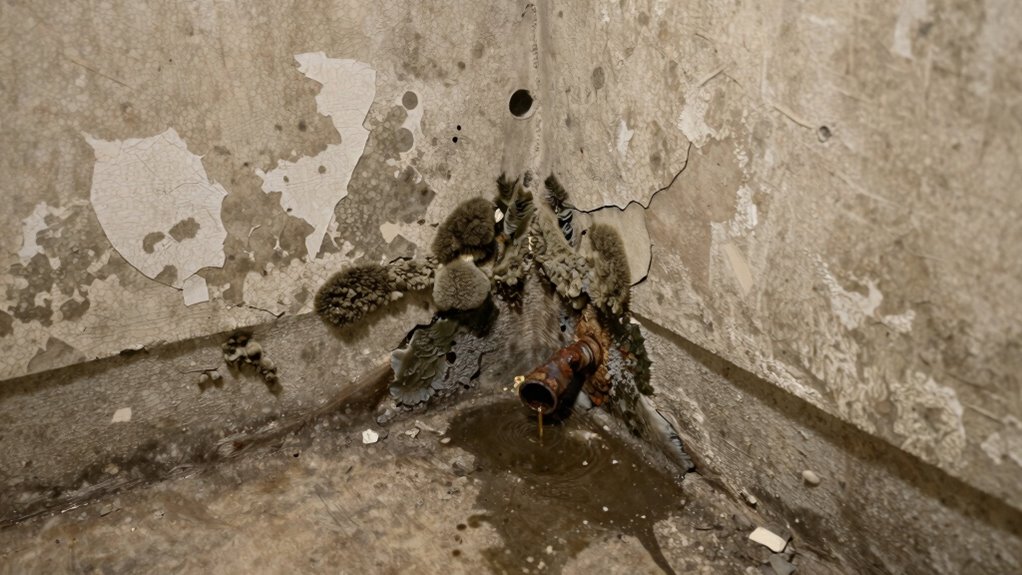
To effectively eliminate basement odors caused by hidden moisture, you need to address both the source of the dampness and the smell itself. Start by installing a high-quality basement dehumidifier to reduce humidity levels and prevent mold growth. Next, treat walls and surfaces with mold resistant paints to inhibit mold development and seal in odors. Finally, improve ventilation by adding vents or exhaust fans to promote air circulation and dry out lingering moisture. These steps work together to tackle the root cause of the smell and prevent it from returning. Remember, consistent moisture control is key to a fresh-smelling basement. Taking these practical measures ensures your basement stays dry, odor-free, and healthier for your home.
Frequently Asked Questions
Can Indoor Plants Contribute to Basement Humidity and Odors?
Indoor plants can contribute to basement humidity and odors if you overwater them or choose plants that release moisture. They increase humidity levels, which can lead to musty smells if not managed. To prevent this, use humidity control measures like dehumidifiers and guarantee proper watering. Regularly check your indoor plants and keep the basement well-ventilated to minimize excess moisture and odors, keeping your space fresher.
How Do HVAC Systems Affect Basement Moisture Levels?
HVAC systems greatly impact basement moisture levels through proper air circulation and regular maintenance. When you keep your HVAC well-maintained, it helps control humidity and prevent dampness that causes musty odors. Good air circulation reduces stagnant air and moisture buildup, while neglected systems can worsen humidity issues. Make certain to schedule HVAC maintenance regularly, check for leaks, and guarantee your system is working efficiently to keep your basement dry and odor-free.
Are There Specific Materials That Trap More Moisture in Basements?
Certain materials in your basement building trap more moisture due to their high moisture absorption. Materials like drywall, carpet, and fabric insulation readily absorb and retain humidity, making them prime sources for mold and musty smells. Concrete and brick are less absorbent but can still hold moisture if sealed poorly. To reduce moisture buildup, choose low-absorption materials and make certain proper sealing and ventilation to keep your basement dry and odor-free.
Can Outdoor Landscaping Influence Indoor Basement Humidity?
Yes, outdoor landscaping can influence your basement humidity. Poor garden drainage and improper yard grading direct excess water toward your foundation, increasing moisture levels inside your basement. To prevent this, guarantee your yard slopes away from your home, and improve drainage systems to divert water effectively. By managing these external factors, you reduce the risk of moisture buildup, helping keep your basement dry and odor-free.
How Often Should Basement Humidity Levels Be Checked for Mold Prevention?
Think of your basement as a garden; regular humidity monitoring is your watering schedule. You should check humidity levels at least once a month to stay ahead of mold prevention. Keeping an eye on your basement’s moisture helps identify any hidden sources of dampness early. This proactive approach guarantees mold doesn’t take root, preserving your space’s health and integrity. Stay vigilant, and your basement will remain dry and mold-free.
Conclusion
Did you know that up to 60% of basement odors stem from hidden moisture sources? By understanding how poor ventilation, foundation cracks, and soil moisture contribute, you can take control. Regular inspections with the right tools help spot issues early. Fixing these problems not only eliminates musty smells but also protects your home from long-term damage. Stay proactive, and your basement will stay fresh and dry for years to come.