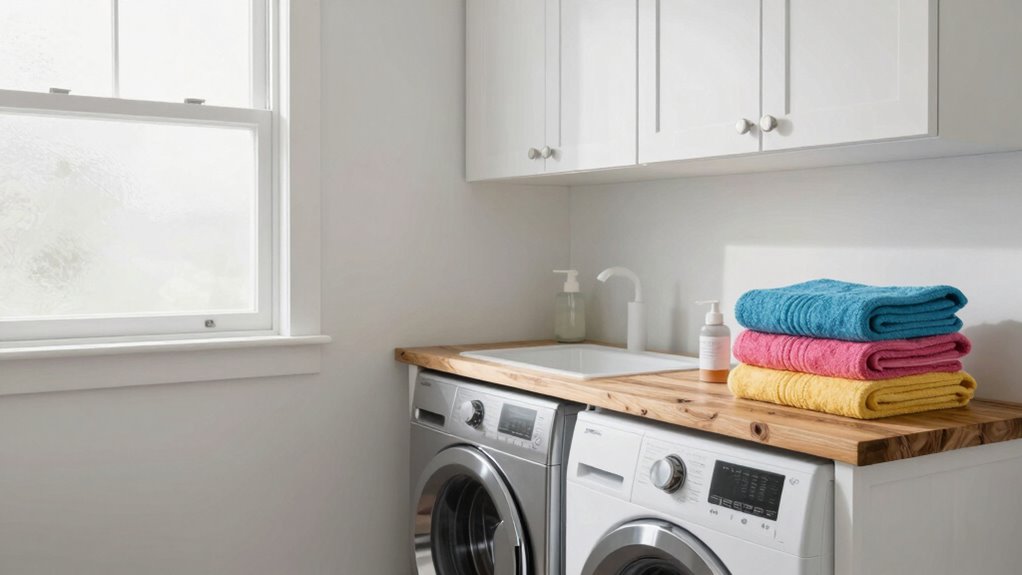

Resetting moisture in your laundry room can profoundly improve your home’s air quality and comfort. By controlling humidity, ventilating properly, and preventing mold growth, you reduce damp odors and improve breathing space. Sealing gaps and using dehumidifiers help keep surfaces dry, stopping mold and mildew from spreading. When your laundry room stays dry, the whole house feels fresher, healthier, and more comfortable. Keep going to discover the simple steps to make this transformation happen.

Get home appliances delivered free — and shop member deals
- Fast, free delivery on millions of items
- Access to Prime Big Deal Days deals on October 6–7
- Prime Video, Amazon Music and more included
Key Takeaways
- Resetting moisture levels in the laundry room reduces dampness and odors throughout the home, improving air quality.
- Proper ventilation prevents mold growth, protecting the entire house from structural damage and health issues.
- Controlling humidity in the laundry area enhances overall comfort and prevents condensation on walls and ceilings.
- Sealing leaks and insulating reduces cold spots, minimizing moisture buildup and mold risk in adjacent rooms.
- Maintaining a dry laundry space supports a healthier, fresher environment for the entire household.
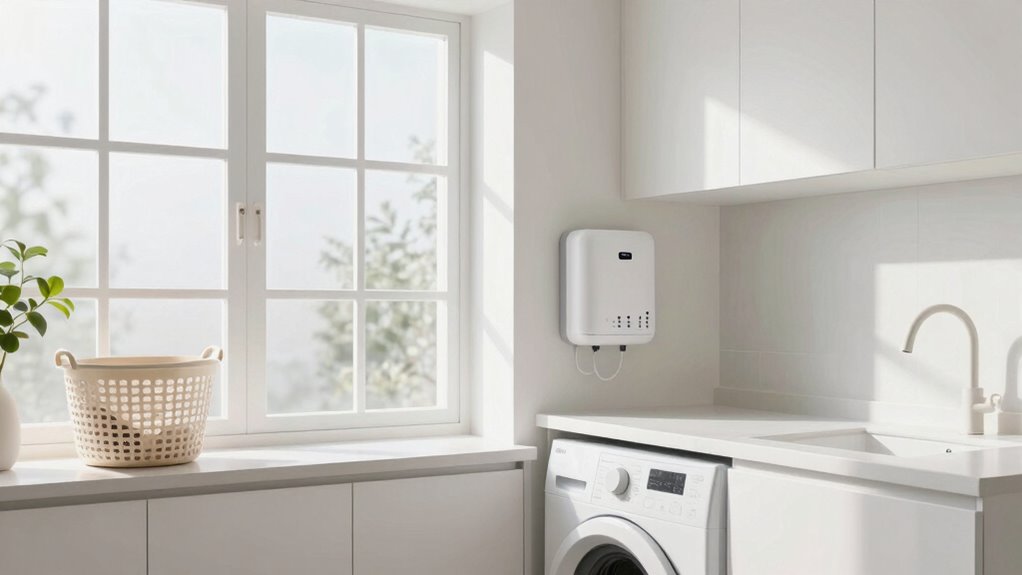
If your laundry room feels damp or musty, it’s a sign that excess moisture needs to be addressed. Moisture buildup in this space can quickly spread throughout your home, affecting air quality and comfort. A simple moisture reset in your laundry room can have a profound impact on the overall feel of your house. The key is implementing effective ventilation strategies and focusing on humidity control to keep moisture levels balanced.
Damp laundry rooms signal excess moisture; improving ventilation and humidity control can transform your home’s air quality and comfort.
Start by improving how air moves in and out of your laundry room. Good ventilation strategies involve installing or upgrading exhaust fans, making sure they vent directly outside, not into attics or crawl spaces. If your laundry room lacks windows, a powerful exhaust fan becomes essential. It pulls humid air out during and after laundry loads, preventing moisture from lingering. If you already have a fan, check that it’s functioning properly and consider upgrading to a more efficient model. Proper ventilation doesn’t just remove damp air; it also reduces musty odors and prevents mold growth, creating a healthier environment. Ensuring proper air circulation is crucial for controlling moisture levels effectively. Additionally, regular maintenance of your ventilation system can improve its efficiency and lifespan. Regularly inspecting and cleaning your exhaust fans can help maintain optimal airflow and moisture removal. As an added measure, choosing the right ventilation equipment can make a significant difference in managing moisture.
Humidity control goes hand in hand with ventilation. Using a dehumidifier can help maintain optimal moisture levels, especially in humid climates or poorly ventilated spaces. Set it to keep humidity between 30-50%, and you’ll notice a significant difference in how the room feels. When humidity drops to comfortable levels, so does the dampness on walls, floors, and laundry itself. This control prevents mold spores from settling and reduces the risk of mildew, which can cause health issues and damage your home’s structure. Proper humidity management also supports the longevity of your appliances and prevents corrosion caused by excess moisture.
Another effective strategy is ensuring your laundry area is well-insulated and free of leaks. Cold spots or leaks allow condensation, which adds to moisture problems. Sealing gaps around windows, doors, and plumbing fixtures keeps moist air outside and maintains a dry environment inside. Additionally, avoid overloading washers and dryers, as excess laundry can produce more humidity than your ventilation system can handle. When your laundry room is properly ventilated and humidity is controlled, the moisture that previously lingered in the air gets released outside or absorbed by your dehumidifier, leaving the space dry and fresh. Proper insulation and sealing can also prevent condensation from forming on surfaces, further reducing moisture issues. Keeping an eye on humidity levels and addressing leaks promptly are essential steps in maintaining a healthy, dry laundry space.
best exhaust fan for laundry room
As an affiliate, we earn on qualifying purchases.
As an affiliate, we earn on qualifying purchases.
Frequently Asked Questions
How Often Should I Perform a Moisture Reset in My Laundry Room?
You should perform a moisture reset in your laundry room every 3 to 6 months, especially if you notice excess humidity or mold. During this time, focus on laundry organization and proper ventilation techniques to keep moisture levels in check. Regular resets help prevent dampness and improve air quality, making your entire house feel fresher. Adjust the frequency based on your laundry habits and climate conditions for ideal results.
Can a Moisture Reset Improve Indoor Air Quality?
Think of a moisture reset as a revitalizing change for your home. It can greatly improve indoor air quality by reducing excess humidity that fosters mold and dust mites. Proper ventilation systems and air purification methods work together to clear out pollutants and maintain a healthier environment. By regularly performing a moisture reset, you help your home breathe easier and create a more comfortable, healthier space for everyone.
What Signs Indicate My Laundry Room Needs a Moisture Reset?
If your laundry room shows signs like persistent dampness, mold growth, or a musty smell, it needs a moisture reset. You might also notice higher humidity levels affecting your energy efficiency, or poor ventilation causing condensation. Resetting moisture levels helps improve ventilation and reduces excess humidity. By addressing these signs promptly, you can enhance indoor air quality, prevent damage, and create a more comfortable, energy-efficient home environment.
Does a Moisture Reset Help Reduce Mold Growth?
Yes, a moisture reset helps reduce mold growth by improving ventilation techniques and controlling humidity levels. You can use a dehumidifier to remove excess moisture from the air, preventing mold spores from thriving. Proper ventilation, like exhaust fans or opening windows, also helps circulate air and reduce dampness. Combining these methods guarantees your laundry room stays dry, which greatly cuts down on mold growth and keeps your entire home healthier.
Are There Specific Tools Required for a Moisture Reset?
Wondering if you need special tools for a moisture reset? Typically, you just require a hygrometer to monitor moisture levels and a dehumidifier to adjust humidity. An air purifier can also help improve air quality. These tools work together to balance moisture levels, making your home feel more comfortable and reducing mold risk. No complex equipment is necessary—just the right tools to effectively manage indoor humidity.
As an affiliate, we earn on qualifying purchases.
Conclusion
Resetting the moisture in your laundry room can dramatically improve your home’s overall comfort and air quality. By taking this simple step, you’re not just fixing a small space—you’re enhancing your entire living environment. Think about how much better your home will feel when humidity levels are just right. Isn’t it worth a quick reset to enjoy fresher, more comfortable days ahead? Sometimes, small changes make the biggest difference.
As an affiliate, we earn on qualifying purchases.
ventilation fan for bathroom and laundry
As an affiliate, we earn on qualifying purchases.
As an affiliate, we earn on qualifying purchases.
Fall Picks
fall essentials
As an affiliate, we earn on qualifying purchases.