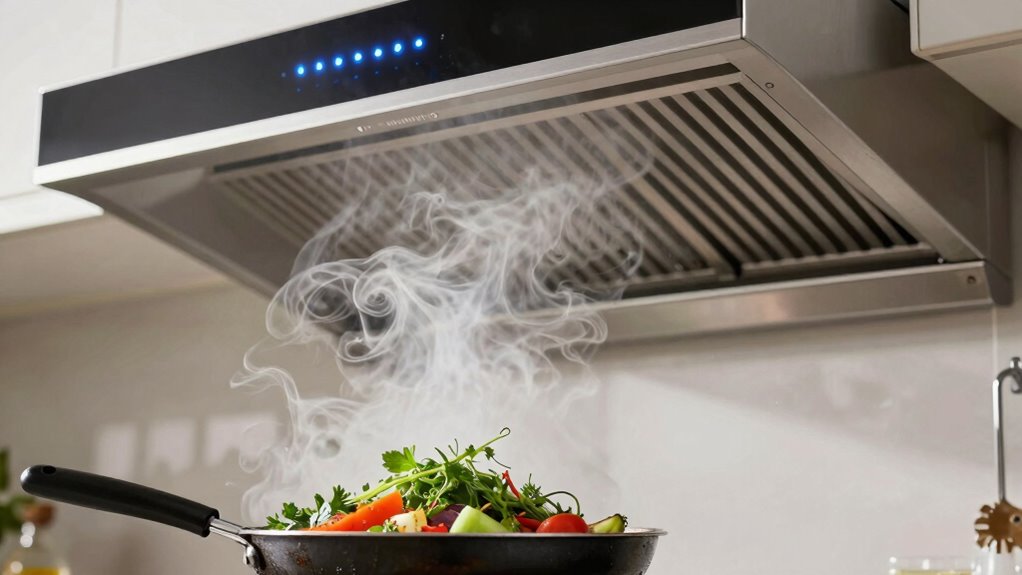
When cooking odors or smoke fill your kitchen, ventilation is your best option because it actively exchanges indoor air with fresh outdoor air, quickly removing strong smells and smoke particles. Air purifiers can help, but they often struggle with dense smoke or persistent odors, especially without high-capacity filters. Proper ventilation, like using range hoods and opening windows, works faster and more effectively. Keep going to discover practical ways to improve airflow and keep your space fresh.
Key Takeaways
- Ventilation actively removes odors and smoke at the source, providing quicker and more effective odor control than passive air purifiers.
- Range hoods and exhaust fans efficiently vent cooking fumes outside, reducing lingering smells and improving indoor air quality.
- Opening windows and using cross-ventilation can outperform air purifiers, especially with good outdoor air quality.
- Air purifiers struggle with dense smoke and persistent odors, often requiring frequent filter replacements and longer operation times.
- Combining ventilation during cooking with air purification afterward offers the most comprehensive approach to odor and smoke management.
What Makes Ventilation Better Than Air Purifiers for Cooking Odors

While air purifiers can help reduce lingering odors, ventilation is usually more effective at removing cooking smells at their source. Air purifier limitations mean they often struggle with odor infiltration, especially when cooking produces strong or persistent smells. Purifiers filter air passively, relying on the device’s placement and capacity, which can leave some odors lingering or re-circulating. Ventilation, on the other hand, actively pulls odors out of your kitchen by exchanging indoor air with fresh outdoor air, preventing odors from building up. This continuous airflow directly tackles odor infiltration at its origin, making it more efficient for quick, effective removal. Proper kitchen equipment like range hoods and exhaust fans further enhance ventilation’s ability to swiftly eliminate cooking odors. Additionally, air exchange rate is a critical factor in how well your ventilation system performs in odor removal. Installing an effective ventilation system ensures consistent and optimal air turnover, boosting odor removal efficiency. Properly designed airflow management plays a vital role in maintaining a fresh kitchen environment. So, while air purifiers can supplement, proper ventilation remains your best defense against stubborn cooking smells.
How Range Hoods and Exhaust Fans Keep Your Kitchen Fresh

Range hoods and exhaust fans actively remove cooking odors by venting them outside your home, guaranteeing your kitchen stays fresh. They play a crucial role in maintaining a pleasant environment, regardless of your kitchen decor style. When you use effective ventilation, you prevent lingering smells that can clash with your decor or affect your mood. Plus, they support your cooking techniques by capturing smoke, steam, and grease before they settle on surfaces or furniture. This keeps your countertops cleaner and reduces cleaning time. Proper ventilation also improves air quality, making your kitchen healthier. Additionally, ventilation efficiency ensures that odors and pollutants are effectively removed, especially during intensive cooking sessions. Whether you’re simmering, frying, or baking, a good range hood or exhaust fan ensures your kitchen remains fresh and inviting, no matter how intense your cooking sessions get. Incorporating auditory feedback techniques can further enhance your overall kitchen environment by reducing noise-related stress for sensitive individuals. Understanding regulatory standards can help you choose the most effective ventilation systems that comply with safety and building codes. Regular maintenance and proper installation practices are essential to keep your ventilation systems functioning optimally over time.
When Opening Windows Works Better Than Using Air Purifiers

Opening a window can often be more effective than relying on air purifiers to remove cooking odors and improve air quality. Fresh air from outside helps dilute indoor pollutants quickly, especially when cooking releases strong odors or smoke. While indoor plants contribute to better air quality over time, they don’t provide immediate relief from odors. Ventilation through open windows creates a natural airflow that sweeps away airborne particles and odors, making your space feel fresher faster. If your outdoor air isn’t polluted, this simple step can outperform air purifiers, which may struggle with heavy or persistent smells. Plus, opening windows encourages a healthier environment by increasing oxygen levels and reducing indoor contaminants. It’s a cost-effective, eco-friendly solution for maintaining a cleaner, more comfortable kitchen. Exploring emerging trends in digital publishing highlights how simple, natural solutions like ventilation can be more effective than technology in certain contexts. Additionally, proper ventilation can help reduce the buildup of indoor pollutants, which is especially important given the impact of climate factors on air quality, as well as the importance of indoor air circulation in maintaining a safe environment. Increasing air exchange through windows can also help prevent the stagnation of indoor air, further supporting overall wellness and comfort. Incorporating natural ventilation strategies can significantly enhance indoor air quality and reduce reliance on mechanical systems.
Why Air Purifiers Struggle With Heavy Smoke and Persistent Odors

Air purifiers often fall short when dealing with heavy smoke or persistent odors from cooking. This is mainly due to air purifier limitations and common odor absorption misconceptions. First, many models aren’t designed to handle large, dense particles like smoke, which can overwhelm filters. Second, odor molecules can be too small for standard filters to trap effectively. Third, some purifiers rely on activated carbon filters that need frequent replacement to stay effective. Fourth, misconceptions lead people to believe purifiers will eliminate all odors instantly, which isn’t true; they work gradually. Heavy smoke and stubborn odors require continuous, high-capacity filtration or supplementary ventilation. Relying solely on an air purifier often isn’t enough, especially with persistent cooking smells. Proper ventilation remains vital for real odor and smoke removal. Additionally, understanding the filter capacity of your device can help you choose models better suited for heavy-duty odor and smoke removal. Moreover, effective ventilation strategies can significantly improve odor and smoke elimination, making your environment fresher and healthier. Implementing proper airflow techniques can further enhance the efficiency of odor removal efforts.
Practical Tips to Improve Natural Ventilation During and After Cooking
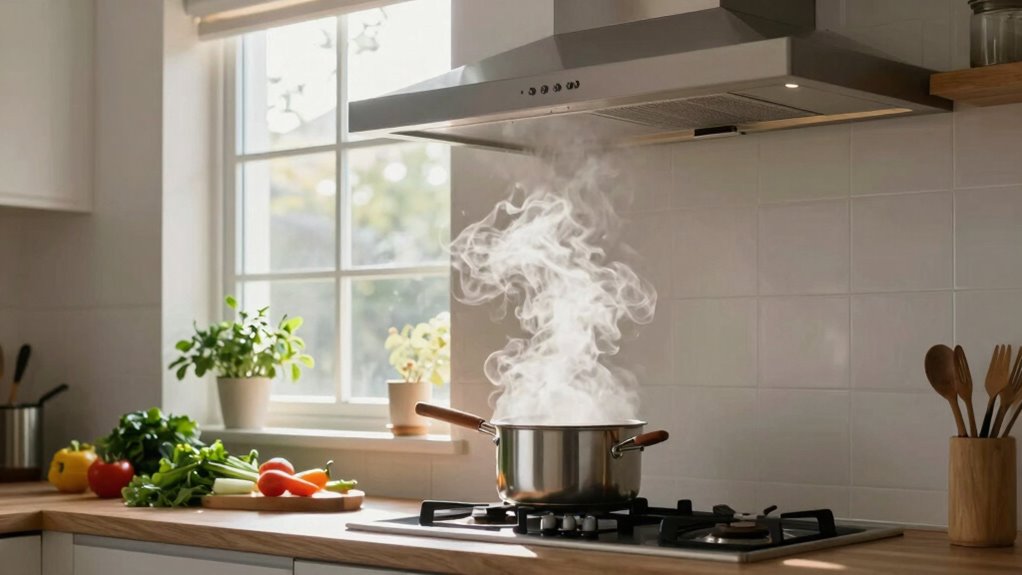
To effectively clear cooking odors and smoke, focusing on natural ventilation methods can make a significant difference. You can improve indoor air quality by maximizing natural airflow during and after cooking. Open windows on opposite sides of your kitchen to create a cross-breeze that pulls out smoke and odors efficiently. Use exhaust fans sparingly, letting fresh air replace stale air. Keep doors open to promote continuous airflow, reducing lingering smells. Here’s a quick guide:
| Action | Benefit |
|---|---|
| Open windows before cooking | Prepares fresh air and reduces odors |
| Use cross-ventilation | Enhances natural airflow |
| Keep doors open | Improves indoor air quality |
| Post-cooking ventilation | Clears residual smoke and smells |
Additionally, optimizing your ventilation system can further improve air exchange and ensure a healthier cooking environment.
How to Choose the Best Ventilation System for Your Kitchen
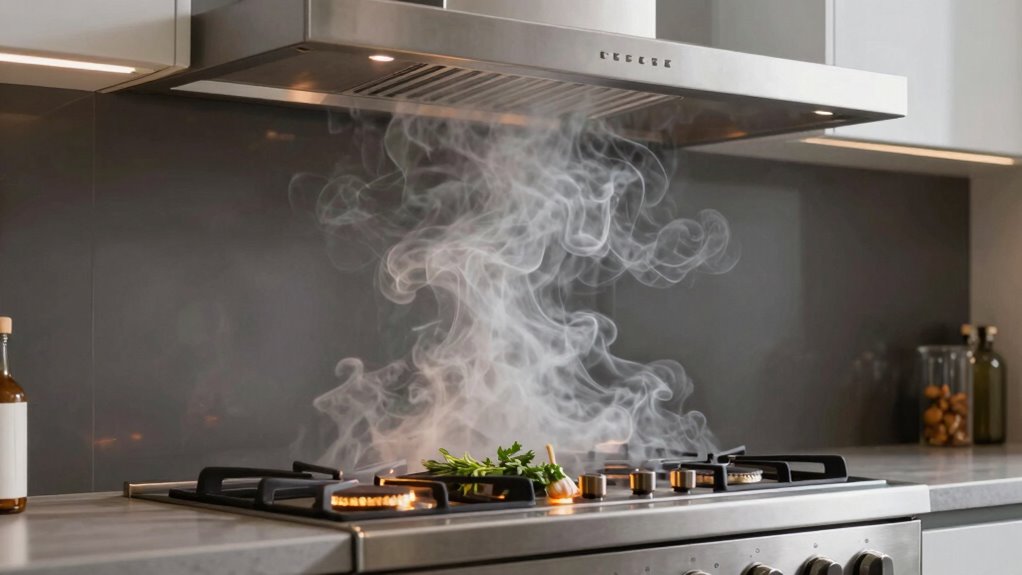
Choosing the right ventilation system depends on understanding your options, like range hoods, exhaust fans, or air purifiers. You also need to take into account how well each system moves air and filters out odors and smoke. Making the best choice guarantees your kitchen stays fresh and safe during cooking. Additionally, considering the testing accuracy of your ventilation devices can ensure optimal performance and safety. Regularly reviewing testing standards can help you select equipment that meets safety and efficiency benchmarks. Ensuring your system is properly tested for efficiency can help identify potential issues before they affect your kitchen environment. Moreover, selecting devices that adhere to essential safety tips can further protect your household from hazards associated with improper ventilation.
Ventilation Type Options
Ever wondered how to effectively clear cooking odors and smoke from your kitchen? Choosing the right ventilation type makes a big difference. Consider these options:
- Range Hoods – Capture odors directly at the source; ideal for strong smoke.
- Exhaust Fans – Ventilate air outside, improving air quality.
- Recirculating Hoods – Filter air inside; less effective for heavy smoke.
- Indoor Plants – Naturally purify air and add aesthetic appeal, boosting overall air quality.
Your choice depends on your cooking style and kitchen layout. For fresh air and reduced odors, exhaust systems are best. Indoor plants can supplement ventilation, especially for improving indoor air quality and creating a healthier environment. Combining options ensures ideal odor control and air cleanliness.
Airflow and Filtration
Selecting the right ventilation system involves understanding how airflow and filtration work together to remove odors and smoke effectively. Proper airflow ensures contaminated air moves efficiently toward the exhaust, preventing lingering smells. Air pressure plays a vital role; creating negative pressure in your kitchen pulls odors away from living spaces and directs them outside. Pay attention to airflow patterns—ideally, they should direct smoke and odors straight to the vent without circulating around the room. High-quality filters trap airborne particles, reducing smoke and odor particles before they escape into your home. Combining good airflow with effective filtration maximizes odor removal and minimizes smoke buildup. When choosing a system, consider how your kitchen’s layout influences airflow and whether the system can maintain consistent air pressure for top performance.
Common Mistakes That Reduce Your Kitchen’s Ventilation Effectiveness

One common mistake is placing your range in an awkward spot, which can hinder proper airflow and ventilation. Forgetting to perform regular maintenance on your system can also lead to reduced effectiveness over time. Additionally, blocking airflow paths with furniture or other objects prevents your ventilation system from working as it should.
Improper Range Placement
When your range isn’t positioned correctly in the kitchen, it can substantially hinder your ventilation system’s ability to remove odors and smoke effectively. Poor range placement affects how well your hood captures airborne particles. To optimize performance:
- Ensure the range is centered under the hood for even coverage.
- Maintain proper cabinet clearance—at least 30 inches above the cooktop—to prevent obstructions.
- Avoid placing the range too close to walls or corners, which can trap smoke.
- Keep the hood directly above the stove, not offset or recessed, for maximum airflow.
Correct range placement allows your ventilation system to work efficiently, reducing lingering cooking odors and smoke. Neglecting these details compromises your kitchen’s air quality and can lead to stubborn smells.
Overlooking Regular Maintenance
Neglecting regular maintenance can considerably diminish your kitchen’s ventilation performance, allowing odors and smoke to linger longer than they should. Failing to replace filters promptly or neglecting duct cleaning causes airflow restrictions, reducing efficiency. Dirty filters trap grease and debris, while clogged ducts hinder smoke and odor removal. To maintain peak function, schedule routine filter replacements and duct inspections.
| Maintenance Task | Impact on Ventilation |
|---|---|
| Filter replacement | Ensures unobstructed airflow |
| Duct cleaning | Prevents buildup of grease and debris |
| Regular inspections | Detects issues early |
Blocking Airflow Paths
Blocking airflow paths is a common mistake that considerably reduces your kitchen’s ventilation efficiency. When airflow interference occurs, smoke and odors linger longer, making your kitchen less comfortable. Vent blockages from clutter or improperly placed furniture hinder the proper flow of air, causing exhaust to recirculate instead of vent outside. To improve ventilation, avoid these mistakes:
- Placing large objects or appliances near vents, which obstruct airflow.
- Storing items in front of exhaust hoods or vents, causing blockages.
- Using curtains or furniture that block air passageways.
- Ignoring the need for regular cleaning, which can lead to buildup and vent blockages.
When and How to Use Ventilation and Purifiers Together
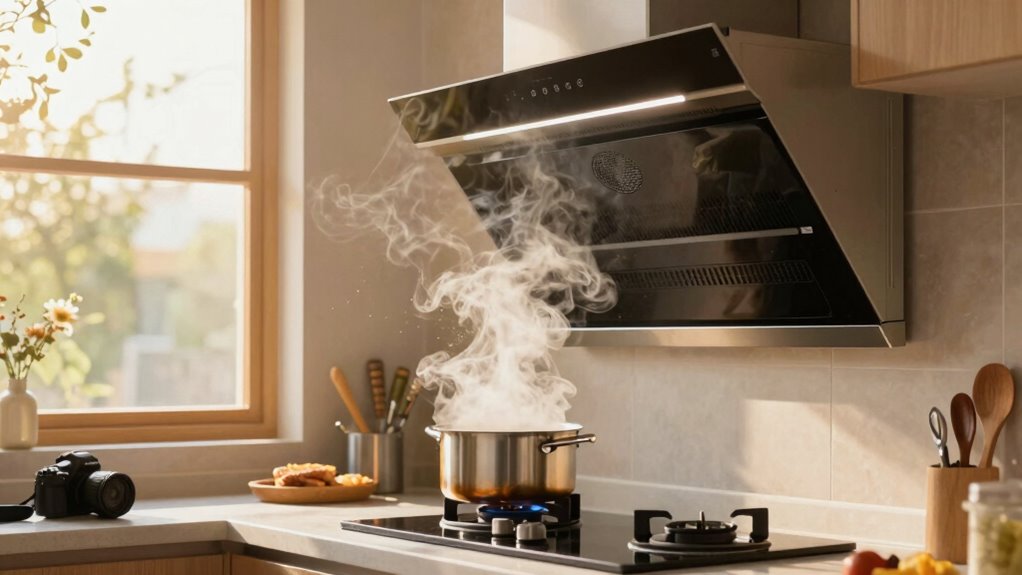
Using ventilation and air purifiers together is the most effective way to eliminate cooking odors and smoke from your home. Turn on your range hood or exhaust fan during cooking to remove immediate fumes. Afterward, run an air purifier with a HEPA filter to capture lingering particles and odors. If you have indoor gardening, ensure your ventilation system helps circulate fresh air and reduces humidity that can promote mold or odors. Regular air quality testing can help you determine when to activate purifiers or improve ventilation. Use them simultaneously during heavy cooking or smoking sessions for maximum effect. Combining ventilation with purifiers creates a cleaner, healthier environment, especially when you’re managing persistent odors or pollutants from everyday activities.
Signs Your Kitchen Ventilation Isn’t Working and How to Fix It
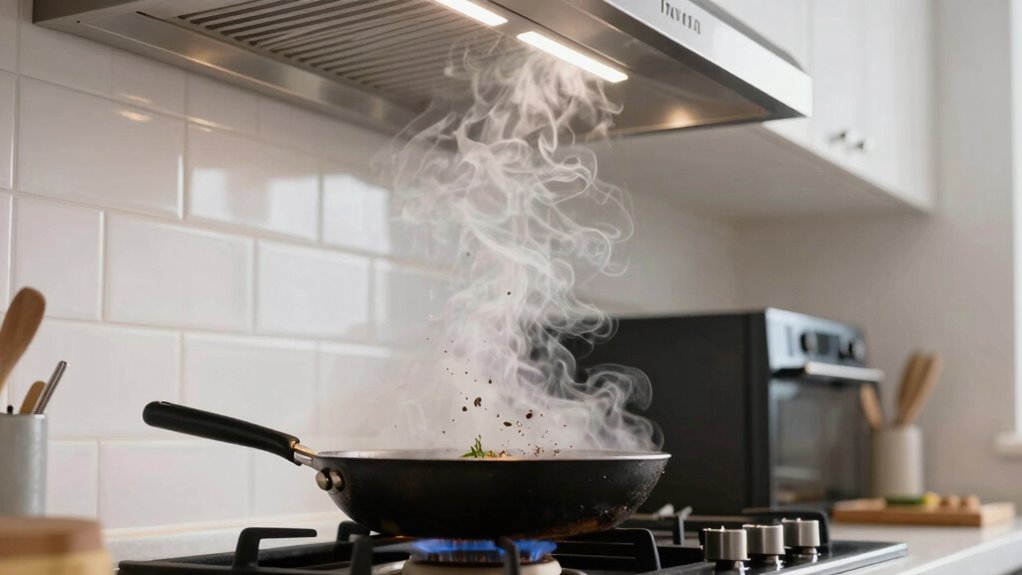
If your kitchen ventilation isn’t effectively removing smoke and odors, you’ll notice some clear signs that it’s not working properly. First, lingering smells may cling to your kitchen decor despite cooking. Second, visible smoke or steam escapes around the vents, indicating poor airflow. Third, grease buildup on walls or cabinets suggests inadequate extraction of airborne particles. Fourth, your ventilation system sounds noisy or sluggish during cooking, hinting at blockages or malfunction. To fix these issues, check and clean filters regularly, ensure vents aren’t obstructed, and review your cooking techniques to avoid excessive smoke. Upgrading to a more powerful system can also improve performance, helping you maintain a fresh, odor-free kitchen environment. Proper ventilation keeps your space appealing and your cooking techniques effective.
Simple Hacks to Maximize Airflow and Keep Odors Away

Maximizing airflow in your kitchen doesn’t require complicated equipment—simple adjustments can make a big difference. Start by organizing your kitchen decor to keep pathways clear, allowing air to circulate freely. Use open shelving or minimal clutter to avoid obstructing vents and windows. Incorporate effective cooking techniques, like simmering rather than frying at high heat, to reduce smoke and odors at the source. Open windows during and after cooking to promote cross-ventilation, and consider placing a fan near an open window to draw odors outside. Keep range hoods clean and well-maintained for ideal performance. Small changes, like turning on ceiling fans or adjusting your cooking style, noticeably improve airflow. These simple hacks help keep odors at bay without overcomplicating your kitchen setup.
Frequently Asked Questions
Can Ventilation Systems Eliminate All Cooking Odors Effectively?
Ventilation systems can’t eliminate all cooking odors completely, but they substantially improve odor control when used effectively. You should guarantee your ventilation is properly designed and maintained to maximize effectiveness. Good airflow, regular filter changes, and appropriate exhaust fans help reduce lingering smells. While no system can remove every odor, proper ventilation makes a noticeable difference in keeping your kitchen fresher and more comfortable.
Do Air Purifiers Help Reduce Smoke Damage in Kitchen Walls?
Did you know that air purifiers remove only about 50% of smoke particles? While they can help, their limitations mean they won’t fully prevent smoke damage on your kitchen walls. To protect your walls, combine air purifiers with effective wall cleaning strategies like scrubbing with mild detergents and using sealants. Relying solely on air purifiers isn’t enough; proactive cleaning is essential for real damage prevention.
How Often Should Range Hoods Be Cleaned for Optimal Performance?
You should clean your range hood every 1 to 3 months for ideal performance. Follow a regular maintenance schedule, especially if you cook frequently or use greasy foods often. Remove and wash filters with warm, soapy water, and wipe down the exterior and interior surfaces. Regular cleaning prevents grease buildup, maintains proper airflow, and guarantees your range hood operates efficiently, helping to keep your kitchen fresh and safe.
Are There Specific Ventilation Options Best for Small Kitchens?
For small kitchens, you should prioritize ventilation options like opening your kitchen window to let fresh air in and exhaust odors out. Portable fans are also effective; place them near the window or door to improve airflow and remove cooking smells quickly. Combining these methods keeps your small space fresh and odor-free without the need for bulky or complex systems. Regularly using both helps maintain a comfortable, odor-free environment.
What Safety Precautions Should Be Taken When Using Exhaust Fans?
They say, “Better safe than sorry,” which rings true with exhaust fan safety. Always make certain your fan is properly installed to prevent fire hazards and regularly check for electrical safety issues like loose wiring or damaged cords. Keep the area clear of grease buildup, and never block vents. Use fans with safety features, and turn them off when not in use. These precautions help keep your kitchen safe and fire-free.
Conclusion
Ultimately, a well-tuned ventilation system acts like a silent guardian, gently guiding lingering odors and smoke away before they settle in. While air purifiers have their moments, relying on natural airflow and proper exhaust methods keeps your kitchen’s atmosphere invigorating and inviting. Remember, sometimes the simplest approach—like opening a window—speaks volumes about caring for your space. Trust the flow, and your kitchen will always feel like a breath of fresh air.