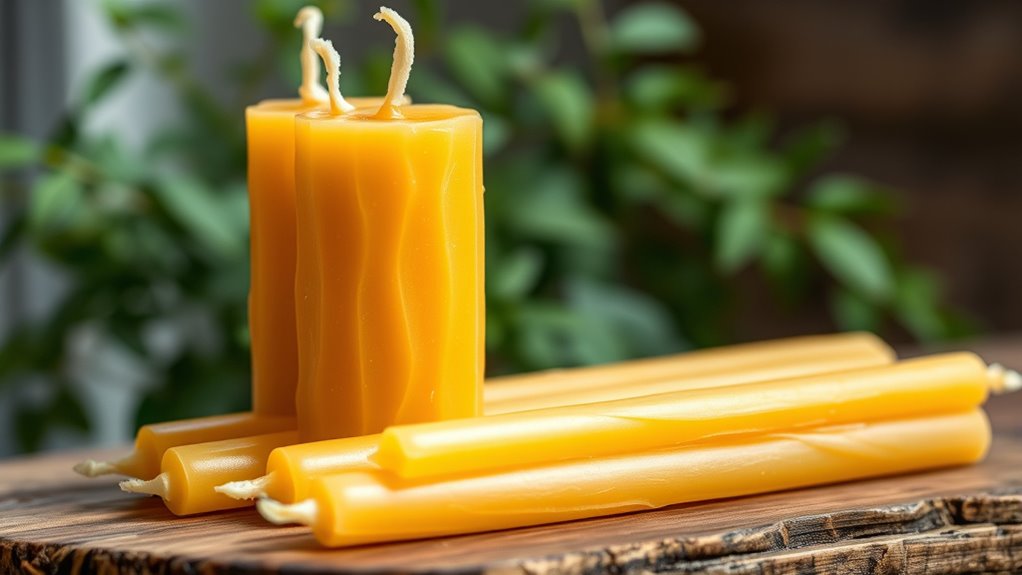
To create homemade beeswax candles for cleaner burning, start by melting pure beeswax in a double boiler, keeping safety in mind. Add subtle scents if desired, but avoid over-adding essential oils, which can cause uneven burn and flare-ups. Use a proper wick size to prevent excess smoking and flickering. Proper pouring, cooling, and trimming ensure steady burn performance. Following these tips helps you craft safer, cleaner-burning candles—if you want more insights, keep going.
Key Takeaways
- Use pure beeswax and avoid additives for a cleaner, soot-free burn.
- Select the appropriate wick size to ensure even and complete combustion.
- Melt beeswax gently using a double boiler to prevent impurities and debris.
- Incorporate natural essential oils sparingly to avoid increased flammability.
- Properly trim wicks and burn candles in draft-free areas for optimal cleanliness.
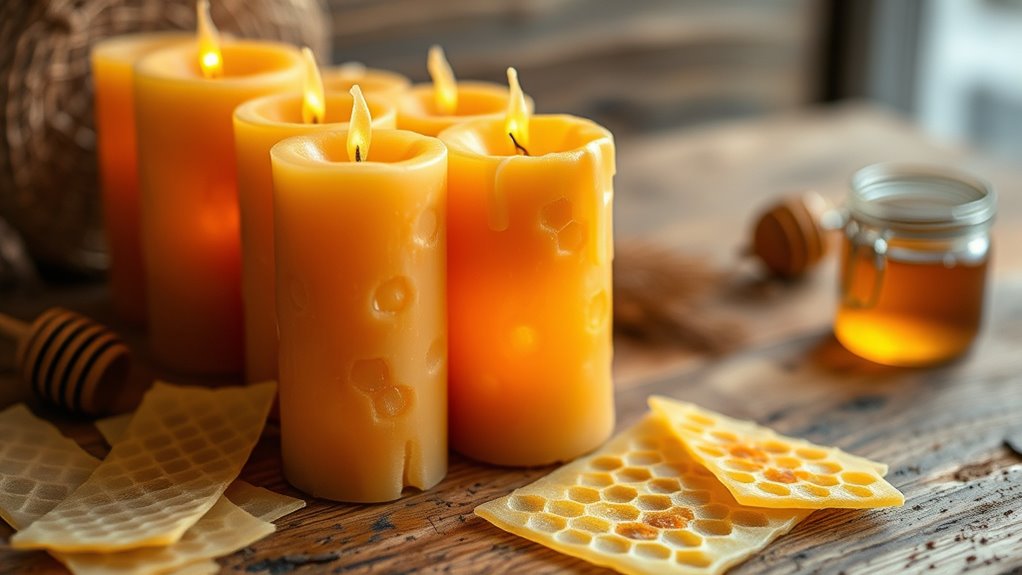
Have you ever wondered how to create your own natural, fragrant candles at home? Making homemade beeswax candles is a rewarding way to enjoy clean-burning, eco-friendly illumination. To start, understanding the importance of a good scent profile and candle safety is vital. Beeswax naturally emits a subtle honey aroma, but you can enhance its scent with essential oils if you desire a more pronounced fragrance. When blending scents, aim for harmonious combinations that complement the natural beeswax aroma, creating a balanced and inviting scent profile. Remember, adding too much essential oil can affect candle safety by increasing the risk of flammability or uneven burning, so always follow recommended guidelines.
Creating a cozy, safe environment for your candle-making process is fundamental. Before you begin, ensure your workspace is clear of clutter and flammable materials. Use a double boiler or a dedicated melting pot to gently melt the beeswax, avoiding direct heat that could ignite the wax or cause uneven melting. As you work, keep a fire extinguisher nearby and never leave melting wax unattended. When pouring the melted beeswax into your prepared containers, make sure they are heat-resistant and stable. Always handle hot wax with care, using tools like tongs or heat-resistant gloves to prevent burns. Proper candle safety isn’t just about preventing accidents; it also ensures your candles burn cleanly and evenly, maximizing their lifespan and safety during use.
Once your candles have cooled and hardened, trim the wicks to about a quarter inch for a safe, steady burn. A well-trimmed wick prevents excessive smoking or flickering, which could compromise candle safety. When lighting your beeswax candles, do so in a draft-free area to avoid uneven burning or potential accidents. Keep the candles away from children and pets, and never leave them unattended while burning. Maintaining proper burn times and ensuring your candles are free of debris or excess wick length helps promote a clean, safe burn, giving you peace of mind and a beautiful ambiance. Additionally, choosing the right wick size is crucial for optimal burning performance.
Frequently Asked Questions
How Long Does a Homemade Beeswax Candle Typically Last?
A homemade beeswax candle typically lasts around 8 to 12 hours per ounce of wax, giving you a good burn time. Your candle’s lifespan depends on factors like wick size and burn habits, but generally, it burns cleaner and longer than paraffin candles. To maximize your candle’s lifespan, trim the wick before each use and avoid burning it for too long. Enjoy your eco-friendly, long-lasting creation!
Can Beeswax Candles Be Used Outdoors Safely?
Like a brave ship steering stormy seas, your beeswax candles can shine outdoors, but you need to respect nature’s moods. Outdoor safety depends on weather considerations—avoid placing them in gusty winds or rain, as the flame may flicker or extinguish. Set them on stable, non-flammable surfaces, and keep a watchful eye. With proper precautions, your beeswax candles can beautifully illuminate your outdoor moments.
Are Homemade Beeswax Candles Suitable for People With Allergies?
Homemade beeswax candles can be suitable for people with allergies because of their natural benefits and allergy safety. Since beeswax is a natural product, it often produces fewer irritants compared to synthetic candles. However, if you have severe allergies to bees or bee products, it’s best to consult with a healthcare professional first. When made properly, beeswax candles burn cleanly and can create a healthier indoor air environment.
What Are the Best Scents to Add to Beeswax Candles?
Imagine a garden bursting with vibrant blooms—now, pick your favorite scent. You should add essential oils or natural fragrances like lavender, citrus, or eucalyptus to your beeswax candles. These enhance aroma without harsh chemicals, creating a calming or invigorating atmosphere. The best scents blend naturally, so choose ones that uplift or soothe you, making your candle lighting a sensory escape, not a chemical cocktail.
How Do I Store Beeswax Candles to Prevent Melting?
To prevent your beeswax candles from melting, store them in a cool, dry place with stable temperature control. Use storage tips like keeping them away from direct sunlight and heat sources. You should also place your candles in an airtight container or wrapping to protect them from humidity. Maintaining a temperature below 80°F (27°C) helps keep them firm and prevents melting, ensuring they stay in perfect condition until you’re ready to use them.
Conclusion
As you light your homemade beeswax candles, imagine the gentle glow of a sunset over a peaceful meadow, flickering softly like a warm embrace. Just as beeswork tirelessly for their hive, your careful craftsmanship creates a clean-burning flame that nurtures your space and soul. With each burn, you’re not only illuminating your home but also echoing nature’s harmony. Embrace this simple joy, and let your candles be a beacon of purity and tranquility in your life.