
To effectively control odors in your grow room, focus on strong airflow and proper ventilation rather than relying mainly on cover scents. Moving air carries away excess moisture, disperses odors, and prevents stale air from lingering. Proper circulation, like exhaust fans and oscillating fans, work with filtration systems to neutralize smells. Cover scents and sprays are temporary fixes that can’t replace good airflow. Keep these techniques in mind, and you’ll discover much more about keeping your grow room fresh.

Get home appliances delivered free with Prime
- Fast, free delivery on millions of items
- Prime Video, Amazon Music and more included
- Member-only deals all year
Key Takeaways
- Proper air circulation removes stale air and reduces odor buildup more effectively than relying solely on cover scents.
- Ventilation with exhaust fans and outside venting ensures continuous odor removal and fresh airflow.
- Strong airflow enhances the effectiveness of carbon filters, neutralizing odors before they escape.
- Cover scents and sprays mask odors temporarily but do not address the root cause without good airflow.
- Integrating consistent air movement improves overall grow room environment and supports healthier plants with less odor.

If you’re growing plants indoors, controlling odors is essential to keep your grow room discreet and fresh. While many believe that using scent covers or air fresheners is enough, the real key lies in effective air movement. Proper airflow prevents odor build-up and ensures your plants thrive. It’s not just about masking smells; it’s about managing the air in your grow space to keep odors at bay.
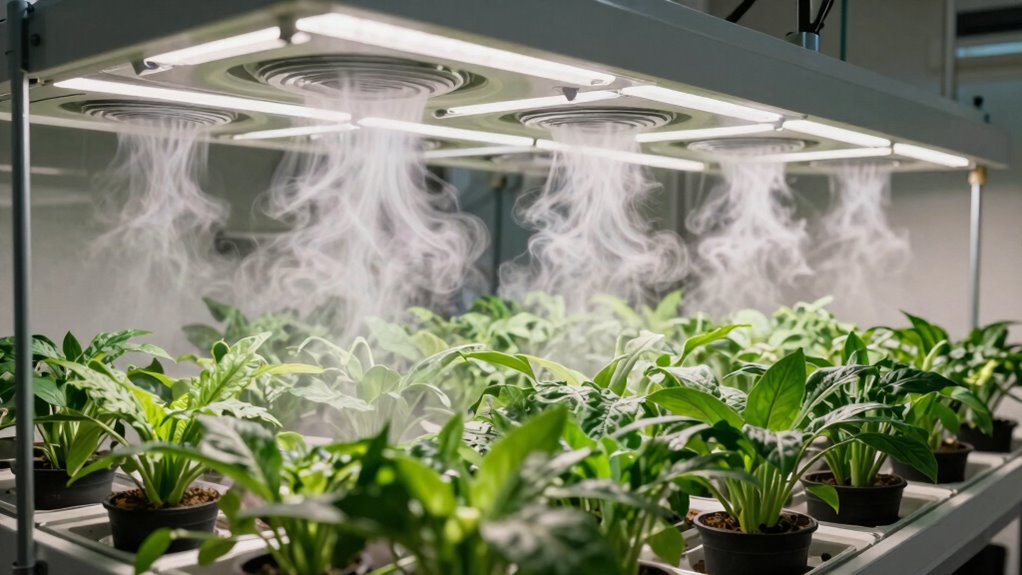
First, focus on air circulation. Good air movement helps carry away excess moisture, reduce mold risk, and, importantly, disperse strong odors before they become noticeable. Use oscillating fans or inline exhaust fans that vent directly outside. These create a steady flow, pulling stale air from your grow room and replacing it with fresh air. When air moves efficiently, odors are less concentrated, making it harder for them to escape and alert others to your grow operation. Ensuring consistent air exchange helps maintain a balanced environment and minimizes odor issues. Regularly monitoring and adjusting your ventilation setup can optimize airflow efficiency for better odor control.
Lighting optimization also plays a role in odor control. Proper lighting encourages healthy plant development, which in turn influences plant nutrition. Healthy, well-fed plants are less stressed and produce fewer odors associated with plant stress or deficiencies. LED grow lights or high-intensity discharge lamps, used correctly, can promote vigorous growth without generating excessive heat or odors. When your plants are healthier, they’re less likely to emit strong odors that are difficult to manage.
Another common misconception is that adding carbon filters or odor-neutralizing sprays can alone solve odor problems. While these tools help, they are most effective when paired with a strong airflow system. A carbon filter attached to your exhaust fan is excellent for filtering odors out of the air before it exits your grow room. However, without sufficient air movement, stale air will linger, making odor neutralization less effective. The importance of air movement in odor control cannot be overstated, as it helps maintain a continuous flow that prevents odors from settling and becoming noticeable. Additionally, understanding the role of ventilation strategies can help optimize odor management in your space. Incorporating proper airflow techniques ensures consistent air exchange, which is crucial for odor control and overall plant health.
inline exhaust fan for grow room
As an affiliate, we earn on qualifying purchases.
As an affiliate, we earn on qualifying purchases.
Frequently Asked Questions
How Often Should I Replace My Air Filters?
You should replace your air filters every 1 to 3 months, depending on usage and odor levels. Regular air filter maintenance guarantees ideal odor absorption techniques and air quality. Keep an eye on signs of clogging or reduced airflow, which indicate it’s time for a change. Properly maintained filters help control odors effectively and keep your grow room fresh. Don’t forget to check manufacturer recommendations for specific replacement intervals.
What Are the Best Fans for Odor Control?
Think of your fans as the lungs of your grow room, controlling airflow techniques and scent masking. The best fans are inline exhaust fans with high CFM ratings, like the Vortex or AC Infinity models, which efficiently remove odors while maintaining proper circulation. These fans create a steady breeze, dispersing scents and preventing buildup, ensuring your grow space stays fresh without relying solely on cover scents.
Can Plants Naturally Absorb Odors Effectively?
Plants can absorb odors naturally through their leaves and roots, offering some level of natural filtration. However, relying solely on plant absorption isn’t enough for strong or persistent smells. You should combine plant-based methods with good air circulation, like fans, to effectively control odors. While plants help, proper ventilation remains essential for maintaining a fresh environment and preventing odor buildup in your grow room.
Are Activated Carbon Filters Necessary for Small Grow Rooms?
Activated carbon filters aren’t strictly necessary for small grow rooms if you focus on proper air movement and odor control. Your choice of plant strain can also influence odor levels, with some strains emitting less scent. For DIY odor solutions, consider using ventilation fans and strategic plant placement. Combining these methods can effectively manage odors without relying solely on activated carbon filters, making your setup more affordable and easier to maintain.
How Do Temperature and Humidity Affect Odor Control?
Temperature regulation and humidity management are essential for effective odor control. When temperatures are too high, smells can become more intense and spread faster; keeping temps in check minimizes this. Proper humidity levels prevent mold and odors from lingering. By maintaining ideal temperature and humidity, you support your air movement system, helping to disperse odors efficiently and keep your grow room smelling fresh without relying solely on cover scents.
oscillating fan for indoor grow tent
As an affiliate, we earn on qualifying purchases.
As an affiliate, we earn on qualifying purchases.
Conclusion
Remember, controlling odor in your grow room isn’t about masking scents with covers; it’s about mastering air movement. Picture your space as a gentle breeze, sweeping away strong smells before they settle. With proper fans and ventilation, you’ll create a fresh, clean environment—like a cool, invigorating wind on a warm day. Keep the air flowing, and you’ll enjoy your thriving plants without the worry of lingering odors.
As an affiliate, we earn on qualifying purchases.
As an affiliate, we earn on qualifying purchases.
NFL season / tailgating Picks
team gear
As an affiliate, we earn on qualifying purchases.