Your ceiling fan can boost your air purifier’s coverage by promoting even airflow and preventing hot or cold spots. However, if placed poorly or operated at high speeds, it can create turbulence and stir up dust, reducing purifier efficiency. Proper placement and gentle, steady airflow are key for best results. Adjusting fan speed and position can help the purifier do its best work. Keep exploring to find out how to get the most from both for cleaner indoor air.

Get home appliances delivered free with Prime
- Fast, free delivery on millions of items
- Prime Video, Amazon Music and more included
- Member-only deals all year
Key Takeaways
- Properly positioned ceiling fans promote even airflow, enhancing purifier coverage and efficiency throughout the room.
- High fan speeds or turbulent airflow can disrupt purifier operation and reduce air quality.
- Regular cleaning of fan blades prevents dust flicked into the air, helping maintain purifier effectiveness.
- Adjusting fan speed and direction optimizes airflow patterns, ensuring cleaner air reaches all areas.
- Coordinated use of fans and purifiers improves indoor air quality by balancing airflow and dust control.
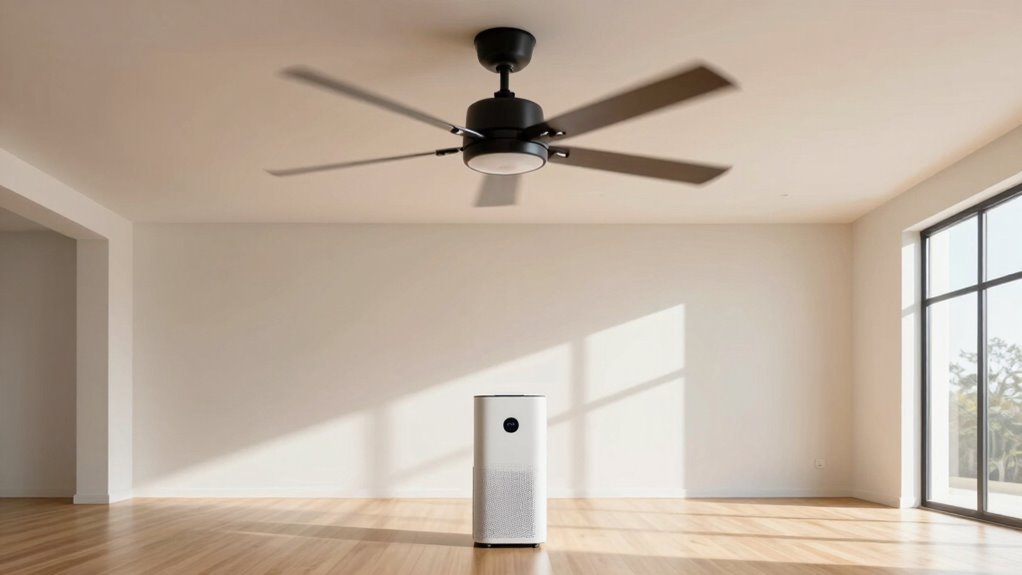
Ceiling fans and air purifiers are essential tools for maintaining a comfortable and healthy indoor environment. When used together, they can notably improve air quality, but if not coordinated properly, they can also hinder each other’s effectiveness. One key factor to evaluate is airflow efficiency. A ceiling fan that moves air effectively helps distribute conditioned air evenly throughout the room, preventing hot or cold spots. However, if the fan’s blades are too fast or poorly positioned, they can create turbulent airflow that disrupts the purifier’s ability to circulate and filter air effectively. Ideally, you want a fan that complements your purifier’s operation by promoting steady, gentle airflow that enhances circulation without causing unnecessary disturbance. Proper airflow management ensures that both devices work synergistically to improve indoor air quality. Dust circulation is another critical aspect to watch out for. Ceiling fans constantly move air, which can stir up dust particles that have settled on surfaces. If your fan blades are dirty or if the fan is spinning too quickly, dust gets thrown into the air, making it harder for your purifier to do its job. This not only reduces the purifier’s efficiency but can also worsen indoor air quality, especially for allergy sufferers or anyone sensitive to airborne dust. Regularly cleaning your fan blades ensures dust isn’t flicked into the air unnecessarily, allowing the purifier to focus on removing pollutants rather than battling airborne dust particles stirred up by inefficient airflow. Additionally, understanding airflow patterns can help you better position your ceiling fan and purifier for optimal coverage. When airflow is optimized, your purifier’s coverage expands, and it can work more efficiently across the entire space. Proper airflow direction can significantly influence how well your purifier performs by guiding the movement of air toward or away from it. To achieve the best results, consider the fan’s speed and placement, as these factors directly impact the overall circulation and effectiveness of your air cleaning setup. It is also beneficial to consider the room’s size and layout, as these elements will influence how airflow should be directed for maximum efficiency. In addition to cleaning, think about the placement and speed of your ceiling fan relative to your air purifier. If the fan is positioned directly above or near the purifier, it might create uneven airflow patterns that limit the purifier’s coverage. Adjusting the fan’s speed or direction can help create a more uniform circulation pattern, ensuring cleaner air reaches all parts of the room. When airflow is optimized, your purifier’s coverage expands, and it can work more efficiently across the entire space. Conversely, if the fan is set too high or if its blades are angled improperly, it might push unfiltered air away from the purifier or cause inconsistent circulation, reducing overall effectiveness. Ultimately, your goal is to balance airflow efficiency and dust circulation to maximize your purifier’s coverage. Properly maintaining your ceiling fan and understanding how it interacts with your air purifier help you achieve a healthier, more comfortable indoor environment. When these tools work together thoughtfully, you’ll enjoy cleaner air, less dust, and a more consistent climate in your space.
air purifier ceiling fan placement
As an affiliate, we earn on qualifying purchases.
As an affiliate, we earn on qualifying purchases.
Frequently Asked Questions
How Do Ceiling Fans Affect Indoor Air Circulation?
Ceiling fans substantially impact your indoor air circulation by influencing airflow patterns and ventilation efficiency. When properly used, they help distribute air evenly, reducing stagnant spots and improving overall ventilation. However, if misaligned or used improperly, they can disrupt airflow, causing uneven circulation and reducing filtration effectiveness. To maximize benefits, guarantee your ceiling fan complements your purifier’s airflow, promoting efficient air exchange and cleaner indoor air.
Can Ceiling Fans Cause Dust to Spread More?
Yes, ceiling fans can cause dust redistribution, spreading dust particles throughout your room. As they spin, they stir up settled dust, making it more noticeable and potentially worsening allergies. Fan noise might also disturb you while dust is being redistributed. To minimize this, regularly clean your ceiling fan blades and guarantee good air filtration. This way, you reduce dust spread and keep the air cleaner and quieter.
Are Certain Ceiling Fan Designs Better for Air Purifier Efficiency?
Studies show that proper airflow can improve air purifier efficiency by up to 20%. You’ll want to choose ceiling fan designs that optimize air circulation—look for models with adjustable speeds and wide blades for better coverage. Fan aesthetics and ceiling design matter too; sleek, unobtrusive fans blend well and promote even airflow, reducing dust spread and enhancing purifier performance. Select a fan that complements your space while maximizing its airflow benefits.
Do Ceiling Fans Increase Energy Consumption When Used With Purifiers?
Using ceiling fans with purifiers does increase energy consumption, but the impact is generally minimal if you run them efficiently. The combined energy impact depends on the fan’s power and how long you use it. Consider cost considerations, like electricity bills, especially if you run fans constantly. To optimize energy use, set ceiling fans to a low or medium speed and turn them off when not needed, balancing comfort and efficiency.
How Should I Position My Ceiling Fan for Optimal Purifier Coverage?
Ever wonder how to maximize your purifier’s coverage? You should position your ceiling fan with blades oriented to promote airflow across the room, ideally in a direction that encourages air circulation without creating drafts. Keep ceiling height considerations in mind—installing the fan at a suitable height helps distribute purified air evenly. By doing this, you guarantee your purifier works efficiently, while the fan enhances overall air quality without disrupting circulation.
ceiling fan with adjustable speed
As an affiliate, we earn on qualifying purchases.
As an affiliate, we earn on qualifying purchases.
Conclusion
To optimize your purifier’s performance, position your ceiling fan properly and prevent poor air circulation. Keep the fan’s blades clean and set it to a gentle, consistent speed. By balancing these basic but essential steps, you’ll boost your purifier’s power, banish airborne allergens, and breathe effortlessly. Don’t let poor placement or careless circulation cancel your cleaning efforts—craft a clean, comfortable, and carefree space by coordinating your ceiling fan and purifier with care.
As an affiliate, we earn on qualifying purchases.
As an affiliate, we earn on qualifying purchases.
Fall yard work Picks
leaf blowers
As an affiliate, we earn on qualifying purchases.