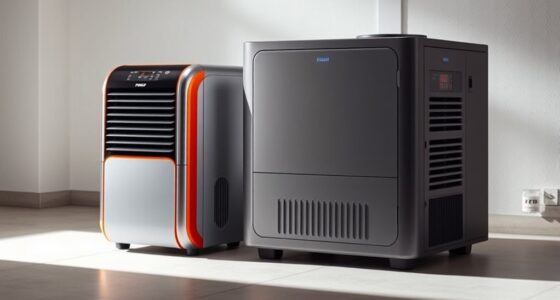
A sump pump and a dehumidifier handle different moisture issues in your home. The sump pump prevents flooding by removing water from heavy rains or rising groundwater, keeping your basement dry and preventing structural damage. The dehumidifier, on the other hand, controls indoor humidity levels, preventing mold and surface damage. Together, they offer thorough protection for your home’s foundation and air quality. Keep exploring to discover how these devices work seamlessly to safeguard your space.
Listen free for 30 days with Audible
Thousands of audiobooks and originals — cancel anytime.
As an affiliate, we earn on qualifying purchases.
Key Takeaways
- A sump pump prevents basement flooding caused by external water infiltration during heavy rains or groundwater rise.
- A dehumidifier reduces indoor humidity to prevent mold growth and surface moisture issues inside the home.
- Sump pumps address external water issues; dehumidifiers focus on internal moisture control.
- Using both devices provides comprehensive protection against different moisture-related problems.
- Regular maintenance of both ensures effective operation and long-term moisture management.

Are moisture problems in your home causing concern? If so, you’re not alone. Excess humidity and water intrusion can lead to serious issues if not addressed properly. One effective way to combat these problems is by using a sump pump and a dehumidifier, each targeting different aspects of moisture control. When it comes to basement waterproofing, a sump pump plays an essential role. It helps keep water from accumulating in your basement, especially during heavy rains or when groundwater levels rise. By installing a sump pump, you guarantee that water is quickly removed from the area, preventing flooding and reducing the risk of water damage. This is vital for maintaining a dry, stable environment, and it’s a key part of effective basement waterproofing. Without proper water removal, you might face long-term issues like structural damage or mold growth, which can be costly and difficult to remedy.
On the other hand, a dehumidifier addresses indoor moisture levels that often go unnoticed but can have just as damaging effects. High humidity fosters mold growth, which not only causes health issues but also damages your home’s surfaces. Mold prevention becomes much easier when you control the humidity inside your home. A dehumidifier reduces excess moisture in the air, creating an environment less hospitable to mold spores. It’s especially useful in areas prone to dampness, like bathrooms, laundry rooms, or basements. Unlike a sump pump, which deals primarily with external water intrusion, a dehumidifier manages the indoor climate, making sure humidity stays within a healthy range. Proper moisture management is essential for maintaining a healthy living environment. Consistent use of a dehumidifier can markedly improve air quality and protect your family’s health.
While these two devices serve different purposes, they work best together. A sump pump prevents water from seeping into your home, helping with basement waterproofing and avoiding flood damage. The dehumidifier, on the other hand, keeps indoor air dry, preventing mold buildup and improving overall comfort. By addressing both external water problems and internal humidity, you develop a complete moisture control strategy. This dual approach not only preserves your home’s structural integrity but also safeguards your health. Regular maintenance of both devices ensures they work efficiently. If you’re serious about protecting your home from moisture issues, investing in a sump pump and a dehumidifier is a wise move—each tackling different, yet equally important, moisture problems.
sump pump for basement waterproofing
As an affiliate, we earn on qualifying purchases.
As an affiliate, we earn on qualifying purchases.
Frequently Asked Questions
Can a Sump Pump Prevent All Types of Basement Flooding?
A sump pump can’t prevent all types of basement flooding, but it’s a key part of effective flood prevention strategies. It works well against water seepage from groundwater or heavy rains, helping with basement waterproofing. However, if flooding results from plumbing issues or sewer backups, you’ll need additional solutions. Combining a sump pump with other flood prevention measures ensures thorough protection for your basement against various water threats.
How Energy-Efficient Are Modern Dehumidifiers?
Modern dehumidifiers are like efficient workers, using less energy to do more. They typically have low energy consumption, making them cost-effective and environmentally friendly. Many models are Energy Star rated, meaning they minimize environmental impact while maintaining performance. You’ll find they use advanced technology to keep your basement dry without wasting electricity, helping you save money and reduce your carbon footprint.
What Maintenance Do Sump Pumps Require Over Time?
You need to regularly check your sump pump’s maintenance requirements to guarantee it runs smoothly. Over time, the sump pump lifespan can vary, but routine maintenance like cleaning the pump and removing debris helps extend its life. You should also test the float switch and inspect the discharge pipe annually. Replacing the sump pump every 5-10 years, depending on usage and condition, keeps it reliable during heavy rain or flooding.
Are Dehumidifiers Safe for Pets and Children?
Think of a dehumidifier as a gentle raincloud that keeps your home dry and comfy. It’s generally safe for pets and children, but you should always check for pet safety and dehumidifier risks. Make sure it’s placed out of reach, and keep an eye on it to prevent electrical hazards. With proper use, it’s a helpful tool that maintains a safe environment without posing harm to your loved ones.
Can These Devices Be Used Together Effectively?
Yes, you can use a sump pump and a dehumidifier together effectively for humidity control. They complement each other by addressing different moisture issues; the sump pump removes excess water from the basement, while the dehumidifier reduces airborne humidity. Confirm device compatibility by placing them in appropriate areas and maintaining proper airflow. Using both helps create a dry, comfortable environment and prevents mold growth or water damage.
dehumidifier for mold prevention
As an affiliate, we earn on qualifying purchases.
As an affiliate, we earn on qualifying purchases.
Conclusion
By pairing a sump pump with a dehumidifier, you effectively combat basement dampness and moisture dilemmas. This dynamic duo defends your home from water woes while drying out damp spaces. Don’t delay; dial in your defense against dampness today. With these two tools working together, you’ll win the war against wetness and enjoy a dry, comfortable, and worry-free home. Take action now—protect your property with power and peace of mind!
As an affiliate, we earn on qualifying purchases.
portable dehumidifier for basement
As an affiliate, we earn on qualifying purchases.
As an affiliate, we earn on qualifying purchases.
Fall Picks
fall essentials
As an affiliate, we earn on qualifying purchases.