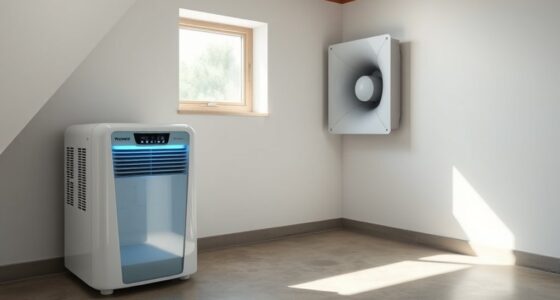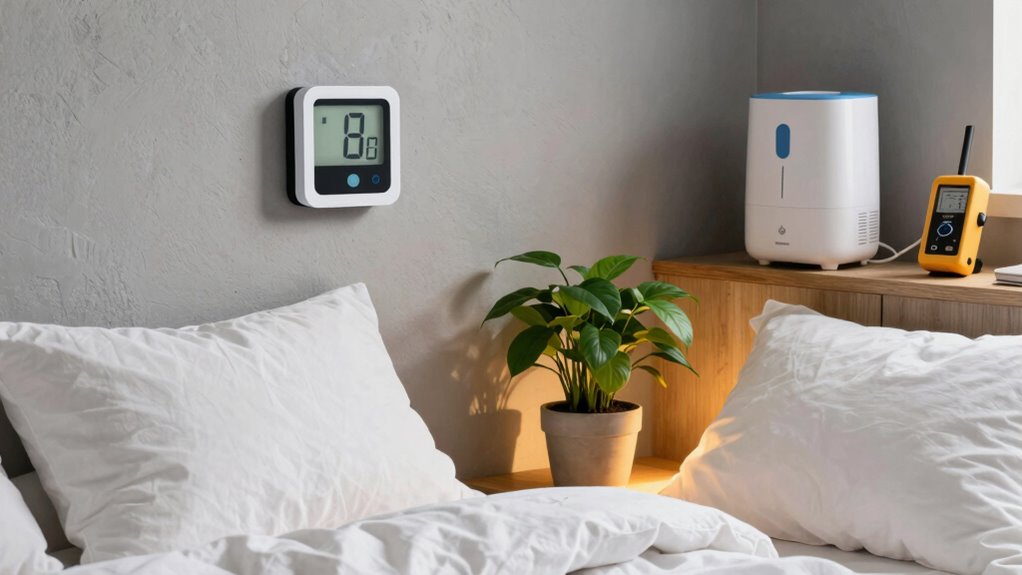
To set the right humidity in your basement and bedroom, aim for 30-50%, ideally 40-50% for comfort and safety. Use a hygrometer to measure moisture levels accurately and place it away from vents and sunlight. Adjust humidity with a dehumidifier in damp areas or a humidifier if things get too dry. Maintaining steady levels helps prevent mold, dust mites, and discomfort—keep exploring to learn how to keep these levels just right.
Key Takeaways
- Use a calibrated hygrometer to accurately measure humidity levels in basements and bedrooms.
- Maintain indoor humidity between 30-50% for optimal comfort and mold prevention.
- In damp areas like basements, use dehumidifiers to keep humidity below 50%.
- In dry bedrooms, add humidifiers to raise humidity to the recommended range.
- Regularly monitor and adjust devices to sustain consistent, healthy humidity levels.
Why Humidity Levels Matter in Your Basement and Bedroom
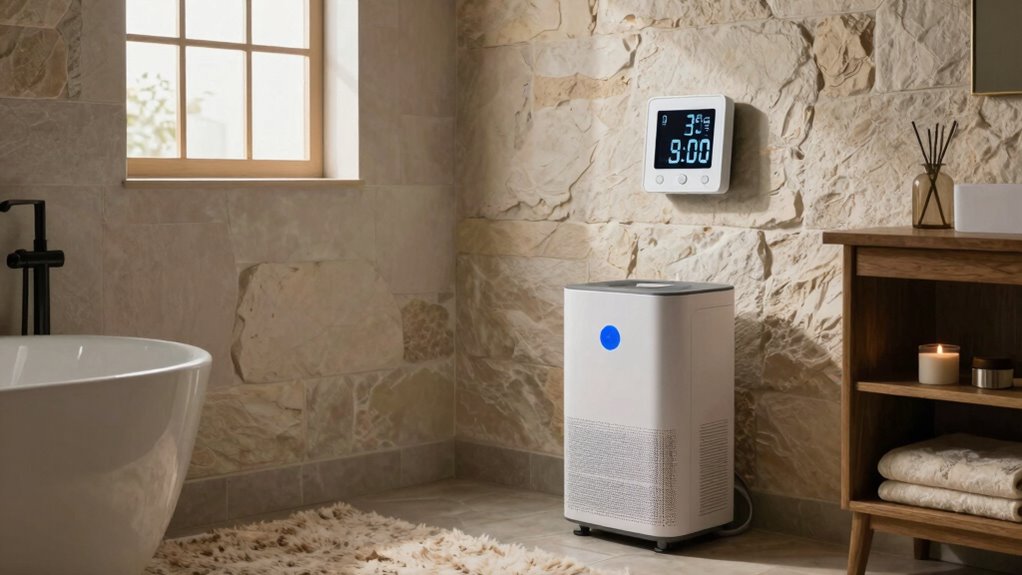
Maintaining proper humidity levels in your basement and bedroom is essential because it directly affects your health, comfort, and the condition of your home. When humidity is too high, mold prevention becomes difficult, increasing the risk of mold growth that can harm your respiratory health. Proper humidity also improves air quality, reducing dust mites and allergens that thrive in damp environments. Conversely, low humidity can cause dry skin, irritated sinuses, and discomfort. Keeping humidity in the ideal range helps create a healthier, more comfortable living space and protects your home’s structure. By paying attention to moisture levels, you prevent mold buildup, improve air quality, and ensure a safer environment for you and your family. Microplastics in dust can also be reduced by controlling humidity, further enhancing your indoor air quality. Maintaining optimal humidity levels also discourages the proliferation of microorganisms, contributing to a cleaner, healthier environment indoors. Additionally, proper humidity control can help prevent structural damage caused by excess moisture or dryness, safeguarding your home’s integrity. Proper humidity levels also help in managing indoor air pollutants, leading to a healthier breathing environment.
How to Measure Indoor Humidity Accurately
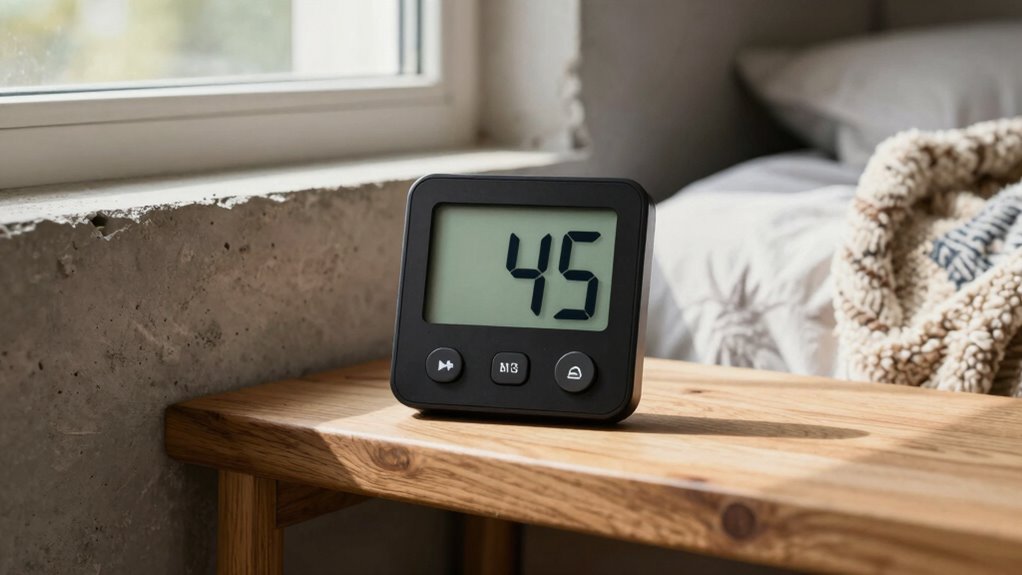
To guarantee your basement and bedroom stay at the right humidity levels, you need an accurate way to measure moisture in the air. A hygrometer is your best tool for this. To ensure precise readings, regularly calibrate your hygrometer, following the manufacturer’s instructions. Proper calibration prevents inaccurate data, which can lead to mold growth or discomfort. When measuring humidity, place the hygrometer away from direct sunlight, vents, or moisture sources to get an accurate reading. Consistent monitoring helps you maintain ideal levels and prevents mold prevention issues. Investing in a reliable hygrometer and keeping it calibrated gives you confidence in your indoor humidity management, protecting your home’s health and comfort. Additionally, understanding content formats can help you choose the most effective device for your needs. Knowing the importance of calibration emphasizes why regular maintenance of your hygrometer is essential for accurate measurements. Maintaining proper humidity levels is crucial for preventing mold, allergies, and other indoor air quality problems, making accurate measurements even more vital. Regularly checking your hygrometer’s accuracy and reliability ensures you can trust the readings and take appropriate action when needed. Incorporating proper placement techniques can further improve the accuracy of your humidity readings and ensure your home stays comfortable.
What Is the Right Humidity Level for Your Home?

Finding the right humidity level in your home is essential for comfort and health. Keeping it between 30-50% helps prevent issues like mold and supports radon mitigation efforts. Proper humidity control is key to achieving this balance and ensuring a safe indoor atmosphere. Additionally, understanding air quality management can help optimize indoor conditions effectively. Maintaining the correct humidity also influences the overall indoor environmental quality, contributing to a healthier living space. Here’s a quick overview:
| Humidity Level | Effect |
|---|---|
| 30-40% | Reduces mold, supports radon mitigation |
| 40-50% | Ideal comfort, prevents condensation |
| Above 50% | Promotes mold growth, triggers health issues |
Stay within this range to protect your home and loved ones efficiently.
Simple Ways to Adjust Humidity Using Dehumidifiers and Humidifiers
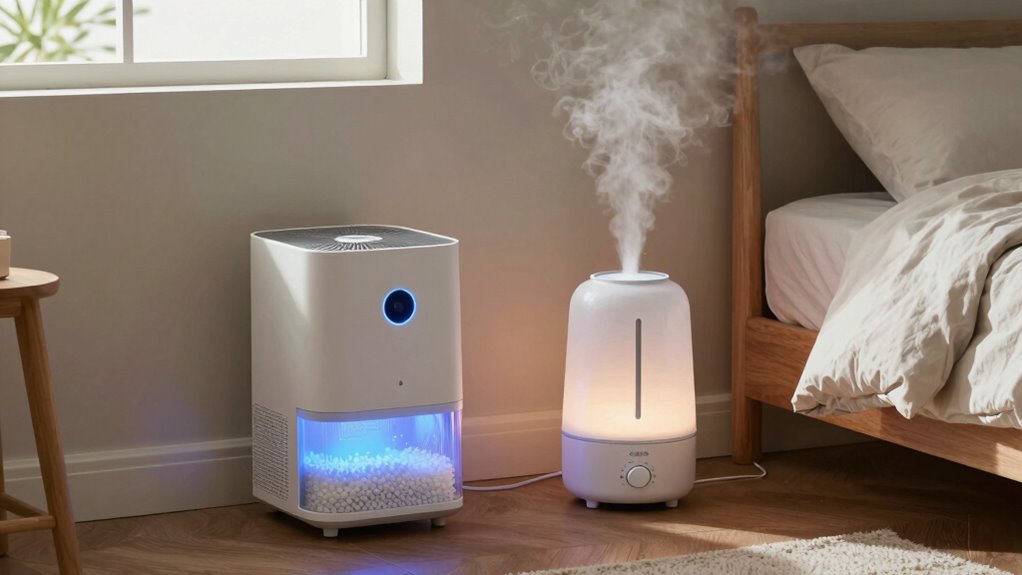
Adjusting humidity levels in your home is straightforward with the right equipment. Using a dehumidifier helps reduce excess moisture, preventing mold growth and improving allergen control. Place it in damp areas like basements, and set it to maintain your ideal humidity level. Conversely, a humidifier adds moisture when the air is too dry, which can ease respiratory issues and keep wood from cracking. Keep an eye on your home’s humidity with a hygrometer to avoid overcorrecting. Regularly clean your devices to prevent mold and bacteria buildup. Properly calibrating humidity controls ensures that your devices operate effectively and maintain the desired moisture levels. Monitoring your indoor humidity levels is essential for maintaining optimal air quality and preventing issues like mold and dust mites. Controlling air moisture is key to creating a comfortable and healthy environment. Understanding symptom indicators can help you recognize when your home’s humidity is too high or too low. By regulating moisture with these simple tools, you create a healthier environment, reduce mold risk, and improve allergen control. Proper adjustment ensures comfort and safety without guesswork.
How to Keep Humidity Levels Steady for Long-Term Comfort

Maintaining consistent humidity levels over time requires more than just occasional adjustments with a dehumidifier or humidifier. To achieve long-term comfort, you need to monitor humidity regularly and make small, ongoing changes. Proper airflow and ventilation help prevent mold growth, which thrives in fluctuating moisture conditions. Using a humidistat can keep humidity steady, reducing the risk of mold and improving allergy relief by minimizing dust mites and mold spores. Consider sealing leaks and insulating walls to prevent moisture intrusion. Monitoring humidity is essential for maintaining a healthy environment and avoiding problems caused by moisture fluctuations. Regularly inspecting your home’s ventilation systems can also help maintain optimal humidity levels. Additionally, installing commercial kitchen equipment such as dehumidifiers designed for larger spaces can aid in controlling moisture more effectively. Proper air circulation plays a crucial role in preventing stagnant air pockets that can lead to moisture buildup. Implementing dehumidification strategies can further enhance your ability to manage humidity levels consistently. Consistent humidity control not only safeguards your home’s structure but also creates a healthier environment. By staying vigilant and making gradual adjustments, you’ll maintain a stable, comfortable space free from the hazards of mold and allergens.
Frequently Asked Questions
Can High Humidity Cause Mold Growth in My Home?
Yes, high humidity can cause mold growth in your home. When humidity levels are above 60%, mold spores thrive, leading to potential health issues and property damage. To prevent mold, focus on humidity control by using dehumidifiers and ensuring proper ventilation. Regularly monitor your indoor humidity, especially in basements and bathrooms, to keep it in the most suitable range for mold prevention.
How Does Humidity Affect Allergy Symptoms Indoors?
Did you know that maintaining proper indoor humidity levels can reduce airborne allergens by up to 50%? High humidity can worsen allergy symptoms by encouraging mold, dust mites, and mildew growth, while low humidity dries out nasal passages, making you more sensitive. Humidity control helps keep these allergens in check, easing your allergy symptoms. By managing your home’s humidity, you create a healthier environment and breathe easier every day.
Are There Health Risks Associated With Low Indoor Humidity?
Low indoor humidity can pose health risks like skin irritation and increased susceptibility to indoor mold growth. When the air is too dry, your skin may become itchy and cracked, and mold spores can thrive on surfaces, worsening allergies or respiratory issues. To protect yourself, maintain proper humidity levels, ideally between 40-50%, which helps prevent indoor mold and keeps your skin healthy and comfortable.
What’s the Best Way to Prevent Humidity From Fluctuating Seasonally?
Think of your home as a ship steering through seasonal shifts. To prevent humidity from fluctuating, you should regularly maintain your dehumidifier, checking filters and emptying tanks. Also, calibrate your humidity sensors to guarantee accurate readings. These steps help stabilize indoor moisture levels year-round, much like adjusting the sails to steady your course through changing weather. Consistent maintenance and sensor calibration keep your home’s environment comfortable and healthy.
How Often Should I Recheck My Home’s Humidity Levels?
You should recheck your home’s humidity levels at least once a month. Use humidity sensors to monitor consistent readings and make certain your dehumidifier is working properly. Regular dehumidifier maintenance, like cleaning filters and checking for leaks, helps keep humidity stable. If you notice fluctuations or high humidity, adjust your system accordingly and recheck more frequently until levels stabilize. This proactive approach keeps your home comfortable and mold-free.
Conclusion
So, now that you know the secret to perfect humidity, go ahead—stop guessing and start controlling. No more moldy surprises or dry-as-a-desert nights. With a little effort, you’ll be the master of your home’s climate, turning your basement and bedroom into the oasis you never knew you needed. Because who wants to be a humidity roulette player when you can be the reigning champion of comfort? Take charge and breathe easy—literally.