
For most warehouses, I’d start with the TURBRO 165 Pint Commercial Dehumidifier: its high stated capacity and built-in pump suit large spaces that need continuous drainage. The MOUNTO 310 Pint LGR stands out for demanding moisture-removal jobs, while the AlorAir Storm 80X offers a more focused commercial option. The main tradeoffs are water-removal capacity, drainage and pump setup, footprint, and whether a unit’s stated coverage matches your warehouse conditions. A warehouse with high ceilings, frequent door openings, or wet stock may need a different approach from a smaller, enclosed space. Read on for the full comparison and guidance on choosing a unit that fits your building and workload.

Get home appliances delivered free with Prime
- Fast, free delivery on millions of items
- Prime Video, Amazon Music and more included
- Member-only deals all year
Complete the kit


Key Takeaways
- The listed capacity range is wide: the MOUNTO 310 Pint LGR and 320-pint commercial unit target heavier moisture loads than lower-capacity choices such as the 113-pint AlorAir Sentinel HD55.
- Drainage design separates convenient daily operation from hands-on emptying: several picks include pumps, while some Waykar models pair a drain hose with a tank, so buyers should verify the exact drainage arrangement.
- Coverage claims vary from 7,000 to 9,000 square feet and are not directly interchangeable: ceiling height, air leakage, temperature, and moisture sources can change what a warehouse needs.
- Not every product is equally warehouse-focused: the Sentinel HD55 is described for crawlspaces, making it a more specialized fit than larger units marketed for industrial spaces.
- The lineup favors matching the machine to the moisture load, not choosing the biggest number: a high-capacity model may be unnecessary for a smaller, controlled area, while a modest unit may struggle with persistent wet conditions.
| Waykar 150 Pint 7000 Sq.Ft Dehumidifier with Drain Hose & Tank | 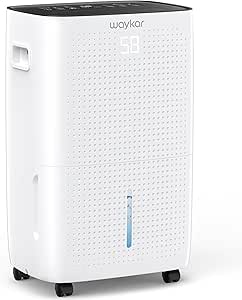 | Best for Flexible Everyday Warehouse Control | Capacity: 150 pints per day | Stated coverage: 7,000 sq. ft. | Tank capacity: 8 L (2.11 gallons) | VIEW ON AMAZON | See Our Full Breakdown |
| TURBRO 165 Pint Commercial Dehumidifier with Pump, Drain Hose, Industrial Use for Large Spaces up to 7,500 sq ft |  | Best for Pumped Drainage and Mobility | Capacity: 165 pints | Stated floor area: 7,500 sq. ft. | Airflow: 276 CFM | VIEW ON AMAZON | See Our Full Breakdown |
| 260 Pints Commercial Dehumidifier with Pump for Basements |  | Best for the Heaviest Moisture Loads | Capacity: 260 pints per day | Stated floor area: 8,500 sq. ft. | Airflow: 442 CFM | VIEW ON AMAZON | See Our Full Breakdown |
| Waykar 155 Pints Commercial Dehumidifier with Pump, Drain Hose, and Washable Filter for Up to 8,000 Sq. Ft. |  | Best for Lower-Power Continuous Operation | Capacity: 155 pints | Stated floor area: 7,500 sq. ft. in specs; up to 8,000 sq. ft. in title and description | Power: 520 watts | VIEW ON AMAZON | See Our Full Breakdown |
| 155 Pint Commercial Dehumidifier with Pump and Drain, Energy Star |  | Best for Energy-Conscious Pumped Drainage | Capacity: 155 pints per day | Suitable area: 7,500 sq. ft. | Airflow: 220 CFM | VIEW ON AMAZON | See Our Full Breakdown |
| 200 Pints Commercial Dehumidifier with Pump for Basements |  | Best for Mid-Size Warehouses | Capacity: 200 pints per day | Floor area: 7,500 sq ft | Dehumidification capacity: 95 liters per day | VIEW ON AMAZON | See Our Full Breakdown |
| Yaufey 155 Pints Commercial Dehumidifier with Pump for Basement and Large Rooms |  | Best for Humidity-Control Features | Capacity: 155 pints per day | Maximum area: 8,000 sq ft | Airflow: 164.7 CFM | VIEW ON AMAZON | See Our Full Breakdown |
| MOUNTO 310 Pint LGR Commercial Dehumidifier with Built-In Pump |  | Best for Restoration and Severe Moisture | Capacity: 310 pints per day | Floor area: 5,000 sq ft | Airflow: 550 CFM | VIEW ON AMAZON | See Our Full Breakdown |
| Commercial Dehumidifier with Pump, 320 Pint – Blue, Industrial for Basement & Warehouse up to 9,000 sq ft | 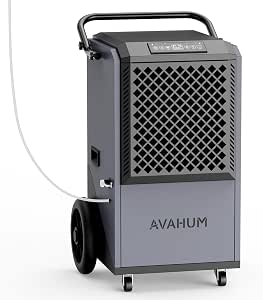 | Best for Large Warehouse Coverage | Model: AM320P | Capacity: 320 pints per day | Floor area coverage: 8,000 sq ft in specs; 9,000 sq ft in product title | VIEW ON AMAZON | See Our Full Breakdown |
| AlorAir Storm 80X 170 PPD Commercial Dehumidifier with Pump |  | Best Compact High-Capacity Pick | Capacity: 170 pints per day | Listed coverage: 2,100 sq ft | Airflow: 200 CFM | VIEW ON AMAZON | See Our Full Breakdown |
| AlorAir Sentinel HD55 Crawlspace Dehumidifier, 113 Pints Capacity, Commercial Use |  | Best for Compact Warehouse Zones | Capacity: 113 pints per day | Airflow: 120 CFM | Power: 460 watts | VIEW ON AMAZON | See Our Full Breakdown |
| ALORAIR 180 PPD Commercial Dehumidifier with Pump, 6-Year Limited Warranty |  | Best for Heavy Warehouse Moisture Loads | Capacity: 180 pints per day | Airflow: 210 CFM | Power: 646 watts | VIEW ON AMAZON | See Our Full Breakdown |
| Waykar 150 Pint Commercial Dehumidifier with Pump & Drain Hose for Basement |  | Best for Flexible Drainage and Relocation | Capacity: 150 pints per day | Airflow: 212 CFM | Power: 520 watts | VIEW ON AMAZON | See Our Full Breakdown |
| AEOCKY 8000 Sq.Ft Commercial Dehumidifier – ENERGY STAR Most Efficient 2025 |  | Best for Efficiency-Focused Warehouse Zones | Capacity at 95°F, 95% RH: 140 pints per day | Capacity at 86°F, 80% RH: 95 pints per day | Claimed coverage: 8,000 sq. ft. | VIEW ON AMAZON | See Our Full Breakdown |
| Waykar 155 Pints Commercial Dehumidifier with Drain Hose and Water Tank for Large Spaces up to 8000 sq. ft |  | Best for Simple Continuous Operation | Capacity: 155 pints per day | Airflow: 164.7 CFM | Power: 500 watts | VIEW ON AMAZON | See Our Full Breakdown |
| commercial dehumidifier for warehouse | Capacity | Dimensions | Weight | Airflow |
|---|---|---|---|---|
| Waykar 150 Pint 7000 Sq.Ft Deh | 150 pints per day | — | — | — |
| TURBRO 165 Pint Commercial Deh | 165 pints | 17" D × 12.8" W × 27.2" H | — | 276 CFM |
| 260 Pints Commercial Dehumidif | 260 pints per day | 15.8" D × 16.7" W × 32.5" H | 95 lb | 442 CFM |
| Waykar 155 Pints Commercial De | 155 pints | 13.58" D × 16.14" W × 26.18" H | 79.4 lb | 164.7 CFM |
| 155 Pint Commercial Dehumidifi | 155 pints per day | 14.2" D × 24.3" W × 15" H | 59 lb | 220 CFM |
| 200 Pints Commercial Dehumidif | 200 pints per day | 14" D × 16.6" W × 29" H | 78 pounds | — |
| Yaufey 155 Pints Commercial De | 155 pints per day | 18.11" D × 15.75" W × 26.37" H | 79.4 pounds | 164.7 CFM |
| MOUNTO 310 Pint LGR Commercial | 310 pints per day | 22" D × 23" W × 35" H | 125 pounds | 550 CFM |
| Commercial Dehumidifier with P | 320 pints per day | 20.07" × 20.86" × 31.89" | — | — |
| AlorAir Storm 80X 170 PPD Comm | 170 pints per day | 15.2" D × 14.4" W × 24.8" H | 63.9 pounds | 200 CFM |
| AlorAir Sentinel HD55 Crawlspa | 113 pints per day | 19.2 × 12.2 × 13.3 in. | 41.7 lb | 120 CFM |
| ALORAIR 180 PPD Commercial Deh | 180 pints per day | 22.8 × 13.7 × 17.3 in. | 64.3 lb | 210 CFM |
| Waykar 150 Pint Commercial Deh | 150 pints per day | 10.48 × 14.89 × 24.22 in. | 38.6 lb | 212 CFM |
| AEOCKY 8000 Sq.Ft Commercial D | — | 17.68 × 11.14 × 24.09 in. | 43.4 lb | — |
| Waykar 155 Pints Commercial De | 155 pints per day | 13.39 × 13.39 × 24.61 in. | 59.5 lb | 164.7 CFM |
More Details on Our Top Picks
Waykar 150 Pint 7000 Sq.Ft Dehumidifier with Drain Hose & Tank
I’d choose this Waykar when a warehouse needs substantial moisture removal but also benefits from straightforward humidity adjustment. Its 150-pint daily capacity and stated 7,000-square-foot coverage put it in the same general working range as the TURBRO 165 Pint, though the TURBRO offers more capacity and a built-in pump. The Waykar instead gives buyers a tank or continuous hose drainage, which helps where a floor drain or gravity route is available. Its humidity range and multiple modes also suit spaces with changing moisture needs. The tradeoff is that the included hose is only 3.3 feet, and the tank means more hands-on emptying if continuous drainage cannot be arranged. I’d rank it below pump-equipped warehouse models for unattended operation, but ahead of simpler units where adjustable controls matter.
Pros:- Rated to remove 150 pints per day for large-space moisture control
- Offers both tank collection and continuous drainage
- Adjustable humidity range supports changing storage conditions
- Multiple modes and two fan speeds provide operating flexibility
Cons:- The 3.3-foot drain hose limits placement flexibility
- The 8-liter tank requires manual emptying when continuous drainage is unavailable
- Large size and multiple settings may be excessive for smaller or simple spaces
Best for: Warehouse operators managing a large room who can use a nearby drain or periodically empty the tank and want adjustable humidity settings.
Not ideal for: Facilities needing unattended pumping to a distant drain, or sites where a large appliance and regular tank emptying are impractical.
- Capacity:150 pints per day
- Stated coverage:7,000 sq. ft.
- Tank capacity:8 L (2.11 gallons)
- Drainage:Manual tank or continuous drainage with 3.3 ft hose
- Humidity range:30%–80%
- Fan speeds:2
- Modes:Continuous, Dry, Fan
Our verdict“Choose this Waykar for a large warehouse with accessible drainage and a need for adjustable controls, but pick a pump-equipped model for more flexible unattended drainage.”
TURBRO 165 Pint Commercial Dehumidifier with Pump, Drain Hose, Industrial Use for Large Spaces up to 7,500 sq ft
For a warehouse where the drain sits away from the unit, I’d favor the TURBRO over the tank-and-hose Waykar 150 Pint because its built-in pump and 16.4-foot hose make continuous water removal more flexible. It also raises capacity to 165 pints per day and lists 276 CFM airflow, a useful combination for larger spaces that need sustained air circulation. Large wheels and handles help when the unit must move between work zones. The limitation is that the product data gives no noise figure, and its sizable body may be awkward to store or position in tight aisles. The 260 Pints Commercial Dehumidifier offers considerably more extraction for more demanding moisture loads, but this TURBRO is the more moderate choice when drainage reach and mobility matter more than maximum capacity.
Pros:- 165-pint daily capacity suits large commercial spaces
- Built-in pump and 16.4-foot hose support flexible drainage
- Large wheels and handles aid movement around a facility
- 276 CFM airflow is specified for comparing air movement
Cons:- No noise-level specification is provided
- Large, heavy form may be difficult to store or maneuver in tight areas
- Offers less extraction capacity than the 260 Pints Commercial Dehumidifier
Best for: Warehouse teams that need a mobile unit with a pump to send collected water to a drain some distance away.
Not ideal for: Very damp, high-volume industrial spaces that need the lineup’s highest extraction capacity, or compact sites with little room for equipment.
- Capacity:165 pints
- Stated floor area:7,500 sq. ft.
- Airflow:276 CFM
- Drainage:Built-in pump with 16.4 ft hose
- Dimensions:17″ D × 12.8″ W × 27.2″ H
- Operation mode:Continuous
- Refrigerant:R32
Our verdict“Pick the TURBRO when a warehouse needs pumped drainage and easier repositioning without stepping up to a much higher-capacity machine.”
260 Pints Commercial Dehumidifier with Pump for Basements
When a warehouse has a serious moisture problem, I’d put this model ahead of the 155-pint Waykar and the 165-pint TURBRO: its 260-pint daily capacity and 442 CFM airflow are the strongest stated figures among these five. That extra capacity makes it the clearest fit for large, wet areas where lower-output machines may struggle to keep up. A built-in pump, automatic defrost, adjustable humidity control, and automatic shutoff add useful support for ongoing operation. The tradeoff is substantial: at 95 pounds and 1,300 watts, it demands more planning for placement, movement, and power use than the smaller options. I’d reserve it for genuinely demanding warehouse conditions rather than choosing it simply because the room is large; the Waykar 155 Pints is a lighter-duty alternative with a lower listed wattage.
Pros:- Highest stated capacity in this five-product group at 260 pints per day
- 442 CFM airflow supports substantial air movement
- Built-in pump supports automatic water removal
- Automatic defrost, adjustable humidity control, and shutoff are included
Cons:- At 95 pounds, moving it may require assistance
- Listed power draw is 1,300 watts
- Large dimensions can make placement difficult in constrained spaces
Best for: Warehouse managers dealing with heavy dampness across a large area who can accommodate a 95-pound machine and its 1,300-watt draw.
Not ideal for: Small warehouses, spaces with limited electrical capacity, or buyers whose moisture load can be handled by a lower-capacity unit.
- Capacity:260 pints per day
- Stated floor area:8,500 sq. ft.
- Airflow:442 CFM
- Power:1,300 watts
- Maximum temperature:95°F
- Dimensions:15.8″ D × 16.7″ W × 32.5″ H
- Weight:95 lb
- Features:Built-in pump, automatic defrost, automatic shutoff, adjustable humidity control, timer
Our verdict“Choose this unit for a large warehouse with a heavy moisture load; for less demanding conditions, the smaller Waykar 155 Pints is easier to justify.”
Waykar 155 Pints Commercial Dehumidifier with Pump, Drain Hose, and Washable Filter for Up to 8,000 Sq. Ft.
I’d shortlist this Waykar for a warehouse that wants a built-in pump and lower listed wattage than the other pump-equipped choices here. Its 155-pint capacity sits close to the TURBRO 165 Pint, while the listed 520-watt draw is below that model’s 860 watts and the 260 Pints unit’s 1,300 watts. That makes it a compelling fit when the moisture load is moderate and power use is part of the operating decision. The stated airflow, however, is only 164.7 CFM, and the product data gives conflicting coverage figures: the title and description say up to 8,000 square feet, while the floor-area spec says 7,500. At 79.4 pounds, it is also not a lightweight unit. I’d choose it over the Waykar 150 Pint when pump drainage matters, but verify sizing against the actual warehouse conditions.
Pros:- 155-pint capacity is suited to substantial spaces
- Built-in pump offers more drainage flexibility than the Waykar 150 Pint
- 520-watt listed draw is lower than the other pump models in this group
- Digital controls and washable filter support routine operation and maintenance
Cons:- Coverage information conflicts between the title or description and the floor-area spec
- Listed airflow of 164.7 CFM is lower than the TURBRO and 260-pint models
- 79.4-pound weight can make relocation difficult
Best for: Warehouse operators seeking a pump-equipped, continuous-operation unit for a large space with a moderate moisture load and attention to listed wattage.
Not ideal for: Buyers who need clearly consistent coverage specifications, high airflow, or a machine that one person can easily carry.
- Capacity:155 pints
- Stated floor area:7,500 sq. ft. in specs; up to 8,000 sq. ft. in title and description
- Power:520 watts
- Airflow:164.7 CFM
- Voltage:115 volts
- Drainage:Built-in pump and gravity hose
- Dimensions:13.58″ D × 16.14″ W × 26.18″ H
- Weight:79.4 lb
Our verdict“Pick this Waykar when pump drainage and a lower listed wattage matter more than high airflow, but confirm the coverage figure before sizing it for a warehouse.”
155 Pint Commercial Dehumidifier with Pump and Drain, Energy Star
This 155-pint model is the strongest fit here for buyers who prioritize an Energy Star certification alongside pumped drainage. Its stated capacity matches the Waykar 155 Pints, but the listed 220 CFM airflow exceeds that Waykar’s 164.7 CFM. The 59-pound weight is also lower than the Waykar’s 79.4 pounds, which can make repositioning less burdensome, though it remains a substantial appliance. There is a data gap to resolve before purchase: the listing gives a 6.56-foot drain hose, while the provided pros claim pumping up to 16.4 feet. I would verify the pump reach and drainage setup for the intended installation. At 860 watts, it draws more listed power than the Waykar 155 Pints, so its efficiency certification does not make that wattage comparison disappear.
Pros:- Energy Star certified, according to the product title and description
- Built-in pump and continuous-drain capability
- 220 CFM listed airflow exceeds the Waykar 155 Pints’ 164.7 CFM
- 59-pound weight is lower than several other pump-equipped models here
Cons:- Listed 860-watt draw is higher than the Waykar 155 Pints’ 520 watts
- Drain-hose data conflicts: 6.56 feet in specs versus a 16.4-foot reach in the pros
- The 155-pint capacity is far below the 260 Pints Commercial Dehumidifier for heavy moisture loads
Best for: Warehouse buyers seeking a mid-capacity pump-equipped unit with Energy Star certification and more airflow than the Waykar 155 Pints.
Not ideal for: Facilities requiring a confirmed long pump lift or hose reach, or operators choosing strictly by the lowest listed wattage.
- Capacity:155 pints per day
- Suitable area:7,500 sq. ft.
- Airflow:220 CFM
- Power:860 watts
- Dimensions:14.2″ D × 24.3″ W × 15″ H
- Weight:59 lb
- Drain hose length:6.56 ft listed; product pros also state pump reach up to 16.4 ft
- Features:Energy Star, auto defrost, auto drain, built-in pump, continuous draining
Our verdict“Choose this model for Energy Star certification, pumped drainage, and stronger stated airflow than the Waykar 155 Pints, after confirming the hose reach.”
200 Pints Commercial Dehumidifier with Pump for Basements
For a warehouse that needs substantial moisture removal without stepping up to the largest units here, this model offers a useful middle ground. Its listed capacity is 200 pints per day, and the built-in pump can send water to a drain, reducing the need for frequent tank handling during long shifts. Compared with the MOUNTO 310 Pint LGR, it has a lower stated removal capacity and a less specialized LGR positioning, but its 78-pound weight is also far below MOUNTO’s 125 pounds. Large wheels and detachable handles help with repositioning, though they do not make it light to lift. At 1,200 watts, operating costs may add up if it runs continuously. I’d choose it for a sizeable warehouse with regular dampness, not a small room or a site needing the lineup’s highest extraction rate.
Pros:- Listed 200-pint daily capacity suits large damp areas
- Built-in pump supports automatic drainage
- Large wheels and detachable handles aid repositioning
- Metal construction is suited to demanding work settings
Cons:- At 78 pounds, it may take two people to lift or load
- The 1,200-watt draw can raise costs during extended operation
- Its stated capacity is well below the 310- and 320-pint options
Best for: Warehouse operators seeking a 200-pint-class unit with pumped drainage and wheels for moving it between work areas.
Not ideal for: Small shops or buyers prioritizing low running wattage; its commercial capacity and 1,200-watt draw may be more than those spaces need.
- Capacity:200 pints per day
- Floor area:7,500 sq ft
- Dehumidification capacity:95 liters per day
- Wattage:1,200 watts
- Voltage:120 volts
- Dimensions:14″ D × 16.6″ W × 29″ H
- Weight:78 pounds
- Material:Metal
Our verdict“Choose this for a large warehouse needing pumped drainage and substantial capacity without the size and weight of the highest-output models.”
Yaufey 155 Pints Commercial Dehumidifier with Pump for Basement and Large Rooms
The Yaufey is a sensible fit when a warehouse needs more than a basic on/off dehumidifier. Its intelligent humidity and temperature sensors and stated 10%–90% RH range give operators more control over the target environment, while the built-in pump supports continuous drainage. The listed coverage reaches 8,000 square feet, though area figures alone cannot predict performance in a warehouse with high ceilings, open doors, or active moisture sources. Compared with the 200 Pints Commercial Dehumidifier, Yaufey lists lower extraction capacity but a wider humidity-control range and a lower wattage figure. Its 79.4-pound weight still makes frequent lifting inconvenient, even with wheels and a handle. I’d favor it for a large space where adjustable humidity management matters more than maximum pint capacity; buyers facing severe water intrusion may prefer the MOUNTO or AVAHUM units.
Pros:- Humidity and temperature sensors support more controlled operation
- Built-in pump enables continuous drainage
- Listed coverage of up to 8,000 sq ft
- Wheels and handle help with repositioning
Cons:- At 79.4 pounds, it is cumbersome to lift between locations
- Its 155-pint capacity trails several higher-output options in this roundup
- The listed 520-watt draw may still add up with prolonged use
Best for: Warehouse managers who want pump drainage and sensor-based humidity control for a large, routinely damp space.
Not ideal for: Sites with heavy water intrusion or a need for maximum extraction; its 155-pint rating is lower than the MOUNTO and AVAHUM models.
- Capacity:155 pints per day
- Maximum area:8,000 sq ft
- Airflow:164.7 CFM
- Power:520 watts
- Voltage:115 volts
- Humidity range:10% RH–90% RH
- Dimensions:18.11″ D × 15.75″ W × 26.37″ H
- Weight:79.4 pounds
Our verdict“Pick the Yaufey when sensor-based humidity control and pumped drainage matter more than having the highest extraction capacity.”
MOUNTO 310 Pint LGR Commercial Dehumidifier with Built-In Pump
When warehouse dampness follows a leak or flooding event, the MOUNTO’s 310-pint capacity and 550 CFM airflow put it in a different class from the 155- and 170-pint options here. Its LGR designation, continuous operation mode, automatic restart, and defrost features suit demanding cleanup work where downtime and manual monitoring are costly. The built-in pump and included 25-foot drain hoses also make it easier to route condensate away during extended runs. This output comes with substantial bulk: at 125 pounds and 22 by 23 by 35 inches, it is much harder to move than the AlorAir Storm 80X. Its stated floor area is 5,000 square feet, lower than the area claims listed for some smaller-capacity models, so I would not choose by pint rating alone. It makes most sense for restoration crews and large facilities with serious moisture loads.
Pros:- 310-pint capacity targets severe moisture loads
- 550 CFM airflow supports high-volume air movement
- Pump and included 25-foot drain hoses support continuous drainage
- Automatic restart and defrost features suit extended operation
Cons:- 125-pound weight makes loading and repositioning difficult
- Large footprint can constrain placement in crowded work areas
- At 1,150 watts, continuous operation can use substantial power
Best for: Restoration contractors and warehouse teams handling major water damage or persistent, high-volume moisture.
Not ideal for: Small warehouses or teams that need frequent solo repositioning; the 125-pound frame is substantially heavier and larger than the Storm 80X.
- Capacity:310 pints per day
- Floor area:5,000 sq ft
- Airflow:550 CFM
- Dehumidification capacity:38.75 gallons per day
- Wattage:1,150 watts
- Voltage:120 volts
- Dimensions:22″ D × 23″ W × 35″ H
- Weight:125 pounds
- Included components:Built-in pump and 25-foot drain hoses
Our verdict“Choose the MOUNTO for restoration-level moisture removal when its high output and drainage setup outweigh the burden of moving a 125-pound unit.”
Commercial Dehumidifier with Pump, 320 Pint – Blue, Industrial for Basement & Warehouse up to 9,000 sq ft
The AVAHUM AM320P has the highest stated daily capacity in this group at 320 pints, making it the capacity-first choice for large warehouses with persistent moisture. Its digital humidity control, timer, automatic restart, and auto-defrost down to 41°F give operators tools for unattended or cooler-area operation. The built-in pump and 16.4-foot drain hose reduce routine water handling, while the washable MERV-1 filter is a practical maintenance feature. Compared with the MOUNTO 310 Pint LGR, AVAHUM lists slightly greater extraction and a steel housing, but it also draws 1,700 watts—well above MOUNTO’s 1,150 watts. The product data lists both 8,000 and 9,000 square feet in its description, so I would treat the coverage claim cautiously and size by the actual moisture load. Its weight is not provided, but the large dimensions and steel build suggest it is not a lightweight portable unit.
Pros:- Highest stated daily capacity in this five-product group
- Pump and 16.4-foot hose support automatic drainage
- Auto-defrost is listed for operation as low as 41°F
- Digital controls include humidity setpoint, timer, and automatic restart
Cons:- 1,700-watt draw may be costly during long operating cycles
- Coverage is listed as both 8,000 and 9,000 sq ft across the supplied data
- Large steel-bodied unit may be difficult to move around a warehouse
Best for: Large-warehouse operators who prioritize maximum stated extraction, adjustable humidity settings, and automatic drainage.
Not ideal for: Facilities with tight energy limits or buyers relying on a confirmed 9,000-square-foot rating; the listed coverage figures conflict and power draw is high.
- Model:AM320P
- Capacity:320 pints per day
- Floor area coverage:8,000 sq ft in specs; 9,000 sq ft in product title
- Dehumidification capacity:40 gallons per day
- Wattage:1,700 watts
- Voltage:120 volts
- Dimensions:20.07″ × 20.86″ × 31.89″
- Material:Alloy steel
- Warranty:5-year limited
Our verdict“Choose the AVAHUM when maximum stated capacity and automated controls take priority, but verify the coverage specification and plan for its higher power draw.”
AlorAir Storm 80X 170 PPD Commercial Dehumidifier with Pump
The Storm 80X is the more manageable choice for a warehouse that needs commercial-grade extraction but cannot accommodate a large, heavy machine. It lists 170 pints per day in a 63.9-pound body, making it notably easier to reposition than the 78-pound 200-pint model and far lighter than the MOUNTO 310 Pint LGR. The built-in pump handles drainage, while its 200 CFM airflow and 607-watt draw make it a lower-output alternative to the 310- and 320-pint machines. Its stated coverage is only 2,100 square feet, so I would not stretch that figure to justify using it as the sole unit in a large open warehouse. There are no multiple speed settings listed, which limits adjustment. This is better suited to a smaller warehouse zone, a contained storage area, or targeted drying than whole-building moisture control.
Pros:- 170-pint capacity in a lighter 63.9-pound body
- Built-in pump supports automatic drainage
- 200 CFM airflow is specified
- Impact-resistant plastic housing is suited to worksite handling
Cons:- Listed coverage is limited to 2,100 sq ft
- No multiple speed settings are listed
- Its 607-watt draw is higher than some lower-capacity household units may require
Best for: Warehouse operators needing a relatively compact, pump-equipped unit for a defined zone, storage area, or targeted drying job.
Not ideal for: Managers seeking one machine for a large open warehouse; its listed coverage is 2,100 sq ft and its capacity trails the MOUNTO and AVAHUM.
- Capacity:170 pints per day
- Listed coverage:2,100 sq ft
- Airflow:200 CFM
- Wattage:607 watts
- Dimensions:15.2″ D × 14.4″ W × 24.8″ H
- Weight:63.9 pounds
- Material:Plastic
- Warranty:6 years: 2-year full, 4-year parts
Our verdict“Choose the Storm 80X for targeted commercial drying where compact size matters more than the whole-warehouse reach of the larger models.”
AlorAir Sentinel HD55 Crawlspace Dehumidifier, 113 Pints Capacity, Commercial Use
I’d choose the AlorAir Sentinel HD55 for a warehouse that needs moisture control in a defined area rather than across a huge open floor. Its 113-pint daily capacity and 120 CFM airflow are below the Waykar 150 Pint model’s stated capacity and airflow, but its compact 41.7-pound body is easier to position in a crawlspace, utility area, or smaller stock zone. The metal casing and automatic defrost suit tougher settings, while continuous drainage avoids frequent bucket emptying. The tradeoff is that the drainage setup is not self-contained: there’s no built-in water tank, so the site needs a suitable drain arrangement. I’d skip it for a large warehouse with broad moisture loads, where a higher-capacity unit such as the ALORAIR 180 PPD is a better fit.
Pros:- 113-pint daily capacity for commercial moisture loads in a smaller zone
- Rugged metal casing suited to demanding utility and industrial areas
- Automatic defrost and continuous drainage support unattended operation
- Compact dimensions and 41.7-pound weight make placement easier than larger models
Cons:- No built-in tank, so operation depends on a continuous drainage setup
- Lower capacity and airflow than the ALORAIR 180 PPD for larger warehouse areas
- Commercial-focused design may be more than a small, dry space needs
Best for: Warehouse operators controlling humidity in a smaller, defined zone who can provide a continuous drain and want a compact metal-cased unit.
Not ideal for: Managers of large open warehouses or sites without a drain location; its 113-pint capacity and lack of a water tank limit flexibility.
- Capacity:113 pints per day
- Airflow:120 CFM
- Power:460 watts
- Voltage:115 volts
- Dimensions:19.2 × 12.2 × 13.3 in.
- Weight:41.7 lb
- Drainage and defrost:Automatic drainage; automatic defrost
- Casing:Metal
Our verdict“Choose the Sentinel HD55 for a compact warehouse zone with a drain nearby, but opt for a higher-capacity model for broad or heavy moisture loads.”
ALORAIR 180 PPD Commercial Dehumidifier with Pump, 6-Year Limited Warranty
When I’m prioritizing moisture-removal headroom over easy handling, the ALORAIR 180 PPD is the strongest fit in this group. Its 180-pint daily capacity and 210 CFM airflow exceed the Sentinel HD55, making it better suited to larger or persistently damp warehouse areas. The built-in pump also gives it a practical advantage over units that rely on gravity drainage: water can be moved away from the machine without placing it beside a floor drain. That flexibility comes with a 64.3-pound weight and a larger footprint, so frequent repositioning is less appealing than with the Waykar 150 Pint. It uses 115V power, which simplifies compatibility for some sites but may not match every facility’s electrical plan. I’d favor it where capacity and pumped drainage matter more than portability.
Pros:- 180-pint daily capacity provides more headroom than the Sentinel HD55
- Built-in pump supports drainage where gravity flow is impractical
- 210 CFM airflow helps circulate treated air through a larger area
- Automatic defrost and restart features support ongoing operation
Cons:- At 64.3 pounds, it is less convenient to reposition than the Waykar 150 Pint
- Requires 115V power, which may not suit every warehouse electrical setup
- Its size and capacity are excessive for small or lightly damp areas
Best for: Warehouse teams managing sustained dampness across a large area who need high removal capacity and pumped drainage on standard 115V power.
Not ideal for: Small warehouses or crews that frequently move equipment; the 64.3-pound body and high capacity can be unnecessary burdens in those settings.
- Capacity:180 pints per day
- Airflow:210 CFM
- Power:646 watts
- Voltage:115 volts
- Dimensions:22.8 × 13.7 × 17.3 in.
- Weight:64.3 lb
- Maximum operating temperature:104°F
- Warranty:6 years on refrigeration-system parts
Our verdict“Pick the ALORAIR 180 PPD when a large, damp warehouse needs high capacity and pump-assisted drainage more than easy relocation.”
Waykar 150 Pint Commercial Dehumidifier with Pump & Drain Hose for Basement
The Waykar 150 Pint balances capacity with easier placement, which makes it a flexible choice for warehouses where the dampest zone can change. Its built-in pump lifts water up to 9.84 feet, and gravity drainage is another option, so the unit is less tied to a nearby floor drain than the Sentinel HD55. At 38.6 pounds, it is also much lighter than the ALORAIR 180 PPD, though the two units serve different capacity needs: the ALORAIR removes more moisture per day, while this Waykar uses 520 watts and is listed as Energy Star certified. The manufacturer’s 7,000-square-foot coverage claim should not replace a site-specific capacity assessment, especially in a humid warehouse. Its small tank is best treated as a backup rather than the main drainage plan.
Pros:- 150-pint daily capacity suits substantial moisture loads
- Pump lifts water up to 9.84 feet, with gravity drainage as an alternative
- At 38.6 pounds, it is lighter than the ALORAIR 180 PPD
- Energy Star certification and 520-watt power draw are useful efficiency indicators
Cons:- The 1.85-gallon tank is small relative to its daily moisture-removal capacity
- Its 150-pint capacity is below the ALORAIR 180 PPD for the heaviest loads
- The stated 7,000-square-foot coverage is not a substitute for matching capacity to warehouse conditions
Best for: Warehouse staff who need to reposition a mid-capacity unit and want pump or gravity drainage options for changing layouts.
Not ideal for: Facilities facing very heavy moisture loads or buyers who expect the 1.85-gallon tank to support long operation without a drain hose.
- Capacity:150 pints per day
- Airflow:212 CFM
- Power:520 watts
- Tank volume:1.85 gallons
- Pump lift:Up to 9.84 ft.
- Dimensions:10.48 × 14.89 × 24.22 in.
- Weight:38.6 lb
- Fan speeds:2
Our verdict“Choose this Waykar for flexible drainage and easier relocation in a large warehouse zone, but select the ALORAIR 180 PPD for heavier moisture loads.”
AEOCKY 8000 Sq.Ft Commercial Dehumidifier – ENERGY STAR Most Efficient 2025
I’d shortlist the AEOCKY 8000 Sq.Ft when electricity use, low-temperature operation, and quieter running matter alongside moisture removal. Its listed capacity changes with test conditions: 140 pints per day at 95°F and 95% relative humidity, versus 95 pints at 86°F and 80% RH. That makes the stated number less directly comparable with the Waykar 155 Pints, whose supplied data gives a single capacity figure without those conditions. AEOCKY’s 50 dB low-fan setting may be welcome near work areas, and operation down to 65°F suits cooler parts of a facility. The tradeoff is that warehouse suitability still depends on load and air circulation, not the 8,000-square-foot claim alone. I’d also expect less hands-on flexibility than the Waykar models with specified pump drainage.
Pros:- ENERGY STAR Most Efficient 2025 designation highlights its efficiency focus
- Two capacity figures show performance under different temperature and humidity conditions
- 50 dB operation on the lowest fan speed may suit work areas
- Listed operation down to 65°F supports cooler warehouse zones
Cons:- Capacity varies from 95 to 140 pints per day depending on test conditions
- No built-in pump or drainage method is specified in the supplied product data
- The 8,000-square-foot coverage claim alone does not establish fit for a high-moisture warehouse
Best for: Warehouse operators prioritizing stated energy-efficiency credentials, quieter operation, and humidity control in areas that remain at or above 65°F.
Not ideal for: Cold-storage facilities below 65°F or buyers who need specified pump drainage and a capacity figure measured under one stated condition.
- Capacity at 95°F, 95% RH:140 pints per day
- Capacity at 86°F, 80% RH:95 pints per day
- Claimed coverage:8,000 sq. ft.
- Lowest fan-speed noise:50 dB
- Operating temperature:Down to 65°F
- Dimensions:17.68 × 11.14 × 24.09 in.
- Weight:43.4 lb
- Efficiency designation:ENERGY STAR Most Efficient 2025
Our verdict“Choose the AEOCKY for efficiency-conscious warehouse zones with moderate temperatures, but favor a pump-equipped Waykar when drainage flexibility is the priority.”
Waykar 155 Pints Commercial Dehumidifier with Drain Hose and Water Tank for Large Spaces up to 8000 sq. ft
The Waykar 155 Pints is a practical middle ground for warehouse operators who want substantial capacity and straightforward controls without moving up to the ALORAIR 180 PPD. It removes 155 pints per day, has 164.7 CFM airflow, and offers continuous operation with a digital touch panel for setting humidity. A water tank plus drain options gives it more collection flexibility than the tank-free Sentinel HD55, although the 1.32-gallon tank is modest beside its daily capacity and is unlikely to replace continuous drainage during extended use. Its metal construction and caster wheels suit commercial placement, but at 59.5 pounds it is considerably heavier than the Waykar 150 Pint. The stated warranty is two years general and five years for the compressor, shorter than the six-year coverage listed for the ALORAIR models.
Pros:- 155-pint daily capacity offers more removal than the Waykar 150 Pint
- Digital touch controls support adjustable humidity settings
- Tank and drain options provide flexibility for setup and operation
- Metal construction and caster wheels suit commercial use
Cons:- At 59.5 pounds, it is heavier than the Waykar 150 Pint for frequent repositioning
- The 1.32-gallon tank is small relative to its daily capacity
- Two-year general and five-year compressor coverage is shorter than the ALORAIR models’ listed six-year coverage
Best for: Warehouse teams seeking a 155-pint unit with digital humidity controls, continuous operation, and both tank and hose drainage options.
Not ideal for: Buyers who need frequent manual relocation, a large water reservoir, or the longer listed refrigeration-system warranty of an ALORAIR model.
- Capacity:155 pints per day
- Airflow:164.7 CFM
- Power:500 watts
- Voltage:115 volts
- Tank volume:1.32 gallons
- Dimensions:13.39 × 13.39 × 24.61 in.
- Weight:59.5 lb
- Warranty:2 years general; 5 years compressor
Our verdict“Choose this Waykar for a warehouse needing 155-pint capacity and simple controls, but pick a lighter unit for frequent moves or the ALORAIR 180 PPD for greater capacity.”

How We Picked
I ranked these options around the practical demands of warehouse moisture control: stated water-removal capacity, suitability for larger spaces, drainage method, and the degree to which the product is presented for commercial or industrial use. I also considered maintenance details such as washable filters, portability cues, and warranty information where those are provided. A pump can reduce routine tank handling, but it does not by itself prove that a unit will handle a difficult moisture load.
The ranking gives more weight to a credible fit for large, continuously operated spaces than to a broad square-foot claim alone. Higher-capacity LGR and industrial models rise for severe or persistent moisture, while more moderate units suit smaller zones or less demanding conditions. Specialized crawlspace products rank lower for a general warehouse because their stated purpose is narrower. Product names and supplied specifications do not provide comparable test conditions, so buyers should confirm capacity ratings, operating limits, drainage details, and electrical requirements before choosing.
Factors to Consider When Choosing Commercial Dehumidifier For Warehouse
I’d size a warehouse dehumidifier around the moisture problem and operating conditions, not just the largest capacity or square-foot figure in a product name. These factors help separate a sensible fit from an oversized or underpowered purchase.
Match Capacity to the Moisture Load
A published pint-per-day figure is useful for comparing models, but it only tells part of the story. Warehouse temperature, air leakage, open dock doors, wet floors, stored goods, and the volume of air all affect the real workload. A unit rated for a large area may still fall short in a leaky building with recurring water intrusion. Conversely, installing a very high-capacity machine in a dry, sealed zone can add equipment and operating demands without solving a real problem. Ask how the capacity was rated and compare models under the same conditions where possible. If the moisture source is active, address that source alongside dehumidification rather than expecting the machine to compensate indefinitely.
Check Drainage for the Actual Installation
Continuous drainage matters when staff cannot empty a tank throughout a shift. A gravity hose needs a drain below the unit and a clear route without kinks or upward sections. A built-in pump can move water to a more convenient outlet, but check its lift distance and discharge instructions before planning the installation. Do not assume that a model with a hose also has a pump, or that a tank is intended for unattended operation. In a warehouse, a blocked or disconnected drain can interrupt moisture control and create a floor hazard. Plan the drain route and a way to notice failures before placing the machine among stock or equipment.
Treat Coverage Claims as a Starting Point
Square-foot coverage figures are not universal measurements of performance. They may assume a particular ceiling height, temperature, and moisture load that differs from a warehouse’s conditions. High ceilings add air volume even when the floor area looks modest, while partitioned zones can prevent one unit from drying the whole building evenly. Air movement and unit placement also matter: blocked intakes or corners with poor circulation can leave damp pockets. Use the stated coverage to narrow choices, then verify the manufacturer’s sizing guidance for your warehouse’s height and moisture conditions. For a large or divided building, multiple appropriately placed units may be more practical than relying on one oversized machine.
Plan for Temperature, Airflow, and Placement
Warehouse temperatures can shift widely between seasons and near exterior doors, so check each model’s published operating range before purchase. A unit outside its rated conditions may remove less water or need more frequent attention. Leave room around the intake and outlet, and avoid locating equipment where pallets, dust, or packaging can obstruct airflow. Consider whether the unit can be moved safely between zones and whether its controls are accessible to staff. Noise may matter near workstations, but airflow and service access should take priority in a storage area. If the building has separate damp zones, placement can matter as much as nominal capacity.
Compare Maintenance and Service Needs
Filters, coils, drains, and pumps need regular checks in dusty commercial environments. A washable filter can reduce replacement steps, but it still needs cleaning on a schedule suited to the warehouse’s dust and debris. Ask how staff will access the filter and drain connection without moving stored goods or disrupting work. Review warranty terms, service availability, and the process for handling a pump or sensor fault before committing to a unit used every day. A longer warranty can be useful, but it does not replace clear maintenance instructions or local repair support. Build routine inspections into warehouse operations so a small blockage does not become a prolonged humidity problem.
Choose for the Job, Not the Biggest Number
Higher pint ratings can make sense for water-damage recovery or a persistently wet, open warehouse, but they may be unnecessary for a contained storage room with moderate humidity. Large commercial units can also require more space, power, and attention to drainage. Before paying for extra capacity, identify whether the goal is routine humidity control, drying after a leak, or protecting sensitive inventory. Those tasks may call for different run times and equipment layouts. Confirm electrical requirements and whether the unit is designed for continuous operation in the intended setting. If the warehouse has strict humidity targets, use a separate hygrometer or monitoring plan rather than relying only on the machine’s display.
Frequently Asked Questions
Can one commercial dehumidifier handle an entire warehouse?
It can in a compact, open warehouse with a manageable moisture load, but floor area alone cannot confirm that fit. High ceilings, multiple rooms, frequent dock-door use, and water entering through floors or walls can exceed what one unit handles effectively. Check the model’s capacity rating and the conditions behind its coverage claim, then compare those with your building’s temperature and humidity. For divided or very large spaces, placing multiple units in separate zones may produce more even control. A moisture assessment can help prevent buying a single machine that is too small or unnecessarily large.
Is a built-in pump worth choosing over a gravity drain?
A built-in pump is useful when the nearest drain is higher than the unit’s outlet or farther away along a route that cannot slope downward. A gravity hose is simpler when a floor drain sits below the machine and the hose can stay unobstructed. Before choosing a pump model, check its specified lift and discharge distance rather than assuming it can reach any outlet. Pumps add a component that may need service, while gravity drainage depends on a reliable slope and clear hose. The best choice follows the warehouse layout, not the product label alone.
Should I choose the highest pint-capacity model for a damp warehouse?
Not automatically. Capacity ratings are useful only when compared under the same rating conditions, and they do not account for every building’s temperature, air leakage, or moisture source. A high-capacity unit may be appropriate for persistent dampness or recovery work, but it can be more machine than a smaller, controlled zone needs. First identify why the warehouse is damp and whether that cause can be fixed, such as a leak or poor drainage. Then select a unit whose published operating range and capacity suit the remaining moisture load.
Does a crawlspace dehumidifier make sense in a warehouse?
It may work for a small, enclosed warehouse area if its capacity and operating conditions match the space, but a crawlspace-focused model is not automatically the right choice for an open industrial floor. Compare its stated capacity, drainage setup, airflow, and installation requirements with products explicitly presented for commercial or warehouse use. A lower-capacity specialized unit may suit a confined zone better than a large portable machine. For broad warehouse coverage or frequent door openings, its narrower intended application could be a limitation. Confirm the manufacturer’s guidance before using it outside the stated setting.
What should I verify before buying a unit for continuous warehouse operation?
Check the allowed operating temperature, electrical requirements, drainage method, and whether the manufacturer supports continuous use in your environment. Confirm how the filter is cleaned, how the pump or drain can be inspected, and what warranty coverage applies to commercial use. Dust, packaging fibers, and forklift traffic can affect placement and maintenance needs, so plan a protected location with clear airflow and service access. Make sure a hose or pump discharge can carry water safely to the chosen drain. If humidity targets matter for inventory, plan independent monitoring and a response for drain or power interruptions.
Conclusion
For a general warehouse with a substantial but not exceptional moisture load, I’d choose the TURBRO 165 Pint as the best overall starting point because its stated capacity and pump suit larger spaces with continuous drainage needs. For a tougher drying job, the MOUNTO 310 Pint LGR is my best premium direction, while the 320-pint commercial model is another high-capacity option to compare after checking its installation requirements. The best value depends on the actual moisture load and drainage layout; a moderate-capacity Waykar or 155-pint model may be a better fit than paying for capacity the space will not use. For beginners, I’d favor a model with clear drainage instructions and a straightforward maintenance routine, then verify whether it has a pump or requires gravity drainage. For specific needs, consider the AlorAir Sentinel HD55 for a confined crawlspace-type area, not as a default whole-warehouse choice. Match capacity and drainage to the building, and confirm the manufacturer’s operating specifications before ordering.