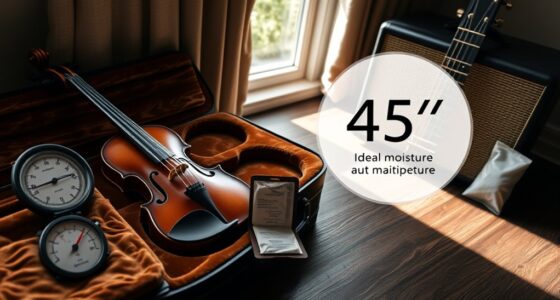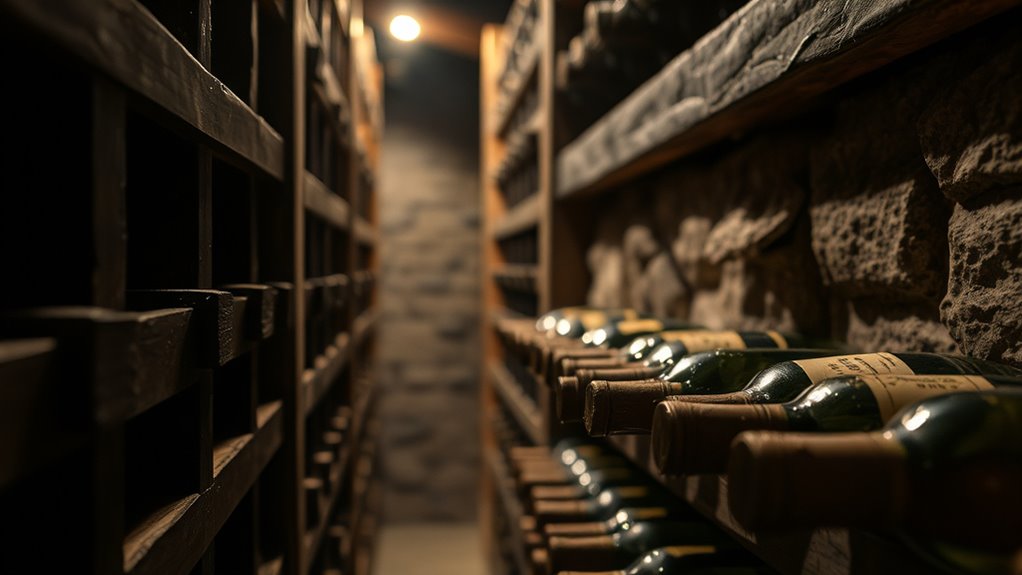

To protect your wine collection, maintain humidity levels between 60% and 70%. This keeps corks moist, preventing shrinkage and spoilage, while also avoiding excess moisture that can cause mold and damage labels. Use a hygrometer to monitor conditions regularly and employ dehumidifiers or humidifiers as needed. Proper humidity safeguards your bottles from deterioration and ensures they age gracefully. Keep going to discover more tips on creating the ideal storage environment for your wines.
Key Takeaways
- Maintain humidity levels between 60%-70% to preserve cork integrity and prevent spoilage.
- Use hygrometers regularly to monitor moisture levels in your wine storage area.
- Avoid excessive humidity to prevent mold growth on corks, labels, and bottle surfaces.
- Employ dehumidifiers or humidifiers to stabilize environmental conditions and protect your collection.
- Proper humidity control ensures long-term wine preservation and prevents damage from mold and cork drying.
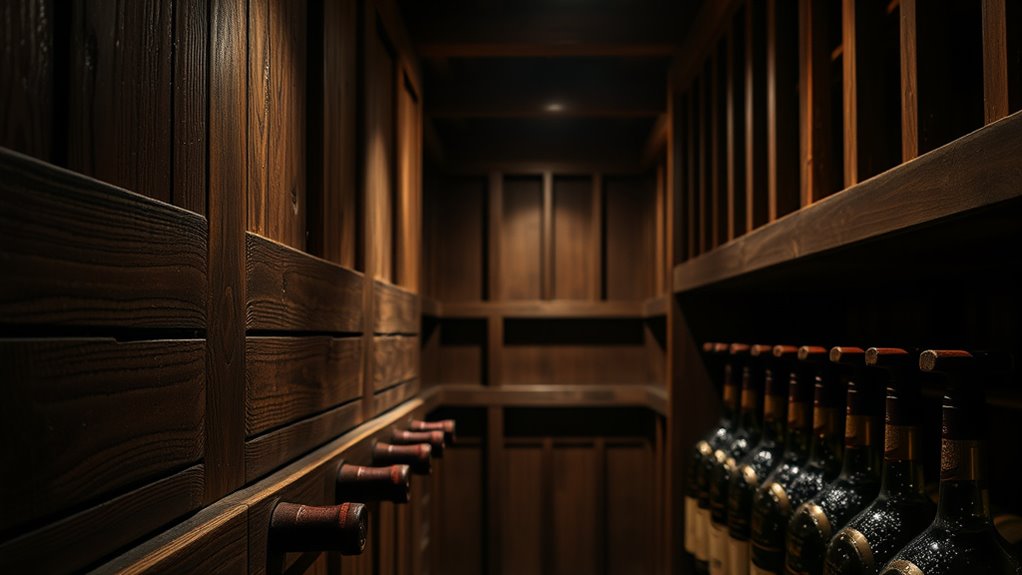
Proper wine storage is essential to preserving the quality and flavor of your bottles, and humidity plays a vital role in this process. Maintaining the right humidity levels ensures that corks stay supple and properly sealed, which is crucial for aging wine gracefully. Too dry, and the cork can shrink, allowing air to seep in and spoil your wine. Too humid, and you risk mold growth that can damage labels and compromise the bottle’s integrity. Striking the right balance keeps your collection safe and in prime condition.
Proper humidity levels keep corks moist and sealed, protecting your wine from spoilage and mold growth.
When humidity levels are optimal—generally between 60% and 70%—the cork remains moist enough to expand slightly, creating an airtight seal. This cork expansion prevents oxygen from entering the bottle, which can lead to oxidation and spoilage. It’s a delicate dance: too little moisture and the cork dries out, shrinking and creating gaps that let air in; too much, and the excess moisture can promote mold growth. Regularly monitoring and adjusting the humidity helps you avoid these pitfalls, ensuring each bottle stays fresh and flavorful over time.
Controlling humidity also plays a key role in mold prevention. High humidity encourages mold to develop on corks, labels, and the storage environment itself. Mold not only damages the appearance of your bottles but can also cause structural harm, potentially compromising the integrity of the seals. Mold spores thrive in damp conditions, so keeping humidity within the recommended range discourages their growth. Using a hygrometer to keep tabs on moisture levels and a dehumidifier or humidifier as needed allows you to maintain a stable environment. This proactive approach prevents mold from taking hold, saving you from costly cleanups and potential loss of your prized bottles.
Additionally, stable humidity levels help preserve labels and packaging. Excess moisture can cause labels to peel or become discolored, which diminishes the aesthetic and collectible value of your collection. It also makes it easier to identify and organize bottles, especially if you’re storing a large number of wines. Proper humidity control can also support the integrity of the corks over time by maintaining their moisture content, which is essential for the longevity of your wine collection especially when aging for extended periods.
Frequently Asked Questions
How Does Humidity Affect Different Types of Wine Bottles?
High humidity levels can cause cork deterioration, risking air exposure that spoils your wine, especially in traditional cork-sealed bottles. Low humidity might lead to glass corrosion over time, weakening the bottle’s integrity. You should monitor humidity carefully to prevent these issues. Proper storage guarantees the cork stays moist and intact, maintaining a tight seal, while protecting glass bottles from corrosion and keeping your wine safe for years to come.
Can Humidity Levels Cause Label Damage on Wine Bottles?
Yes, humidity levels can cause label damage on wine bottles. Excess humidity leads to label deterioration, making labels peel or become moldy. It also weakens the adhesive, causing adhesive failure and making labels fall off. Maintaining proper humidity helps preserve your wine labels, ensuring they stay clear and intact. To protect your collection, keep humidity levels consistent and within recommended ranges, avoiding excess moisture that harms your bottles’ labels.
What Are the Signs of Improper Humidity in Storage?
If you ignore humidity, you might see mold growth on your wine labels or cork deterioration that threatens your entire collection. Signs of improper humidity include a musty smell, swollen or shrinkage corks, and visible mold. You’ll feel the difference in your storage environment—it’s like your wine is crying out for help. Keep humidity balanced, or risk losing your precious bottles to damage and decay.
How Often Should Humidity Levels Be Checked in Wine Storage?
You should check humidity levels at least once a month to guarantee your wine storage remains stable. Use reliable humidity sensors to monitor conditions accurately, especially during seasonal fluctuations when humidity can vary unexpectedly. Regular checks help you spot and address any issues early, preventing damage to your collection. Keep a record of your readings and adjust your storage environment as needed to maintain ideal humidity levels consistently.
Are There Specific Humidity Requirements for Aging Wine?
Did you know that ideal humidity levels for aging wine are between 60-70%? If you want your wine to mature perfectly, make sure your wine cellar insulation and humidity control systems are finely tuned within this range. Proper humidity prevents corks from drying out or molding, which can spoil your collection. Regular checks keep your environment stable, allowing your wine to age gracefully without spoilage or evaporation.
Conclusion
Maintaining the right humidity levels creates a subtle harmony that nurtures your wine collection, allowing it to mature gracefully. When you pay attention to these delicate details, you’re gently guiding your wines toward their full potential. Think of it as offering your bottles a cozy, welcoming environment where they can rest and age beautifully. By respecting these unseen factors, you guarantee your collection remains a treasured, enduring legacy—worthy of admiration for years to come.