

Hidden moisture behind furniture is more common than you might realize, especially if furniture stays against walls for long periods. Poor ventilation and high humidity can trap moisture, creating the perfect environment for mold to grow unseen. This mold can damage your furniture, trigger allergies, and cause health issues before you notice any signs. Staying alert and checking behind furniture regularly can help you catch problems early—keep going to learn more about staying safe.
Open a free Amazon Business account
Business pricing, bulk buying and tax-exempt orders.
As an affiliate, we earn on qualifying purchases.
Key Takeaways
- Furniture placed against walls traps moisture, creating hidden damp areas conducive to mold growth.
- Poor ventilation and high humidity increase unseen moisture behind furniture.
- Mold can develop silently behind furniture, causing structural damage and health issues.
- Regular inspections and airflow management help detect and prevent hidden moisture buildup.
- Mold spores from hidden moisture can trigger allergies and respiratory problems.
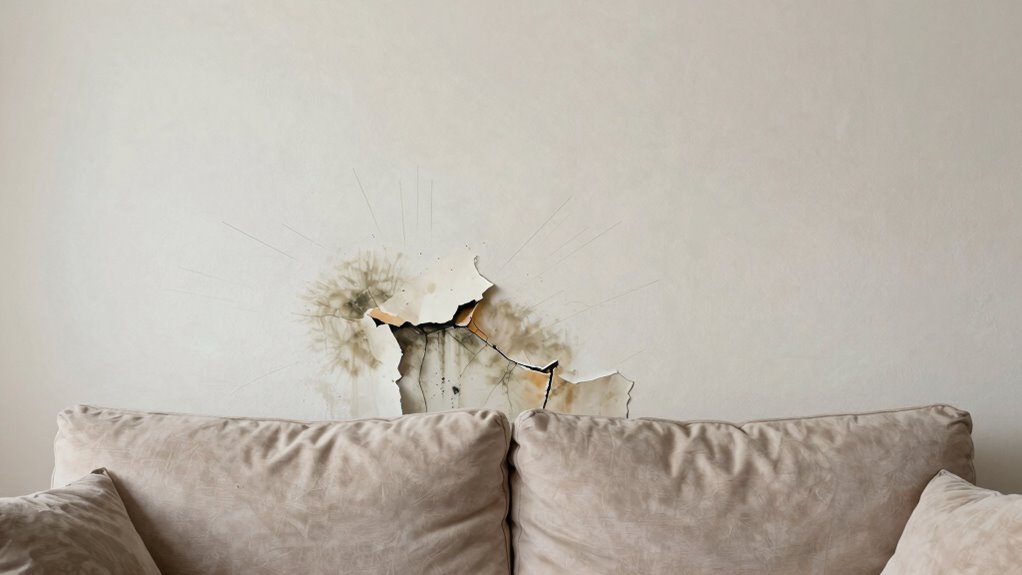
When furniture is placed against walls for extended periods, moisture can accumulate behind or beneath it without you realizing. This hidden dampness creates the perfect environment for furniture mold to develop, which often goes unnoticed until it causes noticeable problems. Mold spores thrive in humid, dark, and poorly ventilated spaces, and furniture pushed tight against walls can trap moisture, trapping mold spores in the process. Over time, this buildup not only damages your furniture but also releases airborne mold particles that can be potent allergy triggers. If you’re prone to allergies or respiratory issues, these hidden mold colonies could worsen your symptoms without you ever suspecting the cause.
Many people don’t realize that furniture mold isn’t just a surface problem; it exists behind and beneath your furniture, where it’s difficult to see. The damp environment encourages mold growth, and the longer it goes unchecked, the more extensive the problem becomes. This is especially true in areas with high humidity or poor airflow, where moisture tends to linger. As mold develops, it can weaken the structure of your furniture, leading to rot and decay, but more concerning is the health impact. Mold spores released into the air can irritate your eyes, throat, and lungs, especially if you’re sensitive or allergic. These mold spores are also common allergy triggers, causing sneezing, congestion, and itchy eyes, which can be mistaken for other illnesses or seasonal allergies. Prolonged moisture exposure can also lead to structural damage that might go unnoticed until significant deterioration occurs. Additionally, many homeowners overlook the importance of proper ventilation in preventing unseen mold growth.
You might notice a musty smell in your home, which is often an indicator of unseen mold lurking behind furniture. If you or your family members start experiencing unexplained allergy symptoms, it’s worth inspecting areas behind your furniture. You can do this by carefully moving pieces away from the wall and checking for visible mold, discoloration, or a damp feeling. Regularly cleaning and ensuring proper ventilation can help prevent moisture buildup. Using dehumidifiers and moisture absorbers can also reduce humidity levels, discouraging mold growth. Remember, even if you don’t see visible mold, the presence of mold spores in the air can still trigger allergies and respiratory issues.
In the end, staying proactive is key. Don’t ignore the signs of hidden moisture or mold behind your furniture. By maintaining good airflow, controlling humidity, and periodically inspecting behind furniture, you can minimize the risk of furniture mold and reduce allergy triggers. Protect your health and preserve your furniture by keeping these hidden dangers in check.
As an affiliate, we earn on qualifying purchases.
Frequently Asked Questions
How Can I Detect Hidden Moisture Behind Furniture?
You can detect hidden moisture behind furniture by checking for musty smells or discoloration on walls and floors. Move furniture slightly to improve air circulation and observe any dampness or mold. Use a moisture meter for precise readings, especially in areas with poor furniture placement. Ensuring proper air circulation helps prevent moisture buildup, making it easier to identify hidden issues and protect your home from damage.
What Health Risks Are Associated With Hidden Moisture?
Hidden moisture can lead to mold growth, which poses health risks like allergy symptoms, respiratory issues, and asthma flare-ups. When moisture stays trapped behind furniture, it creates a perfect environment for mold to thrive, and you might not notice it right away. This can worsen allergy symptoms and cause long-term health problems. To protect yourself, regularly check for signs of mold and keep your space dry and well-ventilated.
Which Furniture Materials Are Most Prone to Moisture Buildup?
Ironically, your plush velvet or delicate fabric furniture is most prone to moisture buildup, despite seeming so cozy. These materials often lack the durability needed to resist humidity, making them hotspots for hidden dampness. Wood furniture with poor maintenance or low-quality finishes also traps moisture behind, accelerating rot and mold growth. Prioritize furniture maintenance and choose durable materials to prevent unseen moisture, ensuring your space stays healthy and long-lasting.
How Often Should I Check for Hidden Moisture?
You should check for hidden moisture every few months, especially if humidity levels are high. Regular inspections help you catch signs of mold growth early before it spreads. Use a moisture meter to detect hidden dampness behind furniture and walls, and keep an eye out for musty odors or discoloration. Maintaining proper ventilation and controlling humidity can prevent moisture buildup, reducing the risk of mold growth and potential damage.
Can Hidden Moisture Cause Structural Damage Over Time?
Hidden moisture can cause significant damage over time, leading to mold growth and pest infestation. As moisture seeps into wood and drywall, it weakens structural integrity, causing walls and furniture to decay. You might not see the damage at first, but the rot and pests silently undermine your home’s foundation. Ignoring it allows mold spores to spread and pests to flourish, risking costly repairs and health hazards. Stay vigilant to protect your space.
As an affiliate, we earn on qualifying purchases.
Conclusion
You might be surprised to learn that nearly 60% of homeowners have hidden moisture behind their furniture, risking mold growth and structural damage. By regularly checking behind your couch and chairs, you can catch potential problems early. Remember, what you don’t see can hurt you, so stay vigilant. Addressing hidden moisture now can save you money and protect your home’s health in the long run. Don’t wait—your home’s safety depends on it.
As an affiliate, we earn on qualifying purchases.
As an affiliate, we earn on qualifying purchases.
Flea & tick season Picks
flea and tick prevention
As an affiliate, we earn on qualifying purchases.


![Pedestrian Walkways No Place For Chairs And Tables [WATCH] - NST Online](https://pureairadviser.com/wp-content/uploads/2026/09/pedestrian-walkways-no-place-for-chairs-and-tables-watch-nst-online-featured-260x140.jpg)


