Using dehumidifiers in your greenhouse helps maintain ideal humidity levels, preventing mold, mildew, and disease that threaten plant health. By controlling moisture, you promote healthier growth, improve crop quality, and reduce the risk of fungal infections. Modern, energy-efficient models also support climate stability while saving on energy costs. When managed properly, dehumidifiers create a healthier environment for your plants and contribute to sustainable operations—discover how integrating these systems can benefit your greenhouse even more.
Key Takeaways
- Dehumidifiers reduce excess moisture, preventing mold, mildew, and fungal infections that threaten plant health.
- They enable precise humidity control tailored to different plant requirements, promoting optimal growth.
- Using energy-efficient dehumidifiers lowers operational costs and supports sustainable greenhouse practices.
- Proper humidity management reduces strain on climate control systems, extending equipment lifespan.
- Maintaining optimal humidity levels enhances plant quality, yield, and overall greenhouse productivity.

Greenhouses often face humidity challenges that can hinder plant growth and increase the risk of diseases. Excess moisture creates an environment where mold, mildew, and other pathogens thrive, threatening your plants’ health and productivity. Controlling humidity is essential, but it’s equally important to do so efficiently. That’s where dehumidifiers come into play, helping you maintain ideal moisture levels while supporting energy efficiency.
Managing humidity prevents mold and disease, boosting plant health and productivity efficiently with dehumidifiers.
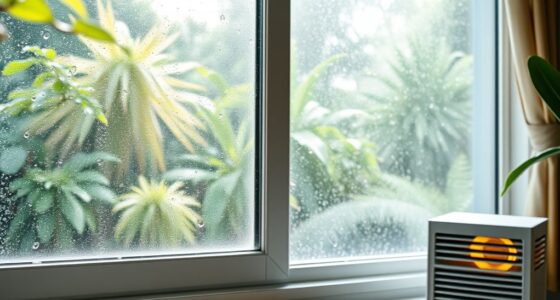
When you implement dehumidifiers in your greenhouse, you gain precise humidity control. This means you can set and maintain the ideal moisture levels for different plants, preventing the condensation that often leads to fungal infections. Proper humidity management not only protects your crops but also enhances their growth rate and quality. By reducing excess moisture, you create a healthier environment that encourages strong, vigorous plants.
Energy efficiency is a key consideration when choosing dehumidification systems. Modern dehumidifiers are designed with features that minimize energy consumption, such as variable speed compressors and smart controls. When you select an energy-efficient dehumidifier, you save on operational costs while still achieving effective humidity control. This balance is vital because maintaining the right humidity shouldn’t come at a steep energy expense, especially if your greenhouse operates year-round.
Installing a dehumidifier with energy-efficient technology allows you to optimize your greenhouse climate without overloading your energy resources. Many models come with automatic humidity sensors and programmable timers, so you don’t have to constantly monitor and adjust settings manually. Instead, the system responds dynamically to changing conditions, reducing unnecessary energy use. This not only lowers your utility bills but also reduces your environmental footprint.
Furthermore, integrating dehumidifiers into your climate control strategy enhances overall energy efficiency. When humidity levels are properly managed, your heating and cooling systems don’t have to work as hard to maintain a stable environment. Less strain on these systems means less energy consumption and longer equipment lifespan. As a result, your greenhouse becomes more sustainable and cost-effective over time. Additionally, utilizing energy-efficient dehumidifiers can further improve your environmental impact by reducing your carbon footprint and operational costs.
Frequently Asked Questions
What Is the Ideal Humidity Level for Greenhouse Plants?
You should aim for a humidity level between 50-70% for your greenhouse plants. Proper humidity control helps regulate plant transpiration, preventing stress and disease. Maintaining this range ensures plants breathe efficiently, reduces mold growth, and keeps pests at bay. Use dehumidifiers to fine-tune humidity, especially during damp seasons. Regularly monitor humidity levels to create a suitable environment that promotes healthy, vigorous plant growth.
How Energy-Efficient Are Greenhouse Dehumidifiers?
Greenhouse dehumidifiers are fairly energy-efficient, helping you control humidity without high energy consumption. They are designed to optimize cost efficiency by using targeted cooling or moisture removal, reducing overall power use. You’ll notice lower energy bills and better climate management, especially when paired with smart controls. While initial costs may vary, their efficient operation guarantees you save money in the long run, maintaining ideal humidity levels without excessive energy use.
Can Dehumidifiers Prevent Mold and Mildew Effectively?
You probably notice how damp spots seem to appear just when you’re least expecting them, right? Dehumidifiers can effectively prevent mold and mildew by controlling excess moisture in your greenhouse. They’re essential for mold prevention and mildew control, helping you keep your plants healthy and your environment safe. When humidity levels stay balanced, mold spores struggle to thrive, giving you peace of mind and a healthier greenhouse overall.
Are Portable Dehumidifiers Suitable for Large Greenhouses?
Portable units can work in large greenhouses, but they might not be the most effective solution. They’re easy to move around, which is a plus, but for extensive spaces, you’ll need multiple units to cover the area adequately. Also, consider the cost considerations—buying several portable dehumidifiers can add up quickly. For larger greenhouses, investing in a centralized or larger capacity system may be more efficient and cost-effective in the long run.
What Maintenance Is Required for Greenhouse Dehumidifiers?
You need to regularly replace filters to guarantee your greenhouse dehumidifier runs efficiently and prevents mold buildup. Additionally, check and calibrate the system periodically to maintain ideal humidity levels. Keep an eye on the condensate drain and clean it as needed to prevent clogs. Regular maintenance not only prolongs the lifespan of your dehumidifier but also supports healthy plant growth by maintaining the right humidity.
Conclusion
Using dehumidifiers in your greenhouse is like giving your plants a burst of fresh air, helping them thrive by controlling excess moisture. They prevent mold, reduce disease risk, and create a healthier environment for your plants to flourish. With the right humidity levels, your greenhouse becomes a lush oasis, where plants grow strong and vibrant. Embrace dehumidification, and watch your green space blossom into a thriving garden paradise.