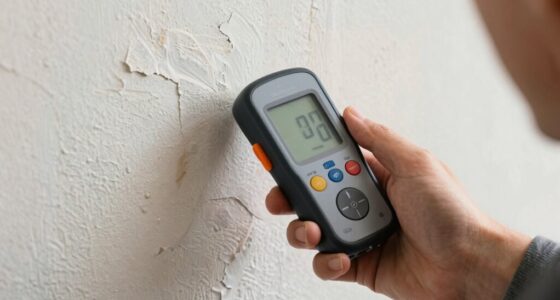
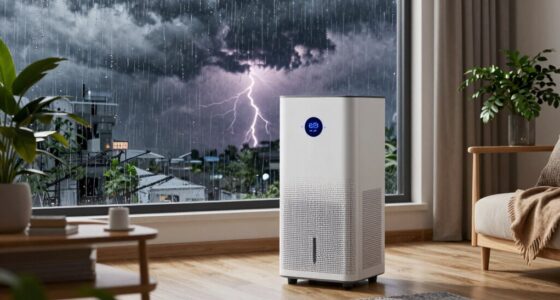
If your dehumidifier runs constantly, it might be due to faulty sensors, dirty filters, or a malfunctioning thermostat. Poor airflow caused by clogged filters or full water buckets can also make it work nonstop. Oversized units or incorrect sizing can contribute too. Always check these issues first, and if they persist, it’s a good idea to get professional help or further tips to fix the problem. Keep exploring to discover more solutions.

Get home appliances delivered free with Prime
- Fast, free delivery on millions of items
- Prime Video, Amazon Music and more included
- Member-only deals all year
Key Takeaways
- Faulty or dirty sensors may cause incorrect humidity readings, leading to continuous operation.
- Full water buckets or blocked drainage systems can trigger nonstop running as the unit can’t drain properly.
- An undersized or oversized dehumidifier may struggle to maintain desired humidity, resulting in constant operation.
- Malfunctioning thermostats or electrical components can prevent proper cycling, causing the unit to run nonstop.
- Regular maintenance, such as cleaning filters and inspecting sensors, can resolve persistent continuous running issues.

If your dehumidifier keeps running nonstop, it’s a sign that something isn’t working quite right. When your appliance runs constantly, it can be a symptom of issues related to humidity levels or inadequate appliance maintenance. For example, a sensor inside the unit might be faulty or dirty, causing it to misjudge the current humidity. When the sensor doesn’t detect the actual humidity level accurately, the dehumidifier keeps working, attempting to reach a target it can’t confirm has been achieved.
Continuous running indicates your dehumidifier is struggling—check humidity levels, filters, and maintenance to keep it working efficiently.
Proper appliance maintenance plays a crucial role in preventing your dehumidifier from running endlessly. If you neglect to clean or replace filters regularly, dust and debris can clog the system, impairing its ability to operate correctly. A dirty filter reduces airflow, forcing the compressor and fan to work harder, which can lead to excessive running times. Similarly, if the water collection bucket is full or the drainage system is blocked, the unit might keep running because it can’t complete its cycle. Always check and empty the water reservoir and inspect drainage hoses for any obstructions. Regularly cleaning filters and inspecting the unit can help ensure proper airflow and operation. Additionally, understanding humidity levels in your space can help you set realistic expectations for your dehumidifier’s performance.
Another factor to consider is the size of your dehumidifier relative to the space it’s meant to dehumidify. If your unit is undersized for the room’s humidity levels, it will naturally run longer to try to lower the moisture content. Conversely, if it’s oversized, it might turn off and on frequently, but a unit that runs constantly indicates it’s working overtime, which could suggest a need for recalibration or replacement. Proper unit sizing is essential for optimal performance and energy efficiency.
In addition to these issues, electrical problems such as faulty thermostats or sensors can cause your dehumidifier to malfunction, leading to continuous operation. Regular appliance maintenance, including inspecting these components, can help catch problems early. A faulty thermostat can also cause your unit to run nonstop, making troubleshooting essential for restoring proper function. Ultimately, understanding the connection between humidity levels and your appliance’s performance will help you troubleshoot common issues and ensure your dehumidifier works efficiently. If persistent problems remain after maintenance, it might be time to consult a professional or consider replacing the unit altogether. Proper sensor functioning is essential for accurate humidity detection and efficient operation.
As an affiliate, we earn on qualifying purchases.
Frequently Asked Questions
How Often Should I Clean My Dehumidifier Filters?
You should clean your dehumidifier filters every 2 to 4 weeks to prevent dust buildup and maintain best performance. Regular filter maintenance guarantees dust doesn’t clog the system, allowing it to run efficiently. If you notice reduced airflow or increased humidity, it’s a sign to check and clean the filters sooner. Keeping the filters clean helps your dehumidifier work effectively and prolongs its lifespan.
Can a Faulty Thermostat Cause Continuous Running?
A faulty thermostat can turn your dehumidifier into an overzealous guardian, endlessly running as if chasing an invisible enemy. When thermostat calibration is off, it misreads temperature fluctuations, causing your unit to stay on constantly. This miscommunication pulls your dehumidifier into a relentless cycle, wasting energy. Check and recalibrate your thermostat to restore harmony, ensuring your device runs only when needed, saving power and prolonging its lifespan.
What’s the Ideal Indoor Humidity Level?
You should aim for an indoor humidity level between 30% and 50%. Humidity sensors help monitor this, so your dehumidifier runs efficiently. Proper air circulation ensures even humidity distribution, preventing hotspots or overly dry areas. Keeping humidity within this range reduces mold growth and allergens, making your space healthier and more comfortable. Regularly check sensors and improve air circulation for ideal humidity control.
Should I Turn off My Dehumidifier When Not Home?
You should turn off your dehumidifier when you’re not home to save energy and reduce noise levels. It’s a coincidence that leaving it on can waste electricity and increase noise, which might disturb neighbors or household peace. Turning it off during your absence optimizes energy efficiency, saving you money, and keeps noise levels down. Plus, it prevents unnecessary wear and tear, extending your dehumidifier’s lifespan.
How Does Room Size Affect Dehumidifier Operation?
Room size directly impacts how your dehumidifier operates, as larger spaces require higher capacity units for effective moisture control. Poor ventilation efficiency and limited air circulation can make it harder for the dehumidifier to maintain ideal humidity levels. Make certain your space is well-ventilated, and the air circulates freely to improve performance. Choosing the right-sized dehumidifier for your room guarantees efficient operation, preventing it from running constantly or underperforming.
dehumidifier sensor cleaning kit
As an affiliate, we earn on qualifying purchases.
As an affiliate, we earn on qualifying purchases.
Conclusion
If your dehumidifier keeps running nonstop, don’t ignore the warning signs. It’s likely battling a hidden issue like a clogged filter or a faulty sensor. Addressing these problems now can prevent bigger headaches later—think of it as fixing your ship before it hits the rocks. Remember, a well-maintained dehumidifier keeps your home comfortable and mold-free, saving you from a future that’s more “Dick Tracy” than cozy. Stay vigilant and keep it running smoothly!
As an affiliate, we earn on qualifying purchases.
best dehumidifier for large rooms
As an affiliate, we earn on qualifying purchases.
As an affiliate, we earn on qualifying purchases.
Halloween Picks
halloween
As an affiliate, we earn on qualifying purchases.