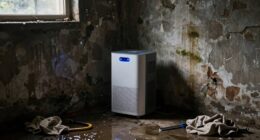
The ‘pints’ rating in a dehumidifier shows how much moisture it can remove in 24 hours, which helps you choose the right size for your space. Higher pints mean more moisture removal, ideal for damp or large areas, but it’s not always better for smaller rooms. To make the best choice, you need to weigh your room size, humidity level, and energy use. Keep exploring, and you’ll learn how to pick the perfect unit for your needs.
Key Takeaways
- The ‘pints’ rating measures how much moisture a dehumidifier can remove in 24 hours, indicating capacity.
- Higher pints mean greater moisture removal, suitable for larger or more humid spaces.
- Properly matching pints to room size prevents under- or over-drying and improves efficiency.
- A higher capacity doesn’t always mean better performance; over-sized units can waste energy.
- Consider room size, humidity level, and usage to select the right pints rating for optimal moisture control.
What Does the ‘Pints’ Rating Mean in a Dehumidifier?

Ever wondered what the “pints” rating on a dehumidifier really signifies? It’s a key figure that shows how much moisture the unit can remove from the air in 24 hours. When comparing humidifier comparisons, this rating helps you gauge a dehumidifier’s capacity to handle your space’s humidity levels. A higher pint rating means more moisture removal, suitable for damp areas or large rooms. Understanding this rating also influences dehumidifier maintenance; larger units may need more frequent filter checks or drainage. Keep in mind, choosing the right pint capacity ensures effective moisture control without overworking your appliance. Additionally, understanding the sustainable manufacturing behind modern appliances can offer insights into eco-friendly practices and ethical production standards. Recognizing the energy efficiency of a dehumidifier can further assist in reducing operational costs and environmental impact. For instance, a dehumidifier with a suitable pint rating can also contribute to better indoor air quality by reducing excess moisture that fosters mold and bacteria growth. Properly selecting a dehumidifier based on the capacity rating ensures optimal performance and longevity. So, when shopping or maintaining your dehumidifier, knowing what the pints rating indicates helps you pick the right size and keep it running smoothly.
Why Does the Pints Rating Matter When Choosing a Dehumidifier?

The pints rating is essential when choosing a dehumidifier because it directly determines how effectively the unit can handle your space’s humidity levels. A higher pint rating means better humidity control, especially in damp environments. If the dehumidifier’s capacity is too low, it won’t remove enough moisture, leading to persistent humidity issues. Conversely, a unit with a higher pint rating can cover larger areas and more effectively reduce excess moisture. This impacts appliance efficiency because selecting the right size guarantees you don’t waste energy on an overpowered or underpowered unit. Properly matching the pints rating to your space helps maintain comfortable humidity levels and prevents problems like mold or musty odors. Understanding dehumidifier capacity is crucial for making an informed purchase. Additionally, choosing the correct capacity ensures energy efficiency and can significantly reduce your ongoing operational costs. Being aware of how room size relates to dehumidifier capacity enables optimal performance and prevents unnecessary energy expenditure. Knowing how capacity affects performance can help you select the most suitable unit for your needs. In short, the rating guides you to a more effective and energy-efficient choice. Recognizing the appropriate size for your environment ensures optimal performance and longevity of your dehumidifier.
How Do Pints Relate to Dehumidifier Capacity and Room Size?

Understanding how pints relate to dehumidifier capacity helps you choose the right unit for your space. Humidity measurement, expressed in pints, indicates how much moisture the dehumidifier can remove in a day. This capacity directly affects its ability to handle different room sizes. For example, a 30-pint dehumidifier is suitable for medium-sized rooms, while a 50-pint unit works better for larger areas with higher humidity. When doing a capacity comparison, consider the room’s size and humidity level to avoid under- or over-drying. A higher pint capacity means a more powerful unit that can manage more moisture, making it effective for bigger spaces or damp environments. Matching the pints rating to your room size ensures efficient, effective humidity control. Proper capacity selection is crucial for maintaining optimal indoor humidity levels and preventing issues like mold or mildew. Additionally, understanding dehumidifier capacity helps prevent overworking the unit, which can lead to increased energy consumption and wear. Selecting the correct capacity also contributes to energy efficiency, saving you money over time. To optimize performance, also consider room humidity levels to ensure the dehumidifier is neither over- nor under-utilized. Being aware of these factors can also help you avoid unnecessary energy costs and prolong the lifespan of your dehumidifier.
How to Read and Compare Pints Ratings Across Models

When comparing dehumidifier models, reading their pints ratings carefully is essential to determine which unit best fits your needs. Look beyond the number itself—consider how the pints reflect moisture removal efficiency for your space. Higher pints generally mean better moisture extraction, but also assess how easy it is to maintain the unit; good dehumidifier maintenance ensures consistent performance. Check if the model’s rating matches your room’s humidity levels and size to avoid over- or under-drying. Comparing models with similar pints ratings can be misleading if their features differ; always review specifications and user reviews. Accurate interpretation of pints ratings helps you choose an efficient, reliable dehumidifier that minimizes upkeep while maximizing moisture removal. Additionally, understanding dehumidifier capacity helps you select a model that aligns with your specific humidity control needs. Recognizing how the pints rating relates to room size ensures you pick a unit that effectively manages your space, and understanding humidity levels in your environment will further refine your choice. Knowing your space’s humidity requirements can help prevent over-drying or underperforming units. Being aware of proper maintenance practices will also prolong the life and efficiency of your dehumidifier.
Common Misconceptions About Pints in Dehumidifiers

Many people assume that a higher pint rating always means a better dehumidifier, but this isn’t necessarily true. This is a common myth busting mistake rooted in measurement myths. A larger pint capacity doesn’t always translate to better performance for your space. Additionally, understanding Indonesian Decor Masks can help you select the right style and size for your decor needs. It is also important to consider dehumidifier efficiency and how it relates to your specific environment. Remember, the pint rating reflects how much moisture the unit can remove in 24 hours, not its efficiency or suitability. Other factors, like room size, humidity level, and energy use, matter more.
How Pints Affect Dehumidifier Performance and Energy Efficiency

While a higher pint rating might suggest a more capable dehumidifier, it doesn’t automatically imply better performance or efficiency. A larger pint capacity can remove more moisture quickly, which helps with moisture removal in bigger spaces. However, bigger units often consume more energy, reducing energy savings. If you pick a dehumidifier with too high a pint rating for your space, it may run longer than necessary, wasting power. Conversely, a unit with a lower pint rating might struggle to keep up with your moisture removal needs, leading to higher running times and less energy efficiency. To optimize both moisture removal and energy savings, choose a pint rating that matches your room’s size and humidity level. This balance ensures effective performance without unnecessary energy use.
Which Pints Rating Is Right for Your Space?

Choosing the right dehumidifier pints depends on your room size and humidity levels. You need a unit that matches the space you’re trying to dry and the moisture you want to remove. Understanding the pints rating scale helps you pick the most effective option for your needs.
Room Size Compatibility
Selecting the right dehumidifier pints rating depends on the size of your space. A unit that’s too small won’t effectively control humidity, while one that’s too large may waste energy. To find the best fit, consider the room’s square footage and humidity levels. Larger spaces need higher pints ratings for adequate humidity control and energy efficiency. Keep in mind:
- Small bedrooms (up to 300 sq ft) often need 10-20 pints
- Medium living rooms (300-500 sq ft) typically require 20-30 pints
- Larger areas (500-1000 sq ft) benefit from 30-50 pints
- Basement spaces may need higher ratings for moisture removal
- Proper sizing ensures ideal humidity control and energy efficiency, saving you money and maintaining comfort
Matching the pints rating to your room size helps you achieve effective humidity control without unnecessary energy use.
Humidity Levels Needed
The right dehumidifier pints rating depends not only on room size but also on the humidity level you need to maintain. Your choice hinges on understanding humidity measurement and the moisture control goals for your space. If your environment is overly humid, you’ll want a dehumidifier that can handle higher moisture levels efficiently. For spaces like basements or laundry rooms with persistent dampness, a unit with a higher pints rating ensures better moisture control. Conversely, in areas where humidity is only slightly above comfortable levels, a lower pints rating may suffice. By evaluating the current humidity measurement and your desired comfort level, you can select the ideal dehumidifier to keep moisture at bay and create a healthier indoor environment.
Pints Rating Scale
Determining the right pints rating for your dehumidifier depends on your space’s specific moisture removal needs. The pints rating indicates how much moisture the unit can extract per day, directly affecting humidity control and energy efficiency. If your space is small or moderately damp, a lower pints rating may suffice. For larger or heavily humid areas, a higher rating guarantees effective moisture removal. Consider these factors:
- Room size and square footage
- Level of humidity and dampness
- Frequency of use
- Energy efficiency preferences
- Whether continuous moisture removal is needed
Matching the pints rating to your space helps optimize humidity control while minimizing energy consumption. Choosing appropriately ensures your dehumidifier works efficiently without wasting energy or underperforming.
Real-World Examples of Pints in Popular Dehumidifiers

Many popular dehumidifiers clearly display their capacity in pints per day, making it easier to choose the right model for your space. For example, a 30-pint unit efficiently manages humidity control and moisture removal in small rooms, while a 70-pint model handles larger areas. Here’s a quick look at real-world examples:
| Model | Suitable Area Size | Pints per Day |
|---|---|---|
| Frigidaire FFAD3033W | Up to 150 sq ft | 30 |
| hOmeLabs HME020030N | 300-500 sq ft | 50 |
| Keystone KSTAD50B | 500-1000 sq ft | 50 |
| DeLonghi DD50PE | 300 sq ft | 50 |
| Ivation IVADM45 | 400 sq ft | 45 |
| Hisense DH-50KP1WG | 500 sq ft | 50 |
| Aprilaire 1820 | 3,000 sq ft | 70 |
These examples show how pint ratings directly impact moisture removal and humidity control in various spaces.
Tips for Selecting the Best Pints Rating for Your Needs

Choosing the right pint rating for your dehumidifier depends on evaluating your space’s size and moisture levels. To pick the best fit, consider the room’s square footage and humidity intensity. A higher pint rating handles more moisture, ideal for large or damp areas. Remember, dehumidifier maintenance is vital for performance, regardless of size. Decide between portable vs built-in units: portable models are flexible, easy to move, and suitable for varying spaces, while built-ins are permanent and better for consistent conditions.
Choosing the right pint rating ensures your dehumidifier effectively handles your space’s moisture levels.
Here are tips to guide your choice:
- Measure your room’s square footage accurately
- Assess how damp or humid your space is
- Choose a portable model for flexibility
- Opt for built-in if permanence is preferred
- Match pint rating to moisture severity
Frequently Asked Questions
How Accurate Are the Pint Ratings in Real-World Conditions?
The pint ratings are generally accurate, but performance variability can affect real-world results. Measurement accuracy depends on factors like room size, humidity levels, and dehumidifier quality. You might notice the dehumidifier pulls less or more moisture than rated at times. To get the best results, choose a unit suited to your space and conditions, understanding that actual performance may slightly differ from the specs.
Do Different Brands Use the Same Standards for Measuring Pints?
Different brands don’t always use the same measurement standards for pints, which can impact brand consistency. Some companies follow industry standards closely, while others might have slight variations, making it tricky to compare dehumidifiers directly. You should check each brand’s specifications carefully, especially their measurement standards, to verify you’re getting an accurate idea of the dehumidifier’s capacity. This way, you can make a more informed purchase decision.
Can a Higher Pint Rating Dehumidifier Be More Energy-Efficient?
A higher pint rating doesn’t automatically mean a dehumidifier is more energy-efficient. Instead, look at energy consumption details to see how much power it uses to remove moisture. Some models with higher pints can be designed to operate more efficiently, but others might consume more energy for the same moisture removal. Always compare energy efficiency ratings alongside pint capacity to find the best balance for your needs.
How Often Should I Empty or Maintain a Dehumidifier With a Specific Pint Rating?
You should empty and maintain your dehumidifier when the water tank fills, which varies by pint capacity. For a smaller tank, check every few days; for larger ones, weekly might suffice. Keep an eye on the water level indicator or listen for a full tank alert. Regular maintenance guarantees peak performance, prolongs your device’s life, and prevents mold or odors, creating a fresh, dry environment for you.
Are There Alternative Measurements to Pints for Comparing Dehumidifier Capacity?
Yes, there are alternative units you can use to compare dehumidifier capacity, such as liters per day or gallons per day. These measurement standards are common in many countries and provide a clear understanding of how much moisture a dehumidifier can extract over a specific period. Using liters or gallons can be more straightforward than pints, especially if you’re familiar with metric or imperial systems.
Conclusion
Understanding pints in dehumidifiers might seem as perplexing as deciphering ancient runes, but it’s simpler than it appears. By knowing what the rating means and how it relates to your space, you can choose confidently—no need for a secret scroll. Remember, selecting the right pint rating guarantees your home stays comfortable, just like a well-tuned instrument. So, don’t wait for the philosophers to solve the mystery—grab the perfect dehumidifier today!