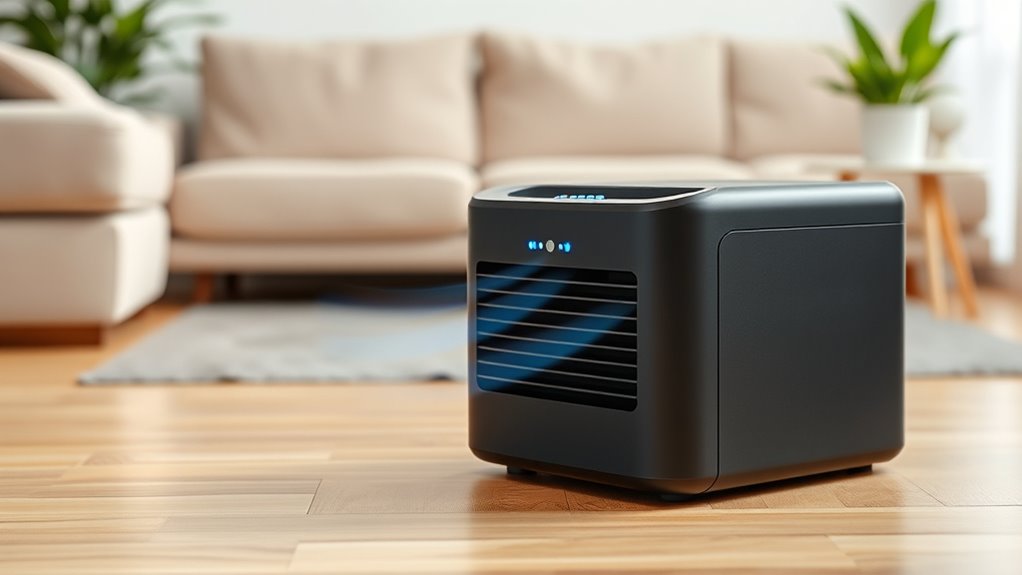

To reduce dehumidifier noise, start by placing it on a stable, level surface away from walls and sensitive areas, using vibration pads if possible. Regularly clean or replace filters and fan blades to prevent rattling and loud operation. Lower the fan speed or switch to quieter modes when you don’t need maximum drying. Proper maintenance and thoughtful placement make a big difference. Keep exploring for more tips to keep your space peaceful and quiet.
Key Takeaways
- Perform regular maintenance, including cleaning filters and fan blades, to prevent dust buildup that causes noise.
- Place the dehumidifier on a stable, level surface and use vibration dampening pads to minimize vibrations.
- Operate the unit at lower fan speeds and switch to quieter modes when high performance isn’t needed.
- Position the dehumidifier away from walls and living areas to reduce noise disturbance.
- Consider upgrading to energy-efficient models designed for quieter operation and enhanced soundproofing options.
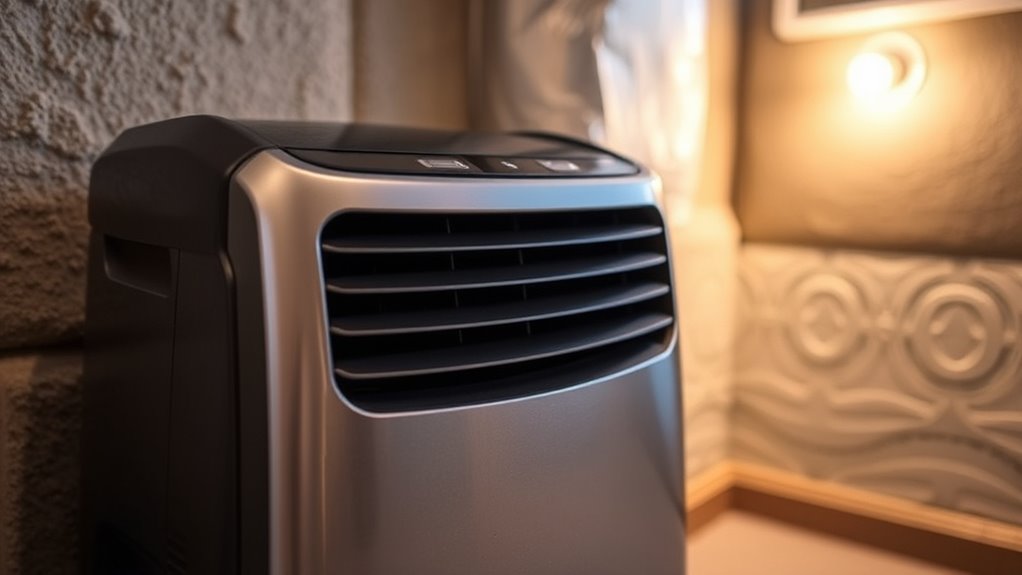
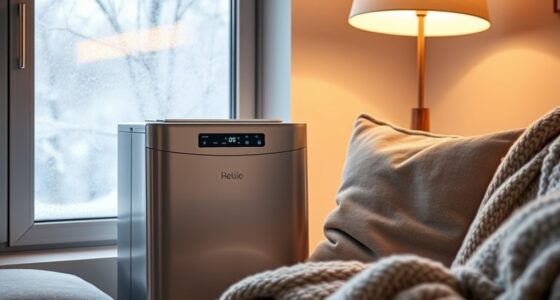
Dehumidifiers are vital for maintaining a comfortable and healthy indoor environment, but their noise can sometimes be disruptive. If you find yourself constantly distracted or disturbed by the hum or rattling sounds, there are practical ways to reduce that noise and enjoy a quieter space. One effective approach involves focusing on your dehumidifier’s energy efficiency, which directly impacts how much noise it produces. An energy-efficient model tends to operate more smoothly and quietly because it runs at optimized speeds and consumes less power, reducing vibrations and mechanical strain. If your current unit is noisy, consider upgrading to a newer, more energy-efficient model that’s designed with sound reduction in mind.
Choosing an energy-efficient dehumidifier can help reduce noise and improve indoor comfort.
Maintaining your dehumidifier regularly also plays a fundamental role in minimizing noise. Dust, dirt, and debris can accumulate inside the unit, causing it to work harder and generate additional noise. Performing routine maintenance, like cleaning or replacing filters and checking for loose parts, can keep the machine running quietly. Be sure to inspect the fan blades for dust buildup and clean them gently. Tighten any loose screws or bolts, as vibrations from loose parts often contribute to excess noise. Proper placement also matters—avoid placing the dehumidifier on uneven surfaces or near walls that can amplify sound. Elevating it slightly on a stable, level surface can help dampen vibrations and reduce noise levels.
Another tip involves soundproofing your space. Placing the dehumidifier on a rubber mat or anti-vibration pad can absorb vibrations that cause rattling sounds. Additionally, positioning the unit away from your main living or sleeping areas can help minimize the disturbance. If the noise persists despite these efforts, consider using soundproof barriers or diffusers around the unit to absorb the sound waves.
Lastly, paying attention to the operational settings can make a difference. Many dehumidifiers have multiple fan speeds; running the unit on a lower setting reduces noise without sacrificing performance. If you’re not in a hurry to dry out the space quickly, switching to a quieter setting can make your environment more peaceful. Always follow the manufacturer’s maintenance tips and guidelines to guarantee your dehumidifier operates at peak efficiency and minimal noise. Proper care not only extends the lifespan of your device but also helps keep it running smoothly and quietly, providing comfort without the unwanted background noise. Understanding energy efficiency can help you choose models that produce less noise during operation.
Frequently Asked Questions
Can Dehumidifier Noise Affect My Sleep Quality?
Yes, dehumidifier noise can affect your sleep quality, especially if you’re sensitive to noise or prone to sleep disruption. The constant sound might disturb your rest or make it harder to fall asleep. To minimize this, consider placing the dehumidifier farther away from your bedroom or using a quieter model. Using earplugs or a white noise machine can also help reduce noise sensitivity and promote better sleep.
Are Quieter Dehumidifiers More Energy-Efficient?
Yes, quieter dehumidifiers often use less energy because they tend to have more efficient fans and compressors. Studies show that models designed for noise reduction can cut energy consumption by up to 15% compared to louder counterparts. By choosing a quieter unit, you not only enjoy less disturbance but also benefit from improved energy efficiency. So, investing in noise-reducing features can save you money and create a more peaceful environment.
Do Dehumidifiers Produce Noise During All Operational Modes?
Yes, dehumidifiers produce operational sounds during all modes, but noise variations depend on the setting. When you switch between fan speeds or humidity levels, the noise levels may change, often becoming quieter at lower settings. During the compressor’s active phase, you’ll notice more sound. To minimize disruptions, choose models designed for quieter operation and maintain proper clearance around your device, ensuring smoother, quieter performance.
How Often Should I Service My Dehumidifier to Reduce Noise?
Like a vintage radio, your dehumidifier needs regular tuning. You should service it every 3 to 6 months, depending on usage, to maintain ideal performance and noise reduction. Follow a maintenance schedule that includes cleaning filters and coils. This proactive approach prevents buildup that causes noise. Incorporate noise reduction techniques by sealing gaps and ensuring proper placement. Regular maintenance keeps your dehumidifier whisper-quiet and efficient.
Can Placement Location Decrease Dehumidifier Noise Levels?
Yes, placement can decrease dehumidifier noise levels. Use placement tips like placing your unit on a sturdy, level surface away from walls and furniture to minimize vibrations. Position it in a corner or against a wall with noise absorption materials like rugs or foam pads nearby. Keeping it centered in the room and away from high-traffic areas also helps reduce the overall noise impact, making your space quieter.
Conclusion
By taking these simple steps, you can make your dehumidifier much quieter—like turning down a loud radio to a gentle hum. Remember to position it properly, clean it regularly, and choose a quieter model if possible. With a little effort, you’ll enjoy a peaceful, comfortable home without the constant noise disturbance. Just think of it as tuning your space into a calm, serene oasis, where every breath feels fresh and quiet.