Regular cleaning of your dehumidifier is key to preventing musty odors. Turn off and unplug it safely before cleaning the water tank, drain hose, and filter, using mild products for scrubbing. Keep vents clear and consider natural deodorizers like baking soda to absorb odors. Establish a routine maintenance schedule to make certain all parts stay clean and dry. If you want to know more tips for keeping your dehumidifier fresh and odor-free, continue exploring helpful strategies.
Key Takeaways
- Regularly clean and disinfect the water tank, filters, and coils to prevent mold and musty odors.
- Disconnect power safely before maintenance to avoid electrical hazards during cleaning routines.
- Check and clean the drain hose and pan to prevent clogs, mold buildup, and unpleasant smells.
- Inspect and replace air filters monthly to ensure proper airflow and odor control.
- Wipe exterior surfaces and vents to remove dust and debris, promoting airflow and odor prevention.
Why Regular Cleaning Prevents Musty Odors in Your Dehumidifier

Regular cleaning is essential because it prevents mold and bacteria buildup inside your dehumidifier, which can cause musty odors. When you neglect cleaning, airborne mold spores can settle inside the unit, leading to contamination. Moisture buildup creates an ideal environment for mold growth, especially in hidden areas like filters and coils. As mold and bacteria develop, they produce unpleasant smells that circulate when the dehumidifier runs. Regular maintenance breaks this cycle, keeping the internal components dry and clean. By removing dust, debris, and excess moisture, you reduce the risk of airborne mold spreading and prevent the musty odors from developing. Additionally, filter replacement helps maintain optimal airflow and prevents odor-causing buildup. Proper drainage ensures that excess moisture does not accumulate inside the unit, further reducing mold growth risks. Incorporating routine inspections can help identify potential issues early before odors become noticeable. Performing internal component cleaning regularly is vital to prevent odor-causing mold from developing. Consistent cleaning ensures your dehumidifier remains odor-free and functioning efficiently while safeguarding your indoor air quality.
Turn Off and Unplug Your Dehumidifier Safely
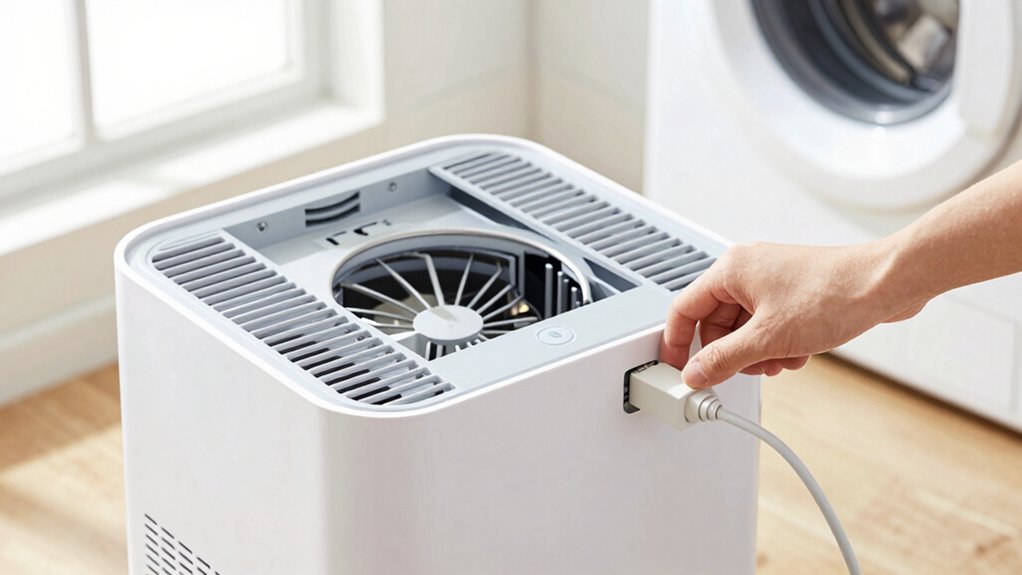
Before cleaning your dehumidifier, make sure to turn off the power switch. Then, unplug it to guarantee there’s no electrical current running through the unit. Always double-check that it’s completely disconnected before starting any maintenance tasks. Additionally, following safety precautions helps prevent accidents and ensures proper maintenance. To further protect your appliance, consider using proper cleaning techniques to maintain its efficiency and longevity. Regularly inspecting your device’s smart lock features can also help prevent unauthorized access during maintenance. Incorporating quality performance parts into your dehumidifier can enhance its operational reliability over time. Remember that routine maintenance can extend the lifespan of your device and keep it functioning optimally.
Unplug Before Cleaning
Always unplug your dehumidifier before cleaning to guarantee safety and prevent electrical shocks. This simple step ensures you avoid potential hazards and follow proper electrical precautions. Remember, handling electrical appliances while they’re plugged in can lead to serious injuries or damage. Before unplugging, make sure the unit is turned off to minimize any power surge risks. Here’s a quick guide:
| Safety Step | Explanation |
|---|---|
| Turn off | Shut down the dehumidifier |
| Unplug | Disconnect from power source |
| Verify | Ensure it’s completely off and unplugged |
Taking these precautions protects you from electrical risks and keeps your maintenance routine safe and effective. Proper dehumidifier maintenance is key to preventing odors and ensuring your unit functions efficiently. Regular cleaning routines help extend the lifespan of your dehumidifier and maintain optimal performance. Additionally, inspecting the air filter regularly can improve air quality and reduce odors.
Turn Off Power Switch
To guarantee your safety, you should first turn off the power switch on your dehumidifier before unplugging it. This step is essential for power safety and electrical precautions. Turning off the switch ensures the device is completely de-energized, reducing the risk of electric shock or damage. Understanding credit card terms is vital for managing personal finances responsibly and avoiding unexpected charges. Remember, your safety depends on taking these simple, yet important, precautions: – Avoid accidental shocks by disconnecting power properly. – Prevent electrical mishaps** that could cause injury or damage. – Ensure peace of mind during cleaning, knowing you’re protected. – Protect your equipment from power surges or shorts. Always switch off before unplugging—this small act is your first line of defense in maintaining a safe cleaning routine and avoiding unnecessary hazards. Additionally, regular maintenance can help prevent odor buildup and ensure your dehumidifier functions efficiently, especially by inspecting and cleaning air filters regularly. Incorporating smart safety features can further enhance your home’s safety during maintenance routines. Moreover, consulting your dehumidifier’s user manual** can provide specific safety instructions tailored to your model.
Ensure Safe Disconnection
Ensuring safe disconnection starts with turning off the dehumidifier’s power switch to cut off the electrical supply. This step is vital for power safety and prevents any electrical hazards during cleaning. Once the switch is off, unplug the unit from the wall socket to eliminate residual power and reduce the risk of electrical shock. Always handle the plug carefully, avoiding forced removal or pulling on the cord. Before touching any internal parts, confirm the dehumidifier has completely cooled down and is unplugged. Following these electrical precautions helps protect you from potential injuries and damage. Additionally, proper nail care can help prevent damage to your nails when handling electrical appliances. Remember, never attempt to disconnect or service your dehumidifier while it’s still plugged in or while it’s operating. Properly turning off and unplugging ensures a safe cleaning routine, especially when considering the importance of electrical safety in household appliance maintenance.
Remove and Clean the Water Collection Tank
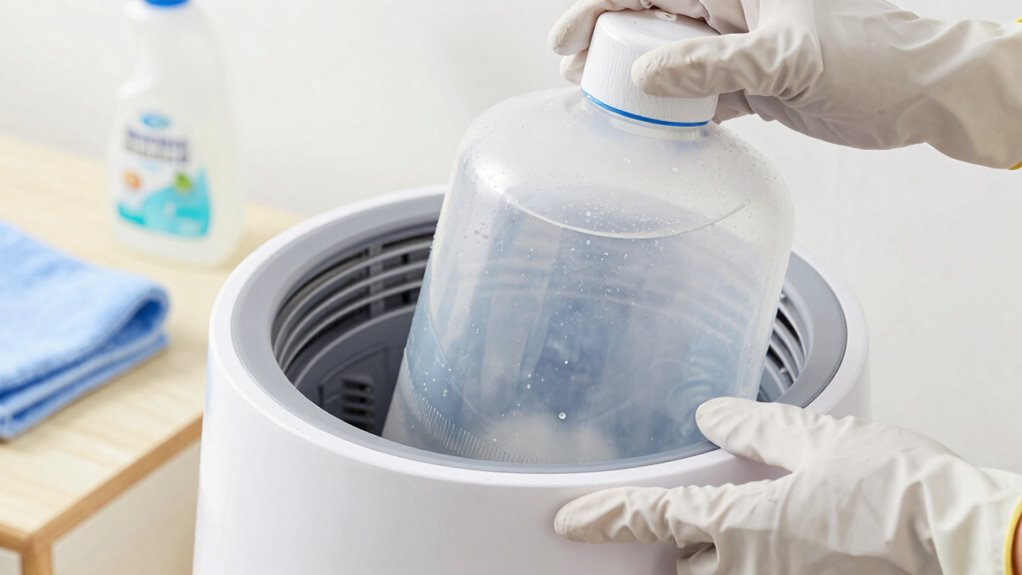
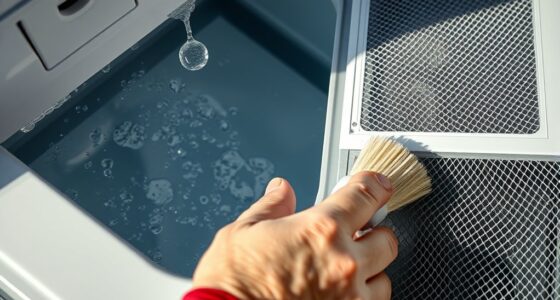
Before cleaning your dehumidifier’s water collection tank, turn off the unit and unplug it to guarantee safety. Removing the water tank is essential for maintaining a fresh, odor-free device. Regularly cleaning the water tank according to your cleaning schedule prevents mold and bacteria buildup that cause unpleasant smells. When you detach the tank, you can see any residue or mold that needs attention. For additional peace of mind, consider using recommended cleaning products to ensure thorough sanitation.
- Feel confident knowing you’re protecting your home from mold spores and musty odors
- Enjoy the satisfaction of a clean, efficient dehumidifier
- Prevent unexpected malfunctions caused by neglect
- Breathe easier with fresher, cleaner air every day
Keeping the water tank spotless ensures your dehumidifier works effectively and stays odor-free longer.
Check and Clean the Drain Hose and Pan

You should regularly inspect your drain hose to guarantee it’s free of clogs and kinks. Make sure to clean the drain pan thoroughly to prevent mold and bacteria buildup. Keeping these parts clean helps your dehumidifier operate efficiently and avoid leaks.
Inspect Drain Hose Regularly
Regularly inspecting the drain hose is essential to keep your dehumidifier functioning properly. Over time, clogs or mold can develop, leading to odors or water leaks. By performing routine drain hose inspection, you prevent these issues before they escalate. Here are some hose cleaning tips to keep your unit running smoothly:
- Check for any blockages or mold buildup inside the hose.
- Look for cracks or leaks that could cause water damage.
- Clear debris to ensure unobstructed drainage.
- Replace or tighten fittings to avoid leaks.
Taking these simple steps ensures your dehumidifier operates efficiently and odor-free. Regular maintenance not only prolongs the lifespan of your appliance but also keeps your indoor air fresh and healthy. Don’t overlook this critical step in your routine!
Clean Drain Pan Thoroughly
To guarantee your dehumidifier operates efficiently, it’s essential to check and clean the drain pan thoroughly. Over time, water residue can build up, leading to mold and unpleasant odors. Start by unplugging the unit and removing the drain pan. Empty any standing water and use a cleaning solution suitable for your device—such as vinegar or mild soap—to scrub away residue and prevent mold growth. Be sure to clean the drain hose as well, checking for clogs or buildup that could hinder proper drainage. Rinse everything thoroughly with clean water, then dry completely before reassembling. Regularly cleaning the drain pan and hose helps maintain ideal performance and prevents musty smells from developing inside your dehumidifier.
Clean and Replace the Air Filter for Fresh Air

Cleaning and replacing the air filter is essential for maintaining ideal airflow and guaranteeing your dehumidifier works efficiently. A clean air filter prevents dust buildup, reduces odors, and keeps your air fresh. Regular maintenance keeps your device functioning smoothly and extends its lifespan.
Remember to:
- Check the air filter monthly and clean or replace it as needed
- Use the maintenance checklist to stay on top of routine care
- Ensure the filter is completely dry before reinserting it
- Replace filters that are worn or damaged for peak performance
A fresh, clean air filter not only improves air quality but also prevents musty smells from developing. Staying diligent with this simple task guarantees your dehumidifier continues to provide fresh, odor-free air in your space.
Wipe Down Exterior and Vents to Remove Dust and Mold

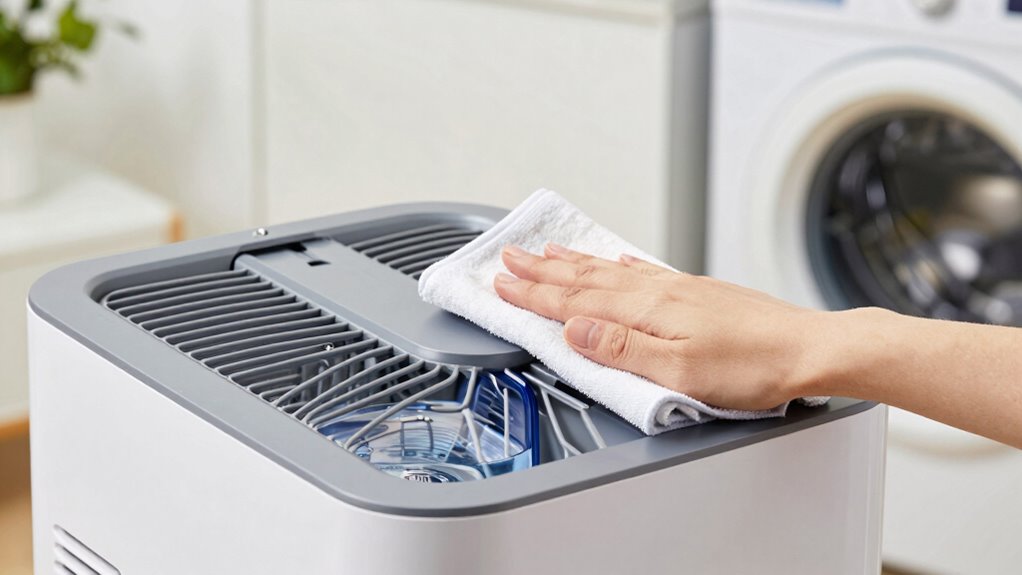
After replacing or cleaning the air filter, it’s important to turn your attention to the exterior and vents of your dehumidifier. Begin with exterior cleaning to remove dust, dirt, and mold buildup that can cause odors. Use a damp cloth to wipe down the surface, paying special attention to corners and crevices. Next, perform vent inspection to check for blockages or mold growth. Clear any dust or debris from the vents using a soft brush or vacuum attachment. Ensuring the vents are clean and unobstructed promotes proper airflow and prevents mold from developing. Regular exterior cleaning and vent inspection are essential steps in maintaining your dehumidifier’s efficiency and preventing unpleasant odors from forming.
Use Natural Deodorizers Safely to Keep Odors at Bay
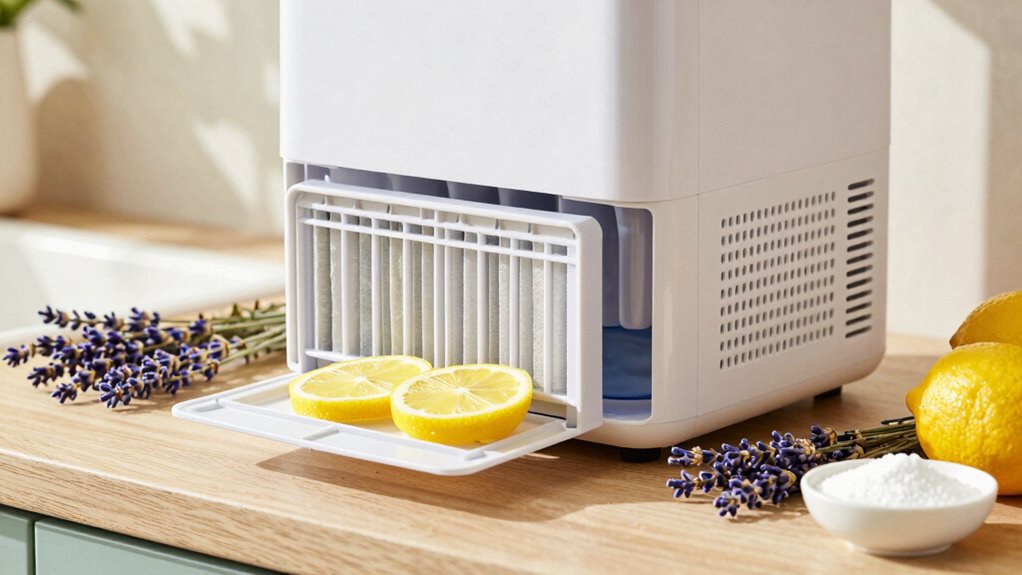
Using natural deodorizers is a safe and effective way to keep your dehumidifier smelling fresh without relying on harsh chemicals. Natural remedies like baking soda, activated charcoal, or essential oils can absorb odors and leave a pleasant scent. However, it’s important to follow safety precautions to avoid any unwanted reactions. Always keep natural deodorizers away from children and pets, and ensure they don’t come into direct contact with the dehumidifier’s internal components. When using essential oils, dilute them properly to prevent damage or residue buildup. Remember, safety first—use natural remedies in moderation and regularly check for any signs of corrosion or buildup. These simple steps help maintain a fresh-smelling, healthy environment.
Create a Regular Maintenance Schedule to Keep Odors Away

Setting up a regular maintenance schedule is key to preventing odors from lingering in your dehumidifier. You should check the unit routinely and replace filters as needed to keep it fresh. Consistent upkeep guarantees your dehumidifier works efficiently and stays odor-free.
Schedule Routine Checks
To keep odors at bay, establishing a regular maintenance schedule for your dehumidifier is essential. By setting consistent checks, you ensure peak performance and fresh air. During routine inspections, focus on filter replacement and water tank cleaning to prevent mold and bacteria buildup. Regularly assess the water tank for slime or debris, and clean it thoroughly to avoid musty smells. Don’t forget to monitor the filter, replacing it when dirty to maintain airflow and efficiency. Creating a schedule gives you peace of mind, knowing your dehumidifier stays fresh and odor-free.
- Feel confident knowing your home stays healthy and odorless
- Experience the satisfaction of a well-maintained appliance
- Enjoy cleaner air that lifts your mood
- Prevent costly repairs by catching issues early
Replace Filters Regularly
Regularly replacing your dehumidifier’s filters is key to maintaining fresh, odor-free air. Consistent filter maintenance prevents buildup of mold, dust, and odors that can circulate in your space. Check your manufacturer’s recommendations for filter replacement intervals—typically every 1 to 3 months. Keep a schedule to avoid neglect. Use the table below to track your filter maintenance:
| Task | Frequency |
|---|---|
| Inspect filters | Monthly |
| Replace filters | Every 2-3 months |
| Clean filter housing | During replacements |
| Record maintenance | Each time you replace |
| Check for signs of wear | Regularly |
Sticking to this routine ensures your dehumidifier functions efficiently and keeps indoor air fresh.
Troubleshoot Persistent Odors: When to Seek Help

Persistent odors in your dehumidifier can be a sign that something isn’t working right, and ignoring them could lead to more serious issues. If cleaning doesn’t eliminate the smell, it’s time to contemplate odor source identification and seek a professional inspection. A technician can pinpoint hidden mold, mildew, or electrical issues causing the odor. Don’t risk damaging your unit or worsening indoor air quality by delaying help.
Consider these warning signs:
- The smell persists despite thorough cleaning
- You notice unusual musty or sour odors
- The unit makes strange noises or behaves irregularly
- Odors seem to worsen over time
If these symptoms appear, calling in an expert ensures proper diagnosis and safe, effective resolution. Trusting professionals can prevent long-term damage and keep your space fresh.
Final Tips for a Fresh-Smelling, Odor-Free Dehumidifier
Maintaining a fresh-smelling, odor-free dehumidifier involves simple yet effective habits that keep odors at bay. Regularly cleaning the water tank and filters prevents mold buildup, which can negatively impact air quality. Make sure to empty the tank frequently and wipe it down with a mild disinfectant to eliminate trapped moisture. Keep the surrounding area dry and well-ventilated to reduce humidity levels that foster mold growth. Check for mold or musty smells and address them immediately with thorough cleaning. Using activated charcoal or baking soda inside the unit periodically can absorb lingering odors. These steps help guarantee your dehumidifier operates efficiently, maintains ideal air quality, and prevents mold, keeping your home fresh and healthy.
Frequently Asked Questions
How Often Should I Replace My Dehumidifier’s Air Filter?
You should replace your dehumidifier’s air filter every 3 to 6 months, depending on the air filter lifespan and usage conditions. Check the manufacturer’s replacement schedule for specific guidance, especially if you notice reduced efficiency or increased musty odors. Regularly inspecting and changing the filter guarantees peak performance, prevents odors, and keeps your air clean. Don’t wait too long, as a dirty filter can strain your device and reduce its lifespan.
Can I Use Regular Cleaning Products on My Dehumidifier?
Sure, you can use regular cleaning products on your dehumidifier, but don’t expect miracles. Instead, get creative with DIY disinfectants or mild cleaning solutions—think vinegar and water or a gentle soap. Harsh chemicals might damage the unit or leave behind residues that cause odors. Keep it simple, effective, and safe, and your dehumidifier will thank you with fresh air and fewer worries.
What Are Signs My Dehumidifier Needs Professional Servicing?
You’ll want professional servicing if your dehumidifier starts making unusual noise or if you notice water leakage. These signs indicate potential issues with internal components or a clogged drain. Ignoring them can lead to further damage or mold growth. Regular inspections by a professional can catch problems early, ensuring your dehumidifier runs smoothly, efficiently, and without odors. Keep an eye out for these warning signs to prevent costly repairs.
Is It Safe to Use Essential Oils in My Dehumidifier?
You might wonder if essential oils are safe in your dehumidifier, but it’s generally not recommended. Essential oil safety isn’t guaranteed when used in appliances like dehumidifiers because oils can damage the unit’s components or cause mold buildup. For dehumidifier scenting, opt for specially designed scent pads or essential oil diffusers. Always check your manufacturer’s guidelines to prevent damage and guarantee safe, effective dehumidifier use.
How Do I Prevent Mold Growth Inside My Dehumidifier?
To prevent mold growth inside your dehumidifier, you should regularly clean and dry all parts, especially the water collection tank and filters. Maintain good dehumidifier hygiene by wiping down surfaces and inspecting for mold. Use a solution of vinegar or mild detergent to disinfect, and leave the unit’s door open after use to promote airflow. Consistent maintenance keeps mold at bay and guarantees ideal dehumidifier performance.
Conclusion
By keeping your dehumidifier clean, you’re tending to its heart, ensuring it breathes fresh air like a well-tuned instrument. Regular maintenance is your melody, preventing musty odors from taking center stage. When you nurture this routine, you’re forging a shield of freshness, a steady rhythm that keeps odors at bay. Like a gentle breeze through open windows, your care brings harmony, making every breath you take a sign of a truly refreshed, odor-free sanctuary.