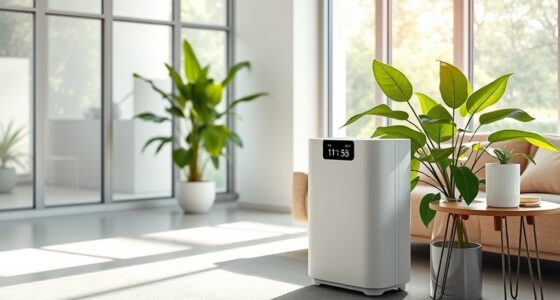
Smart air purifiers easily connect with your home automation system, giving you complete control over your indoor air quality. You can set routines, automate based on pollution levels, and even use voice commands through Alexa, Google Assistant, or Siri. With a companion app, you’ll monitor air quality remotely and adjust settings on the go. This seamless integration makes managing your environment simple and efficient—discover how these smart features can enhance your home experience further.
Key Takeaways
- Integrate sensors for real-time air quality monitoring and automatic device adjustments.
- Enable voice control through assistants like Alexa, Google, or Siri for hands-free operation.
- Connect with home automation systems to create routines based on pollution levels or occupancy.
- Use companion apps for remote management, detailed reports, and scheduling from anywhere.
- Combine automation features to maintain optimal indoor air quality effortlessly and enhance overall home comfort.
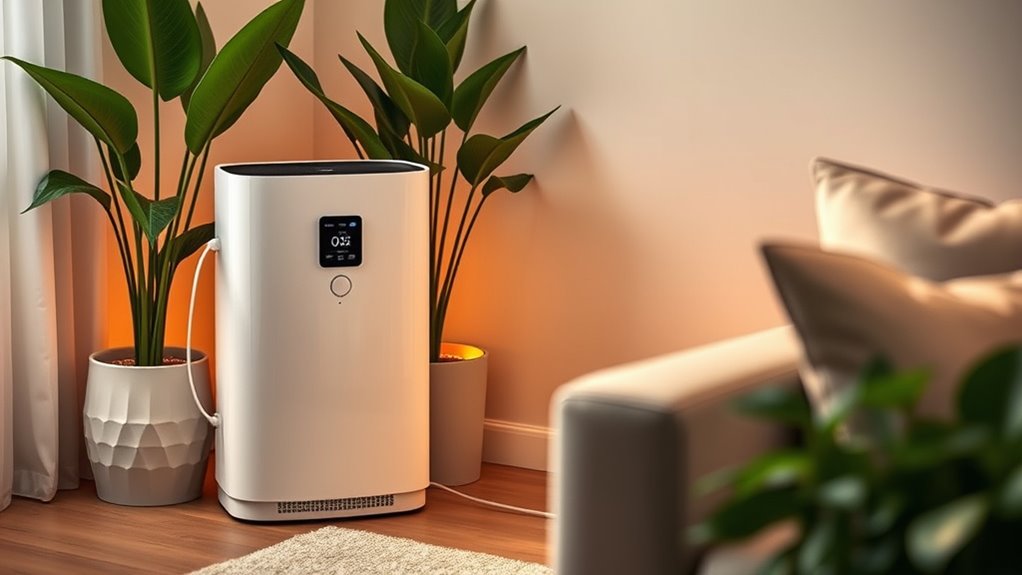
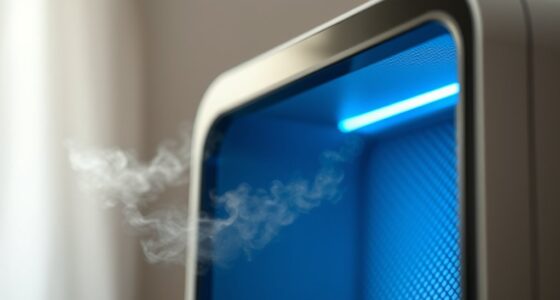
Smart air purifiers have revolutionized how you improve indoor air quality by combining advanced technology with user-friendly features. With these devices, you’re no longer limited to manual adjustments or basic timers. Instead, they seamlessly integrate with your home automation systems, enhancing both convenience and effectiveness. One of the key features that makes this possible is air quality monitoring. These purifiers come equipped with sensors that constantly track the levels of pollutants, allergens, and particulate matter in your environment. This real-time data allows the purifier to automatically adjust its operation, increasing filtration when air quality drops and reducing activity when things are cleaner. As a result, you get ideal purification without having to lift a finger, ensuring healthier air at all times.
Smart air purifiers automatically adjust based on real-time air quality data for effortless, healthier indoor environments.
Beyond air quality monitoring, voice control integration takes the smart air purifier experience to the next level. When you pair your device with voice assistants like Alexa, Google Assistant, or Siri, you gain hands-free control over your air quality. Want to turn on the purifier before you arrive home or adjust its settings while cooking? Simply speak your command. This integration makes managing your indoor environment effortless, especially during busy moments or when your hands are occupied. Plus, voice commands can be customized for specific functions, such as setting a particular fan speed or scheduling purification cycles, giving you precise control through natural language.
Connecting your smart air purifier to your home automation system also opens the door to automation routines. You can set it to activate automatically based on air quality readings, time of day, or occupancy sensors. For example, the purifier might turn on when sensors detect high levels of dust or VOCs, or shut off during times when you’re sleeping or away from home. This level of automation not only maintains a consistently healthy environment but also optimizes energy use, saving you money and reducing your ecological footprint. Interestingly, advancements in AI, such as air quality monitoring, are now enabling devices to adapt and improve their performance over time.
Furthermore, many smart air purifiers offer companion apps that provide detailed air quality reports, filter status updates, and customization options. These apps let you monitor and control your device remotely, giving you peace of mind no matter where you are. Whether you’re adjusting settings, scheduling purification times, or checking the current air quality, the app ensures you stay connected and in control.
In short, integrating your smart air purifier with home automation systems and voice control transforms your space into a truly intelligent environment. You benefit from continuous air quality monitoring, effortless voice commands, and automation routines that keep your indoor air clean and healthy with minimal effort. This seamless integration elevates your home’s comfort, convenience, and overall air quality, making smart living easier than ever.
Frequently Asked Questions
Can Smart Air Purifiers Detect Specific Allergens?
Yes, smart air purifiers can detect specific allergens, thanks to advanced allergen detection features. They use sensitive sensors with high accuracy to identify common allergens like pollen, dust mites, and pet dander. You’ll appreciate how sensor accuracy guarantees precise readings, allowing your device to adjust filtration levels automatically. This way, you maintain a healthier environment, especially if you or your family have allergies or asthma.
How Secure Is Data Sharing With Home Automation Systems?
You can trust that data sharing with your home automation system is generally secure, thanks to robust data encryption methods. Make certain to regularly check your privacy settings to control what information is shared and with whom. By staying vigilant and adjusting settings as needed, you protect your personal data and ensure your smart air purifier’s integration remains safe and private.
Are Smart Purifiers Compatible With All Smart Home Platforms?
You’re in the driver’s seat when it comes to compatibility with smart purifiers; however, not all models play nice with every platform. Some devices face compatibility issues, especially with less common or proprietary systems. To avoid surprises, verify platform integrations and compatibility details before buying. While many popular systems like Alexa, Google Home, or Apple HomeKit support certain purifiers, you’ll want to ensure your chosen model plays well with your existing setup.
What Is the Typical Lifespan of a Smart Air Purifier?
A smart air purifier typically lasts about 3 to 5 years, depending on filter maintenance and usage. Regularly changing filters guarantees ideal performance and energy efficiency, extending its lifespan. Keep an eye on filter indicator alerts and follow manufacturer recommendations. Proper maintenance not only improves air quality but also helps your device run smoothly and efficiently for years to come.
Do Smart Purifiers Require Professional Installation or Setup?
Did you know that over 70% of smart device users prefer seamless setup? You typically don’t need professional installation for a smart air purifier; most models come with clear installation guidance. You can easily set it up yourself through user setup, often via a smartphone app. Just follow the instructions, connect it to your Wi-Fi, and integrate it with your home automation system. It’s designed for quick, hassle-free installation.
Conclusion
By integrating smart air purifiers into your home automation, you’re creating a revitalizing gust that effortlessly adapts to your life. Think of it as having a vigilant guardian, silently working behind the scenes to clear away pollutants and enhance your environment. When technology and comfort unite, your home becomes a sanctuary—an oasis where clean air flows freely, nurturing your well-being like a gentle breeze carrying away the dust of everyday worries.