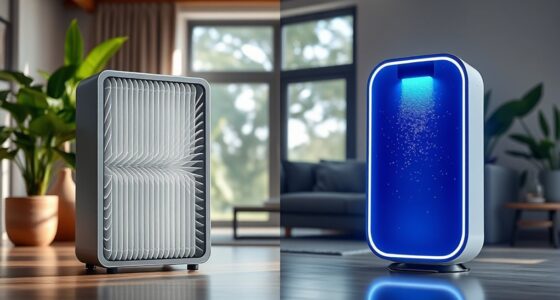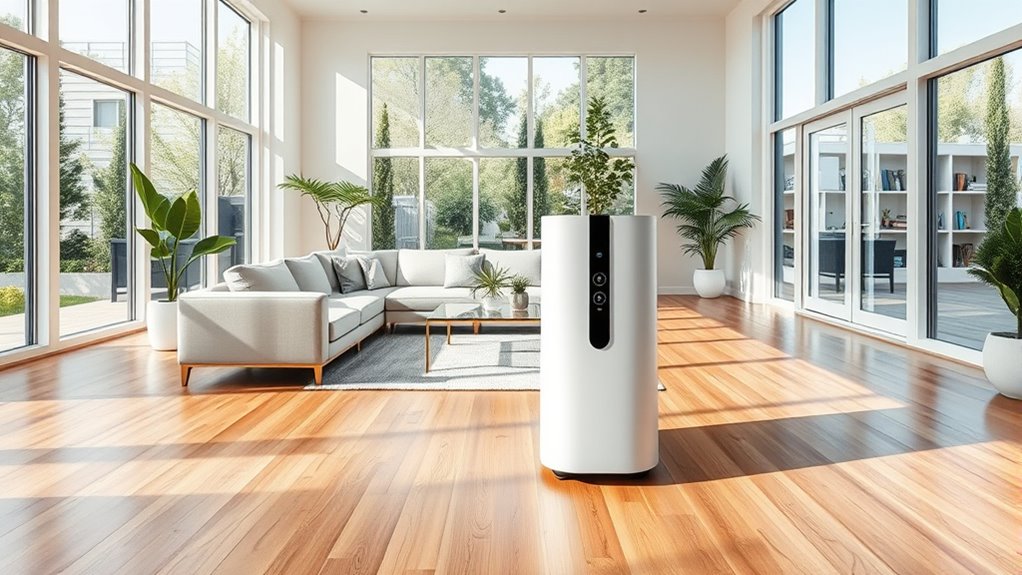
To size an air purifier for your open floor plan, start by accurately measuring the total space, including all zones, to determine the overall area. Choose a model with a CADR rating that matches or exceeds your room’s square footage. Proper placement is key; position the unit centrally and ensure vents are unobstructed. If your space is large or divided, consider multiple units. Keep these tips in mind to optimize air quality—more details await to help you get it just right.
Key Takeaways
- Measure the total combined length and width of all rooms in the open plan for accurate space calculation.
- Select an air purifier with a CADR rating that matches or exceeds the total square footage of the area.
- Ensure the model is designed for large or multi-zone spaces to effectively cover the entire open layout.
- Position the purifier centrally and avoid obstructions to maximize airflow and coverage.
- Use multiple units if the space is divided or exceeds the capacity of a single purifier.
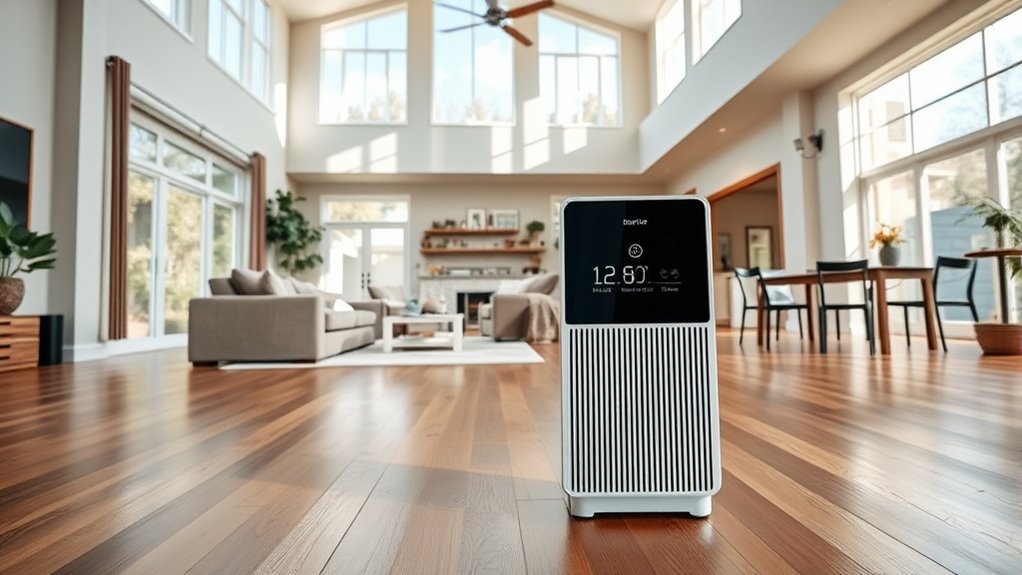
Choosing the right air purifier for an open floor plan can considerably improve your indoor air quality, but it requires more than just picking a model with a high CADR rating. In an open space, air circulates freely across multiple areas, so you need a purifier that’s capable of handling the total room coverage effectively. The goal is to select an air purifier that can clean the air throughout the entire space without leaving dead zones or requiring constant repositioning. To do this, you should first measure the total square footage of your open floor plan. Add up the length and width of all interconnected rooms to get a clear picture of the space you need to cover. With this measurement, you can then look for units specifically designed to handle large areas or multiple zones, ensuring you’re not overspending on a device that’s too small or wasting energy on an overly powerful model.
Next, consider the airflow capacity of the air purifier, often indicated by the clean air delivery rate (CADR). While a high CADR is generally better, it’s essential to match that number to your room coverage needs. For open floor plans, you’ll want a purifier with a CADR that aligns with or exceeds the square footage of your space. Some models specify their recommended room size, so check these ratings carefully. Keep in mind that an air purifier with a CADR suitable for a smaller room won’t be efficient enough for a large, open area, and it might strain the device or reduce its lifespan. Conversely, a unit designed for larger spaces will operate more efficiently, maintaining consistent air quality throughout the entire floor plan. Additionally, understanding personal health needs can guide you in choosing features like HEPA filters or activated carbon filters for allergens or odors.
Placement also plays a critical role in maximizing room coverage. Position the purifier centrally or in a location where air intake and outlet vents are unobstructed. Avoid corners or tight spots that can hinder airflow. In an open floor plan, you might even consider multiple units if the space is exceptionally large or divided into distinct zones. This ensures ideal air circulation and consistent air quality. Remember, the key is not just the size of the purifier but how well it integrates into your space to provide thorough coverage. When you choose a model with adequate room coverage and proper placement, you’ll notice a marked improvement in air quality, allergies, and overall comfort in your open living area.
Frequently Asked Questions
Can an Air Purifier Effectively Cover Multiple Rooms?
An air purifier can effectively cover multiple rooms if you optimize airflow and consider room partitioning. To improve coverage, choose a purifier with a high CADR and guarantee unobstructed airflow. Using fans or strategic placement helps direct clean air across different areas. Keep in mind that room partitioning might limit effectiveness, so selecting a purifier with a wider coverage or multiple units can better maintain air quality throughout your open floor plan.
How Often Should I Replace the Air Purifier Filters?
Think of your air purifier filters as the lungs of your home, needing care to keep breathing easy. You should check your filter lifespan regularly, usually every 6 to 12 months, depending on usage and air quality. Follow the manufacturer’s replacement schedule for peak performance. Ignoring it is like holding your breath—eventually, your home’s air will suffer, so stay proactive and swap out those filters on time.
Do Specific Air Purifiers Target Pet Odors?
You’re wondering if specific air purifiers target pet odors. Many air purifiers are designed with pet odor removal in mind, featuring activated carbon filters that absorb smells effectively. Look for models labeled as air purifier targeting pets, as they’re optimized for pet dander and odors. These units help keep your space fresh by efficiently tackling pet-related smells, making your environment more comfortable for both you and your furry friends.
Will an Air Purifier Reduce Outdoor Pollution Indoors?
Outdoor air pollution is a relentless beast, but an air purifier can be your shield. It reduces outdoor pollution indoors by filtering out harmful particles through indoor filtration systems. While it won’t eliminate all outdoor pollutants, it markedly improves air quality, making your space healthier. Keep in mind, the effectiveness depends on the purifier’s size and capacity, so choose one that matches your open floor plan for the best results.
Are There Quiet Models Suitable for Open Living Spaces?
You’ll find quiet air purifier models that suit open living spaces well. Look for units with low noise levels, often advertised as “quiet” or “sleep mode.” These models also tend to be energy-efficient, so you can run them longer without high electricity bills. By choosing a purifier with these features, you guarantee a peaceful environment while maintaining fresh indoor air, perfect for open floor plans where noise can easily carry.
Conclusion
Choosing the right air purifier for your open floor plan balances power with subtlety. While a larger unit can handle more space, it might drown out the room’s natural ambiance. Conversely, a smaller purifier offers quiet efficiency but may struggle to keep the air fresh. Ultimately, finding that perfect fit means respecting the room’s expansive nature while understanding that sometimes, less is more in truly capturing clean air.