If your purifier sits next to a fireplace, you might be using it backward, which reduces its effectiveness. Heat from the fireplace creates airflow patterns that pull dust and smoke away from the purifier’s intake, making it harder for the device to do its job. Proper placement is key—place it where it can freely draw in air without obstructions or heat interference. To discover how to optimize your air quality setup, keep exploring these tips.

Get home appliances delivered free with Prime
- Fast, free delivery on millions of items
- Prime Video, Amazon Music and more included
- Member-only deals all year
Key Takeaways
- Placing the purifier near the fireplace can disrupt airflow, reducing its ability to filter indoor air effectively.
- Heat from the fireplace causes air currents that pull pollutants away from the purifier’s intake.
- Proper placement involves positioning the purifier away from heat sources for optimal airflow and pollutant capture.
- Using the purifier backward—close to the fireplace—can lead to increased wear and decreased efficiency.
- Moving the purifier to a central or open area enhances airflow and maximizes its air-cleaning performance.
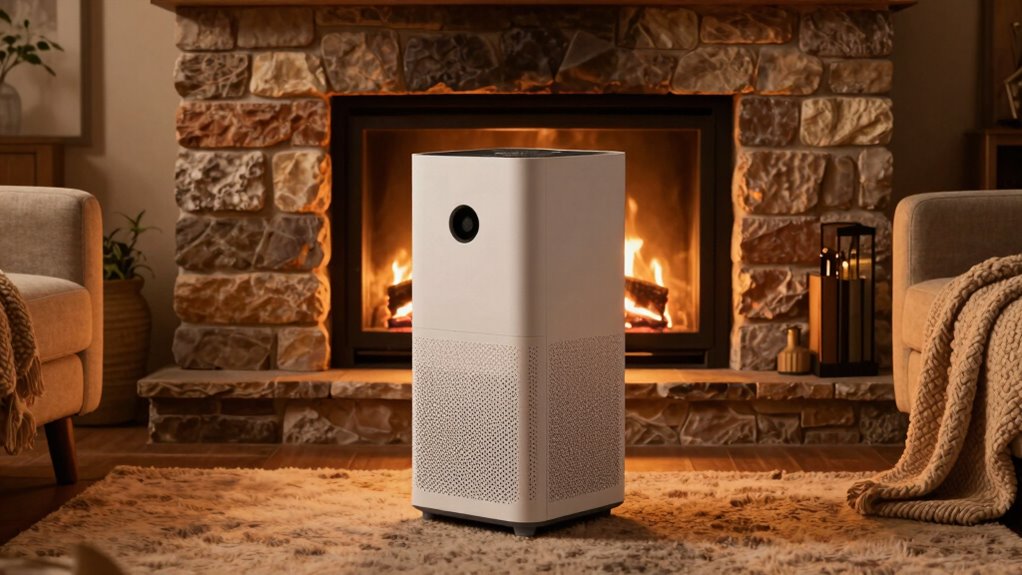
Proper purifier placement is essential for maximizing its effectiveness in improving indoor air quality. If your purifier sits right next to a fireplace, you might be unintentionally reducing its ability to clean the air efficiently. Fireplaces generate heat and create airflow patterns that can interfere with your purifier’s operation. Instead of enhancing air quality, placing your purifier near a heat source like a fireplace can disrupt airflow optimization, making it harder for the device to draw in contaminated air and circulate clean air effectively.
When a purifier is positioned too close to a fireplace, the heat can cause air currents that pull dust, smoke, and other particles away from the purifier’s intake. This means the purifier isn’t capturing pollutants as it should, and you might notice little to no improvement in air quality. Additionally, the heat from the fireplace could cause the purifier’s internal components to work harder than necessary, which can lead to increased wear and tear over time. This can also negatively impact the airflow patterns within your room, further diminishing the purifier’s efficiency. Proper air circulation is crucial for maintaining optimal air quality and ensuring the purifier functions correctly.
To optimize airflow, you should place your purifier in a location where it can freely draw in air without obstruction. Keep it away from heat sources, direct sunlight, or drafts that could skew airflow patterns. For example, positioning it in the center of the room or near an open space allows for better circulation of air. This way, the purifier can effectively trap airborne particles and circulate cleaner air throughout the room. Remember, a well-placed purifier not only improves air quality but also extends its lifespan by reducing unnecessary strain on its components.
If your goal is to improve indoor air quality near a fireplace, consider moving the purifier to a different spot in the room, ideally on the opposite side or away from the heat source. Regular purifier maintenance becomes easier when it’s placed where air can flow naturally, reducing the risk of dust buildup or overheating. Ensuring proper airflow management enhances the purifier’s performance and longevity, making it a crucial aspect of effective air purification. By paying attention to placement and ensuring airflow optimization, you make sure your purifier works as efficiently as possible, providing healthier indoor air and reducing the need for costly repairs down the line.
Products Worth Considering

Levoit Core 400S-P Smart Air Purifier for Large Rooms

LEVOIT Vital 200S-P Smart Air Purifier for Large Rooms

Blueair Blue Pure 511i Max Smart Air Purifier
As an affiliate, we earn on qualifying purchases.
Frequently Asked Questions
Can Purifier Placement Affect Its Energy Consumption?
Yes, purifier placement affects its energy consumption. Proper airflow optimization guarantees the device runs efficiently, reducing unnecessary energy use. Keep it positioned in a central, unobstructed area away from fireplaces or walls to maximize airflow and filtration. Follow energy-saving tips like setting the right fan speed and maintaining filters regularly. This way, your purifier works effectively without wasting electricity, saving you money and improving air quality.
How Do I Know if My Purifier Is Working Efficiently?
You can tell if your purifier is working efficiently by monitoring your air quality and noticing improvements in odors or particles. Regularly check your filter for dirt buildup and replace it as recommended. If the air feels fresher and your purifier runs smoothly without unusual noises, it’s a good sign it’s operating well. Consistent filter maintenance and paying attention to air quality indicators help guarantee your purifier stays effective.
Are There Specific Purifier Models Better for Fireplace Areas?
You might wonder if certain purifiers work better near a fireplace. Some models with high CADR ratings specifically target fireplace smoke and odors, making them ideal for fireplace air. Look for purifiers with activated carbon filters and HEPA filters, and place them strategically for best purifier placement. Brands like Dyson, Blueair, and Honeywell often have options suited for filtering fireplace air effectively, helping you keep indoor air fresh.
Does Furniture Placement Impact Purifier Effectiveness?
Your furniture arrangement definitely impacts purifier effectiveness. To optimize airflow, keep furniture away from the purifier and avoid blocking vents. Arrange pieces to promote smooth airflow and prevent obstructions, which guarantees cleaner air circulation. Proper placement allows your purifier to work more efficiently, especially in high-traffic or smoky areas like near a fireplace. Regularly adjusting furniture for airflow optimization helps maximize your purifier’s performance and keeps your indoor air clean.
How Often Should I Replace Filters in a Purifier Near a Fireplace?
You should replace filters in your purifier near a fireplace every 1 to 3 months, depending on usage and filter type. Fireplace proximity accelerates filter lifespan because it introduces more soot, smoke, and dust, impacting air quality. Regular replacement guarantees your purifier effectively removes pollutants and maintains good air quality. Check your manufacturer’s recommendations and monitor filter condition, replacing sooner if you notice decreased airflow or a musty odor.
Conclusion
If your purifier sits by a fireplace, you’re risking your entire home’s air quality—it’s like inviting a tornado into your living room! Move it away from the heat source to guarantee it works at peak performance, trapping harmful particles and keeping your air truly clean. Don’t let poor placement turn your purifier into an ineffective paperweight. Take action now, and breathe easier knowing your home is a sanctuary of fresh, healthy air—your lungs will thank you!