Photocatalytic oxidation (PCO) in air purifiers is generally effective at breaking down airborne pollutants, especially VOCs, into harmless substances like carbon dioxide and water. It can improve indoor air quality by reducing odors and chemical buildup. However, safety depends on the device’s design; some models produce ozone, which can cause health issues. To guarantee effectiveness and safety, choose certified units and explore how proper use can enhance your air quality.
Key Takeaways
- PCO effectively breaks down VOCs and odors into harmless substances like CO2 and water.
- When certified and properly maintained, PCO air purifiers are safe and compliant with ozone emission standards.
- PCO enhances indoor air quality by targeting airborne chemicals at a molecular level.
- Its effectiveness improves when combined with ventilation and other purification methods.
- Proper device selection and maintenance are essential for maximizing PCO safety and efficiency.
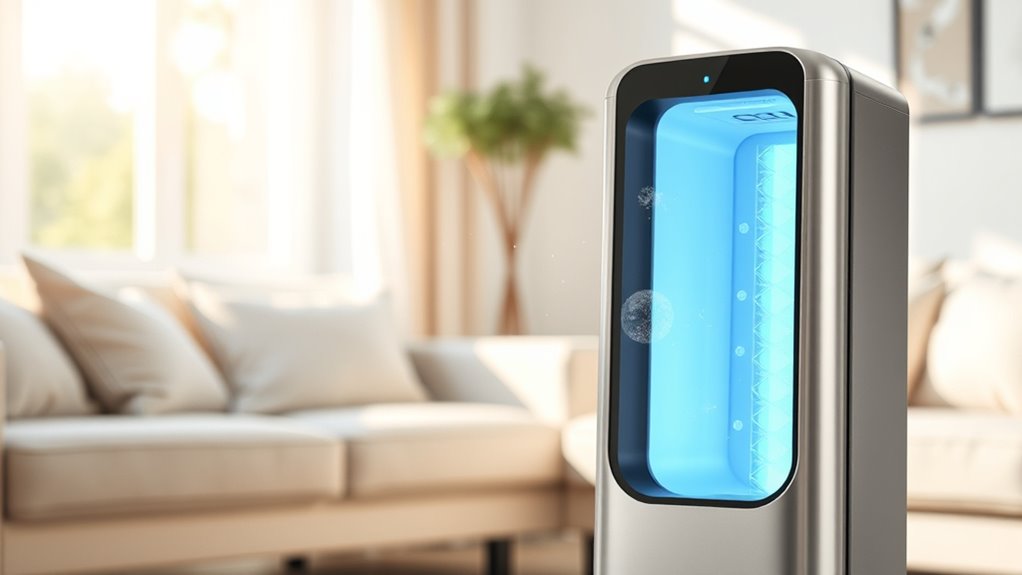
Photocatalytic oxidation (PCO) is a cutting-edge technology used in air purifiers to effectively eliminate pollutants and improve indoor air quality. If you’re concerned about airborne contaminants, understanding how PCO operates can help you decide if it’s the right solution for your space. One of its main strengths is VOC elimination. Volatile organic compounds, which come from paints, cleaning products, and furniture, can linger in the air and cause health issues over time. PCO works by breaking down these VOC molecules at a molecular level, converting them into harmless substances like carbon dioxide and water. This process not only reduces odors but also prevents the buildup of harmful chemicals that could irritate your lungs or trigger allergies.
However, while PCO is effective at VOC elimination, you should also be aware of ozone safety concerns. Some PCO air purifiers produce ozone as a byproduct, and excessive ozone levels can be detrimental to health, especially for those with respiratory issues. Ozone is a powerful oxidant that can irritate your airways, worsen asthma, and even compromise lung function over prolonged exposure. That’s why it’s vital to select a PCO air purifier that is certified to produce ozone within safe limits. Reputable models adhere to strict standards set by organizations like the EPA or CARB, ensuring ozone emissions stay below harmful thresholds. If you’re particularly sensitive or have respiratory conditions, it’s wise to verify the device’s ozone output before making a purchase.
You might also wonder how safe PCO technology is in general. When used properly and with certified units, PCO can be a safe and effective way to tackle indoor pollutants. It’s not a silver bullet, though, and works best when combined with regular ventilation and other air purification methods. Keep in mind that some older or cheaper PCO devices may produce higher ozone levels, so always research the product’s specifications and reviews. Proper maintenance, such as replacing the catalytic cell as recommended, also guarantees that the purifier continues to operate safely and efficiently. Additionally, understanding cybersecurity vulnerabilities associated with smart air purifiers is crucial to protect your home network from potential cyber threats.
Frequently Asked Questions
Does Photocatalytic Oxidation Produce Any Harmful Byproducts?
You might wonder if photocatalytic oxidation produces harmful byproducts. It generally doesn’t, but there’s a slight chance of creating compounds like formaldehyde if the process isn’t optimized. To guarantee byproduct safety, choose air purifiers with well-maintained catalysts, as catalyst degradation can reduce effectiveness and increase risks. Regularly replacing or cleaning the catalyst helps keep the process safe and efficient, minimizing potential harmful emissions.
How Does Photocatalytic Oxidation Compare to HEPA Filtration?
You’ll find photocatalytic oxidation offers a different approach to air purification than HEPA filtration. While HEPA filters trap particles like dust, pollen, and bacteria effectively, photocatalytic oxidation breaks down pollutants including VOCs and odors through a chemical reaction. The technology comparison shows that photocatalytic oxidation can target gases and odors that HEPA filters can’t, but it may produce byproducts, so consider your specific air quality needs when choosing an air purification method.
Is Photocatalytic Oxidation Effective Against Viruses?
You might think photocatalytic oxidation works like magic against viruses, but it’s more like a helpful sidekick. It can assist in viral inactivation and surface sterilization, but it’s not foolproof. While it reduces some airborne viruses and cleans surfaces over time, don’t rely solely on it. For full protection, combine it with other methods like HEPA filters and disinfectants—because no single solution is perfect, even in the world of “miracles.”
What Maintenance Is Required for Photocatalytic Air Purifiers?
You should regularly replace the filter as recommended by the manufacturer to keep your photocatalytic air purifier working effectively. Additionally, clean the catalyst surface periodically to remove dust and debris that can diminish its effectiveness. Check the user manual for specific instructions on filter replacement intervals and cleaning procedures. Proper maintenance guarantees peak performance, extends the lifespan of your purifier, and maintains healthy indoor air quality.
Are There Health Risks Associated With Photocatalytic Oxidation?
You might worry about potential chemical emissions from photocatalytic oxidation, but studies show that, with proper use, long-term safety remains high. While some concerns about byproducts exist, most air purifiers are designed to minimize risks, acting like a safety net. To keep your environment safe, choose reputable models, ensure proper maintenance, and stay informed—because your health is the lighthouse guiding your choices.
Conclusion
So, is photocatalytic oxidation truly effective in air purifiers? While it can break down some pollutants and reduce odors, evidence shows it might not eliminate all harmful particles or gases completely. Some studies suggest it’s helpful but not a standalone solution. To maximize air quality, consider combining photocatalytic technology with other purification methods. Keep questioning and researching—don’t rely solely on one technology to keep your air truly clean.