
Ozone generators produce ozone to neutralize pollutants, but they can harm your health and cause respiratory issues if misused. In contrast, air purifiers with HEPA filters are safer, trapping particles without releasing harmful byproducts. While ozone generators might be cheaper upfront, long-term safety and environmental concerns make air purifiers a better choice. To understand the full risks and benefits, explore how each device works and what suits your needs best.
Key Takeaways
- Ozone generators produce ozone that can cause respiratory issues, making them less safe for indoor use compared to HEPA-filter air purifiers.
- Air purifiers with HEPA filters safely trap particles without harmful emissions, ensuring consistent and effective air cleaning.
- Excess ozone from generators can contribute to environmental pollution and health risks, unlike environmentally friendly air purifiers.
- HEPA air purifiers are generally more expensive initially but offer safer, long-term effectiveness without health hazards.
- Ozone generators are effective for large-scale odor removal but pose safety concerns, whereas air purifiers are safer for everyday indoor air quality.
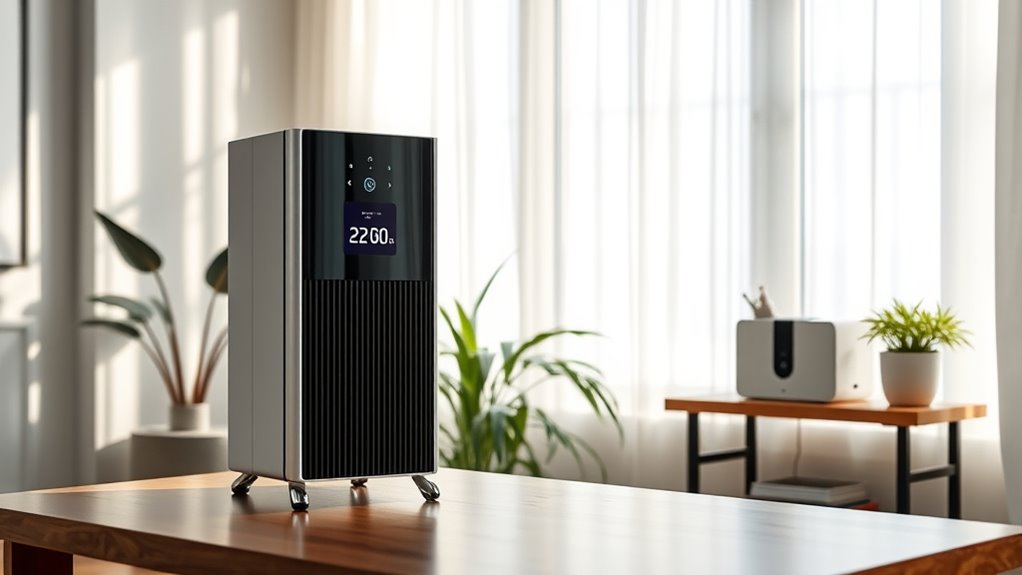
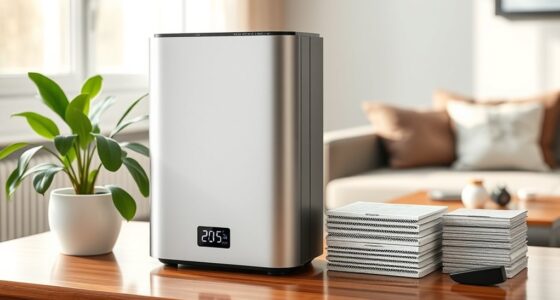
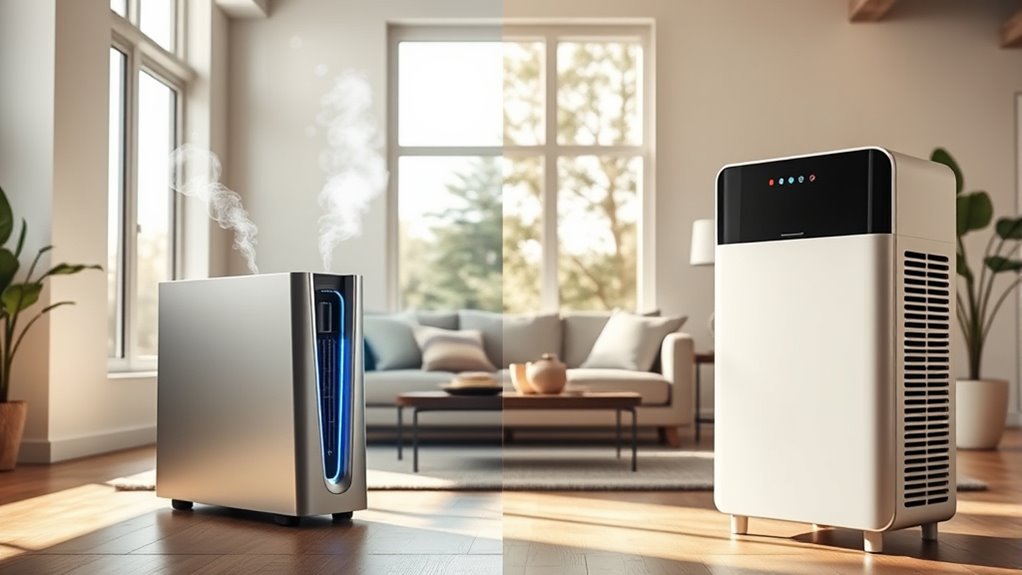
When choosing between ozone generators and air purifiers, understanding how each device works is essential to making an informed decision. Ozone generators produce ozone molecules to neutralize airborne contaminants, whereas air purifiers typically use filters like HEPA to trap particles and improve air quality. This fundamental difference influences not only their safety and effectiveness but also their environmental impact and cost comparison. Ozone generators release ozone into the environment, which can react with other pollutants but also has the potential to cause harm to humans and pets when used improperly. The environmental impact of ozone generators can be significant if they’re overused or misused, as excess ozone contributes to smog formation and respiratory issues in the broader ecosystem. On the other hand, air purifiers with HEPA filters are designed to clean the air without releasing harmful byproducts, making them a more eco-friendly option overall. Additionally, the technology used in air purifiers often results in fewer maintenance issues and a more consistent performance over time.
Cost comparison is another critical factor to weigh. Ozone generators tend to have a lower upfront cost, often making them appear attractive for budget-conscious consumers. However, ongoing expenses can add up because they require regular maintenance, and the potential health risks associated with ozone exposure may lead to additional health costs or the need for medical treatment if used improperly. Air purifiers with HEPA filters usually come with a higher initial purchase price, but they tend to be more cost-effective over time. Their filters need replacing periodically, but they do not pose the same health risks as ozone generators, potentially saving you money on health-related costs.
In terms of environmental impact, air purifiers generally have a smaller footprint. They operate with minimal emissions and do not contribute to air pollution or ozone depletion. Conversely, ozone generators, while effective at neutralizing certain odors and pollutants, can contribute to environmental concerns if misused because they actively release ozone into the air. This makes them less sustainable from an environmental standpoint, especially in enclosed spaces where ozone levels can accumulate.
Ultimately, your choice depends on your priorities. If safety and environmental impact weigh heavily, air purifiers with HEPA filters are the better option. They’re safer for indoor use, have a smaller environmental footprint, and tend to be more cost-effective over time. Ozone generators might seem appealing for quick, large-scale odor removal, but the potential health risks and environmental consequences make them less suitable for everyday use, especially in homes with children or pets. Selecting devices based on their technological safety and environmental impact can help you make a more informed and responsible decision.
Frequently Asked Questions
Are Ozone Generators Safe for Children and Pets?
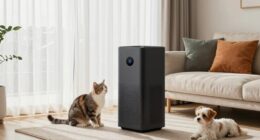
Ozone generators aren’t safe for children and pets, as high ozone levels can harm their respiratory systems. You should prioritize child safety and pet health by avoiding devices that produce ozone indoors. Instead, opt for air purifiers with HEPA filters, which effectively remove pollutants without risking ozone exposure. Protect your loved ones by choosing safer air cleaning options that guarantee a healthy environment for everyone.
How Long Should I Run an Air Purifier Daily?
You should run your air purifier about 8-12 hours daily for ideal air quality. Regularly check and maintain the device to guarantee it functions effectively, as neglecting maintenance can reduce its cleaning power. Remember, many believe continuous operation improves air quality, but overuse can cause unnecessary energy use and wear. Investigate your specific model’s recommendations to balance fresh air with device longevity and safety, especially in homes with children or pets.
Do Ozone Generators Eliminate All Airborne Germs?
Ozone generators can reduce airborne pathogens, but they don’t eliminate all germs completely. The ozone reacts with certain airborne bacteria and viruses, helping with germ elimination, but it’s not a foolproof solution. You shouldn’t rely solely on ozone generators for disinfecting your space, especially since high ozone levels can be harmful. For thorough germ removal, combine proper cleaning, ventilation, and using approved air purifiers.
Can Ozone Generators Cause Respiratory Issues?
You could be playing with fire if you use ozone generators, as ozone exposure can cause respiratory issues. Ozone can irritate your respiratory system, leading to symptoms like coughing, throat irritation, and even asthma attacks. When you’re exposed to high levels of ozone, it’s like breathing in a cloud of trouble. To keep your lungs safe, avoid prolonged exposure and guarantee good ventilation when using air purifiers.
Are There Certification Standards for Ozone Generators?
Yes, there are certification standards for ozone generators. Regulatory standards, such as those set by the EPA and UL, guarantee these devices meet safety and performance requirements. Certification requirements often include limits on ozone emissions and safety warnings. Before purchasing, verify if the ozone generator is certified by recognized organizations to ensure it operates safely and effectively, reducing health risks associated with high ozone levels.
Conclusion
As you weigh your options, imagine stepping into a fresh, crisp room where air feels light and clean. Ozone generators might promise quick results, but their invisible dangers lurk behind the scenes. Air purifiers, on the other hand, gently sweep away pollutants, creating a safe haven. Choose the one that nurtures your space and peace of mind, filling your home with clarity and calm—breathe easy, knowing your air is truly safe.