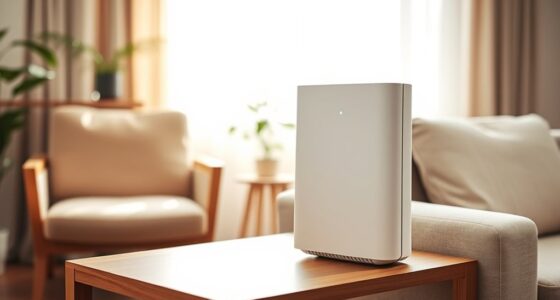
During winter, you should consider using an air purifier because indoor air quality often worsens when windows stay closed. Increased humidity can promote mold growth and dust mites, which aggravate allergies and respiratory issues. Heating methods may dry out your air or raise humidity levels further, making air purifiers with dust and allergen filters valuable. Proper ventilation and humidity management help create a healthier indoor environment. If you want to learn more about maintaining ideal indoor air quality during winter, keep exploring these tips.
Key Takeaways
- Indoor air pollution often worsens in winter due to closed windows and heating, increasing the need for air purification.
- HEPA-filter air purifiers help reduce airborne allergens and mold spores that thrive in high-humidity indoor environments.
- Maintaining optimal humidity levels (40-50%) with purifiers or dehumidifiers prevents mold growth and allergen proliferation.
- Air purifiers with dehumidification features can improve overall air quality and comfort during the cold season.
- Monitoring indoor humidity and air quality helps determine if an air purifier is necessary for a healthier winter environment.
Winter can bring about increased indoor air pollution due to closed windows and heating systems, making it harder to breathe clean air. When you keep your windows shut to stay warm, the air inside your home can become stale and laden with pollutants. This environment often leads to higher indoor humidity levels, which can create the perfect conditions for allergens and mold to thrive. Elevated indoor humidity makes the air feel damp and can cause surfaces to stay moist longer, providing an ideal breeding ground for mold spores and dust mites. These allergens can trigger asthma, allergies, or respiratory discomfort, especially during the winter months when you’re likely spending more time indoors.
You might not notice it, but indoor humidity plays a pivotal role in your air quality. When humidity levels rise above 50%, you risk encouraging mold growth and dust mites, both of which can severely impact your health. Mold spores are microscopic but can become airborne, making it easier for you to inhale them and experience allergy symptoms or respiratory issues. Dust mites flourish in humid environments, contributing to allergy symptoms like sneezing, coughing, and congestion. An air purifier equipped with a HEPA filter can help reduce airborne allergens and mold spores, making the air safer to breathe. Additionally, some purifiers have features specifically designed to manage humidity levels or include dehumidification functions, which can be beneficial during the winter. Proper ventilation is also key to maintaining good indoor air quality during the colder months and preventing indoor air pollution.
During the cold season, you might also notice that indoor air feels drier or more humid depending on your heating method. Forced-air heaters tend to dry out the air, leading to dry skin, sore throats, and nasal discomfort. Conversely, if you use humidifiers or have poor ventilation, humidity can increase, promoting mold growth and allergen accumulation. An air purifier helps create a balanced environment by filtering out airborne particles and reducing pollutants, but it’s also essential to monitor indoor humidity with a hygrometer. Maintaining ideal humidity levels—around 40-50%—can help prevent mold and allergen proliferation, making your home healthier and more comfortable.
Frequently Asked Questions
Can an Air Purifier Help With Winter Respiratory Illnesses?
Yes, an air purifier can help with winter respiratory illnesses by reducing allergens and airborne mold, which can worsen symptoms. It provides allergy relief by capturing pollen, pet dander, and dust mites, and prevents mold spores from circulating. During cold seasons, when indoor air quality drops and people spend more time inside, using an air purifier creates a healthier environment and eases respiratory discomfort.
Are There Specific Filters Better Suited for Winter Air Quality?
Yes, during winter, HEPA filters are especially effective at capturing airborne particles like pollen, dust, and pet dander, helping to improve indoor air quality. Activated carbon filters are also beneficial because they absorb odors, pollutants, and VOCs from heating sources or indoor activities. Together, these filters provide all-encompassing purification, ensuring you breathe cleaner air when windows are closed and outdoor air quality may decline.
How Often Should I Change the Filter During Winter?
You should change your filter every 4 to 6 weeks during winter to guarantee ideal filter maintenance. But beware—seasonal adjustments might be necessary if you notice reduced airflow or lingering odors. Don’t wait too long, or your purifier could strain, losing efficiency. Staying vigilant during this season keeps your indoor air fresh and your device working smoothly, making every breath safer and more comfortable.
Do Air Purifiers Reduce Indoor Humidity Levels in Winter?
Air purifiers generally don’t reduce indoor humidity levels in winter; instead, they focus on filtering out pollutants. If your home has issues with indoor mold or excess humidity, you might need a dehumidifier for humidity control. Using an air purifier can improve air quality by removing allergens and pollutants, but to manage humidity effectively, combine it with a dehumidifier, especially during cold months when indoor moisture can promote mold growth.
Is Noise From Air Purifiers More Noticeable in Winter?
Yes, the noise from air purifiers can seem more noticeable in winter because indoor heating reduces background sounds, making white noise stand out more. This white noise can actually improve your sleeping comfort by masking other disturbances. If you’re sensitive to sound, consider choosing a quieter model or using earplugs. Overall, the added white noise can help you sleep more peacefully during cold, quiet winter nights.
Conclusion
So, as winter wraps the world in a frosty embrace, don’t let your indoor air become a stubborn cloud of pollutants. An air purifier acts like a gust of revitalizing mountain air, clearing away the sneaky allergens and germs lurking inside. Keep your home’s air crisp and clean, turning your winter sanctuary into a cozy haven where every breath feels like a revitalizing breeze. Stay vigilant, breathe easy, and let your purifier be your wintertime guardian.