Air purifiers with HEPA filters can markedly reduce airborne viruses by trapping particles as small as 0.3 microns, including many that carry viruses. While they lower the concentration of virus-laden aerosols and reduce the risk of inhaling infectious particles, they don’t completely eliminate the threat. Proper maintenance, combined with masks and ventilation, boosts safety. If you want to understand how these devices work and their limits, further insights await you.
Key Takeaways
- HEPA filters can trap many airborne viruses, reducing their concentration in indoor air.
- They do not actively kill viruses but remove virus-laden aerosols through physical filtration.
- Proper maintenance and filter replacement are essential for optimal virus mitigation.
- Air purifiers are most effective when used alongside masks, ventilation, and hygiene measures.
- They help lower infection risk but do not guarantee complete virus elimination.
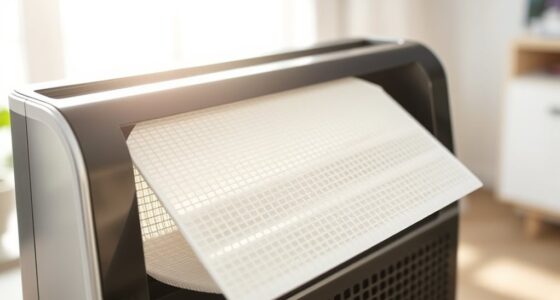
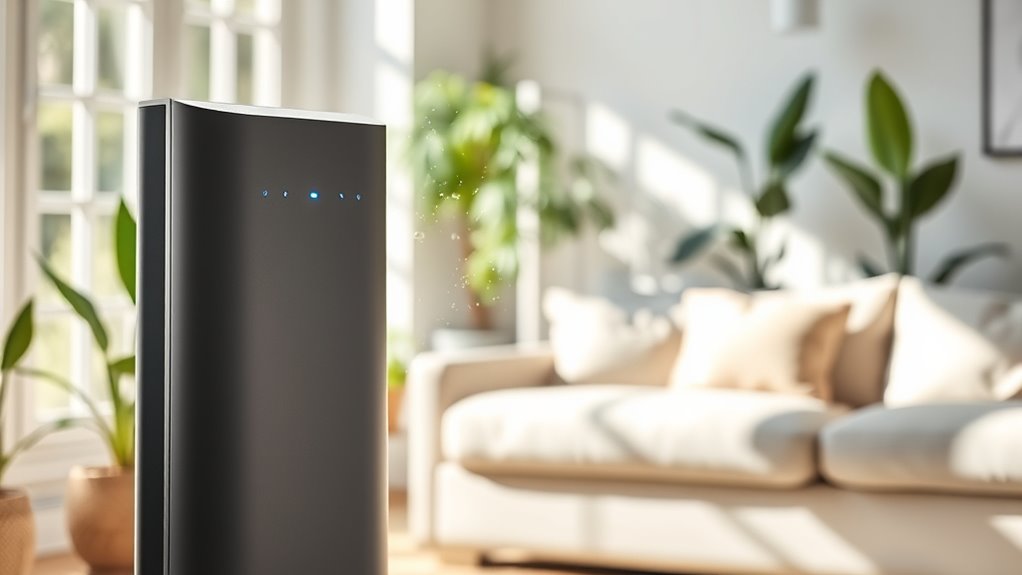
Have you ever wondered if air purifiers can effectively reduce the spread of viruses in your home? The truth is, many people hope that installing an air purifier will be a simple way to keep their indoor air safer. While some models are equipped with HEPA filters, which are designed to trap tiny particles, understanding their role in virus transmission is key. HEPA filters are capable of capturing particles as small as 0.3 microns, including many airborne pollutants, dust, and even some bacteria and viruses. However, it’s important to recognize that not all viruses are airborne or large enough to be trapped easily. Many respiratory viruses, like the flu or COVID-19, can linger in the air in aerosolized forms, which makes the effectiveness of HEPA filters in reducing virus transmission more nuanced. Using an air purifier with a HEPA filter can substantially lower the concentration of airborne virus particles in a room. This doesn’t mean it will completely eliminate the risk, but it can reduce the likelihood of inhaling infectious particles. When you run an air purifier continuously in a well-sealed space, it helps to filter out airborne contaminants, including virus-laden aerosols that might otherwise remain suspended in the air for hours. This is especially useful in shared spaces or environments where ventilation might be limited. Keep in mind, though, that an air purifier should complement other safety measures, like wearing masks, practicing good hand hygiene, and ensuring proper ventilation, rather than replacing them. Proper maintenance, such as regular filter replacements, ensures the purifier continues to perform at its best. Remember, while HEPA filters are effective at trapping airborne particles, they don’t actively kill viruses. Instead, they remove them from the air, which helps reduce overall virus transmission indoors. Additionally, selecting an air purifier with proper filtration technology and regular upkeep is crucial for maximizing its benefits in virus mitigation.

Clorox Medium Room Turbo Air Purifiers for Home With True HEPA Filter
- High-Efficiency HEPA Filter: Captures 99.97% of allergens and particles
- 3-Stage 360° Filtration: Includes pre-filter, HEPA, and carbon filters
- Effective for Medium Rooms: Cleans up to 215 sq. ft. five times hourly
As an affiliate, we earn on qualifying purchases.
As an affiliate, we earn on qualifying purchases.
Frequently Asked Questions
Do All Air Purifiers Effectively Remove Airborne Viruses?
Not all air purifiers effectively remove airborne viruses, as their capabilities depend on factors like filtration and air exchange rates. To improve safety, you should consider ventilation standards that increase air exchange and use purifiers with HEPA filters proven to trap tiny particles. Regular maintenance and proper placement also enhance their efficiency. Remember, combining good ventilation with high-quality purifiers offers the best protection against airborne viruses.
How Long Does It Take for an Air Purifier to Eliminate Viruses?
The filtration duration for virus elimination varies based on your air purifier’s efficiency and room size. Typically, it takes about 15 to 30 minutes for a good purifier to markedly reduce airborne viruses, but complete virus elimination might take longer depending on factors like filter type and airflow. Keep your purifier running continuously for the best virus elimination time, ensuring consistent air quality and safety.
Can Air Purifiers Prevent Virus Transmission in Crowded Spaces?
While air purifiers help, they aren’t foolproof in crowded spaces. Relying solely on them ignores the importance of ventilation strategies and mask efficacy. You should combine multiple measures—improving airflow, using masks, and maintaining distance—to effectively reduce virus transmission. Don’t think an air purifier alone can prevent infections; it’s just one part of a holistic approach to keeping you safe in busy environments.
Are HEPA Filters Sufficient for Virus Removal?
HEPA filters are effective at capturing many airborne particles, but they have limitations when it comes to virus removal. Due to virus particle size, some tiny particles may slip through HEPA filters, especially if they’re damaged or improperly maintained. While HEPA filters markedly reduce airborne pathogens, relying solely on them isn’t enough. Combining air purifiers with other health measures offers better protection against viruses in indoor spaces.
Do UV-C Air Purifiers Kill Viruses More Effectively?
Think of UV-C air purifiers as knights wielding invisible swords. Their UV-C efficacy targets viruses, inactivating them more effectively than filters alone. While HEPA filters trap particles, UV-C light directly damages virus DNA, making it less infectious. So, yes, UV-C air purifiers can kill viruses more effectively, providing an extra layer of protection in your space. Just make certain your device’s UV-C technology is properly designed for maximum virus inactivation.

Clorox Medium Room Air Purifiers for Bedroom Home, True HEPA Filter
- High-Efficiency Filtration: Captures 99.97% allergens and 99.9% viruses
- 3-Stage 360° Air Purification: Filters allergens, particles, odors, and VOCs
- Suitable for Medium Rooms: Cleans 225 sq. ft. 5x/hour, larger spaces
As an affiliate, we earn on qualifying purchases.
As an affiliate, we earn on qualifying purchases.
Conclusion
While air purifiers can help reduce airborne viruses, they aren’t foolproof. A recent study found that HEPA filters can remove up to 99.97% of airborne particles, including some viruses, but effectiveness depends on proper use and maintenance. Remember, combining air purifiers with good ventilation and hygiene practices offers the best protection. So, investing in a quality purifier is wise—just know it’s one piece of a larger safety puzzle.

LEVOIT Smart Air Purifier for Home Pets Room up to 1875 ft Vital 200S-P
- AHAM Verified for Performance: Independently tested for air quality and safety
- Trusted by Experts: Certified with high CADR ratings for smoke, dust, pollen
- Designed for Allergies: Effective against pollen, pet hair, dander, and dust
As an affiliate, we earn on qualifying purchases.
As an affiliate, we earn on qualifying purchases.

Cabiclean Core Mini Replacement Filter for LEVOIT Core Mini-P Air Purifier
- Compatibility: Designed for LEVOIT Core Mini models
- Filtration System: 3-in-1 filtration with pre, personal, activated carbon
- Efficiency & Longevity: Eco-friendly materials for longer use
As an affiliate, we earn on qualifying purchases.
As an affiliate, we earn on qualifying purchases.