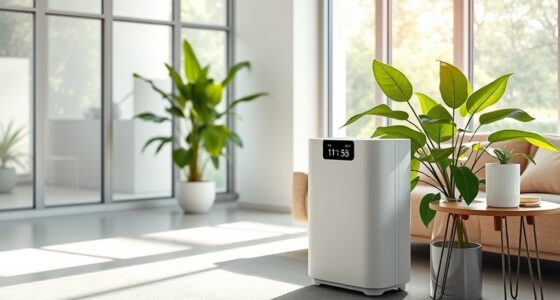
Using an air purifier with HEPA and activated carbon filters helps you reduce pet dander and odors effectively. HEPA filters trap tiny allergens like pet fur, saliva, and dander, while activated carbon absorbs stubborn smells. Running the purifier consistently, especially in pet areas, boosts indoor air quality and eases allergy symptoms. Keeping filters fresh and maintaining good hygiene can make your home healthier and more comfortable. Stay with us to discover practical tips for a cleaner, fresher space.
Key Takeaways
- HEPA filters trap pet dander and allergens, reducing airborne particles and allergy symptoms.
- Activated carbon filters absorb pet odors, keeping indoor air fresher.
- Consistent use of air purifiers in pet areas minimizes dander buildup and odors.
- Regularly replacing filters maintains purifier efficiency and indoor air quality.
- Combining air purifiers with routine cleaning and pet grooming enhances overall air health.

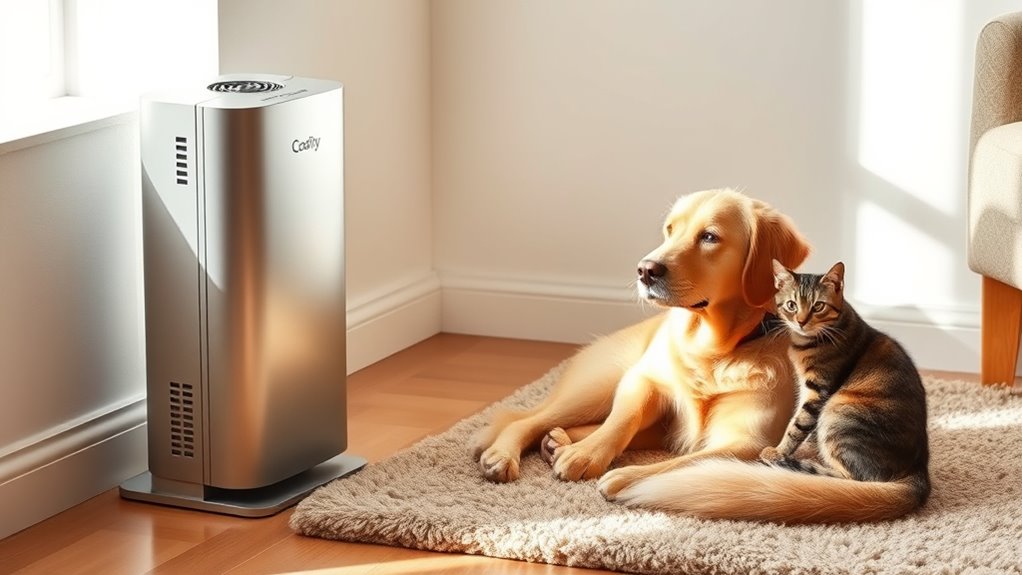
If you have pets at home, you know how their fur, dander, and odors can quickly affect indoor air quality. These everyday realities can make it challenging to breathe comfortably, especially if someone in your household suffers from pet allergies. Pet allergies are often triggered by microscopic proteins found in pet dander, saliva, and urine, which become airborne and settle on surfaces. When these allergens circulate in your home, they can cause sneezing, itchy eyes, congestion, and even asthma symptoms. Improving your air quality becomes essential not just for comfort but also for health. One of the most effective ways to do this is by using air purifiers designed specifically to target pet allergens and odors.
Air purifiers equipped with HEPA filters are particularly beneficial because they can trap tiny particles like pet dander, dust mites, and pollen. These filters are capable of capturing particles as small as 0.3 microns, which covers most pet allergens. By continuously filtering the air, a quality air purifier reduces the number of airborne allergens, lessening your allergy symptoms and improving overall air quality. This means you can breathe easier, especially during peak shedding seasons or after vigorous play sessions with your pets. Additionally, many air purifiers include activated carbon filters, which are excellent at absorbing pet odors and other household smells. This helps keep your home smelling fresher longer, reducing the need for sprays and air fresheners that often contain harsh chemicals.
HEPA filters trap pet dander and allergens, improving air quality and reducing allergy symptoms.
Using an air purifier in common areas, bedrooms, or wherever your pets spend most of their time can make a noticeable difference. It’s important to run the purifier consistently, especially during and after activities that stir up dander, like grooming or vacuuming. Regular maintenance, such as changing filters on schedule, ensures the unit works effectively. Keep in mind that air purifiers are a supplement to, not a substitute for, regular cleaning routines. Vacuuming with a HEPA-filter vacuum cleaner, washing pet bedding frequently, and grooming your pets outdoors can greatly reduce the amount of dander present. Regular use of HEPA filters can significantly improve your indoor air quality and allergy symptoms. Together, these practices help maintain a cleaner environment and make the air safer to breathe.
In essence, investing in a good air purifier is a smart step toward better air quality in a pet-friendly home. It helps eliminate airborne pet allergens and odors, making your living space more comfortable for everyone. With consistent use and proper maintenance, you’ll notice fewer allergy symptoms, cleaner air, and a fresher home atmosphere. This simple addition can profoundly improve your indoor environment, allowing you and your pets to coexist happily and healthily.
Frequently Asked Questions
Do Air Purifiers Emit Harmful Ozone When Used Around Pets?
Air purifiers can emit ozone if they use ozone generators or have high ozone emission levels, which can be harmful to your pets. These harmful effects include respiratory irritation and other health issues. To keep your pets safe, look for air purifiers that specify low or no ozone emission, especially if your pets have respiratory sensitivities. Always check product labels and reviews to verify you’re choosing a pet-safe air purifier.
How Often Should Air Filters Be Replaced in Pet-Friendly Spaces?
You should replace filters every 3 to 6 months in pet-friendly spaces, but this varies based on filter type and pet activity. Regular filter maintenance guarantees your air purifier works efficiently and keeps air clean for your pets. If you notice decreased airflow or odors lingering, it’s time for replacement. Staying attentive to these signs helps maintain a healthy environment and prevents filter overload.
Are Certain Air Purifier Models Safer for Animals With Respiratory Issues?
Yes, certain air purifier models are safer for animals with respiratory issues. Look for purifiers with HEPA filters, which effectively capture pet dander and allergens, and those that include VOC reduction features to minimize harmful odors and chemical fumes. Choose models specifically designed for sensitive environments, ensuring they operate quietly and don’t emit ozone. These features help create a healthier space for your pets with respiratory concerns.
Can Air Purifiers Help With Pet-Specific Allergies Effectively?
Yes, air purifiers with HEPA filters can effectively diminish pet-specific allergies by capturing pet hair, dander, and other allergens. You should look for models that excel at pet hair removal and have high-efficiency filters to improve air quality. Regularly replacing filters and maintaining your purifier will ensure it continues to help manage allergy symptoms, creating a healthier environment for you and your pets.
Do Air Purifiers Remove All Types of Pet Odors Completely?
Sure, an air purifier can seem like a magic wand for pet odor elimination, but it doesn’t remove all odors completely. While air purifier efficiency improves indoor air quality and reduces smells, some persistent pet odors linger, especially if sources aren’t addressed. Think of it as a helpful tool—not a cure-all. For truly fresh air, combine an air purifier with regular cleaning, ventilation, and odor-neutralizing methods.
Conclusion
So, here’s the irony: while air purifiers promise to clear your home of pet dander and odors, they can’t quite replace the simple joy of cuddling your furry friend. You buy them to breathe easier, yet sometimes it’s the pet’s love—and a little extra cleaning—that truly freshens your space. Still, with an air purifier in hand, you might just find yourself loving the smell of your pet that much more.