A leaky air purifier can’t hit its advertised CADR because unsealed gaps allow unfiltered air to bypass the filters, reducing airflow and filtration efficiency. This leak causes the purifier to work harder without improving air quality, increasing noise and energy use. Proper seals ensure that all air passes through the filters for peak performance. Keep following along to discover how you can detect, fix, and prevent leaks for better indoor air quality.
Key Takeaways
- Leaks allow unfiltered air to bypass filters, reducing overall purification efficiency.
- Proper sealing maximizes airflow through filters, ensuring optimal Clean Air Delivery Rate (CADR).
- Air leaks cause the purifier to work harder, increasing noise and energy consumption.
- Detecting leaks through visual inspection and smoke tests helps maintain seal integrity.
- Regular maintenance and replacing worn seals prevent leaks, ensuring consistent CADR performance.
Why a Tight Seal Is Critical for Your Air Purifier’s Performance

A tight seal is essential for your air purifier’s effectiveness because it prevents unfiltered air from bypassing the filters. When seal integrity is compromised, dirty air can leak around the filters, reducing overall purification. Ensuring a proper seal also makes filter maintenance more effective; if gaps form, you might need to replace filters more frequently since unfiltered air short-circuits the system. Regularly check that all seals are intact and snug, especially after moving or cleaning your unit. Proper sealing maximizes the purifier’s Clean Air Delivery Rate (CADR), making sure every breath is filtered properly. Neglecting this step not only diminishes performance but also leads to unnecessary wear and tear on your filters, costing you more over time. Additionally, air quality factors, like dust and microplastics, can accumulate more rapidly if seals are compromised, further reducing purifier efficiency. Ensuring seal integrity helps maintain consistent filtration performance and prolongs the lifespan of your device. A well-maintained seal also helps optimize the air purifier maintenance dos and don’ts, ensuring your unit performs at its best over time.
How Air Leaks Lower Your Purifier’s Effectiveness
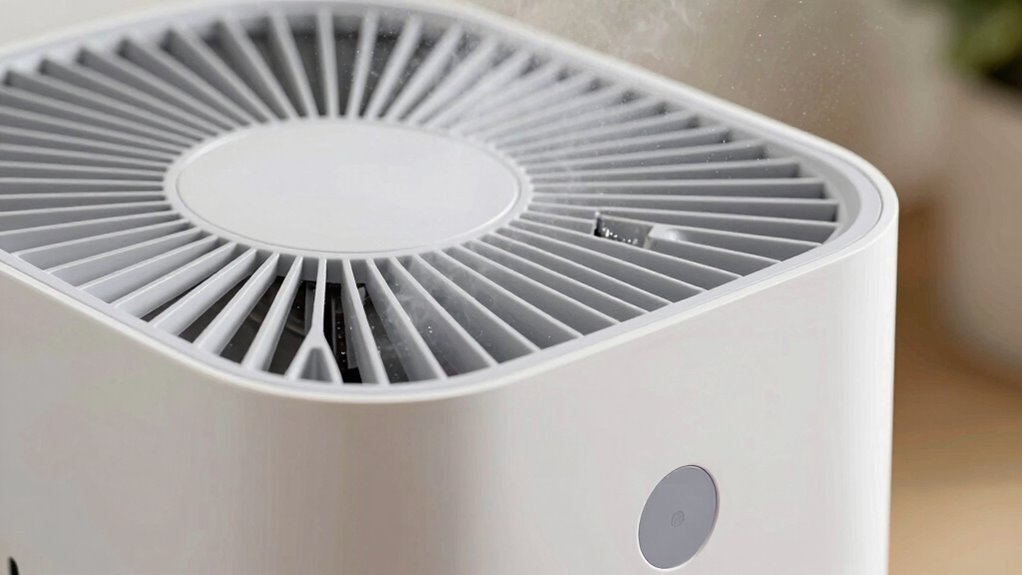
When air leaks occur in your purifier, they allow unfiltered air to bypass the filters, directly reducing its ability to clean the air effectively. This means the purifier isn’t reaching its expected Clean Air Delivery Rate (CADR), no matter how well you maintain the filters. Air leaks also cause the unit to work harder, increasing noise levels and making filter maintenance less efficient because dust and debris can settle in unexpected places. Over time, these leaks compromise the seal, diminishing overall effectiveness and possibly leading you to replace filters more often. To keep your purifier performing at its best, verify the seals are intact, which helps maintain proper airflow and noise reduction, maximizing the unit’s ability to filter the air properly. Regular inspection of digital concepts can help identify potential issues early and ensure optimal operation. Additionally, ensuring the seal integrity remains intact prevents unnecessary energy consumption and prolongs the lifespan of your purifier components. Maintaining a proper airflow path is essential for optimal performance and energy efficiency, and paying attention to airflow management can further enhance its effectiveness. Proper seal maintenance is especially important in regions with frequent temperature changes, which can cause materials to expand or contract, leading to potential leaks.
Signs Your Air Purifier Might Be Leaking Air
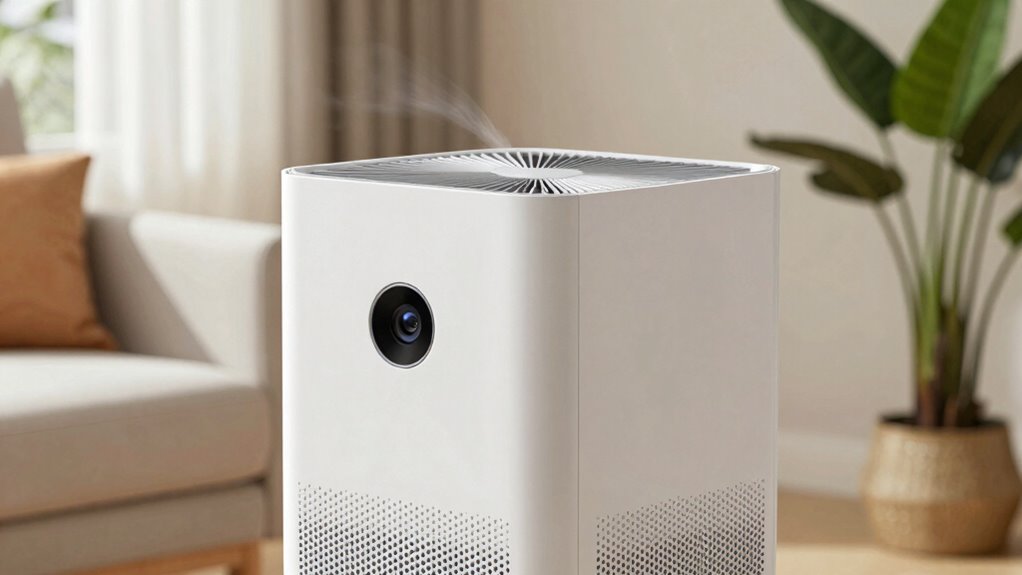
If your air purifier isn’t performing as it should, you might notice some telltale signs of air leaks. One common indicator is inconsistent filter placement; if the filter isn’t seated properly, air can escape, reducing efficiency. You may also notice unusual noise levels, such as whistling or whirring sounds, which often signal air is leaking around seals or vents. Additionally, if the purifier feels unusually warm or you detect a slight draft around it, these are signs that air isn’t being contained properly. Poor filter placement or loose fittings compromise the seal, causing leaks that diminish CADR. Paying attention to these signs helps you identify leaks early, ensuring your purifier functions at peak performance. Proper wiring and secure fittings are crucial to prevent heat buildup and potential safety hazards that could further compromise the unit’s effectiveness. Ensuring the seal integrity of your air purifier is essential for maintaining optimal airflow and filtration efficiency. Regularly inspecting and maintaining the gasket seals can help prevent leaks and sustain high CADR levels over time. Being vigilant about airflow patterns can also help you detect subtle leaks before they significantly impact performance.
How Leaks Affect Your Indoor Air Quality and Health
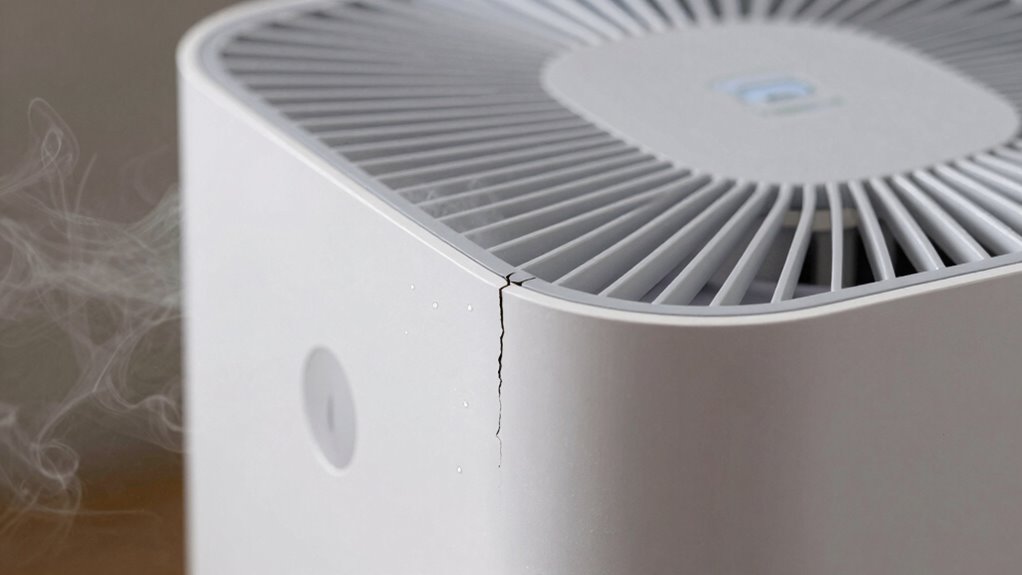
When your air purifier leaks, outside contaminants can enter your home, making it harder to breathe clean air. Leaks also reduce the device’s efficiency, meaning it won’t remove pollutants effectively. Addressing leaks guarantees better air quality and protects your health. Additionally, ensuring your purifier’s proper seal integrity can help maintain optimal performance and extend the lifespan of your device.
Air Leakage and Contaminants
Ever wonder how tiny gaps in your home’s building envelope can impact your health? These small leaks allow outdoor pollutants, dust, and allergens to bypass your air purifier, making it harder to maintain good indoor air quality. Leaks can also cause your purifier to work harder, reducing its filter lifespan and efficiency. As a result, your device may produce more noise while trying to compensate for the extra contaminants. This constant struggle can lead to decreased noise reduction, leaving you exposed to irritants. Sealing these gaps helps guarantee that your purifier can operate effectively, filtering out harmful particles and maintaining a healthier environment. Proper sealing minimizes contaminant intrusion, supports ideal purifier performance, and improves overall indoor air quality and comfort. Additionally, understanding building envelope integrity can help identify where leaks may occur, ensuring comprehensive sealing for optimal air quality.
Impact on Purifier Efficiency
Leaks in your home’s building envelope directly compromise your air purifier’s efficiency by allowing unfiltered pollutants to bypass the device. When air leaks occur, your purifier works harder to maintain indoor air quality, which can shorten the filter lifespan as it traps more pollutants than intended. This increased workload may also lead to more noise, reducing noise reduction benefits and making your environment less comfortable. Additionally, leaks cause your purifier’s CADR (Clean Air Delivery Rate) to drop, meaning less effective air cleaning. Without a proper seal, your device can’t achieve peak performance, and the overall indoor air quality suffers. Proper solar system sealing techniques are essential for maintaining optimal performance and efficiency. To maximize efficiency and health benefits, ensure your purifier and home are well-sealed, preventing unfiltered air from bypassing the filter. Building envelope integrity is crucial for maintaining a healthy indoor environment and supporting efficient air purification. Ensuring airtightness of your home can significantly improve the effectiveness of your air purification system and protect your indoor air quality. Regularly inspecting and addressing air leaks can help sustain optimal purifier performance and energy efficiency. Maintaining proper home sealing can also help reduce energy costs and improve overall comfort.
How to Test if Your Air Purifier Is Leaking at Home
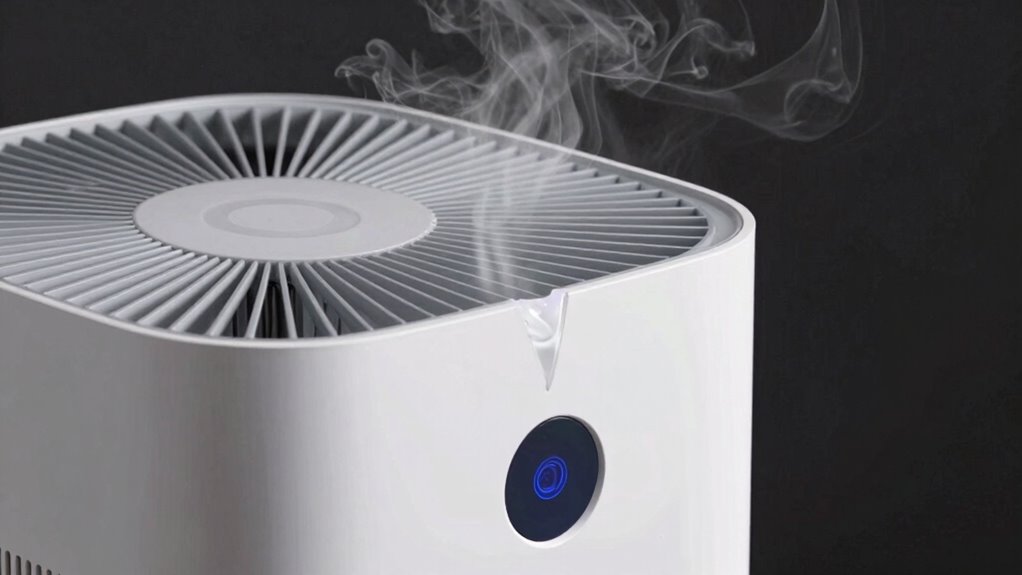
To guarantee your air purifier isn’t leaking, start by checking for visible gaps around the unit. You can also perform a smoke test to see if air escapes where it shouldn’t, and inspect the filter seals for signs of wear or damage. These simple steps help keep your indoor air clean and your purifier working efficiently. Regularly monitoring air quality and maintenance can also extend the lifespan and effectiveness of your appliance. Additionally, understanding Floating on Water concepts can help in troubleshooting moisture-related issues that might affect your purifier’s seals.
Check for Visible Gaps
Inspecting your air purifier for visible gaps is a straightforward way to guarantee it’s functioning properly. Look closely around the edges of the filter and the unit’s seams for any cracks or spaces. These gaps can cause air to escape, reducing efficiency. Check the gasket maintenance; a worn or damaged gasket may need a seal replacement to restore a tight fit. Make certain all panels are securely fastened, and no parts are loose or misaligned. Pay special attention to areas where air might leak, and replace any worn seals immediately. Keeping your purifier sealed maximizes CADR and airflow, making sure it cleans the air effectively. Regular visual inspections help catch issues early, maintaining ideal performance and extending the lifespan of your device.
- Look for cracks or worn gasket edges
- Make certain all panels are tightly fastened
- Check for dislodged or damaged seals
- Replace seals that appear degraded
- Confirm no gaps around filter or vents
Conduct Smoke Test
Wondering if your air purifier is truly sealed? Conducting a smoke test is a simple way to check for leaks. Turn on the purifier and hold a lit incense stick or a smoke pencil near its seams and filter replacement areas. Watch for any smoke escaping, which indicates leaks. If you notice smoke fluttering or drifting out, your device isn’t fully sealed. Fixing leaks helps improve noise reduction, since airflow isn’t escaping through gaps, and ensures your purifier hits its designed CADR. Remember, a properly sealed unit maintains ideal airflow, so regular smoke testing can catch issues early. Keep in mind that even minor leaks can compromise performance, so don’t skip this step before replacing filters or adjusting your setup.
Assess Filter Seals
How can you quickly check if your air purifier’s filter seals are intact? Start by inspecting the seal materials around the filter for cracks, gaps, or looseness. During filter maintenance, ensure all seals fit snugly without any visible damage. A simple way is to gently press around the edges while the purifier is running—if you notice escaping air or unusual noise, the seals might be compromised. You can also perform a smoke test or hold a tissue near the filter edges to see if it moves or gets pulled by airflow. Properly maintained seals prevent leaks that hinder CADR and overall performance. Remember, damaged or worn seal materials can cause significant efficiency drops and should be replaced promptly. Seal integrity is key to excellent air purification.
How to Fix or Replace Faulty Seals and Filters
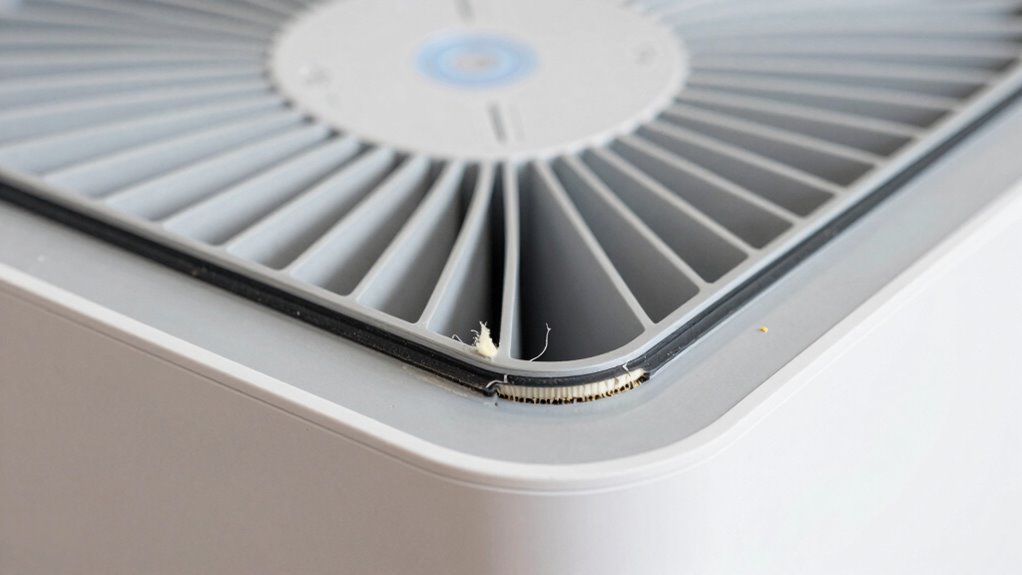
Are you noticing leaks, reduced efficiency, or strange odors? These signs often point to faulty seals or filters. To fix this, start with seal replacements by carefully inspecting the seals for cracks or gaps. If you find damage, remove the old seal and clean the area thoroughly before installing a new one. Proper filter maintenance is also essential; check if your filter is dirty or clogged, and replace it if necessary. Always refer to your purifier’s manual for specific instructions on filter and seal replacement. Keep your device sealed tightly to guarantee optimal performance and air quality. Regularly inspecting and maintaining these components prevents leaks and maintains the purifier’s efficiency, helping it hit its intended CADR.
Choosing Air Purifiers That Seal Better and Last Longer

Choosing air purifiers that seal better and last longer starts with evaluating their construction quality. Well-made units prevent leaks, ensuring ideal airflow and consistent CADR. A tight seal reduces the need for frequent filter maintenance and minimizes noise caused by air escaping. Look for models with high-quality gaskets and sturdy housing materials. Paying attention to these details can extend your purifier’s lifespan and maintain performance. Proper sealing also means filters stay in place, making maintenance easier and more effective. Additionally, a sealed unit operates more quietly because less air escapes, reducing noise levels. Overall, investing in a well-constructed purifier saves you money and hassle over time, while maintaining peak air cleaning efficiency.
- Durable seals resist wear and tear over years of use
- Better sealing improves filter lifespan and reduces replacement frequency
- Reduced noise levels come from minimized air leakage
- High-quality construction withstands daily wear and tear
- Consistent performance depends on tight, reliable seals
Tips for Keeping Your Purifier Sealed Tight Over Time

To keep your air purifier sealed tight over time, regular maintenance is essential. Start by replacing filters as recommended by the manufacturer, since old or worn filters can cause gaps that lead to leaks. Properly sealing the filter compartment minimizes air escaping and maintains peak performance. When installing new filters, ensure they fit snugly and are securely in place. Additionally, a well-sealed purifier reduces noise, making it more comfortable to use continuously. Check seals and gaskets periodically for cracks, tears, or dirt buildup, and replace or clean them as needed. Keeping your purifier tightly sealed preserves its CADR, ensures efficient filtration, and prolongs its lifespan—all while preventing unwanted noise and air leaks.
Common Mistakes That Cause Leaks and How to Avoid Them
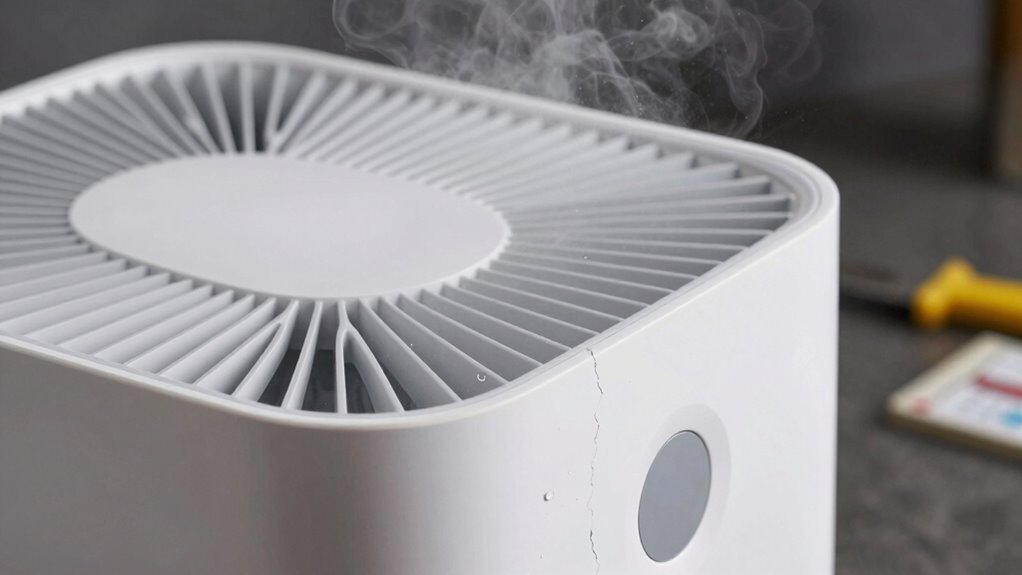
One of the most common mistakes that lead to leaks is neglecting regular inspections of seals and gaskets. Over time, wear and tear can cause small gaps, resulting in air leaks that reduce your purifier’s efficiency. To avoid this, prioritize proper filter maintenance and seal replacement when needed.
Be mindful of these pitfalls:
- Ignoring signs of cracked or brittle seals
- Using incompatible sealants or adhesives
- Delaying seal replacement after filter changes
- Forgetting to clean gaskets regularly
- Over-tightening fittings, which damages seals
Maintaining a tight seal ensures maximum CADR and prevents leaks. Regular inspections and timely replacements keep your purifier running smoothly and prevent costly repairs down the line.
Frequently Asked Questions
Can a Leaky Purifier Still Filter Large Particles Effectively?
A leaky purifier struggles to filter large particles effectively because airflow disruption caused by leaks reduces its filtering efficiency. When air escapes, less contaminated air passes through the filters, meaning fewer particles are captured. You might notice less clean air output, and the purifier won’t perform at its best. To guarantee effective filtering, check for leaks and maintain a proper seal, so airflow stays directed through the filters for maximum efficiency.
Do Different Purifier Brands Have Varying Sealing Standards?
Yes, different purifier brands do have varying sealing standards, which affects their overall performance. You’ll notice that some brands prioritize tighter seals for better CADR and efficiency, ensuring consistent brand performance. Others may have less strict sealing standards, leading to leaks that reduce filtering effectiveness. When comparing brands, consider their sealing standards to ensure you get a purifier with reliable, consistent performance that maximizes air quality.
How Often Should I Check for Seal Integrity?
Ever wondered how often you should check your purifier’s seal? You should inspect it monthly, especially if you notice decreased performance or fluctuating air quality sensor readings. Regular checks ensure your filter replacement is effective and prevent leaks that diminish air purification. Keep an eye on the seal’s condition to maintain ideal CADR, and don’t forget to reseal or replace it if you spot any cracks or gaps.
Are There Specific Materials That Improve Seal Durability?
You should look for materials like silicone or rubber gaskets, which are known for their durability. Material innovations and sealant technologies have improved these materials, making seals more reliable over time. Using high-quality, flexible materials ensures your purifier maintains a tight seal, preventing leaks that reduce CADR. Regularly inspecting and replacing worn seals with these advanced materials keeps your purifier performing at its best and extends its lifespan.
Can Sealing Issues Affect the Lifespan of My Air Purifier?
Sealing issues can definitely affect your air purifier’s lifespan. If you neglect seal maintenance, it can lead to leaks that reduce efficiency and strain components. During durability testing, sealed units perform better and last longer. You might think repairs are costly, but maintaining proper seals guarantees your purifier stays effective and durable, saving you money and hassle in the long run. Regular checks keep your device working its best.
Conclusion
A leaky purifier is like a whisper in a storm—ineffective and unnoticed until it’s too late. Keep your seals tight, your filters fresh, and your air clean. Remember, a small leak today can turn into a big problem tomorrow. Don’t let your efforts go to waste; seal the deal and breathe easy. After all, isn’t your health worth every effort to keep the air pure and your home safe?