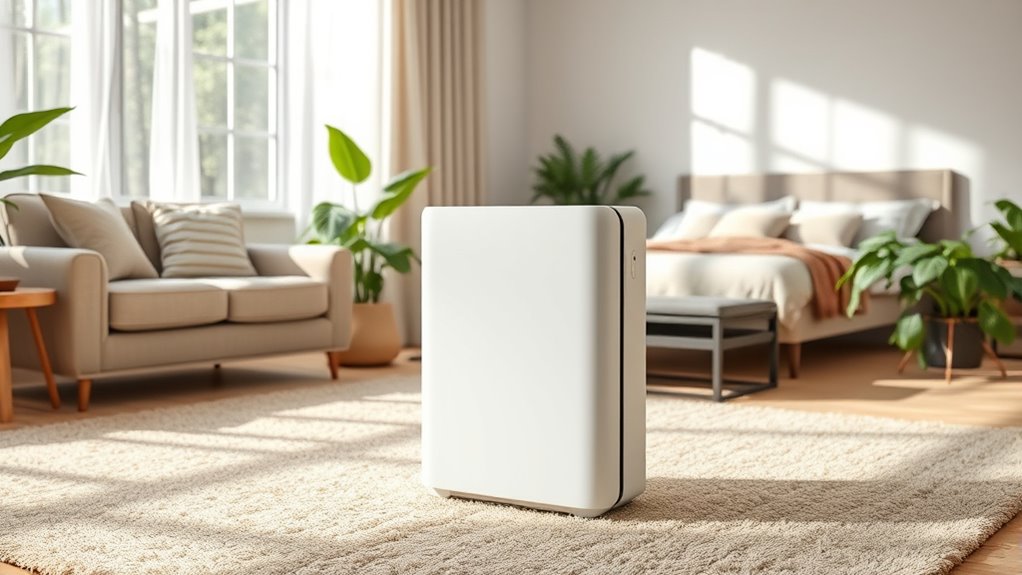

To get the best results, place your air purifier near the center of the room on a flat, stable surface, keeping it away from walls, furniture, and pollution sources. In bedrooms, position it where it won’t disturb your sleep, and in larger spaces, consider elevating it or using multiple units. Avoid obstructions to guarantee good airflow. For detailed tips tailored to each room, keep exploring how to optimize your setup.
Key Takeaways
- Place the purifier centrally at least a few feet above the ground for even air distribution.
- Keep it away from walls, furniture, and curtains to ensure unobstructed airflow.
- In bedrooms, position where it operates quietly and is a few feet from the bed.
- Near pollution sources or high-traffic areas for targeted air cleaning.
- Elevate in rooms with high ceilings and avoid corners or behind large objects.

Proper placement of your air purifier is essential to maximize its effectiveness in improving indoor air quality. When you position your device correctly, it can efficiently filter out pollutants, allergens, and odors, providing cleaner air throughout the room. The key to ideal results lies in understanding how air purifier placement impacts room air quality. You want to avoid placing it in corners or behind furniture, where air circulation is limited, because this can reduce its ability to circulate and clean the air effectively. Instead, choose a central location that allows the purifier to distribute clean air evenly across the space.
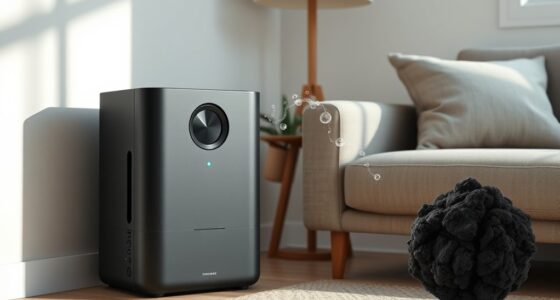
In living rooms or open-plan areas, it’s best to position your air purifier away from walls, curtains, or large furniture pieces that block airflow. Placing it on a flat, stable surface at least a few feet off the ground helps ensure that air can freely move into and out of the device. Elevating the purifier slightly, such as on a table or a stand, can improve its efficiency, especially in rooms with high ceilings. Avoid placing it near sources of pollution, like fireplaces or smoking areas, as this can cause it to work harder and decrease its lifespan. Instead, position it where it can continuously draw in air from different parts of the room.
The size of the room also influences air purifier placement. For smaller spaces, placing the device near the center ensures that all corners benefit from cleaner air. In larger rooms, you might need multiple units or to position your purifier near the main seating or activity area where people spend the most time. If you’re concerned about specific pollutants, like pet dander or smoke, place the purifier closer to the source of these contaminants. Additionally, considering airflow patterns within the room can help optimize placement for maximum efficiency.
In bedrooms, you want to position the air purifier where it can run quietly and not disturb your sleep. Keep it at least a few feet away from your bed but close enough to effectively improve room air quality overnight. In kitchens, avoid placing the purifier near the stove or sink, as cooking fumes and moisture can overwhelm the device. Instead, position it somewhere central but out of the way of foot traffic.
Ultimately, the goal is to facilitate good airflow and ensure that the air purifier can access all parts of the room. Proper air purifier placement involves considering the room layout, avoiding obstructions, and strategically positioning it near pollution sources or high-traffic areas. When done correctly, your device will work more efficiently, and you’ll notice a tangible improvement in your indoor air quality.
Frequently Asked Questions
How Often Should I Replace the Air Purifier Filters?
You should replace your air purifier filters according to the recommended replacement schedule, typically every 3 to 6 months. Regular filter maintenance guarantees peak performance and clean air. Keep an eye on signs like decreased airflow or persistent odors, which indicate it’s time for a filter change. Following the manufacturer’s guidelines helps maintain air quality and prolongs your device’s lifespan. Don’t forget to mark your calendar for timely replacements.
Can Air Purifiers Help With Allergy Relief Long-Term?
An air purifier can be your superhero against allergies, offering substantial allergy symptom reduction and long-term health benefits. By continuously filtering out pollen, pet dander, and dust, it helps break the allergy cycle. Over time, this ongoing protection can improve your overall health and reduce allergic reactions. Keep your purifier running consistently, and you’ll notice a significant difference in your quality of life and allergy management.
Are There Specific Brands Recommended for Different Room Sizes?
Yes, there are specific brands recommended for different room sizes. You should look for brand recommendations that offer room-specific models, ensuring ideal air purification. For larger spaces, choose brands like Coway or Winix, which provide powerful units designed for bigger rooms. For smaller bedrooms or offices, consider compact models from Blueair or Dyson. Always check the manufacturer’s guidelines to match the purifier’s capacity with your room size for the best results.
How Do I Know if My Air Purifier Is Effective?
You can tell if your air purifier is effective by checking its placement and filter performance indicators. Make certain it’s placed in the right location—central and unobstructed—to maximize air circulation. Regularly monitor filter indicators for dirt or alerts that suggest a filter change. When the filter is clean and the device is properly positioned, you’ll notice improved air quality, confirming your purifier’s effectiveness in reducing pollutants and allergens.
Is It Better to Run an Air Purifier Continuously or Intermittently?
You should run your air purifier continuously if you want the best air quality, especially in high-traffic or polluted areas. Continuous operation guarantees pollutants are consistently removed, reducing allergens and airborne particles. However, if your air quality is usually good, intermittent use can save energy and extend filter life. Consider your needs and environment to decide whether to keep it running nonstop or turn it on only when needed.
Conclusion
Think of your air purifier as a guardian, standing watch over your space. By placing it thoughtfully, you’re planting a seed of clean air that grows stronger with each breath. When you position it wisely, you’re not just purifying the air—you’re nurturing a sanctuary of health and comfort. Remember, where you place your purifier is where peace and clarity will flourish, turning your home into a haven where fresh beginnings can always breathe freely.