
To effectively control pet dander, you should use a filter stack that combines a high-quality HEPA filter with pleated or electrostatic technology, arranged from coarse to fine. Place the filters strategically near high-traffic pet areas and replace them every 1-3 months for best results. Proper installation and regular maintenance are key to maximizing dander removal while preserving airflow. Keep going to discover how to set up and maintain your ideal filter stack.
Key Takeaways
- Use a multi-layer filter stack starting with coarse pre-filters, followed by HEPA filters, to effectively trap pet dander and microplastics.
- Ensure filters are high MERV-rated (13-16) for superior microscopic particle removal.
- Position the filter stack near major airflow sources like return vents in high-traffic pet areas.
- Regularly replace filters every 1-3 months to maintain optimal allergen capture and airflow.
- Incorporate electrostatic or pleated filters within the stack to enhance dander and allergen filtration efficiency.
Why Pet Dander Is a Challenge for Indoor Air Quality
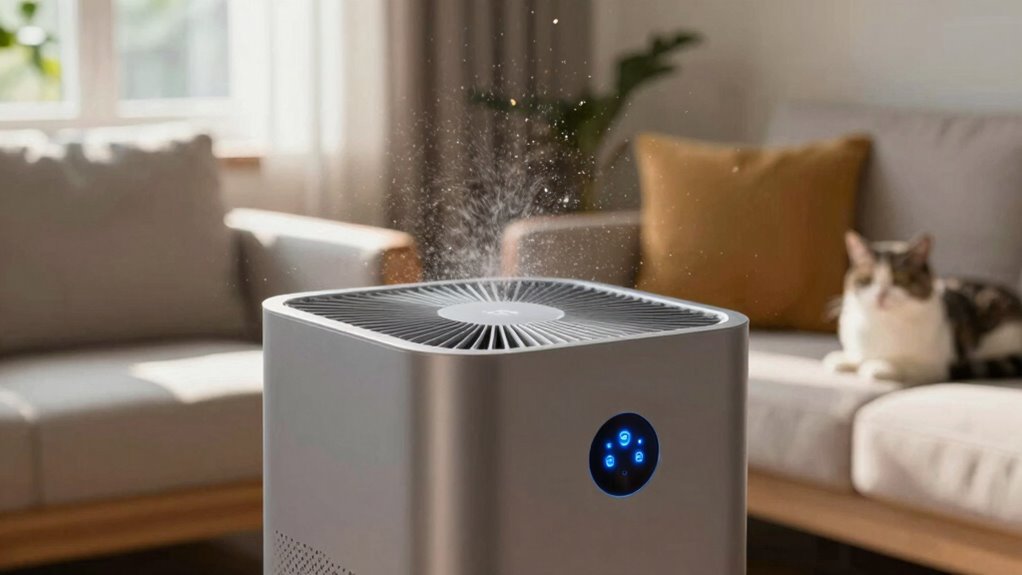
Pet dander is a major obstacle to maintaining good indoor air quality because tiny particles from skin flakes, saliva, and urine become airborne and linger in the environment. These allergy triggers can trigger asthma and allergic reactions, making breathing difficult. Pet hair removal helps reduce the amount of dander present, but it doesn’t eliminate all particles. Dander sticks to furniture, carpets, and clothing, continuing to circulate whenever you move around. Because of this, even well-groomed pets contribute to indoor air pollution. You need to be aware that cleaning alone isn’t enough; managing pet dander requires consistent effort to minimize allergy triggers and improve air quality. Using air filtration systems can further enhance removal of tiny particles that standard cleaning might miss. Incorporating proper ventilation and choosing effective air purifiers with HEPA filters are essential steps toward creating a healthier indoor environment. Implementing routine cleaning with specialized equipment can significantly decrease the buildup of allergens on surfaces.
How to Choose the Best Air Filters for Pet Dander

Choosing the right air filter is a key step in reducing pet dander and improving indoor air quality. To do this effectively, consider where you place your air purifier for ideal air circulation. Proper placement ensures dander gets captured quickly, making a real difference. Next, focus on filter material selection; look for filters with dense, allergen-trapping fibers like HEPA filters that capture tiny particles. Also, check if the filter is rated for pet dander—this makes a significant impact. Keep in mind:
Choose HEPA filters rated for pet dander and place your purifier strategically for the best results.
- Position your air purifier in high-traffic pet areas
- Select filters made of dense, allergen-trapping material
- Ensure the filter is rated for pet dander
- Replace filters regularly for consistent performance
- Understanding filter efficiency helps you choose the best option for pet dander removal, including features like filter lifespan and maintenance requirements. Additionally, considering filter replacement frequency can optimize your filtration system’s effectiveness. Regularly monitoring your filter’s performance capacity ensures it continues to effectively trap allergens over time. Proper maintenance and understanding of filter ratings can further enhance your home’s air quality.
Making these choices helps you breathe easier and enjoy a healthier home environment.
Key Features to Look for in Pet Dander Air Filters
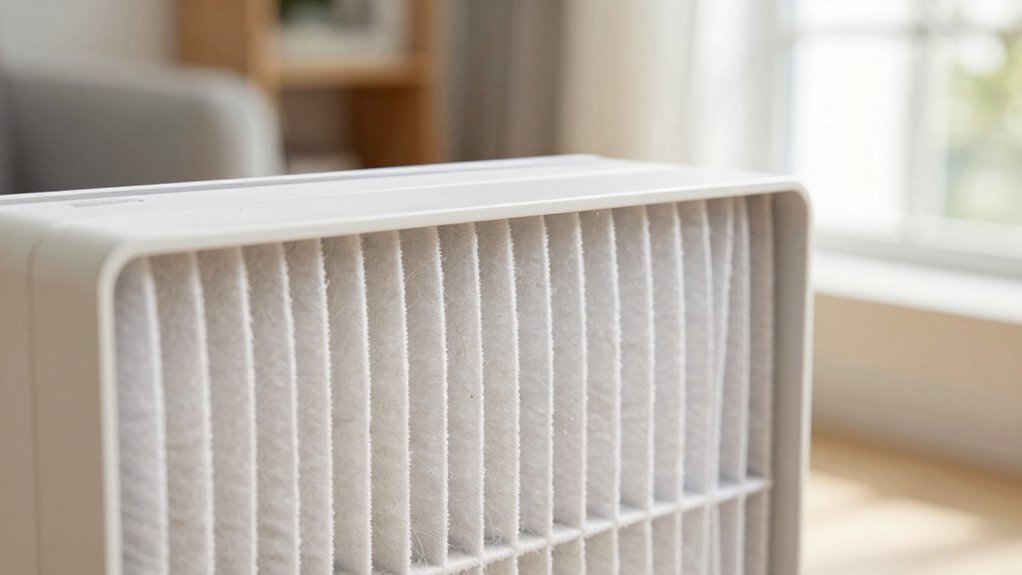
When selecting a pet dander air filter, look for one with a high MERV rating to guarantee it captures tiny particles effectively. These filters can trap more allergens, making your indoor air cleaner and healthier. Effective particle capture is key to reducing pet-related allergens in your home. Additionally, choosing filters that address microplastics in dust can further improve overall indoor air quality. Incorporating filters with advanced filtration technology can enhance their ability to remove a broader range of airborne contaminants. Furthermore, understanding filtration efficiency helps ensure you select a filter that balances particle removal with minimal airflow resistance, maintaining good ventilation. The filter stack design also plays a crucial role in maximizing allergen removal while preserving airflow and filter lifespan.
High MERV Ratings
High MERV (Minimum Efficiency Reporting Value) ratings are essential when selecting air filters for pet dander, as they determine how effectively the filter captures tiny particles. A higher MERV score means better filtration, helping you breathe easier and protect your loved ones. When choosing, consider how air purifier technology enhances particle removal and the importance of filter material selection for durability and performance. Look for filters with:
- Superior particle trapping capabilities that keep your home healthier
- Enhanced airflow without sacrificing filtration efficiency
- Long-lasting filter materials that maintain performance over time
- Quiet operation so your comfort isn’t compromised
A high MERV rating gives you peace of mind, knowing your filter is fighting pet dander effectively. It’s a crucial feature for creating a cleaner, allergen-free environment tailored to your needs. Effective filtration is vital for maintaining indoor air quality and ensuring your home remains a safe haven for everyone. Additionally, filter material selection plays a significant role in the longevity and performance of your air purifier, especially in homes with pets.
Effective Particle Capture
Are you aware of the key features that make pet dander air filters truly effective at capturing tiny particles? Look for filters with high-quality media designed for air purification and allergen removal. Pleated filters increase surface area, improving particle capture without restricting airflow. Electrostatic filters use static electricity to attract and trap dander, pollen, and other allergens. HEPA filters are essential, as they can remove at least 99.97% of particles as small as 0.3 microns, making them ideal for allergen removal. Additionally, filters with a dense, tightly woven structure provide better particle retention. Understanding filter efficiency ratings can help you choose the most effective air purifier for your needs. Selecting proper airflow design ensures optimal performance and allergen reduction. Incorporating advanced filtration technologies can further enhance the system’s ability to capture pet dander effectively. Regular maintenance of filters and components also ensures consistent air quality improvement, allowing your system to perform at its best. Considering filter longevity can help you select filters that maintain high performance over time. Choosing the right combination of these features ensures your air purification system effectively captures pet dander, reducing allergens in your environment and improving indoor air quality.
How to Arrange Your Filter Stack for Maximum Dander Capture

To maximize dander capture, you need to carefully arrange your filter stack so that air flows through the most effective filters first. Proper filter placement guarantees airflow optimization, making each filter work at its best. Place high-efficiency filters at the front of the stack to trap the smallest particles before they reach less effective filters. This setup prevents dander from bypassing your system. Consider these key points:
Arrange filters from high to low efficiency to optimize airflow and trap dander effectively.
- Prioritize filters with the highest MERV ratings upfront
- Maintain a logical sequence for airflow, from coarse to fine
- Ensure filters fit snugly to avoid air leaks
- Regularly check and replace filters to keep airflow steady
- Incorporate foam rolling routines to support overall recovery and HRV, which can improve your body’s ability to handle airborne allergens more efficiently.
How Often Should You Change Your Pet Dander Filters?

How often you should change your pet dander filters depends on several factors, including your pet’s size, shedding habits, and your household’s air quality. Typically, filters have a set filter lifespan, but allergen buildup can occur more quickly in homes with heavy shedding or multiple pets. Check your filters regularly; if they look dirty or clogged, it’s time for a replacement. In general, changing your filters every 1 to 3 months helps maintain ideal air quality and prevents allergen buildup. Regularly replacing filters ensures they continue to trap dander effectively, reducing allergens in your environment. Remember, timely changes keep your HVAC system running efficiently and support a healthier home for you and your pets.
Installing and Maintaining Your Filter System Effectively

To keep your air clean, make sure your filter is placed in an ideal spot where air circulates freely. You should also set a regular maintenance schedule to replace or clean your filter so it works efficiently. Proper placement and consistent upkeep are key to reducing pet dander effectively.
Proper Filter Placement
Where should you position your air filter for maximum effectiveness? Place it where airflow is strongest and unobstructed, ideally near the main intake or return vents. Proper filter placement enhances airflow efficiency and ensures the filter material works effectively to trap pet dander. Consider these key points:
- Position the filter in a central location to maximize coverage.
- Avoid placing it behind furniture or in corners where air circulation is limited.
- Keep the filter away from sources of moisture or direct sunlight.
- Regularly check that airflow isn’t restricted by nearby objects, ensuring consistent pet dander removal.
Correct placement transforms your filter into a powerful barrier against allergens, making your space healthier and more comfortable. Proper filter positioning is essential for optimal performance and peace of mind.
Regular Maintenance Schedule
Maintaining your air filter system regularly is essential for consistent pet dander removal and overall indoor air quality. A proper maintenance schedule ensures your air purifier technology functions at its best, supporting effective pet allergy management. Check and replace filters as recommended—usually every 3 to 6 months. Regular cleaning of vents and fans also helps prevent dust buildup. To emphasize, consider this table:
| Maintenance Task | Frequency |
|---|---|
| Replace filters | Every 3-6 months |
| Clean air vents and fans | Monthly |
| Inspect for air leaks | Annually |
Sticking to this schedule keeps your system running efficiently, reducing allergens and improving your indoor environment. Consistency is key to managing pet allergens through effective filter maintenance.
Comparing Cost and Performance of Top Pet Dander Filters

When choosing a pet dander filter, understanding the balance between cost and performance is essential. Higher-quality filters often reduce pet allergies more effectively and have a longer filter lifespan, but they come with a higher price tag. To help you decide, consider these factors:
- The initial cost versus long-term savings
- How well the filter captures tiny dander particles
- Durability and filter lifespan
- The impact on your indoor air quality and overall health
While budget models may seem appealing, they might need frequent replacements and perform poorly over time. Investing in a top-tier filter can provide peace of mind, better allergy relief, and fewer maintenance worries. Ultimately, matching your budget with the filter’s performance guarantees a healthier, more comfortable home.
Frequently Asked Questions
Do HEPA Filters Eliminate All Pet Dander From Indoor Air?
HEPA filters considerably reduce pet dander from indoor air, but they don’t eliminate all allergens entirely. Their effectiveness depends on proper maintenance and filter quality. You can improve pet allergen reduction by choosing high-efficiency HEPA filters and ensuring regular replacement. While they greatly improve air quality, some tiny particles might still linger. Overall, HEPA filters are one of the best options for minimizing pet dander and allergen exposure indoors.
Can Air Purifiers Completely Remove Pet Odors Along With Dander?
Air purifiers can notably reduce pet odors and dander, but they might not completely eliminate them. To enhance odor control, combine your purifier with regular pet hair removal and thorough cleaning. HEPA filters capture airborne dander effectively, while activated carbon filters help neutralize pet odors. Keep in mind, consistent maintenance and complementary cleaning routines are key to creating a fresher indoor environment and minimizing pet-related smells and allergens.
Are Cheaper Filters as Effective as High-End Models for Pet Dander?
Think cheaper filters are like trying to catch a hurricane with a paper towel? Well, not quite. While they save you cash upfront, they often have a shorter lifespan and may not trap pet dander as effectively as high-end models. The cost comparison shows you save initially, but you might replace them more often. So, you decide: invest upfront or deal with pet allergens longer? Your call.
How Do Humidity Levels Affect Pet Dander Accumulation Indoors?
If you maintain ideal humidity control, around 40-50%, you can reduce pet dander buildup indoors. Low humidity causes dander to become airborne, worsening allergies, while high humidity encourages mold and dust mites. By regulating humidity levels, you minimize pet dander accumulation, making your home healthier. Proper humidity control helps keep dander settled, easing cleanup and allergy symptoms, and creates a more comfortable environment for you and your pets.
Is It Better to Use Multiple Smaller Filters or One Large Filter System?
Using multiple smaller filters generally offers better filter efficiency and easier maintenance. You can replace or clean them more frequently, ensuring ideal performance. Smaller filters target specific areas, reducing dander buildup and improving indoor air quality. Conversely, one large filter may be less efficient and harder to maintain regularly. So, if you want consistent air purity, opt for multiple smaller filters to keep your environment healthier and cleaner.
Conclusion
By choosing the right filters and arranging them wisely, you can turn your home into a fortress against pet dander. Think of your filter system as a diligent garden hose, steadily washing away allergens and keeping your indoor air fresh. Stay consistent with filter changes and maintenance, and you’ll enjoy cleaner air and happier, healthier days with your furry friends—making your home a sanctuary where pet love and fresh air thrive together.