Finding a reliable fresh air ventilator for tight homes can be challenging, as these spaces require efficient ventilation without sacrificing energy savings. The VentS-US Micra 100 (FreshBox) stands out as the overall best choice for its balanced performance and ease of use, while the Pioneer ECOasis 150 offers a ductless option ideal for retrofit projects. For those seeking premium features and smart controls, the Panasonic Intelli-Balance Elite Plus delivers advanced performance. The main tradeoffs involve balancing cost, installation complexity, and energy recovery efficiency. Keep reading to see how these options compare and find the best fit for your home.

Get home appliances delivered free with Prime
- Fast, free delivery on millions of items
- Prime Video, Amazon Music and more included
- Member-only deals all year
Complete the kit


Key Takeaways
- Top-performing models combine high energy recovery efficiency with quiet operation, making them suitable for tight, insulated spaces.
- Ductless options like Pioneer ECOasis simplify retrofits but may offer slightly lower performance compared to whole-house systems.
- Smart features and Wi-Fi connectivity are increasingly common, but they often come at a higher price point.
- Installation complexity varies widely; models designed for easy DIY installation can save money but may sacrifice some advanced features.
- Choosing the right ventilator depends heavily on home size, insulation level, and whether you need whole-house or single-room ventilation.
| VENTS-US Micra 100 (FreshBox) – Single-Room HRV Ventilation System |  | Best for Small Spaces and Convenience | Airflow Range: 18 to 59 CFM | Filters: MERV 8 and MERV 14 supply filters | Energy Recovery: Up to 98% | VIEW ON AMAZON | See Our Full Breakdown |
| Broan B210E75RS AI Series 210 CFM Energy Recovery Ventilator with Side Ports |  | Best for Larger Homes and Versatile Installation | Airflow: 210 CFM | Core Efficiency: 81% at 32°F | Filter Level: MERV 8 | VIEW ON AMAZON | See Our Full Breakdown |
| Pioneer ECOasis 150 Ductless Wall-Mounted Single-Room Wi-Fi Energy Recovery Ventilator |  | Best for Smart, Quiet Indoor Air Quality | Coverage Area: up to 500 sq. ft. | Filtration System: 4-stage including HEPA & activated charcoal | Heat Exchanger Efficiency: 82% | VIEW ON AMAZON | See Our Full Breakdown |
| Panasonic WhisperComfort 60 ERV, Wall/Ceiling Mount Exhaust Fan, FV-06VE1 | 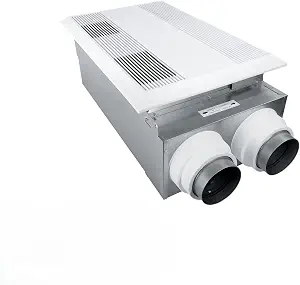 | Best for Easy, Balanced Ventilation | Air Flow Capacity: 60 CFM | Power: 50 watts | Noise Level: 2.5 sones | VIEW ON AMAZON | See Our Full Breakdown |
| Panasonic FV-12ESC1 Intelli-Balance Elite Plus ERV, 120 CFM |  | Best for Smart, Flexible Whole-Home Ventilation | Air Flow Capacity: 120 CFM | Motor Type: SmartFlow ECM | Filters: MERV 13 | VIEW ON AMAZON | See Our Full Breakdown |
| Wi-Fi-Enabled Pioneer 50 Single-Room Wall-Mounted Energy Recovery Ventilator |  | Best Overall for Smart, Silent, and Efficient Ventilation in Tight Spaces | Model: ERV-50 | Power Supply: 110-240 VAC, 50-60 Hz | Dimensions: 9-3/8″ x 19-5/8″ x 10-1/8″ | VIEW ON AMAZON | See Our Full Breakdown |
| Panasonic Intelli-Balance Elite ERV, 110 CFM | | Best for Flexible, Quiet Indoor Ventilation with Smart Features | Power Source: AC/DC | Room Type: Bathroom | Special Features: Manual | VIEW ON AMAZON | See Our Full Breakdown |
| 6 Inch Heat Recovery Ventilator with Ceramic Heat Exchanger |  | Best for Cost-Effective Heat Recovery in Multiple Indoor Spaces | Power Source: AC/DC | Room Type: Attic, Basement, Bedroom, Garage, Home Office | Special Features: App Operable, Quiet Operation, Remote Controlled | VIEW ON AMAZON | See Our Full Breakdown |
| Aprilaire V22BEC Energy Recovery Ventilator (ERV), 120 CFM for Homes up to 6,000 Sq. Ft. |  | Best for Large Homes Needing Balanced Ventilation and Humidity Control | CFM: 120 | Suitable for Homes Up To: 6,000 sq. ft. | Mounting Options: Wall, Ceiling, Floor | VIEW ON AMAZON | See Our Full Breakdown |
| VENTS-US Frigate ERV 120s Energy Recovery Ventilator – Whole House Ventilation Fan with Freeze Protection and Dual Air Filtration |  | Best for Whole-House Ventilation with Cold Climate Compatibility | Airflow Capacity: 162 CFM | Voltage: 120 volts | Wattage: 94 watts | VIEW ON AMAZON | See Our Full Breakdown |
More Details on Our Top Picks
VENTS-US Micra 100 (FreshBox) – Single-Room HRV Ventilation System
The VENTS-US Micra 100 excels in providing high-efficiency heat recovery in compact environments like offices or cafes. Its standout feature is the impressive 98% thermal energy recovery, which outperforms many single-room units and significantly reduces energy costs. The WiFi control and remote enhance user convenience, especially compared to simpler manual models. However, its design limits it to small, single-room applications, making it unsuitable for larger areas. Installation might require professional help, adding to setup costs. Compared to multi-room systems like the Broan B210E75RS, this model is less versatile but offers more tailored performance for tight spaces.
Pros:- Exceptional heat recovery efficiency of up to 98%
- Convenient WiFi control for remote operation
- Includes mounting kit and remote for easy setup
- Effective filtration reduces allergens and dust
Cons:- Limited to single-room use, unsuitable for larger spaces
- Professional installation may be necessary
Best for: Owners of small commercial spaces or apartments needing efficient, controlled ventilation in one room.
Not ideal for: Homeowners with larger living areas or those seeking whole-house ventilation solutions.
- Airflow Range:18 to 59 CFM
- Filters:MERV 8 and MERV 14 supply filters
- Energy Recovery:Up to 98%
- Control:WiFi, remote control, onboard panel
- Mounting:Through-the-wall
- Motors:Energy-efficient EC motors
Our verdict“This system is ideal for small spaces where high energy recovery and control are priorities.”
Broan B210E75RS AI Series 210 CFM Energy Recovery Ventilator with Side Ports
The Broan B210E75RS offers a substantial airflow capacity of 210 CFM, making it suitable for larger residential spaces. Its VIRTUO™ technology simplifies installation, which is a key advantage over more complex systems like the Pioneer ECOasis 150. The LCD display provides real-time data, and its durable galvanized construction ensures long-term reliability. While it boasts high airflow, it lacks some smart features like automatic shutoff or timers, and it isn’t ENERGY STAR certified, which might impact energy savings. The unit’s performance at low temperatures (81% at 32°F) is commendable but less efficient than dedicated heat recovery units, and the filter options are limited to MERV 8, with HEPA filters available only as upgrades.
Pros:- High airflow capacity suitable for large homes
- Easy installation with VIRTUO™ technology
- Reusability of washable MERV 8 filters reduces ongoing costs
- Long-term durability with a 10-year warranty on the core
Cons:- Lacks automatic shutoff or timer features
- Not ENERGY STAR certified
- Limited filtration options without HEPA upgrade
Best for: Homeowners seeking a reliable, high-capacity ERV with straightforward installation for larger living spaces.
Not ideal for: Small apartment dwellers or users wanting advanced smart controls or energy certifications.
- Airflow:210 CFM
- Core Efficiency:81% at 32°F
- Filter Level:MERV 8
- Warranty:10 years
- Installation:Wall-mount or suspended
- Certifications:cETL, ETL, HVI, UL
Our verdict“This ERV is best suited for larger homes needing robust airflow with straightforward installation, but it trades off some energy efficiency features.”
Pioneer ECOasis 150 Ductless Wall-Mounted Single-Room Wi-Fi Energy Recovery Ventilator
The Pioneer ECOasis 150 stands out with its ductless, wall-mounted design tailored for rooms up to 500 sq. ft. It combines advanced filtration—including HEPA and activated charcoal stages—with sensors for PM2.5 and CO2, enabling smart, precise air quality management. Its 82% heat exchanger efficiency offers good energy savings, and the Wi-Fi control allows remote scheduling and monitoring, making it ideal for tech-savvy users who prioritize indoor air quality. Compared to larger, more complex systems like the Broan B210E75RS, this model is quieter and more suited for bedrooms or living rooms. However, its limited coverage makes it unsuitable for bigger spaces, and professional installation could increase setup complexity.
Pros:- High purification with HEPA and activated charcoal filters
- Smart Wi-Fi control allows remote management
- Quiet operation at 23-37.9 dB(A)
- Energy-efficient with 82% heat exchange efficiency
Cons:- Limited to rooms up to 500 sq. ft.
- Requires wall-mount installation, possibly needing professional help
- Price may be higher due to advanced features
Best for: Homeowners with medium-sized rooms seeking smart control and high filtration for health-focused indoor environments.
Not ideal for: Large open-plan areas or users seeking whole-house ventilation without wall-mounted units.
- Coverage Area:up to 500 sq. ft.
- Filtration System:4-stage including HEPA & activated charcoal
- Heat Exchanger Efficiency:82%
- Power Consumption:35W
- Noise Level:23-37.9 dB(A)
- Control:Wi-Fi, touchscreen, remote
Our verdict“This ductless ERV is ideal for health-conscious users wanting smart, quiet ventilation in medium-sized rooms.”
Panasonic WhisperComfort 60 ERV, Wall/Ceiling Mount Exhaust Fan, FV-06VE1
The Panasonic WhisperComfort 60 offers a straightforward, balanced approach to indoor ventilation, suitable for bathrooms, laundry rooms, or small living areas. Its manual, selectable CFM settings give users control over airflow, helping to prevent over-ventilation or energy waste. Its 60 CFM capacity makes it a practical choice for spaces where moisture and stale air removal are needed without high noise levels. Compared with the Pioneer ECOasis 150, this model lacks smart controls but provides a simple, reliable solution with easy wall or ceiling mounting. Its noise level of 2.5 sones is acceptable in most environments, but may be noticeable in very quiet rooms. Its energy recovery feature helps save on heating costs, a key advantage in tight homes.
Pros:- Energy-efficient with heat recovery to reduce heating costs
- Customizable airflow with multiple speed settings
- Easy to install on wall or ceiling
- HVI certified for performance and energy efficiency
Cons:- Limited to indoor use only
- Noise level of 2.5 sones may be noticeable in quiet environments
Best for: Residents seeking a reliable exhaust fan for small spaces like bathrooms that balances efficiency with ease of use.
Not ideal for: Large or open-plan areas where higher airflow is necessary, or users wanting smart controls.
- Air Flow Capacity:60 CFM
- Power:50 watts
- Noise Level:2.5 sones
- Mounting Type:Ceiling or wall
- Speed:3 levels
- Materials:Aluminum
Our verdict“This fan is well-suited for small indoor spaces needing balanced, efficient ventilation with simple controls.”
Panasonic FV-12ESC1 Intelli-Balance Elite Plus ERV, 120 CFM
The Panasonic FV-12ESC1 combines a solid 120 CFM capacity with intelligent control features, making it suitable for homeowners who want adaptable, whole-home ventilation. Its SmartFlow ECM motors dynamically adjust speed for the quietest, most energy-efficient operation, outperforming simpler models like the VENTS-US Micra 100 in terms of smart features. The high-efficiency MERV 13 filters improve indoor air quality, especially for allergy sufferers. Installation options include wall, ceiling, or floor mounting, providing flexibility for various home layouts. However, its complexity can be daunting for DIYers, and the higher price point reflects its advanced capabilities. For those seeking a straightforward single-room solution, this might be overkill.
Pros:- Adjustable SmartFlow ECM motors for quiet, efficient operation
- High-quality MERV 13 filters improve air quality
- Flexible installation options for various spaces
- Suitable for whole-house ventilation
Cons:- Installation complexity may require professional help
- Price and setup might be a barrier for some
- Control options can be overwhelming for less tech-savvy users
Best for: Homeowners wanting a smart, flexible, and high-capacity ERV for multiple rooms or whole-house ventilation.
Not ideal for: Users with small spaces or those who prefer simple, plug-and-play units without extensive setup.
- Air Flow Capacity:120 CFM
- Motor Type:SmartFlow ECM
- Filters:MERV 13
- Warranty:Warranty info linked
- Installation:Wall, ceiling, or floor
- Control Method:Touch
Our verdict“This model is best suited for homeowners seeking an intelligent, high-capacity ventilation system with extensive control options.”
Wi-Fi-Enabled Pioneer 50 Single-Room Wall-Mounted Energy Recovery Ventilator
The Pioneer ERV-50 stands out as the most well-rounded option for tight homes needing continuous ventilation. Its high 97% heat recovery efficiency means it minimizes energy loss while exchanging indoor stale air for fresh outdoor air. The Wi-Fi control and smartphone app add convenience, especially for those who want remote management, making it ideal for busy households. Compared with the Panasonic Intelli-Balance Elite, the Pioneer offers superior silent operation at just 32.7 dB, though it requires ducting and wall space, which might complicate installation. Its continuous air quality monitoring ensures a healthier environment, but limited details on filter maintenance could pose challenges for long-term upkeep. Overall, this model is perfect for homeowners seeking smart, efficient, and quiet ventilation in a single room or small space, provided they can accommodate installation requirements.
Pros:- High 97% heat recovery efficiency reduces energy costs
- Wi-Fi control and smartphone app for remote operation
- Silent operation at 32.7 dB ensures unobtrusive ventilation
- Continuous air quality monitoring maintains healthy indoor environment
Cons:- Requires wall installation space and proper ducting setup
- May need multiple units for seasonal temperature control
- Limited detailed guidance on filter maintenance and replacement
Best for: Homeowners wanting a smart, quiet, and energy-efficient solution with minimal ongoing management for a single room or small space.
Not ideal for: Those with limited wall space or ducting options, or who prefer simple plug-and-play units without installation complexities.
- Model:ERV-50
- Power Supply:110-240 VAC, 50-60 Hz
- Dimensions:9-3/8″ x 19-5/8″ x 10-1/8″
- Weight:11 lbs
- Airflow (Max):35.3 CFM
- In-Wall Channel Span:11″ – 18-1/2″
- Water-Resistance Rating:IPX4
- Control Methods:Onboard interface, handheld remote, smartphone app
Our verdict“Ideal for tech-savvy homeowners seeking a quiet, efficient, and remotely controllable ventilation solution for tight spaces.”
Panasonic Intelli-Balance Elite ERV, 110 CFM
The Panasonic FV-11ES1 Intelli-Balance Elite ERV offers a flexible approach to indoor ventilation with a capacity of 110 CFM, making it suitable for mid-sized or larger rooms. Its smart ECM motors adjust airflow automatically, optimizing energy use and maintaining comfort without manual intervention. Compared with the Pioneer ERV-50, it lacks Wi-Fi but compensates with three-speed settings and versatile mounting options, including wall, ceiling, or floor placement. Its high-quality MERV 13 filters improve air purity, yet the installation process can be complex, often requiring professional help—something less necessary with easier-to-install units like the VENTS-US Frigate ERV. The noise level at 45 dB is moderate, but might be noticeable in very quiet spaces. This model makes the most sense for users who prioritize flexible installation and high filtration in indoor environments with moderate noise tolerance.
Pros:- Smart ECM motors that adjust airflow automatically for energy efficiency
- High-efficiency MERV 13 filters improve indoor air quality
- Flexible mounting options including wall, ceiling, or floor
- Quiet operation at 45 dB enhances comfort in living or working spaces
Cons:- Installation may require professional help due to complexity
- No smart home integration beyond basic controls
- Limited to indoor use, not suitable for outdoor applications
Best for: Families or small businesses needing flexible, high-quality indoor air exchange with customizable airflow and filtration.
Not ideal for: Homeowners seeking Wi-Fi app control or those with limited installation space and DIY skills, as installation can be complex.
- Power Source:AC/DC
- Room Type:Bathroom
- Special Features:Manual
- Air Flow Capacity:110 cfm
- Mounting Type:Wall Mount
- Noise Level:45 db
- Motor Type:Brushless
- Materials & Care:Metal, Plastic
Our verdict“Best suited for users seeking adaptable, high-performance indoor ventilation with advanced filtration and moderate noise levels.”
6 Inch Heat Recovery Ventilator with Ceramic Heat Exchanger
This wall-mounted heat recovery ventilator excels in recovering up to 90% of heat energy thanks to its ceramic heat exchanger, making it a strong choice for homes where energy savings matter. Its quiet 30 dB operation combined with Wi-Fi and remote control makes it suitable for bedrooms, attics, or basements. Compared to the Pioneer ERV-50, it emphasizes heat recovery over air quality monitoring, which might be less appealing for those focused solely on indoor air quality. Its versatile installation options suit various indoor spaces, but wall mounting and space for installation could be a barrier for some. The absence of detailed filter maintenance info and a higher price point in some markets might also influence the decision. This pick fits best for users prioritizing energy efficiency and heat retention in multiple indoor zones.
Pros:- Ceramic heat exchanger recovers up to 90% of heat energy
- Wi-Fi and remote control for convenient operation
- Quiet operation at 30 dB with energy-efficient EC motor
- Versatile wall mounting suitable for multiple indoor spaces
Cons:- Requires wall mounting and sufficient space for installation
- Limited to indoor use only
- No detailed info on filter maintenance or replacement process
Best for: Homeowners seeking high heat recovery efficiency and quiet operation for various indoor spaces with an emphasis on reducing heating costs.
Not ideal for: Those primarily concerned with air quality or requiring direct Wi-Fi control without heat recovery features.
- Power Source:AC/DC
- Room Type:Attic, Basement, Bedroom, Garage, Home Office
- Special Features:App Operable, Quiet Operation, Remote Controlled
- Air Flow Capacity:60 cubic meter per hour
- Speed:2200 rpm
- Voltage:230 volts
- Control Method:App, Push Button, Remote
- Materials & Care:Acrylonitrile Butadiene Styrene
Our verdict“Ideal for energy-conscious users who want to maximize heat retention across various indoor zones without sacrificing quiet operation.”
Aprilaire V22BEC Energy Recovery Ventilator (ERV), 120 CFM for Homes up to 6,000 Sq. Ft.
The Aprilaire V22BEC ERV offers a substantial airflow capacity of 120 CFM, making it suitable for larger homes up to 6,000 sq. ft. Its balanced approach to humidity and temperature control through heat and moisture recovery makes it ideal for varied climates. Compared with the VENTS-US Frigate ERV, the Aprilaire provides more straightforward installation options and a simple push-button control system, though it may lack some smart features. Its energy recovery core enhances efficiency, reducing heating and cooling costs across extensive living spaces. However, installation might require professional help for optimal setup, and smart home integration appears limited. For owners of large properties seeking reliable, balanced ventilation with straightforward operation, this model offers a dependable solution.
Pros:- High airflow capacity suitable for large homes
- Effective heat and moisture recovery reduces energy costs
- Flexible mounting options for various spaces
- Simple push-button controls ease operation
Cons:- Installation may require professional assistance
- Limited smart home features or app control
- Basic controls may not satisfy tech-savvy users
Best for: Owners of large, multi-zone homes seeking balanced ventilation with humidity and temperature control, especially in diverse climates.
Not ideal for: Small households or apartments where high airflow capacity is unnecessary and simpler, more compact units suffice.
- CFM:120
- Suitable for Homes Up To:6,000 sq. ft.
- Mounting Options:Wall, Ceiling, Floor
- Energy Recovery Core:Yes
- Control Type:Push-button
- Compatible Thermostats:Models 8120X, S86NMUPR, S86WMUPR, 8920W, 8910W, 8910, 8840
Our verdict“Best for large-scale homes needing balanced, reliable ventilation and humidity regulation with straightforward operation.”
VENTS-US Frigate ERV 120s Energy Recovery Ventilator – Whole House Ventilation Fan with Freeze Protection and Dual Air Filtration
The VENTS-US Frigate ERV 120s is designed to ventilate entire homes effectively, with an airflow capacity of 162 CFM. Its integrated freeze protection and dual washable filters make it especially suitable for cold climates, where freezing can be a concern. Compared with the Aprilaire V22BEC, it offers higher airflow, which is beneficial for large or more air exchange-intensive homes. Its electronic cycling prevents frost buildup, ensuring consistent operation during winter. The washable MERV 6 filters simplify maintenance, though some users might find the basic controls less intuitive. Installation might also need professional help, but the combination of high airflow, energy recovery, and cold-weather features makes this a compelling choice for whole-house ventilation in challenging climates.
Pros:- High 162 CFM airflow for whole-house ventilation
- Effective freeze protection for cold climates
- Washable filters for easy upkeep
- Energy recovery reduces heating costs
Cons:- Installation may require professional help
- Basic control interface may not appeal to tech-savvy users
- Limited to 162 CFM, might be insufficient for very large or very high-ventilation-demand homes
Best for: Owners of large or cold-climate homes needing robust, whole-house ventilation with freeze protection and easy filter maintenance.
Not ideal for: Small or single-room dwellings where less airflow suffices, or users preferring advanced smart controls and app integration.
- Airflow Capacity:162 CFM
- Voltage:120 volts
- Wattage:94 watts
- Noise Level:1.9 sones
- Material:Metal
- Energy Recovery:Yes
- Humidity Recovery:Yes
- Filtration:Washable MERV 6 filters
Our verdict“Best for large homes in cold climates needing dependable, whole-house ventilation with frost protection and straightforward filter maintenance.”

How We Picked
Our evaluation process focused on performance, usability, build quality, and value for tight homes. We prioritized energy recovery efficiency, noise levels, ease of installation, and maintenance requirements, since these factors directly impact daily comfort and long-term operation. Systems that excelled in quiet operation and low energy consumption earned higher rankings, especially for tightly sealed homes where ventilation must be both effective and unobtrusive. We balanced cost against feature set, selecting models that offer the best combination of affordability and advanced functionality, with particular attention to those suited for retrofit or small-space applications.
Factors to Consider When Choosing Fresh Air Ventilator For Tight Homes
Choosing the right fresh air ventilator for a tight home involves understanding several key factors. Not all systems are created equal, and what works for one home may not suit another. By considering these factors, you can avoid common pitfalls such as under-ventilating or installing a system that’s too complex or costly. The following sections highlight the most important considerations to help you make an informed decision.Energy Recovery Efficiency
Energy recovery efficiency determines how well a ventilator captures and reuses heat or coolness from exhausted air. For tight homes, high efficiency means less energy loss and lower heating or cooling costs. Look for models with at least 70-80% recovery rates for balanced performance. Keep in mind, higher efficiency systems tend to be more expensive upfront but can lead to savings over time by reducing energy bills.
Installation and Maintenance
Ease of installation is crucial, especially for retrofit projects or DIY homeowners. Some systems are designed for straightforward wall-mounting or ductless operation, saving time and money. Maintenance requirements, such as filter cleaning or component checks, should also factor into your choice. Fewer moving parts and accessible filters contribute to long-term ease of upkeep, which is vital for consistent performance in tight homes.
Size and Capacity
Matching the system’s capacity to your home’s size is essential to effective ventilation. Overpowered units can cause drafts and energy waste, while undersized models won’t ventilate adequately. For tight homes, consider a system that balances airflow with sound levels, ensuring ventilation without noise disturbance. Whole-house systems require higher capacity, whereas single-room units are better suited for localized needs.
Smart Features and Controls
Many modern ventilators come with Wi-Fi connectivity and smart controls, allowing remote operation and monitoring. These features can optimize performance, especially in variable weather conditions. However, they often add to the initial cost and complexity. Decide if these extras align with your comfort level and budget, or if a simpler model will suffice for your needs.
Cost and Value
Prices for fresh air ventilators vary widely, reflecting differences in features, capacity, and brand reputation. While investing in a premium model may seem costly initially, it often yields better energy savings and longer lifespan. Conversely, more affordable options can be suitable for smaller or less demanding homes, but they might compromise efficiency or durability. Weigh your budget against your home’s specific ventilation needs to find the best value.
Frequently Asked Questions
Can I install a fresh air ventilator myself in a tight home?
Many single-room or ductless models are designed for straightforward DIY installation, especially those with simple mounting options and minimal wiring. However, whole-house systems or units requiring ductwork may need professional expertise to ensure proper sealing and performance. If you’re comfortable with basic electrical work and home upgrades, some models can be installed with careful planning. For complex systems, hiring a professional can prevent issues related to air leaks or improper setup that could compromise efficiency.
How do I choose the right capacity for my home?
Choosing the correct capacity depends on your home’s size, insulation level, and ventilation needs. A general rule is to select a system that can provide at least 0.35 air changes per hour for typical homes, but this varies based on your climate and airtightness. Larger, well-insulated homes may require higher capacity units to maintain fresh air levels without causing drafts. Consulting ventilation guidelines or a professional can help determine the ideal airflow rate to balance comfort and efficiency.
Are ductless systems suitable for whole-house ventilation?
While ductless systems like Pioneer ECOasis are excellent for single-room or retrofit applications, they generally aren’t designed to serve entire large homes. These units excel in providing localized fresh air without extensive ductwork, making them ideal for tight, small spaces. For whole-house ventilation, systems with ducting and higher capacity are typically more effective, ensuring balanced airflow throughout the entire home while maintaining energy efficiency.
What maintenance should I expect with these ventilators?
Most systems require periodic filter cleaning or replacement, which is crucial to maintaining indoor air quality and efficiency. Some models have easily accessible filters that can be cleaned with minimal tools, while others might need professional servicing for more complex components. Regularly inspecting the unit and following manufacturer recommendations will extend its lifespan and ensure reliable operation, especially in tight homes where consistent ventilation is key.
Is noise a concern with these ventilators for tight homes?
Noise levels are an important consideration, particularly if the system will be installed in living spaces. Many modern units operate quietly, with noise ratings specified in decibels. Choosing models with low noise outputs, typically below 30 dB, ensures that the ventilation system won’t disturb daily activities or sleep. For tight homes, quiet operation enhances comfort without sacrificing ventilation performance.
Conclusion
For those seeking an all-around performer, the VentS-US Micra 100 offers a compelling balance of efficiency, ease of use, and value. Budget-conscious buyers or DIY enthusiasts will appreciate the simplicity and affordability of models like the Pioneer ECOasis 150. Homeowners looking for advanced features and premium performance should consider the Panasonic Intelli-Balance Elite Plus, especially if smart controls are a priority. Newcomers to ventilation will benefit from straightforward, ductless options, while larger homes require systems with higher capacity and robustness. Your choice should align with your home size, budget, and desired level of automation.