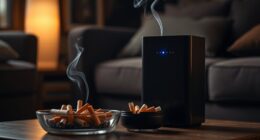
To build an indoor air quality emergency kit, gather masks like HEPA respirators, gloves, sealing materials such as plastic sheeting and duct tape, and batteries for power backups. Include a quality air purifier and verify filters are clean or new, using routine checks. Keep clear instructions for sealing spaces, operating purifiers, and ventilating safely. Store everything in a waterproof container near your main exit for quick access—that way, you’ll be ready to act quickly when needed. Keep exploring to learn more tips and strategies.
Key Takeaways
- Gather essential supplies: masks, gloves, sealing materials, batteries, and waterproof containers for quick access.
- Include a high-quality air purifier with regularly maintained filters for airborne toxin removal.
- Use sealing materials to contain contaminated air and ventilate safely when conditions permit.
- Keep clear, printed instructions for sealing, ventilating, and operating air purifiers readily accessible.
- Organize all items in an easily reachable, waterproof container near main exits for rapid deployment.
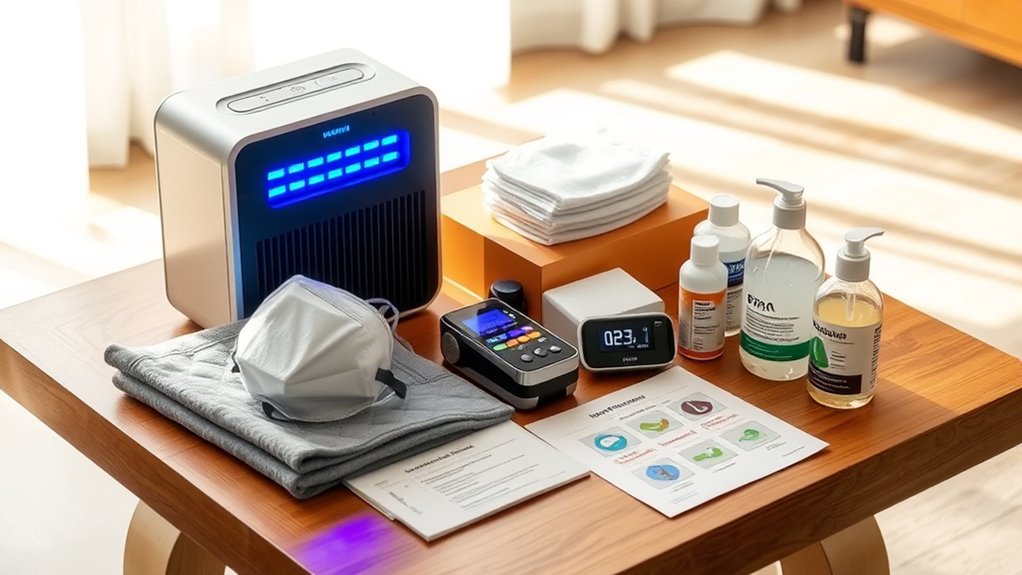
When indoor air quality suddenly worsens due to a fire, chemical spill, or other emergency, having an Indoor Air Quality Emergency Kit can make all the difference. In such moments, your quick response can protect your health and prevent hazardous exposure. A well-prepared kit should include essential emergency preparedness supplies, such as masks, gloves, and sealing materials, along with items specifically aimed at improving air quality. One key component is an air purifier, but it’s equally important to know proper air purifier maintenance. Regularly cleaning or replacing filters guarantees your device works effectively when it’s needed most, especially during an emergency. An air purifier can markedly reduce airborne toxins, smoke particles, and harmful chemicals, providing immediate relief while help arrives or conditions stabilize. Incorporating data-driven strategies can also help identify the most effective products and procedures to safeguard indoor air quality during crises.
Your emergency kit should also contain high-efficiency particulate air (HEPA) masks or respirators. These masks block out fine particles and airborne contaminants, offering crucial protection when the air is compromised. Keep multiple masks in your kit to accommodate everyone in your household. Additionally, sealing materials like plastic sheeting and duct tape help contain contaminated air within a room, preventing its spread and reducing exposure. Use these supplies to create a temporary barrier until external help arrives or the situation is under control. Including a battery-powered fan can help circulate and filter the air more effectively, especially if your primary air purifier is overwhelmed or unavailable.
Store multiple HEPA masks and sealing supplies to contain airborne hazards during emergencies.
Another critical aspect is having clear, printed instructions for how to improve indoor air quality during an emergency. This might include steps for sealing doors and vents, turning on your air purifier, and ventilating the space safely when possible. Regularly reviewing these instructions guarantees you’re ready when needed. Remember, your emergency preparedness supplies should be easily accessible and organized, so you can grab what you need swiftly. Keep spare filters, batteries, and masks in a dedicated, waterproof container close to your main exit or in an easily reachable spot.
Incorporating routine air purifier maintenance into your preparedness plan guarantees your device will perform at its best during a crisis. It’s not just about having a device but ensuring it functions correctly when it matters most. By assembling a thorough Indoor Air Quality Emergency Kit with both air purifier maintenance in mind and essential emergency supplies, you’re taking proactive steps to safeguard your health. Being prepared means you can act quickly, minimize exposure, and breathe easier during hazardous situations. This preparedness provides peace of mind, knowing you’ve done everything possible to protect yourself and your loved ones from sudden indoor air quality emergencies.
Frequently Asked Questions
How Often Should I Update My Indoor Air Quality Emergency Kit?
You should update your indoor air quality emergency kit at least once a year to guarantee it’s effective. Regular kit maintenance is essential for emergency preparedness, so check for expired supplies, batteries, and functioning filters or air purifiers. If you notice changes in your home’s air quality or after any emergency event, update your kit immediately. Staying proactive helps you respond quickly and keeps your indoor environment safe.
What Are the Most Common Indoor Air Pollutants to Include?
Pinpoint the prevalent pollutants for your indoor air quality kit. You should include essentials that address airborne toxins like volatile organic compounds (VOCs), mold spores, and smoke. Household allergens such as pet dander, dust mites, and pollen also pose significant threats. Prioritize products that purify, filter, and neutralize these pollutants, ensuring you’re prepared for any indoor incident. Properly selecting and managing these materials keeps your space safe and breathable.
Can I Use Household Items Instead of Specialized Gear?
You can use DIY alternatives and household substitutes for some air quality needs, but be cautious. Items like wet cloths or HEPA vacuum filters may help reduce dust and allergens temporarily. However, they aren’t a full replacement for specialized gear like air purifiers or masks. Always prioritize safety and consider professional-grade equipment for serious issues, but household items can provide limited, immediate relief when necessary.
How Do I Store the Kit to Ensure Its Effectiveness?
Think of your emergency kit as a secret weapon—you want it ready when needed. Store it in a cool, dry place away from sunlight to keep supplies effective. Use clear containers or label everything for quick access. Consider accessibility considerations, ensuring you can grab it fast, even in a panic. Good storage tips make sure your indoor air quality kit remains functional, so you’re prepared when an emergency strikes.
Are There Specific Kits Recommended for Children or Sensitive Individuals?
You should look for kits that include child-specific gear and cater to sensitive individual precautions. These kits often have smaller masks, gentle filters, and items designed for delicate skin or respiratory needs. When choosing, confirm they’re easy for children or sensitive individuals to use and store. This way, you’ll be prepared to protect everyone effectively during an air quality emergency, making sure their unique needs are met.
Conclusion
Think of your indoor air quality emergency kit as a sturdy lighthouse guiding you through stormy skies. When pollutants threaten, it shines a bright beacon of clean air, helping you navigate safely back to calm. Just as a lighthouse offers shelter and direction, your kit provides the tools to protect your home and loved ones from unseen dangers. Keep it ready, and you’ll always have a safe harbor whenever indoor air quality issues arise.