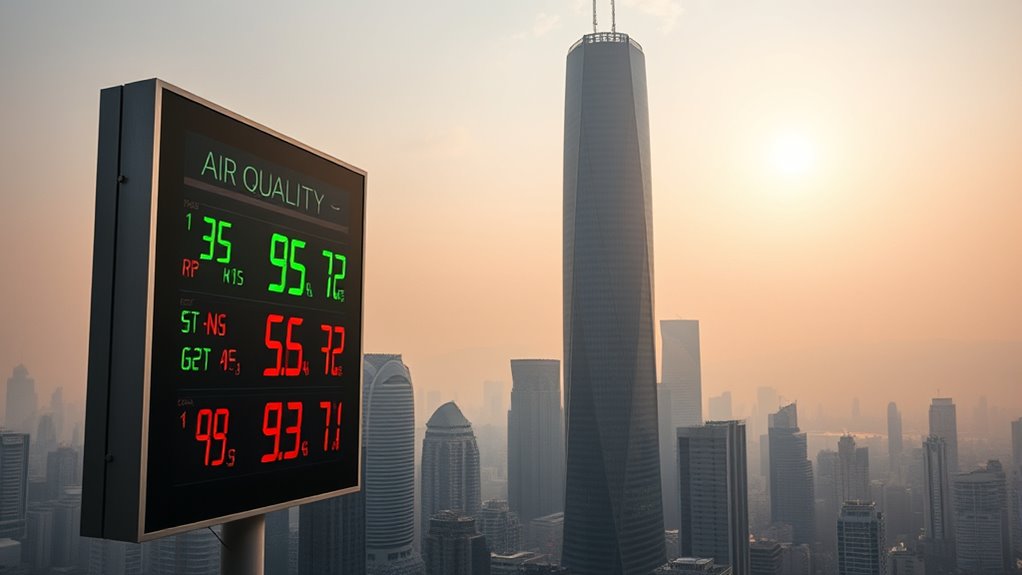

The Air Quality Index (AQI) gives you a simple number that shows how clean or polluted the air is and what health risks might come with it. It considers pollutants like ground-level ozone, particulate matter, nitrogen dioxide, sulfur dioxide, and carbon monoxide. Higher AQI values mean worse pollution and greater health concerns, especially for sensitive groups. If you want to know exactly what each number means for your health, keep exploring how AQI levels relate to safety.
Key Takeaways
- The AQI assigns a single number to air quality, indicating pollution levels and potential health risks.
- Lower AQI values (0-50) mean good air quality with minimal health concerns.
- Higher AQI values (above 100) signal increasing pollution, posing health risks, especially to sensitive groups.
- Different pollutant concentrations correspond to specific AQI ranges, guiding health advisories.
- Monitoring AQI helps individuals take appropriate precautions to protect their health during pollution episodes.
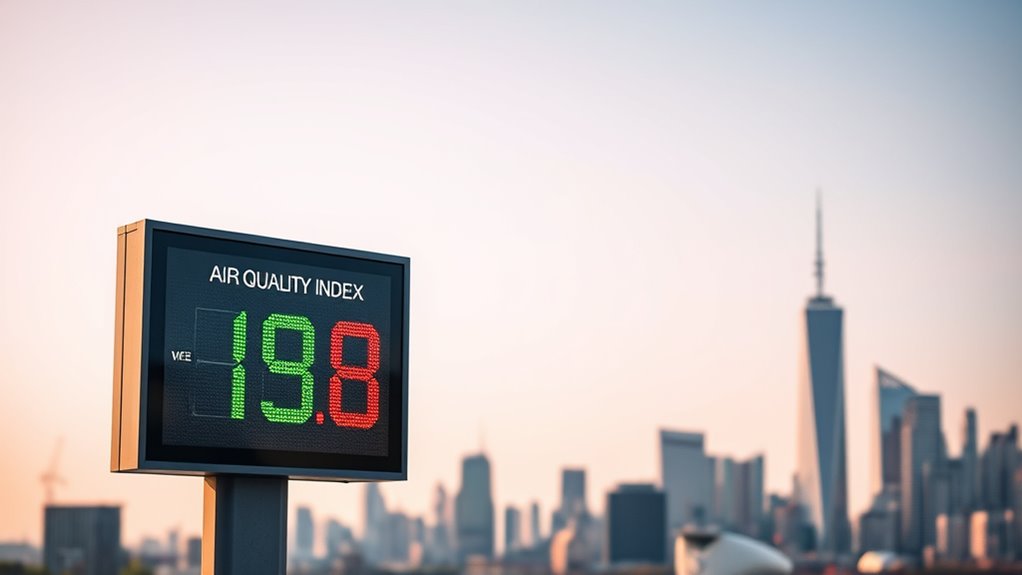
Understanding the Air Quality Index (AQI) is essential because it helps you quickly assess how clean or polluted the air is and what health risks might be involved. The AQI translates complex air quality data into a simple number, making it easier for you to understand the potential impact on your health. To determine these numbers, environmental agencies analyze pollution sources such as vehicle emissions, industrial activities, construction dust, and natural events like wildfires. Recognizing these sources is key because they directly influence the AQI readings you see daily. Pollution from traffic, for example, often leads to higher levels of nitrogen dioxide and particulate matter, while factories may emit sulfur dioxide and other harmful pollutants. Knowing where pollution comes from helps you understand why the air quality fluctuates and what measures are being taken to control it.
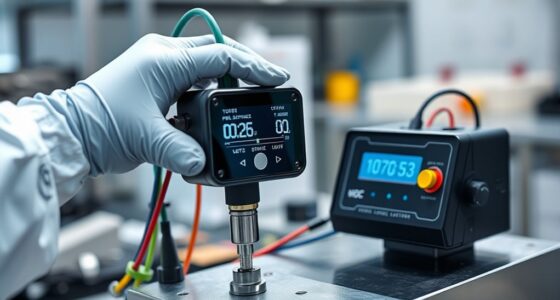
Air monitoring techniques play a vital role in accurately measuring pollutants and establishing the AQI. These techniques include ground-based sensors, remote sensing devices, and even mobile monitoring units that track air quality in real-time. Ground sensors are strategically placed throughout cities and rural areas, continuously recording concentrations of pollutants like ozone, particulate matter (PM2.5 and PM10), carbon monoxide, and sulfur dioxide. Remote sensing technologies, such as satellites, provide broader coverage and help identify pollution trends over large regions. Meanwhile, mobile monitors can be deployed to specific locations to gather detailed data during pollution episodes or special events. Air quality monitoring is a crucial aspect of maintaining accurate and timely AQI data.

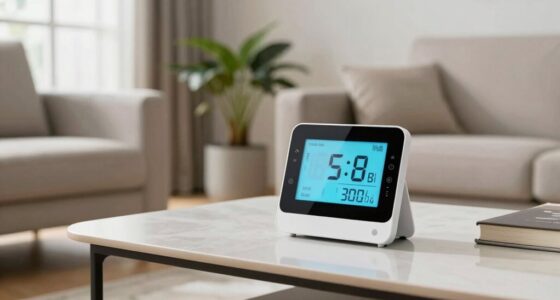
Amazon Smart Air Quality Monitor – Know your air, Works with Alexa
- Real-time air quality insights: Understand indoor air conditions easily
- Monitors five key factors: Tracks PM 2.5, VOCs, CO, humidity, and temperature
- Color-coded LED indicator: Displays current air quality status
As an affiliate, we earn on qualifying purchases.
As an affiliate, we earn on qualifying purchases.
Frequently Asked Questions
How Often Does the Air Quality Index Get Updated?
You’re wondering how often the air quality index gets updated. Typically, air quality monitoring using air quality sensors occurs continuously or at frequent intervals, often hourly. This real-time data collection guarantees that the air quality index reflects current conditions. Many cities and agencies update their air quality index daily or several times a day, providing timely information so you can make informed decisions about outdoor activities and health precautions.
Can the AQI Predict Future Air Quality Conditions?
The AQI itself doesn’t predict future air quality conditions, but predictive models use historical data and current measurements to create future forecasts. These models analyze patterns and trends, helping you understand potential air quality changes ahead. While the AQI shows present conditions, relying on these models gives you a glimpse into what to expect, so you can plan outdoor activities or take precautions accordingly.
What Personal Health Risks Are Associated With Specific AQI Levels?
You should know that specific AQI levels pose different risks to your respiratory health. When the AQI is in the moderate range, air pollution may cause minor irritations, but it’s generally safe. However, if it reaches unhealthy levels, you might experience worsened respiratory issues, especially if you have existing conditions like asthma. Staying aware of AQI helps you protect yourself from air pollution’s potential impact on your respiratory health.
How Do Weather Patterns Influence AQI Readings?
Weather variations and seasonal effects greatly influence AQI readings. For instance, wind can disperse pollutants, lowering AQI, while calm, stagnating air can trap smog and increase pollution levels. Temperature inversions, common in winter, trap pollutants near the ground, raising AQI. During different seasons, activities like heating or agricultural burning also impact air quality. So, understanding weather patterns helps you anticipate changes in AQI and protect your health accordingly.
Are There Differences in AQI Standards Globally?
You’ll notice that global standards for AQI vary because of regional variations in air quality and health priorities. While some countries adopt the same guidelines, others set stricter or more lenient limits based on local pollution levels and scientific research. These differences can affect how AQI numbers are interpreted and how health advisories are issued, so it’s important to take regional standards into account when evaluating air quality in different parts of the world.

Levoit Air Purifiers for Bedroom Home Pets Dorm Room, Small Air Purifiers
- Certified for Performance: AHAM Verifide certified for reliability
- Removes Pollutants: Captures lint, pet dander, smoke
- Odor Neutralization: Reduces smoke, odors, fumes
As an affiliate, we earn on qualifying purchases.
As an affiliate, we earn on qualifying purchases.
Conclusion
So, now that you know what those numbers mean, you’re practically an air quality expert, right? Just remember, those “good” days might be hiding a sneaky smog party, and “hazardous” could be your new best friend. But don’t worry—keep an eye on the index, breathe smart, and maybe, just maybe, consider that fancy air purifier. After all, your lungs deserve VIP treatment, not a surprise guest appearance from pollution!

100 Pcs Activated Carbon PM2.5 Mask Filter Paper 5 Layers
- Package Includes: 100 replacement filters for cloth masks
- Replacement Frequency: Replace daily for safety
- Easy Installation: Insert into filter opening easily
As an affiliate, we earn on qualifying purchases.
As an affiliate, we earn on qualifying purchases.

8-in-1 Indoor Air Quality Monitor, Portable Tester for Temperature, Humidity, HCHO, TVOC, Smart Sensor for Grow Tents, Bedroom, Home
- 8-in-1 Air Quality Monitoring: Tracks CO2, AQI, temperature, humidity, HCHO, TVOC
- High-Precision Sensors: Provides fast, accurate, real-time readings
- Long-Lasting Battery: Up to 72 hours on a single charge
As an affiliate, we earn on qualifying purchases.
As an affiliate, we earn on qualifying purchases.