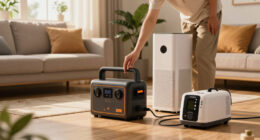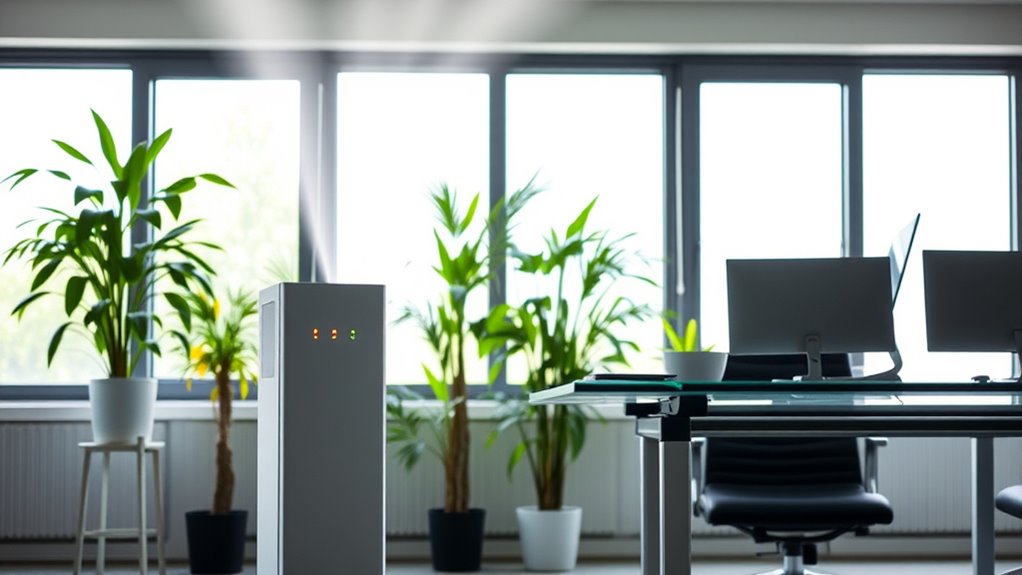

Investing in air purifiers for your office helps improve air quality, reducing allergens, dust, and pollutants that can impact health and productivity. Choose quiet, appropriately sized units with HEPA and activated carbon filters to tackle airborne particles and odors effectively. Proper placement and maintenance guarantee consistent performance, creating a healthier, more comfortable workspace. By taking these steps, you’ll support your team’s well-being and focus—keep going to discover how to select the best options for your office.
Key Takeaways
- Choose quiet, energy-efficient air purifiers with low decibel levels to minimize workplace disruption.
- Select units with HEPA and activated carbon filters to effectively remove allergens, pollutants, and odors.
- Properly position purifiers in low airflow areas and select appropriately sized models for optimal coverage.
- Regularly maintain and replace filters to sustain high air quality and device efficiency.
- Incorporate air purifiers as part of a comprehensive approach to create a healthier, more productive office environment.

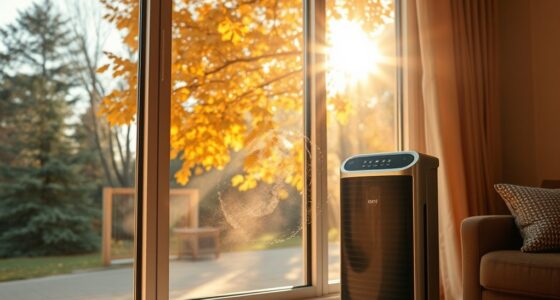
Creating a healthy and productive office environment starts with clean air. When the air quality is high, you’ll notice improved concentration, fewer sick days, and a more comfortable workspace. Air purifiers play a vital role in maintaining this environment by filtering out pollutants, allergens, and airborne pathogens. They help reduce dust, mold spores, pet dander, and volatile organic compounds, all of which can negatively impact your health and productivity. By investing in a good air purifier, you’re actively working to create a space where everyone feels better and can perform at their best.
Another important aspect of a conducive office environment is managing noise levels. While air purifiers are primarily known for improving air quality, many models also contribute to noise control. When chosen carefully, they operate quietly enough not to be disruptive, helping you and your colleagues focus more effectively. Excessive noise can cause stress, decrease concentration, and lead to mistakes, so selecting an air purifier with a low noise level is essential. Look for units that specify decibel ratings, aiming for models that operate below 50 dB to guarantee a peaceful atmosphere. This way, you get the dual benefit of cleaner air and a quieter workspace.
The right placement of air purifiers also influences their effectiveness. Position them in areas where air circulation is limited, such as corners or behind desks, to maximize their ability to filter the air throughout the room. Keep in mind that some units are designed for small spaces, while others are suitable for larger areas. Choosing the correct size ensures you’re not overworking the device or leaving parts of the office unfiltered. Regular maintenance, like replacing filters, keeps the purifiers running efficiently, maintaining ideal air quality and noise levels.
Furthermore, selecting the right type of air purifier can address specific concerns. HEPA filters are excellent for trapping tiny particles, making them ideal for offices prone to dust or allergens. Activated carbon filters help remove odors and chemical fumes, creating a fresher environment. Combining these features can drastically improve overall air quality and reduce the need for additional air management strategies. Incorporating advanced filtration technology ensures you’re optimizing air quality and health benefits in your workspace. When you’re proactive about these factors, you create an office space that’s healthier, more inviting, and more conducive to productivity.
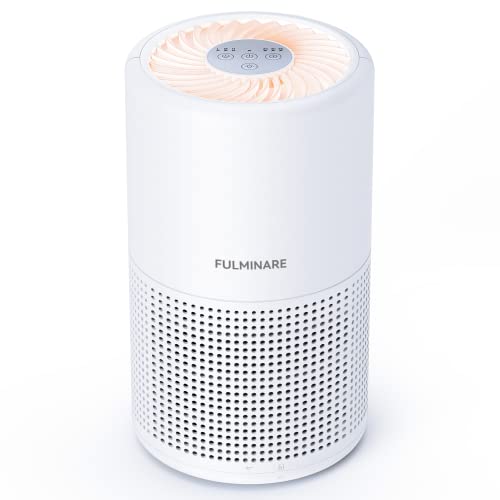
Air Purifiers for Bedroom, FULMINARE H13 True HEPA Air Filter, Quiet Air Cleaner With Night Light, Portable Small Air Purifier for Home, Office, Living Room
- Efficient Particle Filtration: H13 HEPA filter for clean air
- High Circulation Rate: 360° air outlet, refreshes 5x/hour
- Suitable for 215 sq ft rooms: Effective in small to medium rooms
As an affiliate, we earn on qualifying purchases.
As an affiliate, we earn on qualifying purchases.
Frequently Asked Questions
How Often Should Office Air Purifiers Be Maintained or Replaced?
You should replace filters and perform maintenance on your office air purifier every 3 to 6 months, depending on usage and air quality. Follow the manufacturer’s maintenance schedule for peak performance. Regular filter replacement ensures that your purifier continues to effectively remove airborne pollutants. Keep an eye on indicator lights or alerts, and clean the unit periodically to maintain healthy indoor air quality and extend the lifespan of your device.
Are There Specific Air Purifiers Suitable for Large Office Spaces?
You’ll want commercial filtration air purifiers designed for large spaces, as they efficiently cover bigger areas. While some worry about cost, investing in models with air quality sensors ensures ideal performance without unnecessary energy use. These purifiers automatically adjust to real-time air quality, maintaining a healthier environment. Look for units specifically rated for large offices, ensuring you get effective coverage and improved air quality across your entire workspace.
Do Air Purifiers Eliminate All Types of Airborne Viruses and Bacteria?
Air purifiers can’t eliminate all airborne viruses and bacteria, but they markedly reduce them. With effective virus filtration, they trap many virus particles, and bacteria elimination features help lower the risk of airborne infections. However, no purifier guarantees 100% removal. To maximize safety, combine air purification with good hygiene practices, proper ventilation, and regular cleaning. This multi-layered approach keeps your office healthier and minimizes airborne health risks.
Can Air Purifiers Reduce Office Odors Caused by Chemicals or Food?
Yes, air purifiers can reduce office odors caused by chemicals and food smells. They work by filtering out airborne particles and neutralizing odors with activated carbon filters. When you use the right purifier, it absorbs chemical odors and food smells effectively, making the workspace more pleasant. Regularly maintaining your air purifier guarantees it continues to improve air quality by reducing unwanted odors from chemicals and food in the office.
What Is the Energy Consumption and Operating Cost of Office Air Purifiers?
Think of office air purifiers as small energy-efficient engines, quietly running to keep your workspace fresh. They typically consume between 30 to 70 watts, making them cost-effective to operate. Their energy efficiency means lower power consumption, which diminishes your operating costs over time. Regular use ensures cleaner air without high electricity bills, helping you maintain a healthy environment while keeping expenses in check.

VOOPNU Air Purifiers for Home, High Efficiency Filter Up to 1076 Ft², White
- Easy-to-Use Control Panel: Intuitive design for effortless operation
- Compact Yet Powerful: Covers 1076 ft² in a small size
- Portable and Space-Saving: Fits on desks or in corners easily
As an affiliate, we earn on qualifying purchases.
As an affiliate, we earn on qualifying purchases.
Conclusion
Incorporating air purifiers into your office is like opening a window to cleaner, revitalized air. They actively chase away pollutants, allergens, and germs, turning your workspace into a healthier haven. By investing in this simple upgrade, you’re giving your environment a gust of fresh air—literally. Keep the air flowing and your team thriving, because a cleaner atmosphere is the foundation for productivity and well-being. Make the change today and breathe easier tomorrow.

MOOKA Air Purifiers for Home Large Room up to 1076ft², H13 True HEPA Air Filter Cleaner, Odor Eliminator, Remove Smoke Dust Pollen Pet Dander, Night Light, B-D02L White
- Large Coverage Area: Covers up to 1076 ft² with 6 air changes/hr
- Effective Filtration System: Captures pet dander, smoke, odors, dust, pollen
- H13 True HEPA Filter: Removes airborne particles as small as 0.3 microns
As an affiliate, we earn on qualifying purchases.
As an affiliate, we earn on qualifying purchases.

LEVOIT Air Purifiers for Bedroom Home Dorm, AHAM VERIFIDE, 3-in-1 Filter Cleaner With Aroma Pad, Filters Smoke, Allergens, Pet Dander, Odor, Dust, Office, Desktop, Core Mini-P, White
- Certified for Performance: AHAM Verifide certified for reliability
- Removes Pollutants: Captures lint, pet dander, smoke
- Odor Neutralization: Reduces smoke, odors, fumes
As an affiliate, we earn on qualifying purchases.
As an affiliate, we earn on qualifying purchases.