

Understanding the AQI involves knowing key pollutants like PM2.5, ozone, carbon monoxide, and sulfur dioxide that affect air quality levels. PM2.5 includes tiny particles from traffic, industry, and burning fuels, which can harm your lungs and heart. Ozone forms in sunlight from vehicle emissions and industrial activity, causing respiratory problems. Other pollutants also impact health, especially in varying weather and location conditions. Continue exploring to learn how these factors influence your outdoor air quality and health decisions.
Key Takeaways
- The AQI simplifies air pollution data into a single number indicating health risk levels.
- PM2.5 represents tiny particles from sources like vehicles and industry that penetrate deep into lungs.
- Ozone forms when nitrogen oxides and volatile organic compounds react in sunlight, impacting respiratory health.
- Other pollutants like carbon monoxide and sulfur dioxide also influence AQI and have specific health effects.
- Weather conditions affect pollutant dispersion, altering AQI readings and helping guide outdoor activity decisions.
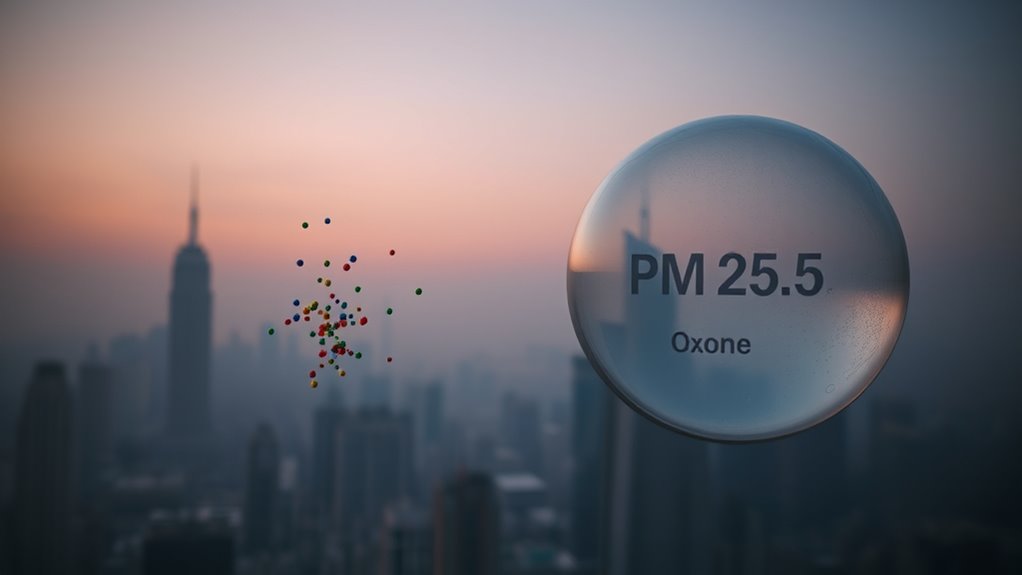
Air Quality Index (AQI) provides a clear measure of how pollution affects your health, but understanding its components is essential for making informed decisions. The AQI is a tool that translates complex air pollution data into a simple number, helping you assess whether the air is safe to breathe. To truly grasp what this number means, you need to understand the key pollutants that influence it, such as PM2.5, ozone, and others. These pollutants originate from various air pollution sources, each contributing differently based on location, weather, and human activity. Recognizing these sources helps you anticipate potential health impacts and take precautions when pollution levels rise.
Particulate matter, especially PM2.5, forms when tiny particles from vehicle emissions, industrial processes, construction activities, and burning fossil fuels get released into the air. Because these particles are so small—less than 2.5 micrometers—they can penetrate deep into your lungs and even enter your bloodstream. Exposure to high levels of PM2.5 is linked to serious health impacts, including respiratory issues, heart disease, and worsened asthma symptoms. Understanding where these particles come from allows you to avoid outdoor activities during pollution spikes or protect yourself with masks and air purifiers.
Ozone, another critical component of the AQI, forms when nitrogen oxides and volatile organic compounds from vehicle exhaust, industrial emissions, and chemical solvents react in sunlight. While ozone plays a crucial role in protecting the Earth’s atmosphere, ground-level ozone is a harmful pollutant that can cause chest pain, throat irritation, and worsen lung diseases. It tends to be worse during hot, sunny days and in urban areas with heavy traffic. Knowing about ozone sources helps you plan outdoor activities for times when ozone levels are lower, reducing your risk of adverse health effects.
Other pollutants, like carbon monoxide and sulfur dioxide, also influence the AQI but tend to have more localized impacts. Carbon monoxide, emitted from vehicle engines and industrial processes, can interfere with your blood’s ability to carry oxygen, leading to fatigue and cardiovascular problems if inhaled in high concentrations. Sulfur dioxide, mainly from burning fossil fuels, can cause breathing difficulties and aggravate existing respiratory conditions. Additionally, air quality patterns and weather conditions can influence pollutant dispersion and concentration levels. By understanding these sources and their health impacts, you can better interpret AQI readings and make smarter choices about when and where to spend your time outdoors.
Frequently Asked Questions
How Does AQI Affect Daily Outdoor Activities?
You should verify the AQI before outdoor exercise or travel planning, as high levels can impact your health. When AQI is poor, you might want to reschedule outdoor activities or choose indoor options to avoid health risks. It also helps you plan travel routes to minimize exposure, especially if you’re sensitive to pollution. Staying informed ensures you protect your health while enjoying outdoor activities and making travel decisions.
Are There Seasonal Variations in AQI Components?
Yes, seasonal fluctuations dramatically change AQI components. In summer, ozone skyrockets due to intense sunlight fueling chemical reactions, turning outdoor air into a hazy, sun-drenched cloud. Winter brings a surge in particulate matter like PM2.5 from heating sources, making the air thick and heavy. These pollutant patterns shift with the seasons, so you’ll notice air quality varies wildly throughout the year, impacting your outdoor plans more than you might expect.
How Can Individuals Reduce Exposure to High PM2.5 Levels?
To reduce your exposure to high PM2.5 levels, use indoor filtration systems with HEPA filters to trap particles. Stay indoors during heavy pollution days, and keep windows and doors closed. Wearing a N95 mask or other personal protective equipment can also help when you need to go outside. These steps protect your lungs and improve air quality around you during smog or haze events.
What Are the Health Effects of Ozone Pollution?
Ever wondered what ozone pollution does to you? It can cause serious respiratory risks, making breathing difficult, especially during outdoor activities. In the short term, expect coughing, throat irritation, and chest tightness. But the threat doesn’t end there—long-term effects may include reduced lung function and chronic respiratory diseases. Stay alert, limit outdoor exposure during high ozone days, and protect your health from these hidden dangers.
How Accurate Are Home Air Quality Monitors Compared to Official AQI Data?
Home air quality monitors can be quite accurate if they have good sensor accuracy and proper calibration methods. However, they often don’t match the precision of official AQI data, which relies on advanced, maintained stations. You should regularly calibrate your device and understand its limitations. For the most reliable info, compare your monitor’s readings with local official data, especially during high pollution periods.
Conclusion
Understanding the AQI helps you stay aware of air quality risks. Did you know that on days with high PM2.5 levels, respiratory issues increase by nearly 15%? By paying attention to components like ozone and particulate matter, you can protect your health and make smarter decisions about outdoor activities. Stay informed, stay safe, and breathe easier—your lungs will thank you!