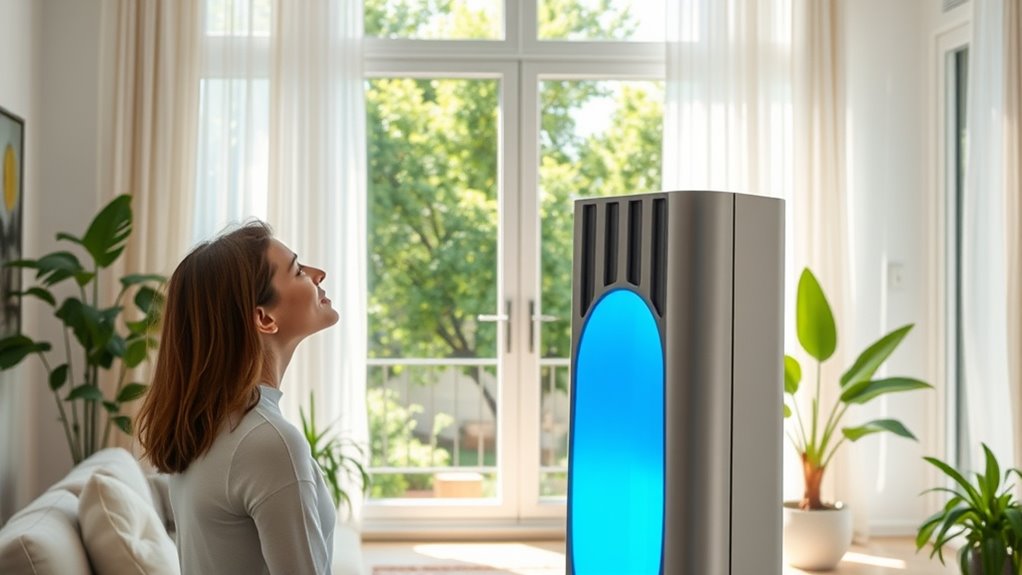

To improve indoor air quality and manage asthma, identify and eliminate common pollutants like pet dander, tobacco smoke, and household chemicals. Enhance ventilation by regularly opening windows, using exhaust fans, and maintaining your HVAC system. Keep surfaces dust-free with damp cleaning and use HEPA filters to trap airborne allergens. Control humidity levels to prevent mold growth, and choose natural, low-VOC products for cleaning and personal care. Keep exploring for more tips to breathe easier at home.
Key Takeaways
- Regularly clean and vacuum with HEPA filters to reduce airborne allergens like pet dander and dust mites.
- Improve ventilation by opening windows, using exhaust fans, and maintaining HVAC systems for fresh air exchange.
- Control indoor humidity between 30-50% to prevent mold growth and reduce mold-related asthma triggers.
- Use air purifiers with HEPA filters to remove airborne pollutants and improve overall air quality.
- Choose household products that are low-VOC, fragrance-free, and natural to minimize chemical irritants.
Identifying Common Indoor Pollutants

Indoor air quality can markedly impact asthma symptoms, and understanding the pollutants present is essential. Pet dander is a common indoor allergen that can trigger asthma attacks, especially if you have pets like cats or dogs. These tiny particles become airborne when pets shed skin or fur, lingering in carpets, furniture, and air. Tobacco smoke is another major indoor pollutant that worsens asthma symptoms. Even if you’re not the smoker, exposure to secondhand smoke can irritate your lungs and inflame airways. Recognizing these pollutants is vital for managing your environment. Regular cleaning to remove pet dander and avoiding tobacco smoke help reduce exposure. Additionally, understanding how air filtration systems can improve indoor air quality is crucial for asthma management. Identifying these common indoor pollutants is the first step toward creating a healthier, asthma-friendly living space.
Improving Ventilation and Air Circulation
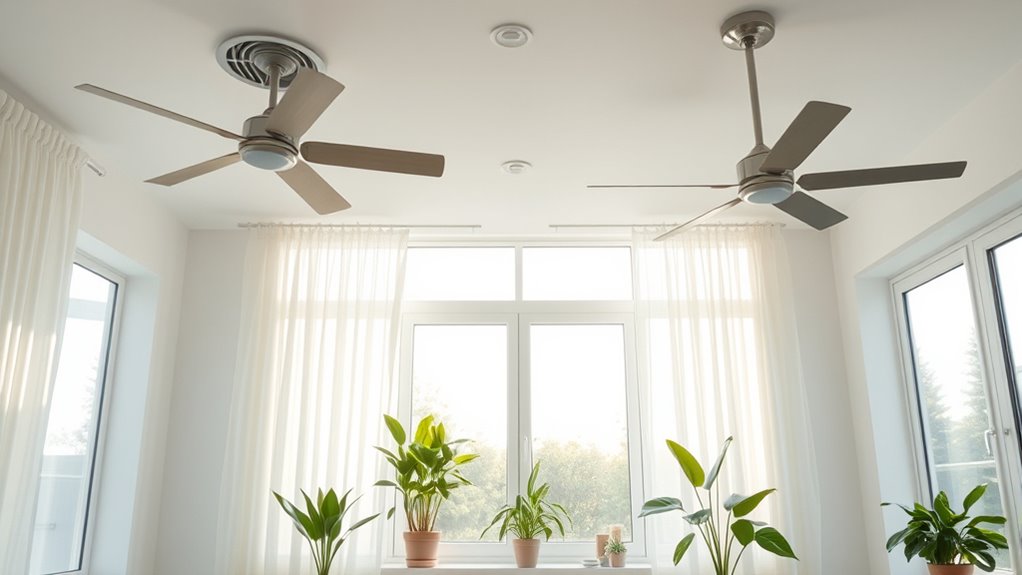
To effectively reduce pollutant buildup and improve air quality, enhancing ventilation and air circulation is crucial. Proper air exchange removes indoor pollutants and brings in fresh air, reducing asthma triggers. Upgrading your ventilation systems ensures consistent airflow and better air quality. You can improve circulation by:
- Installing exhaust fans in kitchens and bathrooms
- Using ceiling fans to promote air movement
- Opening windows regularly for natural ventilation
- Utilizing air purifiers with HEPA filters
- Ensuring HVAC systems are maintained and filters are changed frequently
Additionally, understanding indoor air quality helps you identify sources of pollutants and take targeted actions. These steps help maintain a steady air exchange, preventing stagnant air and minimizing indoor pollutants. Adequate ventilation is an essential part of creating a healthier indoor environment, especially for asthma sufferers.
Regular Cleaning and Dust Control

Regular cleaning and dust control are essential steps in reducing asthma triggers and maintaining healthier indoor air. Regularly dust surfaces with a damp cloth to trap allergens and prevent dust buildup. Vacuum carpets and upholstery frequently using a vacuum with a HEPA filter to minimize airborne particles. Keep allergen-proof bedding on beds, which helps block dust mites and other irritants. For air purifier maintenance, clean or replace filters regularly to guarantee peak performance and reduce airborne allergens. Decluttering your space also limits dust accumulation and makes cleaning easier. By staying consistent with these practices, you’ll markedly lower indoor allergens, improve air quality, and create a safer environment for asthma management.
Managing Humidity and Mold Growth
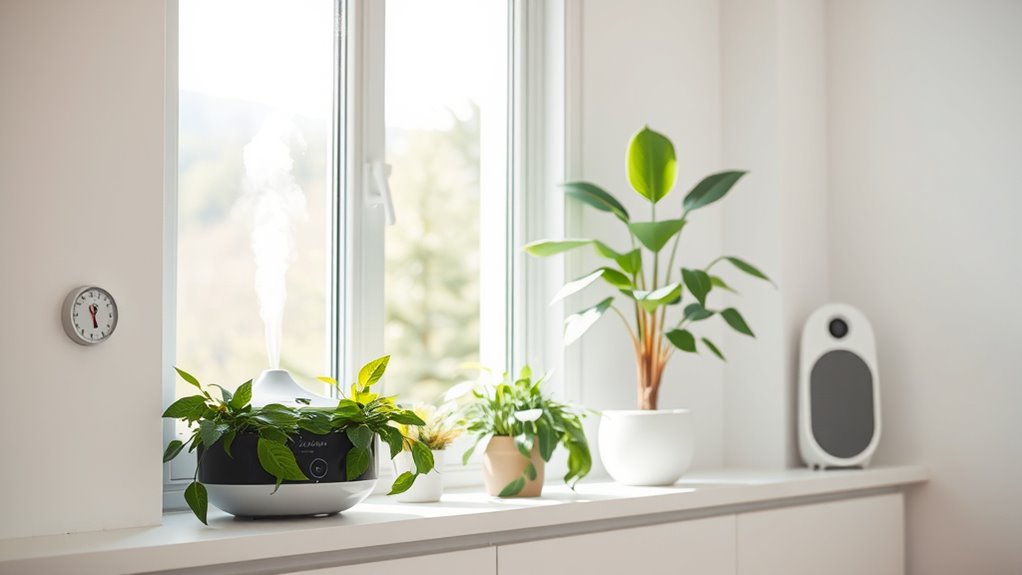
Since high humidity levels can promote mold growth, it’s essential to monitor and control moisture in your home. Mold thrives in damp environments, which can worsen asthma symptoms. To manage humidity effectively, consider these tips:
- Regularly maintain your humidifier to prevent excess moisture and mold buildup
- Use mold-resistant materials in areas prone to dampness, like bathrooms and basements
- Keep indoor humidity levels between 30-50% with a hygrometer
- Ventilate your home properly, especially in kitchens and bathrooms
- Fix leaks promptly to avoid hidden mold growth
- Be aware that couples traveling together often face unique challenges that can impact emotional well-being; maintaining a healthy environment at home can support your overall health.
Choosing Safe Household Products
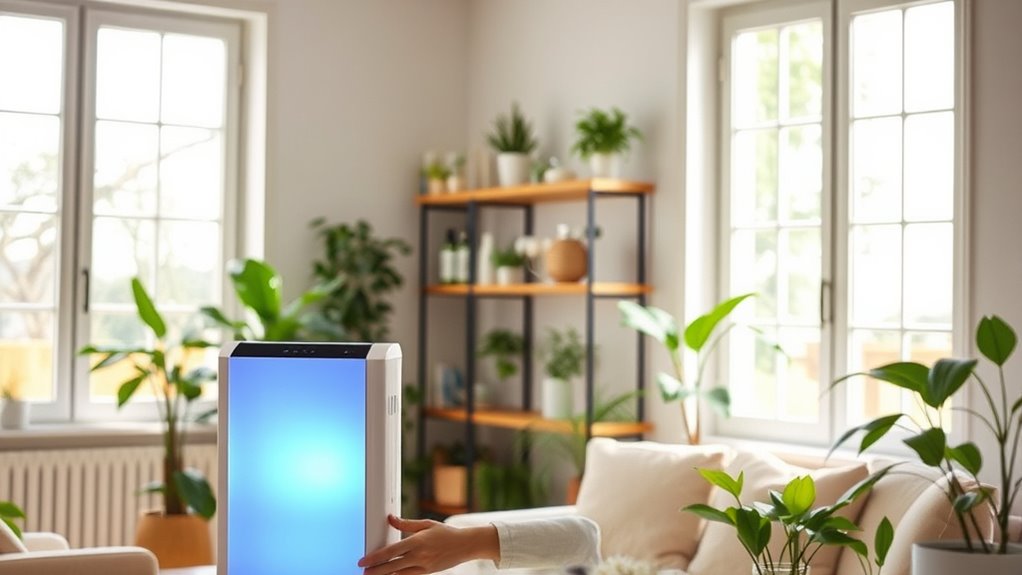
Choosing safe household products is essential for maintaining good indoor air quality and preventing asthma triggers. Opt for natural remedies like vinegar, baking soda, and essential oils to reduce chemical exposure. Look for products labeled low-VOC or free from synthetic fragrances and dyes. These choices support air purification and create a healthier environment. Using sulfate-free shampoos can also help minimize airborne irritants that may affect sensitive individuals. Use the table below to compare common household options:
| Product Type | Safe Alternatives |
|---|---|
| Cleaning Supplies | Vinegar, baking soda, essential oils |
| Air Fresheners | Natural scent diffusers, open windows |
| Personal Care Products | Fragrance-free lotions, mineral-based deodorants |
Frequently Asked Questions
How Can I Test Indoor Air Quality Effectively at Home?
To test your indoor air quality effectively at home, start with DIY testing using affordable air quality sensors. These devices monitor pollutants like dust, VOCs, and humidity levels, giving you real-time data. Place sensors in common living areas and regularly check their readings to identify issues. This proactive approach helps you maintain a healthier environment, especially if you or your family are sensitive to air quality changes.
Are Air Purifiers Suitable for Asthma Management?
They say, “A little prevention goes a long way.” Air purifiers can be a good addition for asthma management, offering benefits like removing allergens and pollutants that trigger symptoms. They help improve indoor air quality, which can lead to asthma symptom relief. While not a cure, using an air purifier supports a cleaner environment, making it easier to breathe and reducing asthma flare-ups.
What Are Natural Alternatives to Chemical Cleaning Products?
You can try DIY cleaning with natural ingredients like vinegar, baking soda, and lemon to avoid harsh chemicals. Essential oils such as tea tree or lavender add antimicrobial properties and a fresh scent. These alternatives are effective for regular cleaning and safer for your indoor air quality. By switching to natural solutions, you reduce chemical exposure and create a healthier environment for everyone in your home.
How Often Should Ventilation Systems Be Inspected and Maintained?
You might wonder how often ventilation systems need inspection and maintenance. Regular HVAC maintenance is essential—ideally, you should have it checked at least twice a year. During these visits, professionals should replace air filters and inspect for issues. Consistent air filter replacement guarantees your system runs efficiently, reduces allergens, and maintains good indoor air quality. Don’t skip these inspections; they’re key to keeping your indoor environment healthy and safe.
Can Indoor Plants Improve Air Quality for Asthma Sufferers?
Indoor plants can offer plant benefits like air filtering, which may help improve air quality for asthma sufferers. While they don’t replace proper ventilation, plants can reduce airborne pollutants and increase humidity. You should choose low-maintenance, non-toxic varieties, and avoid overwatering to prevent mold. Incorporating plants into your space can be a natural way to support cleaner indoor air, but always combine this with other best practices for ideal health.
Conclusion
By keeping your indoor air clean, you can markedly reduce asthma triggers. Did you know that indoor air pollutants can be up to five times higher than outdoor levels? Simple steps like improving ventilation, controlling humidity, and using safe products make a real difference. Taking these actions not only helps manage asthma but also creates a healthier living environment for everyone. Start today, and breathe easier tomorrow.