
TL;DR
Home-design and laundry experts say indoor clothes drying can raise humidity, particularly in rooms without effective extraction or moisture-resistant finishes. They recommend using a ventilated kitchen or utility room where possible, while avoiding bathroom dehumidifiers because of electrical safety concerns. The scale of the reported humidity increase and the best approach for each home are not established in the source material.
Experts cited in a recent home-design report say drying wet laundry indoors can add moisture to rooms that lack effective ventilation, increasing the possibility of condensation and mould. They recommend choosing a well-ventilated kitchen or utility room over a bedroom or landing where possible, while stressing that electrical safety matters when using dehumidifiers.

Get home appliances delivered free with Prime
- Fast, free delivery on millions of items
- Prime Video, Amazon Music and more included
- Member-only deals all year
Alysia Panther, head of design at House Designer, describes kitchens, bathrooms and utility rooms as “wet” rooms in the terminology used by building regulations, saying they are the rooms typically designed with extractor fans. Bedrooms and living rooms, by contrast, may have only a small window trickle vent. That difference can affect how readily moisture from drying clothes is removed.
Panther says drying laundry in a room without appropriate ventilation or moisture-management measures can leave water vapour on colder surfaces and in poorly ventilated areas, including windows and spaces behind furniture. The report warns that persistent damp conditions can contribute to condensation and mould, though it does not provide measurements from a specific home or establish that indoor drying alone causes mould in every case.
Deyan Dimitrov, Laundryheap’s chief executive and a laundry expert, says research shows that drying clothes on doors or over warm radiators can raise home moisture levels by 30%. The source does not identify the research, explain its methods, specify the measurement window, or state the comparison baseline. The figure should therefore be treated as an attributed claim rather than a result that can be applied to every household.
Is Your Laundry Drying Spot Adding Dampness?
Indoor drying releases moisture. Ventilation, room finishes and existing dampness affect how it may build up.
Room choice matters
The experts recommend a space with effective extraction where possible.
- Kitchen or utility room with extraction
- Bathroom surfaces may resist moisture
- Bedroom or landing with limited airflow
- Cold windows and areas behind furniture
What moisture may affect
Persistent damp conditions can contribute to condensation and mould.
Cold spots
Water vapour may settle on windows and poorly ventilated areas.
Flooring and fabrics
Experts describe potential risks to carpets, wood and some laminate; effects vary by home.
Ways to manage indoor drying
These are suggested measures; the source does not compare their effectiveness or costs.
Use a kitchen or utility room with effective extraction when available.
Use an extra spin where appropriate, or a tumble dryer if practical.
Briefly open a window where suitable; check your room and equipment guidance.
Moisture Can Affect Rooms and Finishes
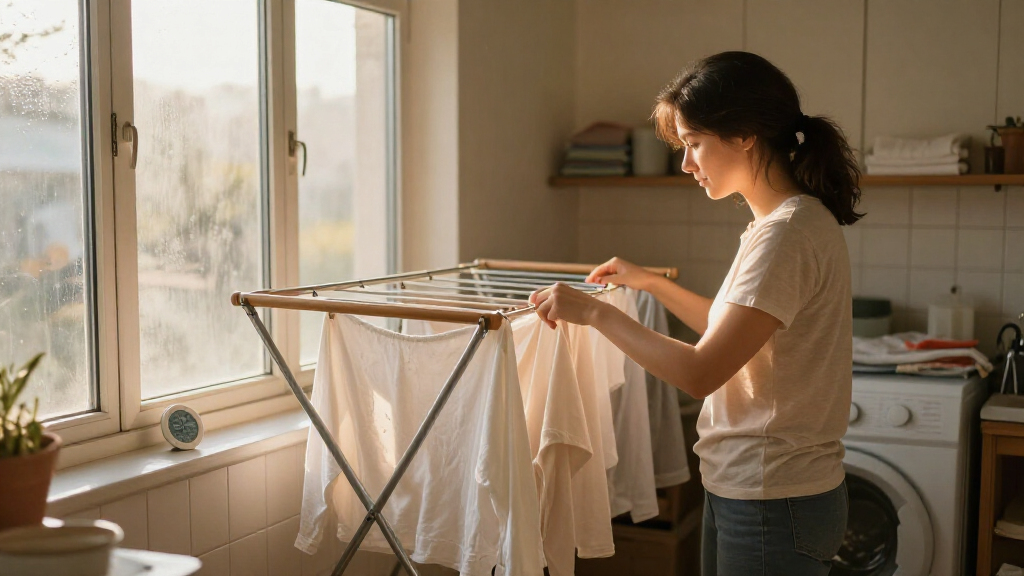
The concern is practical for households that cannot dry clothes outdoors, particularly during cold or wet weather. A room may feel convenient for a drying rack but still lack the extraction, airflow or surfaces needed to handle moisture released from wet fabric. Repeated moisture exposure may raise the risk of condensation and mould, and can affect materials such as carpets, wood and some laminate flooring, according to the experts quoted.
Graeme Shelley, managing director at Factory Direct Flooring, says carpets can be vulnerable to mould, while prolonged exposure to moisture can damage real wood and laminate. His comments describe potential material risks, not a finding that a particular floor will be damaged by occasional indoor drying. The likely effect depends on how much laundry is dried, room ventilation, temperature, duration and existing damp conditions.
Choosing a room with an extractor fan or other effective ventilation may make moisture easier to remove. But the article does not establish that a “wet” room will prevent dampness, or that a dehumidifier is necessary in every home. Readers should treat room choice as one part of managing indoor moisture, alongside ventilation and the condition of their home.
Products Worth Considering

Google Nest Thermostat E Smart Thermostat with Temperature Sensor Bundle – White

Shark HydroVac MessMaster Wet Dry Vacuum & Mop Combo (AW261)

Dyson Car+Boat Cordless Handheld Vacuum
As an affiliate, we earn on qualifying purchases.
Why Room Design Matters
The advice distinguishes between rooms designed to handle routine moisture and rooms commonly finished with materials that absorb or retain it. Panther says bathrooms may use tiles and paint designed for steam, while bedrooms may have matt paint, wallpaper, carpet and curtains. She says moisture can settle first in colder areas, including windows and walls behind wardrobes where air movement is limited.
These descriptions are expert guidance from the source article, not a room-by-room assessment of building regulations or every UK home. Ventilation and finishes vary by property, and the source provides no inspection data. Its central point is that room ventilation and surface materials differ, so indoor laundry drying may have different effects depending on where it takes place.
The report suggests several ways to reduce moisture or drying time: use a washing machine’s extra spin where appropriate, run a tumble dryer if available, and briefly open a window to help moisture escape. It also suggests combining a heated airer with a dehumidifier in a suitable room. These measures may help, but the article does not compare their effectiveness or energy costs.
““So when you dry washing in a wet room, you’re using the one part of the house that was designed to send damp air outside.””
— Alysia Panther, head of design at House Designer
The Humidity Figure Needs More Detail
The source does not identify the research behind the claim that drying clothes on doors or over radiators can raise indoor moisture levels by 30%. It gives no baseline, time period, sample size or account of how moisture was measured. The figure cannot be interpreted as a universal increase or compared reliably across homes from the information provided.
It is also unclear how much moisture a typical load adds under different conditions, how often indoor drying would need to occur to create a persistent problem, or whether the households discussed had pre-existing dampness. The article offers general expert recommendations rather than new tests or findings from a particular property. Bathroom dehumidifier safety is raised, but no specific electrical standard or product guidance is supplied.
Choose a Ventilated Drying Area
For households drying clothes indoors, the advice is to use a kitchen or utility room with effective extraction where available, and to avoid placing wet laundry in a poorly ventilated bedroom or landing if another suitable space exists. A bathroom may have moisture-resistant surfaces and an extractor, but the source advises against using a dehumidifier there because of safety concerns; it recommends considering a kitchen or utility room instead.
Other steps mentioned include spinning clothes more thoroughly, using a tumble dryer where practical, and briefly opening a window to let moisture escape. The source also suggests a hygrometer to monitor humidity, but does not set a target reading or provide a threshold for action. The next step for readers is to check their own room ventilation, existing condensation and equipment instructions; further evidence would be needed to quantify the benefit of each measure.
Key Questions
Where should I dry laundry indoors?
The experts cited recommend a well-ventilated kitchen or utility room where possible, especially one with effective extraction. Room conditions differ, so this is general guidance rather than a guarantee against dampness.
Can drying clothes indoors cause mould?
Indoor laundry releases moisture, and the source says persistent damp conditions can contribute to condensation and mould. It does not establish that drying clothes alone will cause mould in every home; ventilation, room temperature, surfaces and existing dampness all matter.
Does drying laundry raise humidity by 30%?
A laundry expert cited in the report attributes a 30% rise to research on clothes dried on doors or over warm radiators. The source gives no study details, measurement period or comparison baseline, so the figure cannot be assumed to apply to all homes.
Is it safe to use a dehumidifier in a bathroom?
The source advises against bathroom use because of safety concerns and suggests using a dehumidifier in a kitchen or utility room instead. Follow the device manufacturer’s instructions and do not use electrical equipment in a wet area unless it is explicitly suitable for that location.
What can help reduce moisture when drying clothes inside?
The article suggests using an extra spin cycle where appropriate, briefly opening a window, and using a tumble dryer if available. A ventilated drying area may also help. The source does not compare these methods or quantify how much moisture each removes.
Source: idealhome.co.uk