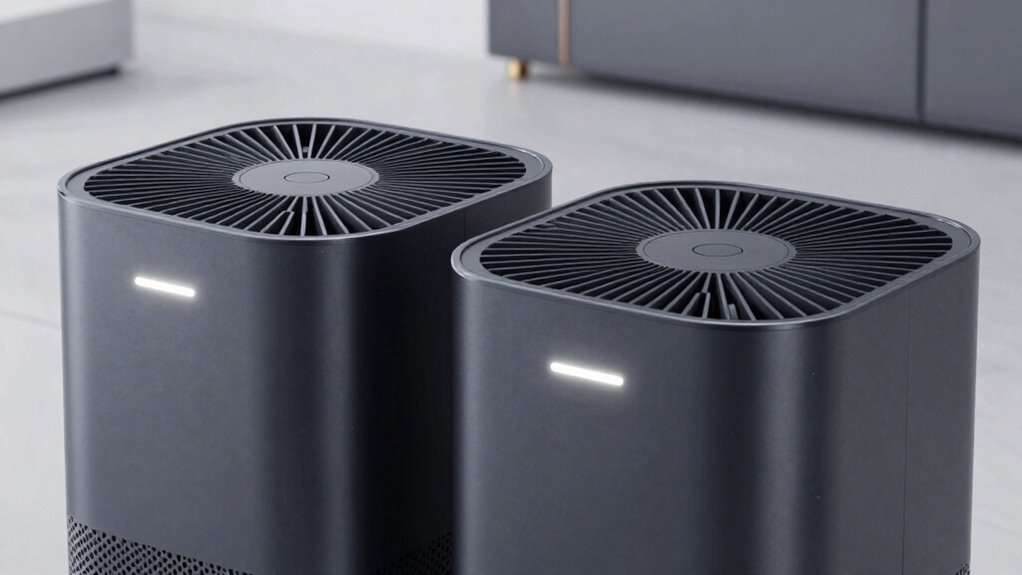

Using two smaller purifiers strategically placed around your space can often outperform a single large unit in maintaining consistent air quality. Smaller units target specific areas, eliminate dead spots, and improve air circulation more effectively. They are energy-efficient, easier to move, and allow flexible coverage. By focusing on problem zones, you can reduce pollutants more thoroughly. Keep exploring to discover how this setup can optimize your indoor air environment even further.
Key Takeaways
- Multiple small purifiers target specific zones, eliminating dead spots and ensuring consistent air quality throughout the space.
- Smaller units improve air circulation in problem areas, enhancing pollutant removal more effectively than a single large purifier.
- Modular setup allows selective operation, reducing energy use and increasing overall efficiency.
- Easier to reposition and scale, small purifiers adapt to changing room layouts and pollution sources.
- Redundancy from multiple units increases reliability and maintains air quality during maintenance or failures.
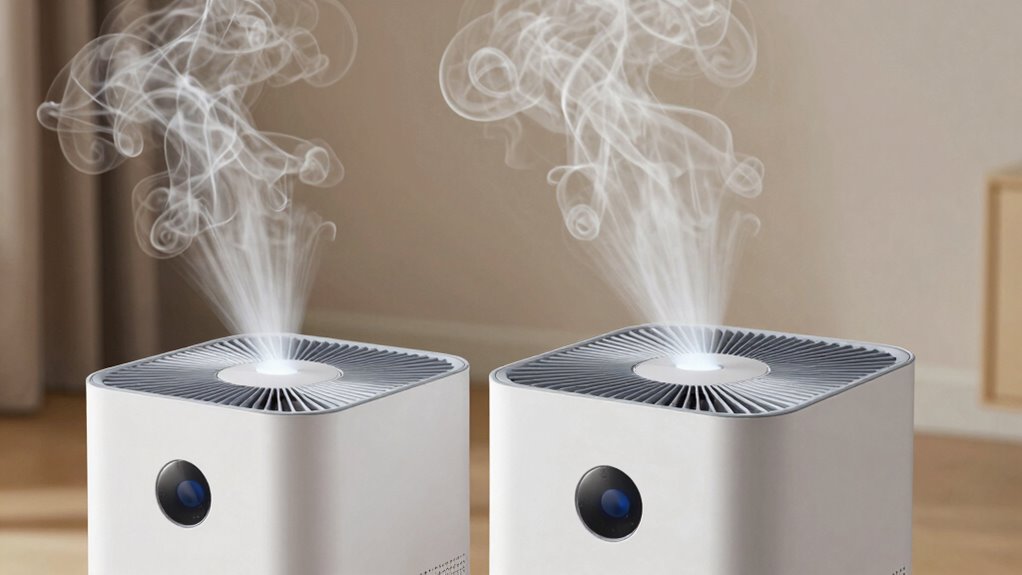
When it comes to air purification, many assume that a single large unit is the most effective option. But that’s not always the case. In fact, two smaller purifiers can often outperform one big unit, especially when it comes to maintaining better air quality and maximizing energy efficiency. You might think a larger device would cover more space and be simpler to manage, but multiple smaller units can target specific areas more effectively, providing more tailored clean air where you need it most.
One key advantage of using two smaller purifiers is their ability to improve overall air quality in different parts of your space. Large units tend to circulate air throughout a room, but they often struggle with dead spots or areas where air exchange isn’t perfect. Smaller purifiers placed strategically in different zones can eliminate these problem areas, resulting in a more uniform and consistent air quality throughout your home or office. This targeted approach ensures dust, allergens, and airborne pollutants are actively reduced in every corner, rather than just in the general vicinity of a single device. Air circulation plays a crucial role in how effectively pollutants are removed from indoor environments. Additionally, multiple units can help address air quality concerns more precisely by focusing on specific sources or zones of pollution. The ability to customize your setup with multiple units also allows for better energy management, leading to more efficient operation overall. Furthermore, the use of multiple units allows for scalability, which can be advantageous as your needs change over time.
Two smaller purifiers strategically placed can eliminate dead spots, ensuring consistent, comprehensive air quality throughout your space.
Energy efficiency is another significant benefit. A large purifier consumes a substantial amount of power, especially when running continuously at high settings. Conversely, smaller purifiers typically use less energy per unit, and you have the flexibility to operate only the units you need at any given time. This way, you can save on electricity bills while still maintaining ideal air quality. Additionally, if one purifier needs maintenance or replacement, you can simply turn it off without disrupting the entire air purification system, unlike with a single large device that might require more extensive downtime. Energy consumption is an important factor to consider in the long-term running costs of your air purifier setup. Moreover, the modular nature of two smaller purifiers adds to their convenience and longevity. If one unit malfunctions or becomes less effective, you can replace or repair it without losing the entire cleaning capacity. This redundancy often results in better long-term performance and cost savings. Plus, smaller units are easier to move or reposition, allowing you to adapt your setup to changing needs or room configurations. This flexibility can be especially beneficial in dynamic living or working environments where space and layout frequently change.
As an affiliate, we earn on qualifying purchases.
Frequently Asked Questions
How Do Maintenance Costs Compare Between Smaller Purifiers and a Large Unit?
In a cost comparison, smaller purifiers generally have lower maintenance costs because they’re easier and cheaper to service regularly. A longevity analysis shows they often last just as long as larger units, especially with proper upkeep. You’ll spend less on parts and labor over time, making them more budget-friendly. Overall, smaller purifiers tend to be more economical to maintain, providing consistent clean air without hefty repair bills.
Are There Specific Room Sizes Where Smaller Purifiers Outperform Larger Ones?
You’ll find that in small to medium rooms, smaller purifiers outperform larger ones because they’re easier to position for peak performance. When considering room size, these purifiers quickly target the air, providing better coverage and faster purification. Larger units may struggle in confined spaces, while multiple small units efficiently manage air quality. So, if your room size is under 300 square feet, smaller purifiers are often the smarter choice for ideal purifier performance.
What Is the Noise Level Difference Between Multiple Small Units and One Large Purifier?
The noise comparison shows that multiple small purifiers often produce lower sound levels than one large unit. Small units tend to run quieter because each operates at a lower power, reducing overall noise. When you use several smaller purifiers, the sound levels distribute evenly, making your environment more peaceful. So, if quietness matters, multiple small units can be a better choice, offering effective air purification without a loud noise.
How Do Energy Efficiencies Compare Among Different Purifier Configurations?
You’ll find that two smaller air purifiers often use less energy than one large unit because of their air purifier technology and energy consumption design. Smaller units tend to operate more efficiently, adjusting power based on room size and air quality. This means they can save energy while maintaining effective purification. When comparing configurations, consider how each unit’s technology impacts overall energy use, ensuring you get ideal air quality without unnecessary power consumption.
Can Multiple Smaller Purifiers Improve Air Quality More Quickly Than One Large Unit?
You’ll find that multiple smaller purifiers often improve air purification effectiveness faster than a single large unit, especially in larger rooms or multiple zones. Studies show that two smaller units can cover more area simultaneously, reducing airborne pollutants more efficiently. Additionally, they tend to be more cost-efficient and easier to maintain, making them a smart choice for quick, effective air quality improvements in diverse spaces.
As an affiliate, we earn on qualifying purchases.
Conclusion
So, next time you’re choosing air purifiers, consider the charm of pairing two smaller units. They might just surprise you with their quiet resilience and efficiency, quietly outshining a single larger model. Sometimes, the smallest efforts create the most noticeable difference. Trust in the subtle strength of two, rather than one, and you’ll find your indoor air quality gently, yet effectively, reaching new heights. It’s a clever dance of simplicity and smart choices.
As an affiliate, we earn on qualifying purchases.
As an affiliate, we earn on qualifying purchases.