
In staircase homes, airflow often becomes unpredictable due to the placement, shape, and materials used. Open riser and spiral staircases create chaotic currents, trapping stale air and making it harder for purifiers to do their job. Sunlight and heat from large windows amplify these effects, causing turbulence and uneven air circulation. If you’re tired of battling inconsistent air quality, keep exploring how architectural design influences airflow and purifier effectiveness.

Get home appliances delivered free with Prime
- Fast, free delivery on millions of items
- Prime Video, Amazon Music and more included
- Member-only deals all year
Key Takeaways
- Staircase placement and shape can create unpredictable airflow patterns that challenge purifier efficiency.
- Sunlight and thermal gradients near staircases generate turbulent vertical air currents.
- Open layouts and glass materials increase airflow chaos, making air purification more difficult.
- Turbulence causes stale air to trap, reducing purifier effectiveness and leading to inconsistent air quality.
- Targeted ventilation strategies and strategic purifier placement help mitigate complex airflow issues.

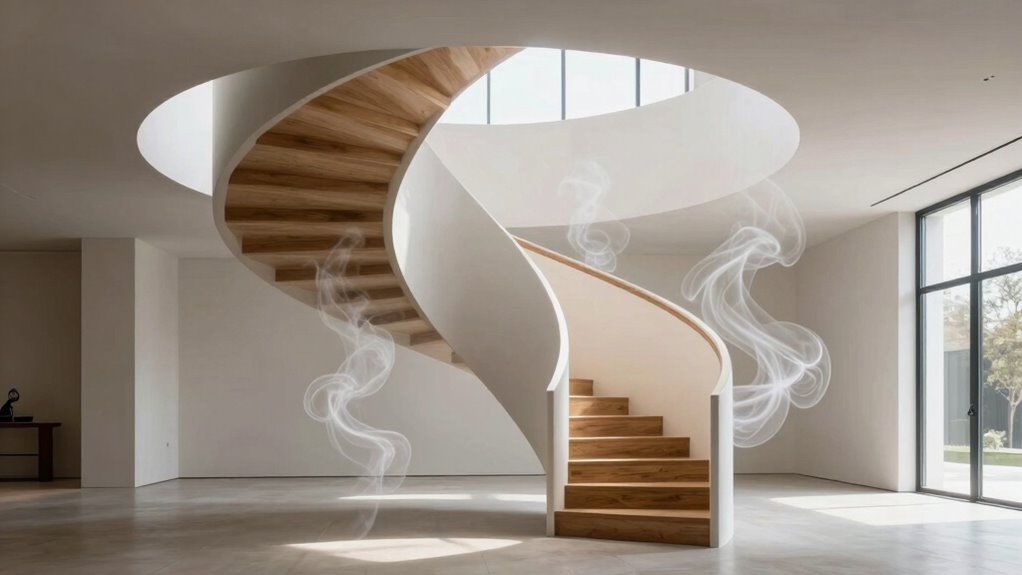
Have you ever wondered how the design of staircase homes influences airflow? It’s a fascinating aspect of interior design that often goes unnoticed but plays a crucial role in how air circulates within your space. The placement, shape, and materials of staircases can create unexpected airflow patterns that make maintaining clean air more challenging. For example, open riser staircases or spiral designs tend to direct air in unpredictable ways, causing drafts or dead zones where stale air lingers. This turbulence can make it harder for air purifiers to do their job effectively because the air isn’t circulating smoothly. Instead, it gets trapped or pushed around in chaotic patterns, which can lead to uneven purification across different parts of your home.
Staircase design creates unpredictable airflow, making air purification more challenging and uneven throughout your home.
Lighting effects within staircase homes also influence airflow in subtle yet impactful ways. Large windows or skylights near staircases can warm the air considerably, creating thermal gradients that drive convective currents. When sunlight hits certain surfaces, it heats the air nearby, causing it to rise and set off a chain reaction of airflow that’s difficult to predict. These lighting effects are often intentional parts of interior design, meant to add aesthetic appeal, but they inadvertently contribute to the strange airflow patterns you notice. As warm air moves upward, cooler air sinks, causing a constant, sometimes turbulent, exchange of air around the staircase. This movement complicates efforts to keep indoor air fresh, especially when relying on purifiers that need stable, predictable airflow to function efficiently.
The way your staircase interacts with natural light and interior design choices can also create vertical air currents that are difficult for purifiers to combat. For example, if your staircase is positioned near a large window, the combination of light, heat, and open space can cause air to rise rapidly, pulling in cooler air from other parts of the house. This dynamic makes it challenging for air purifiers to keep up, as they might be fighting against these natural currents rather than just filtering stagnant air. Additionally, certain interior design elements like glass balustrades or minimalist materials can amplify these effects, making airflow patterns even more unpredictable. Moreover, the architecture of staircase homes often enhances these airflow irregularities due to their open and flowing layouts. Recognizing the influence of interior design elements can help you better understand and manage these airflow challenges.
Furthermore, implementing thoughtful ventilation strategies can help mitigate some of these airflow issues by promoting more consistent circulation despite architectural quirks. Recognizing the complex interactions between design and airflow allows you to better position air purifiers, choose suitable materials, and optimize your space for healthier indoor air, even with the quirks of your staircase layout.
air purifier for open staircase homes
As an affiliate, we earn on qualifying purchases.
As an affiliate, we earn on qualifying purchases.
Frequently Asked Questions
How Do Staircase Designs Impact Indoor Air Quality?
Your staircase design impacts indoor air quality by influencing airflow patterns throughout your home. Open or spiral staircases can create unpredictable airflow, making it harder for purifiers to circulate clean air effectively. Design considerations like placement and size matter; they help guarantee proper ventilation and reduce stagnant air. By optimizing your staircase layout, you can improve airflow, which enhances air purifier efficiency and creates a healthier indoor environment.
Can Airflow Issues Cause Mold Growth in Staircase Homes?
Yes, airflow issues can lead to mold growth in staircase homes. Ventilation challenges cause moisture buildup in hidden corners and tight spaces, creating ideal conditions for mold to thrive. When air doesn’t circulate properly, humidity levels rise, and dampness persists. You should guarantee proper ventilation to reduce moisture and prevent mold. Improving airflow helps eliminate moisture buildup, protecting your home’s air quality and maintaining a healthier living environment.
Are Certain Air Purifiers More Effective in Staircase Layouts?
Yes, certain air purifiers are more effective in staircase layouts. You should focus on optimizing airflow patterns by placing purifiers strategically—near the base or top of the staircase—so they can better circulate and clean the air. Avoid placing purifiers where airflow is blocked or stagnant. By understanding airflow patterns and adjusting purifier placement accordingly, you’ll improve air quality and reduce issues like mold or airborne contaminants.
How Does Temperature Variation Affect Airflow in These Homes?
You might find that temperature variation considerably impacts airflow, with up to 80% of thermal stratification occurring between floors. This causes warm air to rise and cool air to sink, disrupting natural air circulation. In staircase homes, these temperature differences create layered air zones, making airflow unpredictable. As a result, purifiers have to work harder to combat stagnant air and guarantee fresh, clean air throughout the space.
What Maintenance Is Needed for Airflow Systems in Staircase Homes?
You should regularly perform ventilation upgrades and keep up with filter maintenance to guarantee your airflow systems work efficiently in staircase homes. Check and replace filters as recommended by the manufacturer to prevent dust buildup and maintain air quality. Upgrading ventilation systems can also help manage the unique airflow challenges, making it easier for purifiers to do their job. Consistent maintenance keeps your indoor air clean and your system functioning smoothly.
As an affiliate, we earn on qualifying purchases.
Conclusion
So, when you design or choose a staircase home, remember that airflow can get tricky—kind of like trying to catch smoke with your hands. Purifiers have to work harder to keep the air clean, which isn’t always easy. Keep in mind, “A chain is only as strong as its weakest link.” Stay mindful of how your home’s layout affects airflow, and you’ll breathe easier, no matter how tricky the design seems.
air circulation fans for large windows
As an affiliate, we earn on qualifying purchases.
As an affiliate, we earn on qualifying purchases.
air purifier placement for uneven airflow
As an affiliate, we earn on qualifying purchases.
As an affiliate, we earn on qualifying purchases.
Fall Picks
fall essentials
As an affiliate, we earn on qualifying purchases.