
During storm weeks, your dehumidifier settings shouldn’t match those used on normal days. You need to increase its capacity to remove moisture more aggressively and lower the humidity levels, ideally maintaining 40-50%. Adjust the unit to higher fan speeds initially and place it in damp-prone areas. Keep doors and windows closed to prevent outside moisture from entering. Staying vigilant and customizing your settings helps protect your home; learn more to master this technique.

Get home appliances delivered free with Prime
- Fast, free delivery on millions of items
- Prime Video, Amazon Music and more included
- Member-only deals all year
Key Takeaways
- Stormy weather increases indoor humidity, requiring more aggressive dehumidifier settings than on normal days.
- Lower humidity targets (40-50%) during storms help prevent mold and moisture damage.
- Adjust fan speeds and capacity to optimize moisture removal without excessive energy use.
- Keep doors and windows closed during storms to maintain effective humidity control.
- Regularly monitor indoor moisture levels to adapt dehumidifier settings appropriately.

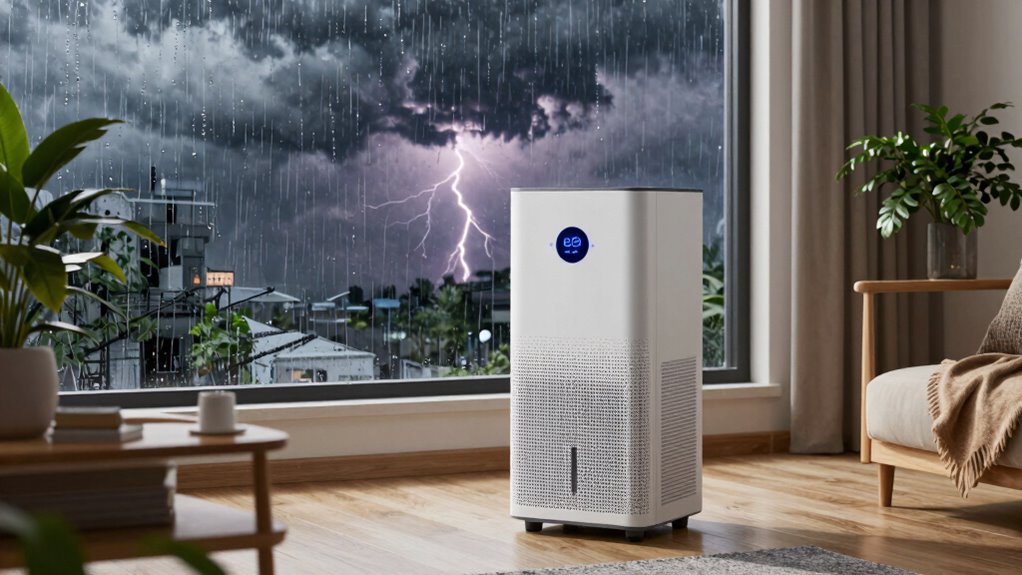
When stormy weather hits, adjusting your dehumidifier settings becomes essential to protect your home from excess moisture and prevent mold growth. During these periods, humidity control takes on greater importance because the air tends to be more saturated, increasing the risk of dampness and damage. You can’t rely on the same settings you use during dry, normal weather days, because the environment has changed significantly. Instead, you need to increase the dehumidifier’s capacity to remove moisture more aggressively. This means setting the unit to a lower humidity level, ideally around 40-50%, to ensure the air inside stays dry and mold doesn’t find a foothold. Proper humidity control during storm weeks is crucial to maintaining a safe and comfortable environment for seniors.
Adjust dehumidifier settings during storms to maintain dry air and prevent mold growth effectively.
However, while you increase humidity control measures, it’s equally important to consider energy efficiency. Running your dehumidifier at higher intensities for extended periods can lead to increased energy consumption, which might spike your utility bills. To counter this, look for units with adjustable settings that allow you to balance moisture removal with power use. Many modern dehumidifiers come equipped with humidity sensors and auto-shutdown features that prevent unnecessary operation once the desired level is reached. By setting your dehumidifier to a slightly higher target humidity when stormy weather is forecasted, you can reduce energy waste while still maintaining effective humidity control.
It’s also wise to adjust your dehumidifier’s fan speed during storm weeks. Running at a higher fan speed can help circulate air more efficiently, removing excess moisture faster. But if energy efficiency is a priority, switching to a lower fan speed after the initial dehumidification can save power without sacrificing humidity control. Remember, the goal isn’t just to run the dehumidifier constantly but to optimize its operation for the weather conditions. Understanding humidity patterns during stormy weather can further improve your dehumidification strategy. Additionally, being aware of indoor air quality and how it’s affected by moisture levels can help you make better adjustments to your dehumidifier settings. Incorporating knowledge about biodiversity can also remind us of the importance of maintaining healthy indoor environments that support overall ecological balance. Being mindful of moisture levels can also help prevent structural damage caused by excess dampness.
Additionally, consider the placement of your dehumidifier during stormy weather. Position it in areas prone to dampness, such as basements or near windows, to maximize its effectiveness. Keep doors and windows closed to prevent outside moisture from entering. Regularly check your unit to ensure it’s functioning properly and that filters are clean, as clogged filters reduce efficiency.
Products Worth Considering

Philips Hue Play Gradient Light Tube, Large, Black

Roborock Q10 S5+ Robot Vacuum and Mop with 10,000 Pa Suction

Sonos Era 100 SL Compact Microphone-Free Speaker, Black
As an affiliate, we earn on qualifying purchases.
Frequently Asked Questions
How Often Should I Adjust My Dehumidifier During Storm Weeks?
During storm weeks, you should adjust your dehumidifier more frequently, ideally every day or two, to manage increased moisture from storm repair efforts and prevent mold. Keep an eye on humidity levels and tweak the settings as needed. Regular dehumidifier maintenance becomes essential during this time, ensuring it operates efficiently. Staying proactive helps protect your home and keeps humidity in check amid fluctuating weather conditions.
Can I Leave My Dehumidifier on Continuously During a Storm?
You can leave your dehumidifier on continuously during a storm, but consider dehumidifier placement for peak efficiency. Place it in a central, open area to maximize moisture removal, and avoid placing it near walls or furniture. Keep energy consumption considerations in mind; running it constantly may increase power use. Adjust settings if the storm causes excessive humidity, but avoid overworking the unit to save energy and prolong its lifespan.
What Signs Indicate My Dehumidifier Is Working Improperly?
If your dehumidifier isn’t working properly, you’ll notice humidity levels remain high despite it running. You might also hear unusual noises or see ice buildup on the coils. Regular dehumidifier maintenance is crucial to keep it functioning correctly. Check the filter, empty the water tank, and make sure vents aren’t blocked. If issues persist, it’s time to troubleshoot or replace your unit for ideal humidity control.
Is It Safe to Operate a Dehumidifier During Thunderstorms?
You shouldn’t operate your dehumidifier during thunderstorms, as it can be dangerous. Lightning and electrical storms pose serious electrical safety risks, potentially damaging your device or causing shocks. Plus, thunderstorms bring unpredictable moisture levels, making your dehumidifier work harder than it should. During storms, it’s safer to unplug your appliance to protect it and maintain proper moisture control, ensuring safety for you and your home.
How Does Humidity Affect My Home’s Electrical Systems During Storms?
Humidity increases your home’s moisture levels during storms, which can lead to electrical surges and moisture damage. When humidity rises, your electrical systems are more vulnerable to short circuits and corrosion, especially if moisture seeps into outlets or wiring. You should take precautions, like unplugging sensitive devices and ensuring your dehumidifier is properly set, to protect your electrical systems from potential damage caused by high humidity during storms.
Conclusion
During storm-week, your dehumidifier acts as a guardian against chaos, adjusting its settings like a vigilant sentinel to shield your home from relentless moisture. On normal days, it relaxes, symbolizing balance and harmony. Matching its storm-week settings to ordinary weather is like trying to tame a tempest with a gentle breeze—ineffective and futile. Embrace the right settings as a dance between strength and serenity, allowing your home to stand resilient, no matter how the skies threaten.