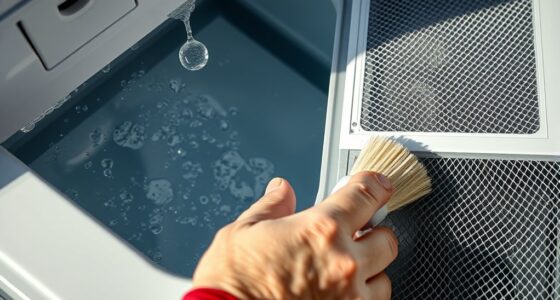
Many finished basements lack proper air circulation, which can lead to dampness, mold, and bad odors. You need to improve airflow with exhaust fans, HVAC systems, or advanced ventilators like ERVs or HRVs. These solutions help control moisture, reduce indoor pollution, and keep the space healthy. Without proper ventilation, your basement risks long-term damage and discomfort. Keep exploring to discover effective ways to boost your basement’s air quality and protect your home.

Get home appliances delivered free with Prime
- Fast, free delivery on millions of items
- Prime Video, Amazon Music and more included
- Member-only deals all year
Key Takeaways
- Inadequate natural airflow in most floor plans can lead to dampness, mold, and poor indoor air quality.
- Mechanical ventilation systems like exhaust fans and HVAC units are essential for proper air exchange.
- Advanced systems such as ERVs and HRVs improve airflow while conserving energy and maintaining humidity levels.
- Proper moisture control, including dehumidifiers and sealing cracks, supports healthy air circulation.
- Enhancing ventilation prevents long-term damage and ensures a safe, comfortable finished basement environment.
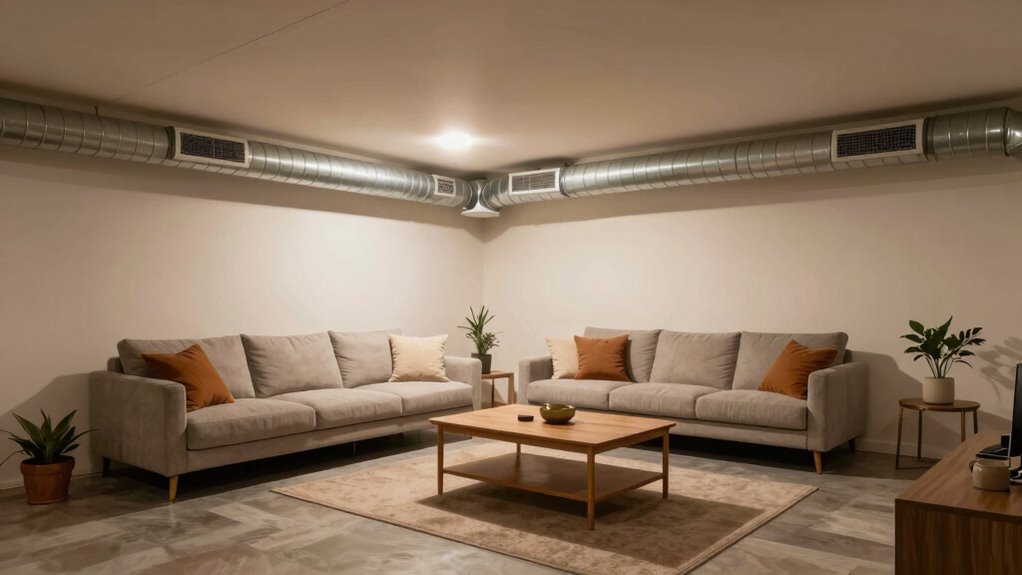
Finished basements often feel comfortable and inviting, but without proper air circulation, they can quickly become stuffy and damp. This isn’t just a matter of comfort; poor airflow can lead to moisture buildup, mold growth, and indoor air quality issues. If you want your basement to be a healthy, functional space, you need to focus on moisture control and effective ventilation systems. These elements work together to keep the air fresh and prevent humidity from creating problems.
Proper airflow prevents dampness, mold, and poor air quality in finished basements.
Moisture control is essential because basements tend to be more prone to dampness than other parts of your home. Water seepage from the ground, condensation, and even leaks can raise humidity levels and promote mold growth. To combat this, you should consider installing a dehumidifier tailored for basement environments. It will help maintain consistent humidity levels, typically around 30-50%, which discourages mold and musty odors. Additionally, sealing cracks and improving drainage around your foundation can greatly reduce water intrusion. These steps guarantee moisture doesn’t accumulate and compromise your basement’s air quality.
However, moisture control alone isn’t enough. You also need to guarantee proper ventilation systems are in place. Most floor plans don’t naturally promote enough airflow in basements, especially if windows are limited or nonexistent. Installing exhaust fans or a dedicated HVAC system that includes ventilation components can dramatically improve air circulation. A well-designed ventilation system pulls stale, humid air out of the space and replaces it with fresh air from other parts of your home or outside. This ongoing exchange prevents odors, reduces humidity, and guarantees the air remains clean.
You might also consider adding air exchange systems like energy recovery ventilators (ERVs) or heat recovery ventilators (HRVs). These systems are specifically designed to improve airflow while conserving energy. They bring in fresh outdoor air and exhaust stale indoor air, all while maintaining your home’s temperature and humidity levels. When properly integrated, these systems can make a huge difference in the overall comfort and safety of your finished basement. Ensuring adequate air circulation is crucial because most basement spaces lack sufficient natural ventilation, making these mechanical solutions essential. Properly functioning ventilation systems can also help mitigate the effects of moisture buildup and prevent long-term damage to your home’s structure. Developing an understanding of the importance of moisture control can further optimize your efforts to keep the space dry and healthy.
Furthermore, understanding the importance of moisture control can help you develop a more effective approach to basement maintenance. Maintaining proper ventilation not only preserves the structural integrity of your home but also promotes a healthier living environment. In the end, your goal should be to establish a balanced environment where moisture is controlled and fresh air circulates freely. This requires a combination of moisture control measures and well-planned ventilation systems. Without these, your basement can become a breeding ground for mold, mustiness, and indoor air pollution. By prioritizing air circulation, you’ll create a space that’s not only inviting but also safe and healthy for everyone who spends time there.
Products Worth Considering

Samsung 55-Inch Neo QLED 4K TV with WireLogic 8-Foot Ultra High Speed HDMI Cable

Philips Hue White and Color Ambiance Smart Retrofit Recessed LED Downlights, 5/6-Inch, 4-Pack

Roborock Q7 L5 Robot Vacuum and Mop Combo, 8,000 Pa Suction
As an affiliate, we earn on qualifying purchases.
Frequently Asked Questions
How Can I Improve Air Circulation in My Finished Basement?
You can improve air circulation in your finished basement by using basement dehumidifiers to reduce humidity and prevent mold growth. Adding airflow fans helps circulate air more effectively throughout the space. Make certain vents or windows are open when possible, and consider installing a ceiling fan or exhaust fan to promote fresh air exchange. These steps work together to keep your basement dry, fresh, and well-ventilated.
Are There Specific Ventilation Systems Recommended for Basements?
Yes, specific ventilation systems like energy recovery ventilators (ERVs) or heat recovery ventilators (HRVs) are recommended for basements. These systems improve air filtration and guarantee fresh air circulation while maintaining energy efficiency. When choosing a ventilation design, consider your basement’s size and airflow needs. Properly installed, these systems help prevent moisture buildup, reduce odors, and improve overall air quality, making your basement healthier and more comfortable.
How Often Should I Check for Air Quality Issues?
You should check your basement’s air quality at least once a month. Did you know poor ventilation can cause indoor air pollution levels to be up to five times higher than outdoor air? Regular checks help catch issues early. Focus on air filtration and odor control, ensuring filters are clean and ventilation is working properly. Addressing problems promptly keeps your basement safe, fresh, and comfortable for everyone.
Can Poor Air Circulation Cause Mold Growth?
Yes, poor air circulation can cause mold growth. When humidity control is inadequate, moisture builds up, creating a perfect environment for mold. If air exchange is limited, stale, damp air stays trapped, increasing humidity and promoting mold. To prevent this, guarantee proper ventilation, use dehumidifiers, and improve air circulation. This helps maintain balanced humidity levels and reduces the risk of mold developing in your basement.
What Are Cost-Effective Ways to Enhance Basement Airflow?
To enhance your basement airflow cost-effectively, start with strategic dehumidifier placement to reduce humidity and prevent mold. Use an air purifier selection that targets mold spores and odors. Keep vents unobstructed and consider adding oscillating fans to improve air movement. Sealing gaps around windows and doors also helps. These simple steps improve circulation without major renovations, making your basement healthier and more comfortable.
Conclusion
You see, without proper air circulation, your finished basement can turn into a veritable swamp of stale air and hidden mold. Don’t rely on outdated floor plans that overlook this vital need—think of it as your own personal “speakeasy” for fresh air. Upgrading your ventilation isn’t just smart; it’s essential for comfort and health. So, don’t be a Luddite—embrace better airflow and breathe easy in your cozy subterranean haven.