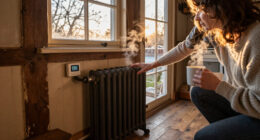
Over-drying a room can make you feel uncomfortable and cause health issues. When the air is too dry, your skin itches, your throat feels irritated, and your nasal passages dry out, increasing your chances of catching colds. It also damages furniture and electronics over time. Plus, uneven airflow can create drafts or hot spots, disrupting temperature regulation. If you want to understand how to balance humidity levels and avoid these problems, keep exploring for more helpful tips.

Get home appliances delivered free with Prime
- Fast, free delivery on millions of items
- Prime Video, Amazon Music and more included
- Member-only deals all year
Key Takeaways
- Over-drying disrupts natural humidity balance, causing skin dryness, irritation, and respiratory discomfort.
- Excessively dry air can crack furniture and damage electronics over time.
- Low humidity affects airflow patterns, leading to uneven temperature and humidity zones.
- Improper moisture levels increase static electricity and reduce overall indoor comfort.
- Disrupted airflow hampers proper humidity circulation, creating cold spots or damp areas.
While it might seem helpful to dry out a damp room quickly, over-drying can cause its own set of comfort issues. When you remove too much moisture from the air, you disrupt the natural humidity balance, which can lead to a variety of discomforts. Your skin might feel dry and itchy, your throat could become irritated, and even your breathing might become labored. These symptoms aren’t just minor annoyances—they signal that the environment has become less healthy and less comfortable. Overly dry air can also impact your furniture and electronics, causing them to crack or malfunction over time.
Over-drying your space causes discomfort, damages belongings, and disrupts natural humidity balance. Aim for moderate moisture levels for comfort and health.
In your effort to fix moisture problems, you might inadvertently cause airflow disruption. When you run a dehumidifier or open windows excessively, the airflow patterns in the room change. This disruption can prevent the air from circulating smoothly, making it harder to maintain a consistent level of humidity. Instead of creating a balanced environment, you might end up with uneven dryness, where some areas are parched while others remain damp. The inconsistent airflow also hampers your efforts to regulate temperature, leading to drafts or hot spots that make the room less inviting. This airflow disruption can also contribute to the development of mold or bacteria, further impacting indoor air quality. Proper humidity management is essential to prevent these issues and maintain a comfortable environment.
You might think that completely eliminating humidity is the goal, but the truth is, the right level of moisture makes a big difference in your comfort. Too little humidity makes the air feel colder and can cause static electricity, which is both annoying and uncomfortable. Proper humidity levels help your body stay hydrated and reduce irritation in your respiratory system. When the air is too dry, your nasal passages dry out, making you more susceptible to colds or respiratory issues. It’s important to understand that air circulation plays a crucial role in maintaining consistent humidity levels throughout the space, preventing uneven dryness or dampness. It can also cause wood furniture and flooring to crack, which adds to the discomfort in your living space. Maintaining appropriate humidity levels also involves understanding airflow patterns, as uneven airflow can lead to zones of varying dryness or dampness. Ultimately, balancing humidity and airflow promotes a healthier and more comfortable indoor environment.
Products Worth Considering

Levoit Core 400S-P Smart Air Purifier for Large Rooms

LEVOIT Vital 200S-P Smart Air Purifier for Large Rooms

Blueair Blue Pure 511i Max Smart Air Purifier
As an affiliate, we earn on qualifying purchases.
Frequently Asked Questions
Can Over-Drying a Room Cause Health Issues?
Yes, over-drying a room can cause health issues. When you excessively dry the air, it can lead to dry skin, irritated sinuses, and respiratory discomfort. It might also hinder air purification, making it harder to remove pollutants. Additionally, overly dry conditions increase the risk of mold prevention problems, as mold thrives in humid environments. Maintaining balanced humidity levels helps support healthy air quality and overall well-being.
What Are Signs of Over-Drying in a Room?
You’ll notice signs of over-drying, like static shocks, cracked skin, or a sore throat. Your furniture or walls might also develop cracks or peeling paint. To prevent this, guarantee proper humidifier maintenance and maintain good air circulation. Keep humidity levels balanced by using a hygrometer, and avoid running your humidifier excessively. These steps help maintain comfortable air quality and prevent discomfort caused by overly dry conditions.
How Can I Prevent Over-Drying During Winter?
Think of your room like a garden; proper air circulation and humidity control are your watering cans. To prevent over-drying in winter, regularly open windows for fresh air, use a humidifier to maintain ideal humidity levels, and avoid running the heating system at maximum. Keep a hygrometer handy to monitor moisture, and balance air flow to guarantee your space stays comfortable without becoming too dry.
Does Over-Drying Affect Indoor Plants?
Yes, over-drying can negatively affect your indoor plants. When the air is too dry, it reduces plant hydration and causes soil moisture levels to drop, making it harder for plants to absorb water and nutrients. You might notice wilting, browning edges, or leaf drop. To keep your plants healthy, maintain proper soil moisture and increase humidity around them, especially during dry winter months.
What Is the Ideal Humidity Level for Comfort?
Think of it as your own personal Goldilocks zone—you want the humidity balance just right. The ideal comfort level is typically between 30% and 50% air moisture. Too dry, and you’ll feel chapped or irritated; too humid, and mold or discomfort creeps in. Maintaining this balance keeps your space cozy without overdoing it, ensuring your environment feels natural, comfortable, and healthy.
Conclusion
If you over-dry your room, you might find yourself caught in a paradox—comfort slipping through your fingers like dry air. Remember, balance is key; too much dryness can be just as unsettling as dampness. Don’t let the pursuit of comfort turn into a quest for perfection that leaves you uncomfortable. Instead, aim for that sweet spot where air feels just right—like a gentle whisper of a breeze, not a harsh gust.