
Even if the rest of your house feels fine, a single bedroom can develop humidity issues due to poor ventilation, condensation, or mold growth. Musty smells, damp odors, and visible mold are signs you need to control moisture in that space. Using a dehumidifier, testing humidity levels with a hygrometer, and improving air circulation can help. Keep an eye on these signs and discover more tips to guarantee your bedroom stays dry and comfortable.
Key Takeaways
- Small rooms may retain higher humidity due to limited airflow despite the rest of the house feeling dry.
- Localized moisture sources, like bathrooms or kitchens, can increase humidity in one bedroom independently.
- Insufficient ventilation or sealing gaps can cause humidity buildup in one room while others remain unaffected.
- A single-room dehumidifier can target specific humidity issues without impacting the entire house.
- Persistent musty odors or mold signs in one bedroom indicate localized humidity problems needing dedicated attention.
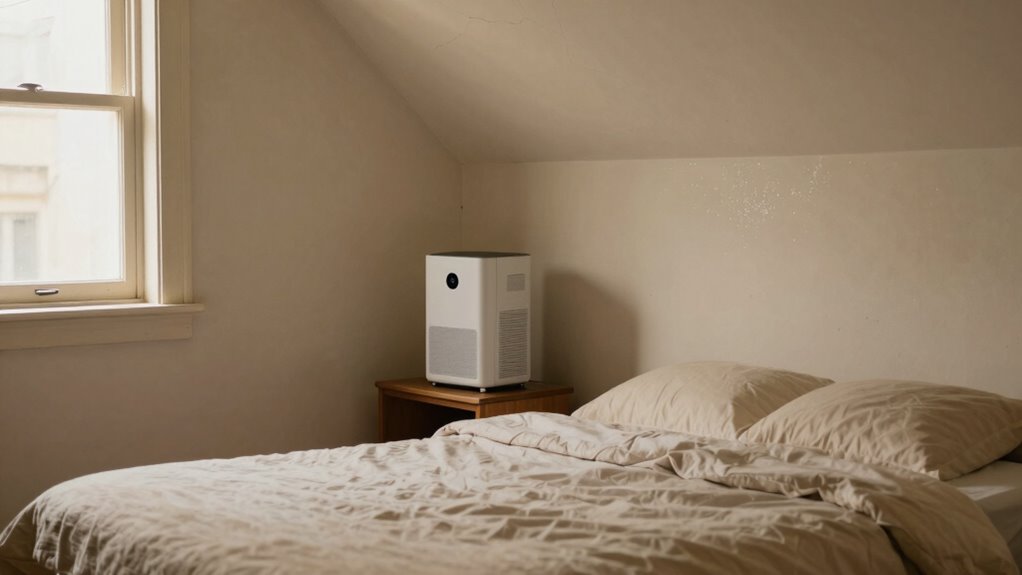
Maintaining proper humidity levels in a one-bedroom apartment can substantially improve your comfort and health. Even if the rest of your home feels fine, your small space can have its own moisture issues. You might notice a musty smell, condensation on windows, or a persistent feeling of stuffiness. These signs often point to too much humidity, which can lead to mold growth and damage your belongings. Managing the moisture in your one-bedroom isn’t just about comfort; it’s about safeguarding your health and protecting your space. Mold prevention becomes a key concern because mold thrives in damp environments. If you ignore excess moisture, you risk inhaling spores or dealing with unsightly patches that can worsen allergies or asthma. The good news is, with the right dehumidifier selection, you can control humidity levels effectively and prevent mold from taking hold.
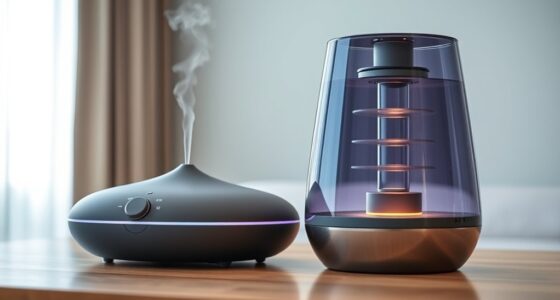
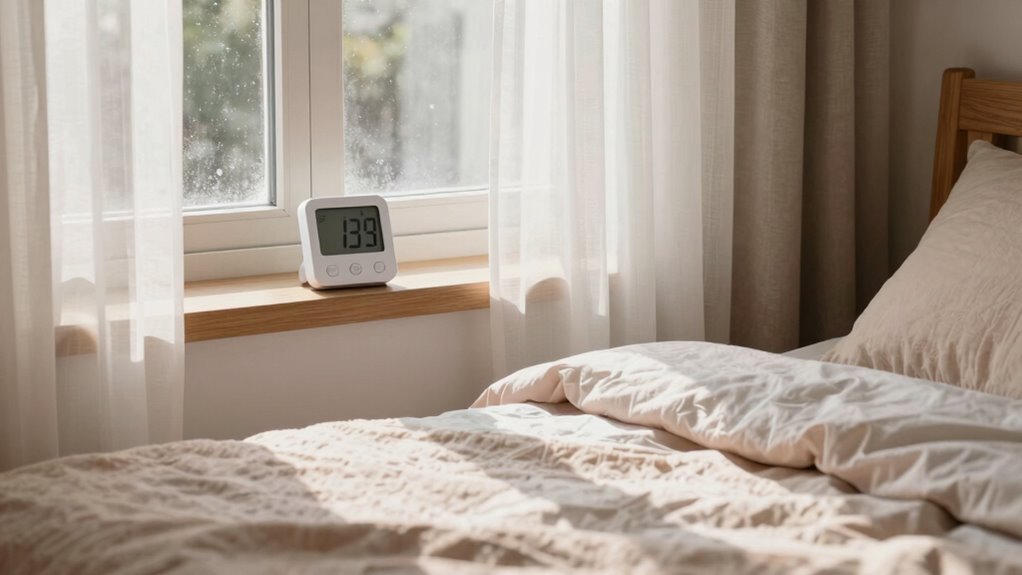
First, identify whether your room’s humidity is too high. Use a hygrometer to measure the moisture level; ideally, it should stay between 30-50%. If readings often go above this range, it’s time to take action. Choosing the right dehumidifier is vital because not all units are suitable for small spaces. Look for a compact model designed for single rooms, with adjustable settings and a sufficient capacity to handle the moisture load. A smaller, energy-efficient dehumidifier will keep the air dry without raising your electricity bill. It’s also helpful to think about features like automatic shut-off, so the device stops working when the desired humidity is reached, and a removable water tank for easy maintenance. Proper ventilation also plays a crucial role in controlling indoor humidity and preventing mold growth. Additionally, understanding how caffeine science can influence your energy levels and alertness may help you plan your ventilation and dehumidification routines more effectively throughout the day. Incorporating humidity control strategies can further enhance your efforts to maintain a balanced environment. Being aware of the signs of mold and acting promptly can prevent more severe issues later on.
A well-maintained environment can also benefit from air circulation, which helps distribute humidity more evenly and prevents pockets of dampness from forming. Once you have your dehumidifier in place, run it regularly, especially in humid seasons or if you notice condensation. Keep windows and doors closed when the unit is operating to maximize its efficiency. Additionally, promote proper ventilation by using exhaust fans in the bathroom and kitchen, which are common sources of excess moisture. Regularly cleaning your dehumidifier is vital for mold prevention—damp or dirty filters can harbor mold spores, defeating your efforts. You should also watch your space for signs of mold growth, like black spots or a persistent musty odor, and address any issues immediately.
In the end, controlling humidity in your one-bedroom apartment isn’t a set-it-and-forget-it task. It requires ongoing attention, but with the right tools and habits, you can create a healthier, more comfortable living environment. Proper dehumidifier selection and consistent maintenance will help you keep moisture levels in check, preventing mold and ensuring your small space remains fresh and safe.
As an affiliate, we earn on qualifying purchases.
Frequently Asked Questions
Can Humidity Issues in a Single Room Affect Overall House Health?
Yes, humidity issues in a single room can impact overall house health. Poor humidity control affects air quality, leading to potential mold growth that spreads beyond one room. Maintaining proper humidity levels helps prevent mold and improves air quality, safeguarding your home’s health. Addressing humidity problems promptly in that room guarantees mold prevention and keeps the entire house environment safe and comfortable.
What Are the Signs of Excessive Humidity in a Bedroom?
If you notice mold growth or skin irritation in your bedroom, excessive humidity might be the culprit. Signs include a musty smell, condensation on windows, and damp or moldy spots on walls and ceilings. You may also experience increased allergies or skin irritation. These indicators suggest humidity levels are too high, so it’s essential to reduce moisture, improve ventilation, and consider using a dehumidifier to keep your room comfortable and healthy.
How Does Humidity Impact Sleep Quality in a Bedroom?
High humidity levels can disrupt your sleep comfort by making the air feel stuffy and heavy, leading to discomfort and restlessness. Poor air quality caused by excess moisture encourages mold and dust mites, which can bother your lungs and cause allergies. Maintaining ideal humidity helps improve sleep quality, ensuring you breathe easier, stay comfortable, and wake refreshed. Keep your bedroom’s humidity balanced to promote better sleep and healthier air quality.
Are There Specific Humidity Levels Recommended for Bedrooms?
Think of your bedroom’s humidity as a delicate dance—aim for a level between 30-50%. Keeping it in this range enhances air quality and helps prevent mold growth, ensuring a healthier sleep environment. Too dry, and your sinuses suffer; too damp, and mold risks increase. Regularly monitor and adjust humidity to maintain this balance, making your room a sanctuary of breathability and comfort.
Can Pets Influence Humidity Levels in a Single Room?
Yes, pets can influence humidity levels in a room. Pet dander and the moisture from their breathing or grooming can add humidity, especially if you have a litter box nearby that releases moisture into the air. This extra humidity can make your room feel damp or musty. To maintain ideal humidity, guarantee proper ventilation, use a dehumidifier if needed, and clean litter boxes regularly to control excess moisture and pet dander.
As an affiliate, we earn on qualifying purchases.
Conclusion
If your one bedroom feels damp while the rest of your house stays comfortable, don’t ignore it. Think of it as a secret garden needing a little care—addressing humidity issues now can prevent mold and damage down the line. Using a dehumidifier or improving ventilation can turn that room from a soggy cave into a cozy retreat. Take action today, and you’ll keep your home feeling fresh, dry, and inviting—no matter which room you’re in.
As an affiliate, we earn on qualifying purchases.
mold-resistant paint for bedrooms
As an affiliate, we earn on qualifying purchases.
As an affiliate, we earn on qualifying purchases.