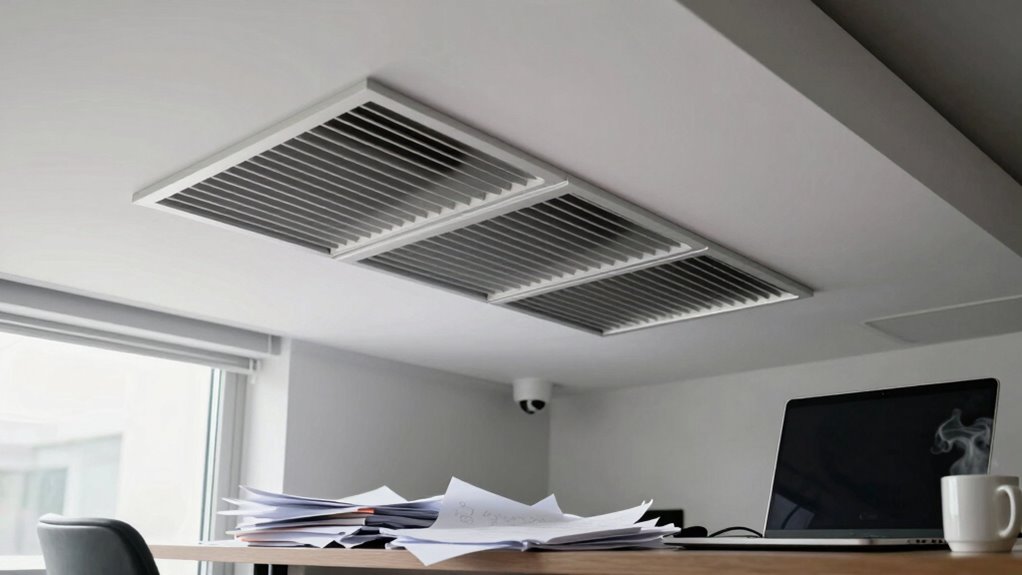

Placing sensors near vents can give you a false sense of indoor air quality because they mainly measure air directly coming from the HVAC system, not the overall environment. This setup overlooks stagnant or contaminated areas where pollutants might build up, and airflow is limited. To truly understand your air quality, you need sensors positioned where people spend most of their time and where airflow isn’t guaranteed. Keep exploring to find out how proper sensor placement can make a real difference.
Key Takeaways
- Vent sensors measure air directly from HVAC, not overall room conditions, leading to potentially inaccurate readings.
- Placement near vents can produce falsely high or low air quality and temperature data.
- Proper sensor placement should reflect areas where occupants spend most of their time for accurate monitoring.
- Relying solely on vent sensors overlooks stagnant zones with pollutant buildup or poor airflow.
- Broader detection of pollutants from well-placed sensors provides a comprehensive understanding of indoor air quality.
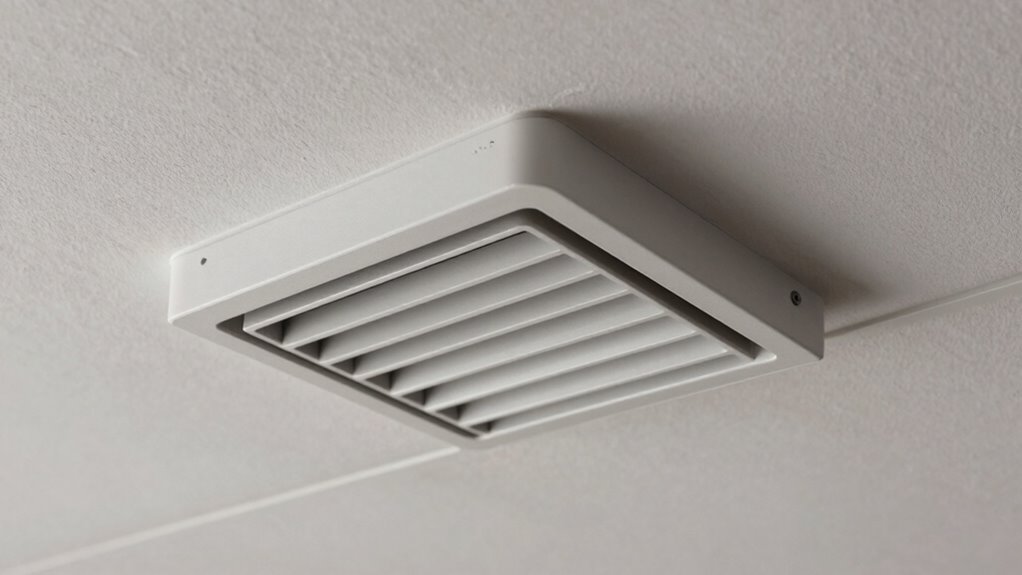
While sensors placed near vents are often relied upon to monitor indoor air quality or temperature, they can give a misleading picture of the environment you actually need to understand. Vents are designed to distribute conditioned air throughout a room, but their placement doesn’t necessarily reflect the overall air quality or comfort levels where you spend most of your time. If you’re basing your readings solely on sensors near vents, you might think the air quality is fine when, in reality, it’s quite poor in other parts of the room.
The problem with vent placement is that it creates a skewed perspective. Sensors placed close to vents tend to measure the air coming directly from the HVAC system, which is often cleaner and more temperature-controlled than the air in the rest of the space. As a result, these sensors can report falsely high air quality or ideal temperatures, even if the air in the room’s corners, behind furniture, or in less-ventilated areas is stagnant, contaminated, or uncomfortable. This can lead you to overlook problem zones that need attention, like areas with poor airflow or higher pollutant concentrations. Additionally, relying solely on vent-based sensors can cause you to miss air quality issues that develop over time in less circulated areas. Understanding sensor placement and its impact on data accuracy is crucial for effective indoor air quality management.
To get a more accurate understanding of your indoor air quality, you need to think beyond vent placement. Proper sensor placement considers the room’s layout and airflow patterns, ideally positioning sensors in spots that reflect the conditions where people actually spend their time. For example, you might want sensors in living areas, workspaces, or bedrooms—places where air circulation might be limited or where pollutant buildup can occur. This way, you’re capturing conditions that impact health and comfort directly, rather than relying on readings from a source that’s not representative of the entire space. Additionally, choosing sensors with comprehensive detection capabilities can ensure you’re aware of a wider range of potential air quality concerns.
Furthermore, understanding air quality involves recognizing how different pollutants can accumulate in specific zones, emphasizing the importance of strategic sensor placement. Additionally, understanding air quality isn’t just about temperature and humidity; it’s also about detecting pollutants, allergens, or volatile organic compounds (VOCs). Sensors near vents won’t reveal the presence of these contaminants if they’re concentrated elsewhere. By strategically placing sensors in different zones, you gain a *holistic* picture of what’s really happening in your indoor environment. Proper sensor placement can help you identify air quality issues more effectively, leading to better ventilation and healthier living spaces. This approach helps you identify problem areas, improve ventilation, and make smarter decisions about air purification or adjustments to your HVAC system.
In the end, the key is to recognize that vent placement can’t tell the whole story. To truly understand and improve your indoor air quality, you need sensors that are positioned where air conditions matter most—where you live, work, and breathe. Only then can you accurately assess your environment and take meaningful steps toward healthier indoor spaces.

Amazon Smart Air Quality Monitor – Know your air, Works with Alexa
- Real-time air quality insights: Understand indoor air conditions easily
- Monitors five key factors: Tracks PM 2.5, VOCs, CO, humidity, and temperature
- Color-coded LED indicator: Displays current air quality status
As an affiliate, we earn on qualifying purchases.
As an affiliate, we earn on qualifying purchases.
Frequently Asked Questions
How Do Vent Sensor Placements Affect Data Accuracy?
Sensor placement directly impacts data precision, so if you position sensors near vents, you might miss important details about overall room conditions. Proper placement guarantees accurate readings, capturing temperature and airflow more effectively. Avoid placing sensors too close to vents or drafts, as this skews data. Instead, position them away from potential disturbances to get a true picture of the environment, helping you make better decisions based on reliable data.
What Alternative Methods Improve Environmental Monitoring?
Ever wonder how to get a clearer picture of your environment? You should consider using alternative methods like deploying multiple sensors across different zones or integrating advanced air quality monitoring systems. Sensor integration enables real-time data collection that’s more accurate and complete. These methods help you identify pollution sources and maintain healthier spaces, because relying solely on vent sensors might miss essential details. Broadening your approach ensures you capture the full environmental story.
Can Sensor Calibration Fix Missed Data Insights?
Yes, sensor calibration can fix missed data insights caused by sensor drift. Regular calibration guarantees sensors maintain accuracy over time, preventing drift from skewing your data. By increasing calibration frequency, you catch issues early, leading to more reliable environmental monitoring. This proactive approach helps you gather precise insights, avoid blind spots, and make better-informed decisions based on consistent, accurate sensor readings.
How Do External Factors Influence Vent Sensor Readings?
Imagine you’re in a science fiction movie, but external interference is real. External factors like airflow patterns, temperature fluctuations, or nearby electronic devices can skew vent sensor readings. These influences cause sensors to pick up false data, making it tricky to get an accurate picture of the actual environment. To improve accuracy, you need to take external interference into account and adjust sensor placement or calibration accordingly.
What Are Common Misconceptions About Vent Sensor Data?
You might think that vent sensor data is always accurate, but common misconceptions can mislead you. Sensor placement is essential; placing sensors near vents can give skewed readings, not the real room conditions. Also, data interpretation often overlooks external factors like drafts or heat sources. Understanding these issues helps you make better decisions, ensuring you rely on thorough data rather than just sensor locations or initial impressions.
As an affiliate, we earn on qualifying purchases.
Conclusion
While placing sensors near vents might seem like a smart move, it often misses the bigger picture of indoor air quality. Did you know that studies show that up to 70% of indoor pollutants can come from sources away from vents? By only focusing on vent locations, you risk overlooking critical areas that impact your health and comfort. Instead, broadening your sensor placement can give you a clearer, more accurate story of the air you’re breathing.
air quality sensor for living room
As an affiliate, we earn on qualifying purchases.
As an affiliate, we earn on qualifying purchases.
VOC and pollutant detection sensor
As an affiliate, we earn on qualifying purchases.
As an affiliate, we earn on qualifying purchases.