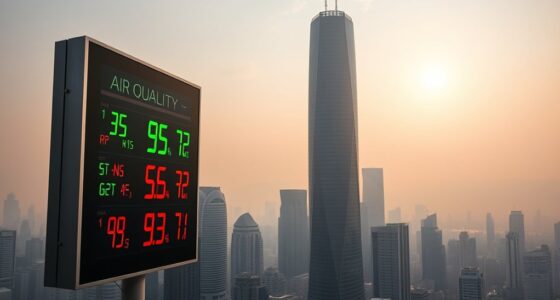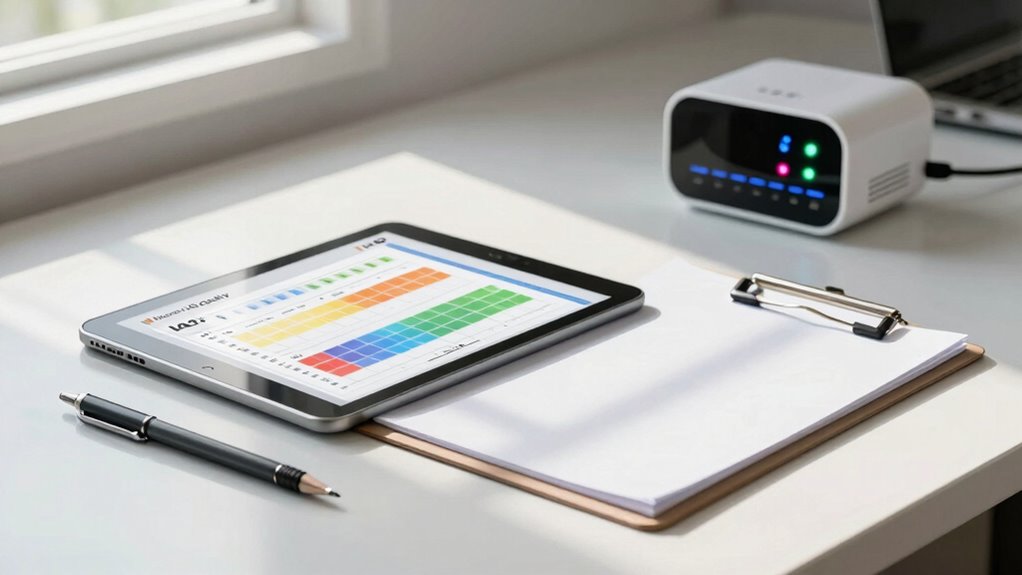
You should review your IAQ logs regularly, depending on your building type, occupancy, and local standards. Critical spaces like hospitals or labs may need daily checks, while commercial offices might require weekly reviews. It’s important to set thresholds for key metrics like CO₂, VOCs, and particulate matter, and analyze patterns to catch issues early. Staying consistent with log reviews guarantees a healthy environment and compliance. Keep going to discover how to optimize your review schedule further.

Get home appliances delivered free with Prime
- Fast, free delivery on millions of items
- Prime Video, Amazon Music and more included
- Member-only deals all year
Key Takeaways
- Review IAQ logs regularly based on building type, occupancy, and ventilation standards to ensure consistent air quality management.
- Frequency ranges from weekly to multiple times daily, depending on space sensitivity and regulatory requirements.
- Monitor key metrics like CO₂, VOCs, and particulates, and review logs when values approach or exceed established thresholds.
- Establish clear review schedules to detect patterns early and prevent health or comfort issues.
- Balance review frequency to optimize proactive monitoring without unnecessary data analysis.

Have you ever wondered how often you should review your Indoor Air Quality (IAQ) logs to guarantee a healthy environment? The answer isn’t as random as it might seem. In fact, regular review is essential for maintaining ideal air quality, but it doesn’t require constant, minute-by-minute checks. Instead, understanding how often to review your logs depends on several factors, including ventilation standards and specific air quality metrics.
Most building codes and ventilation standards recommend monitoring IAQ periodically, especially in commercial spaces or areas with high occupancy or sensitive populations. These standards set the baseline for acceptable air quality levels and provide guidance on how frequently you should check your logs. For example, you might review data weekly or biweekly in a typical office environment, but in hospitals or laboratories, more frequent checks—daily or even multiple times a day—might be necessary. The key is to stay ahead of potential issues before they impact health or comfort. Regular review routines help you identify trends and anomalies early, preventing more serious problems down the line. Understanding ventilation standards can also help you interpret your data more effectively and ensure compliance with safety regulations. Additionally, being aware of acceptable air quality levels can guide you in setting appropriate thresholds for review frequency.
Monitoring IAQ regularly, with frequency depending on space type, helps prevent issues and maintain a healthy indoor environment.
Air quality metrics are your best indicators of when a review is due. Common metrics include particulate matter levels, carbon dioxide (CO₂), volatile organic compounds (VOCs), humidity, and temperature. By setting thresholds based on these metrics, you can determine if your environment is within safe limits or if it requires action. If you notice consistent readings approaching or exceeding acceptable thresholds, it’s time for a closer review of your logs. This doesn’t mean obsessively scrutinizing every detail, but rather establishing a routine check that aligns with your ventilation standards and the specific needs of your space. Regularly analyzing these metrics can also reveal patterns that might otherwise go unnoticed, ensuring you maintain a healthy indoor environment.
Additionally, understanding the importance of ventilation standards can help you tailor your review schedule more effectively. Ultimately, the right review frequency balances proactive monitoring with practicality. Too infrequent, and you risk missing warning signs; too frequent, and you might waste time on negligible variations. By aligning your review schedule with ventilation standards and the specific air quality metrics relevant to your environment, you ensure that your indoor air remains safe and healthy. In this way, reviewing your IAQ logs becomes less of a chore and more of a strategic tool for maintaining a safe, comfortable space.
Indoor Air Quality (IAQ) monitor
As an affiliate, we earn on qualifying purchases.
As an affiliate, we earn on qualifying purchases.
Frequently Asked Questions
What Are the Key Indicators to Look for in IAQ Logs?
You should look for key indicators like elevated levels of VOCs, carbon dioxide, humidity, and particulate matter in your IAQ logs. These readings reveal air quality issues that need addressing. Focus on data interpretation to spot trends or sudden spikes, which can signal ventilation problems or pollutants. Regularly monitoring these indicators helps you maintain safe indoor environments and respond promptly to any air quality concerns.
How Do Seasonal Changes Affect IAQ Log Reviews?
Seasonal variations considerably influence your IAQ log reviews. During colder months, you might notice increased indoor pollutant levels due to closed windows, requiring ventilation adjustments. Conversely, in warmer months, open windows can improve airflow but also introduce outdoor pollutants. Regularly reviewing logs helps you identify these seasonal patterns, allowing you to make timely ventilation adjustments, ensuring consistent indoor air quality throughout the year.
Can IAQ Logs Identify Long-Term Health Risks?
Yes, IAQ logs can identify long-term health risks by tracking indoor pollutants and ventilation effectiveness over time. When you review logs regularly, you spot patterns that reveal potential hazards, like persistent pollutants or poor airflow. This proactive approach helps you address issues early, reducing chronic health risks. Consistent reviews empower you to create healthier indoor environments, ensuring ventilation effectiveness and indoor air quality continually improve for long-term well-being.
What Tools Assist in Analyzing IAQ Log Data?
You can analyze IAQ log data effectively using tools like air quality sensors and data visualization software. Air quality sensors collect real-time data on pollutants, humidity, and temperature, providing accurate information. Data visualization tools then help you interpret this data clearly through charts and graphs, making it easier to identify trends and potential issues. Together, these tools streamline your analysis process, ensuring you maintain healthy indoor air quality consistently.
Are There Industry Standards for IAQ Log Review Frequency?
Yes, industry standards recommend reviewing IAQ logs regularly, typically weekly or monthly, to monitor indoor pollutants and ventilation efficiency. By consistently checking these logs, you can identify patterns or spikes in pollutants that compromise air quality. Regular reviews help guarantee ventilation systems are working effectively, reducing health risks. Staying proactive with log analysis enables timely adjustments, maintaining a healthier indoor environment and adhering to best practices and standards.
CO2 VOC particulate matter sensor
As an affiliate, we earn on qualifying purchases.
As an affiliate, we earn on qualifying purchases.
Conclusion
In the end, reviewing your IAQ logs regularly isn’t just good practice—it’s essential. Most facilities check logs monthly, but did you know that indoor air quality can decline rapidly during just a few days of neglect? Regular reviews help catch issues early and keep your environment safe. So, set a consistent schedule, stay vigilant, and remember: a proactive approach can markedly improve health and comfort for everyone.
As an affiliate, we earn on qualifying purchases.
air quality threshold alert system
As an affiliate, we earn on qualifying purchases.
As an affiliate, we earn on qualifying purchases.
Fall Picks
fall essentials
As an affiliate, we earn on qualifying purchases.