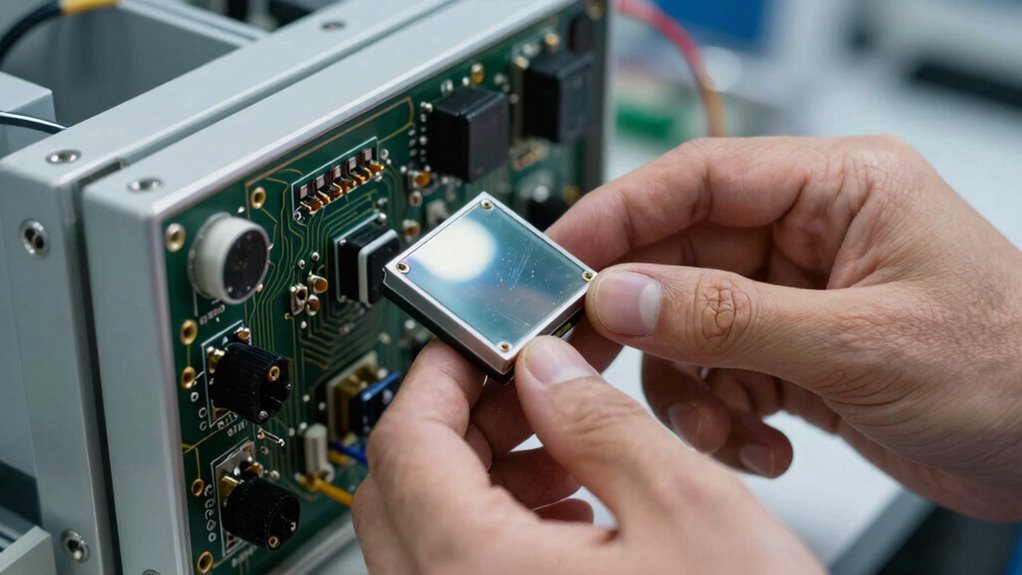

You should consider moving your sensor instead of buying a new one when it’s misreading data due to interference or poor placement, especially if the issue can be fixed by repositioning. Moving it close to the source or away from obstructions can restore accuracy and extend its lifespan. If calibration after repositioning solves the problem, it’s often more practical and cost-effective than replacement. Keep going to learn more about making smart sensor decisions.
Key Takeaways
- When sensor placement causes interference or signal distortion, relocating it can restore proper function without replacement.
- If calibration drift or environmental issues impact accuracy, moving the sensor to a better location is preferable.
- For minor adjustments needed to improve performance, repositioning is more cost-effective than buying a new sensor.
- When environmental conditions threaten sensor longevity, relocating to a more suitable spot can extend its lifespan.
- If the sensor is still functional but outdated, moving it for better placement is better than immediate replacement.
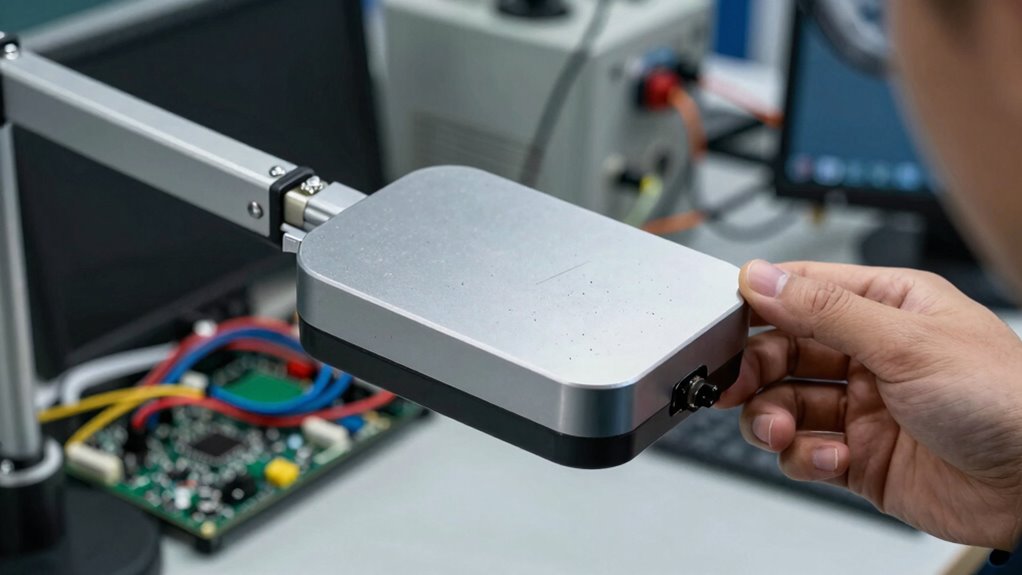
Deciding whether to move an existing sensor or purchase a new one depends on several factors, including cost, functionality, and installation complexity. Before jumping to replace, consider whether relocating the current sensor can solve your issues. A key reason to move a sensor is to improve its accuracy. Over time, sensors can drift from their calibration, leading to inaccurate readings. Instead of buying a new unit, you might only need to perform sensor calibration after repositioning it. Proper calibration ensures the sensor provides precise data, especially when moved to a different environment or location. Additionally, understanding the sensor lifespan can help determine whether a replacement might be necessary sooner rather than later. Recognizing signs of sensor degradation can also guide your decision to move or replace. It’s also worthwhile to evaluate whether the current placement aligns with your sensor performance expectations to maximize its effectiveness.
Relocating a sensor can improve accuracy; recalibration often suffices before considering a full replacement.
Another important factor is signal interference. Sensors placed too close to sources of electromagnetic interference or physical obstructions may experience distorted signals, skewing your data. Moving a sensor away from these interference sources can restore proper signal transmission without the expense of a new device. For example, relocating a sensor away from heavy machinery, wireless routers, or metal objects can markedly reduce signal interference, leading to more reliable readings. Considering environmental factors can also impact the sensor’s performance and longevity. Proper environmental assessment can prevent premature sensor failure and improve overall system reliability. Ensuring the placement considers these factors can extend the sensor’s useful life and maintain optimal operation.
Installation complexity also plays a role in your decision. If the current setup allows for a simple move with minimal adjustments, it’s often more practical and cost-effective to relocate the sensor. On the other hand, if moving the sensor involves complex wiring, drilling, or extensive setup, you might need to weigh whether the benefits outweigh the effort. Sometimes, a new sensor with better placement options or more advanced features might be a better long-term investment, especially if the existing device is outdated or no longer meets your needs. Considering installation effort can help you determine whether a move or replacement is more suitable in the long run.

ADAS Radar Corner Reflector Kit with 0-30 Centimeter Scale Stand
- Universal Vehicle Compatibility: Fits Honda, Toyota, Kia, Ford
- ADAS Calibration Enhancement: Improves safety and system performance
- Durable Construction: Conical metal trihedron reflector
As an affiliate, we earn on qualifying purchases.
As an affiliate, we earn on qualifying purchases.
Frequently Asked Questions
How Do I Determine if My Sensor Is Still Functional?
You can determine if your sensor still works by checking its calibration and testing its readings. If the sensor produces inconsistent or unexpected signals, signal interference might be affecting it. Try recalibrating the sensor first; if issues persist, move it to a different location to reduce interference. If it still doesn’t function properly after these steps, then replacing it might be necessary.
What Tools Are Needed to Move a Sensor?
To move a sensor, you’ll need basic installation tools like screwdrivers, pliers, and possibly a drill. Before relocating, guarantee proper sensor calibration by adjusting settings for the new position. Carefully disconnect the sensor’s wiring or mounting, then reposition it in the desired location. Use your tools to secure it firmly, then double-check connections and calibration. This ensures accurate readings while avoiding the need for a new sensor purchase.
Can Relocating a Sensor Improve Its Accuracy?
Yes, relocating a sensor can improve its accuracy. When you move it, you might reduce signal interference from nearby devices or obstacles, which can distort readings. Additionally, recalibrating the sensor after relocation guarantees it measures correctly in its new position. Proper placement that considers factors like environmental conditions and potential interference sources helps optimize sensor performance, leading to more reliable and precise data collection.
How Often Should Sensors Be Repositioned?
You should reposition sensors when they start acting like a broken record, giving inconsistent readings. Usually, recalibrate and check for signal interference every few months, or sooner if environmental changes occur. If calibration drifts or interference persists despite adjustments, it’s time to move the sensor. Regular repositioning ensures accurate data, preventing costly errors while extending your sensor’s lifespan and maintaining peak performance.
Are There Risks in Moving a Sensor Myself?
Yes, there are risks when you move a sensor yourself. You might affect its calibration, leading to inaccurate readings, or accidentally disconnect the power supply, causing malfunction. To minimize these risks, make certain you properly calibrate the sensor after repositioning and check the power supply considerations before moving it. Carefully follow manufacturer instructions, and if unsure, consult a professional to avoid damage or data inaccuracies.
As an affiliate, we earn on qualifying purchases.
Conclusion
Think of your sensors like loyal pets—you wouldn’t replace them at the first sign of trouble. Instead, try repositioning or troubleshooting first; it might just save you money and effort. I once moved a motion sensor to a different corner of my home, and suddenly, it worked perfectly—like a dog finally catching its favorite ball. Sometimes, a small adjustment is all it takes to restore harmony and keep everything running smoothly.
environmental sensor placement kit
As an affiliate, we earn on qualifying purchases.
As an affiliate, we earn on qualifying purchases.
As an affiliate, we earn on qualifying purchases.