
Implementing a garage separation plan helps keep fumes out of your living spaces by sealing gaps around doors, windows, and ductwork, and installing physical barriers like walls or dedicated doors between the garage and home. Proper ventilation, such as exhaust fans and vents, directs fumes outside and maintains air quality. Storing chemicals safely and educating household members on safety protocols also play a key role. Keep these strategies in mind, and you’ll discover how to guarantee a safer, healthier home environment.
Key Takeaways
- Proper physical barriers and sealing prevent fumes from migrating into living areas.
- Effective ventilation systems direct garage fumes outside, improving indoor air quality.
- Safe chemical storage in ventilated, sealed containers minimizes fume buildup.
- Regular maintenance of barriers and ventilation ensures continued fume containment.
- Educating household members on safety protocols reduces risks of fume exposure indoors.
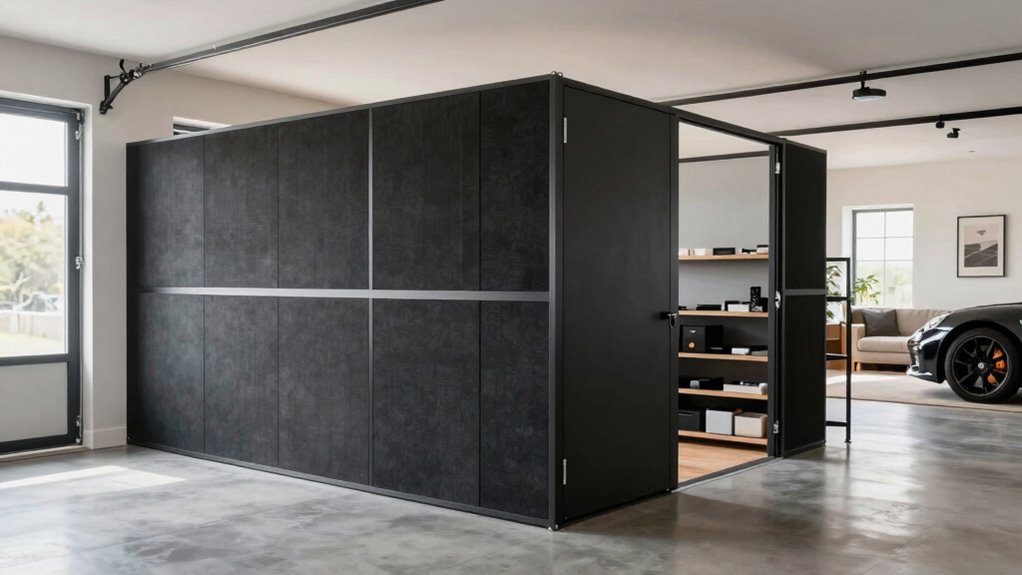
Creating a garage separation plan is an fundamental step to organize your space effectively and guarantee safety. When you set up clear boundaries between your garage and living areas, you’re taking proactive measures to prevent harmful fumes from infiltrating your home. Fumes from gasoline, paints, or cleaning chemicals can pose serious health risks, especially if they seep into your living spaces over time. By implementing effective ventilation strategies, you ensure these fumes are directed outside, reducing exposure and maintaining a healthier environment inside your home.
Creating a garage separation plan is essential for safety and organization, preventing fumes from entering your home.
A well-designed garage separation plan starts with identifying areas that need dedicated ventilation. You might consider installing exhaust fans or vents that pull air directly from the garage to the outdoors. These ventilation strategies are essential because they continuously circulate air, preventing the buildup of dangerous fumes. When choosing ventilation methods, focus on creating a system that is both efficient and quiet, so it operates seamlessly without disturbing your daily routine. Proper placement of vents and fans ensures maximum airflow, and regular maintenance keeps these systems functioning at their best. Additionally, incorporating proper ventilation systems that are designed for indoor air quality can significantly improve overall safety and air purity within your garage. Regularly checking and upgrading your ventilation components can help maintain optimal air quality, especially in areas with high chemical usage.
Along with ventilation, adhering to strict safety protocols is indispensable. Always store chemicals, paints, and fuels in sealed containers and in well-ventilated sections of the garage. Keep flammable items away from heat sources or electrical outlets to prevent fires or explosions. When working with potentially hazardous materials, wear protective gear and ensure your workspace is well-ventilated to minimize inhalation risks. Installing smoke detectors and carbon monoxide alarms nearby adds an extra layer of safety, alerting you immediately if dangerous fumes or gases accumulate. Regularly inspecting these barriers for leaks or damage guarantees they stay effective over time. Furthermore, understanding the importance of indoor air quality can help you make better decisions about ventilation and safety measures. Incorporating fume detection devices can provide early warnings of dangerous buildup, further enhancing safety.
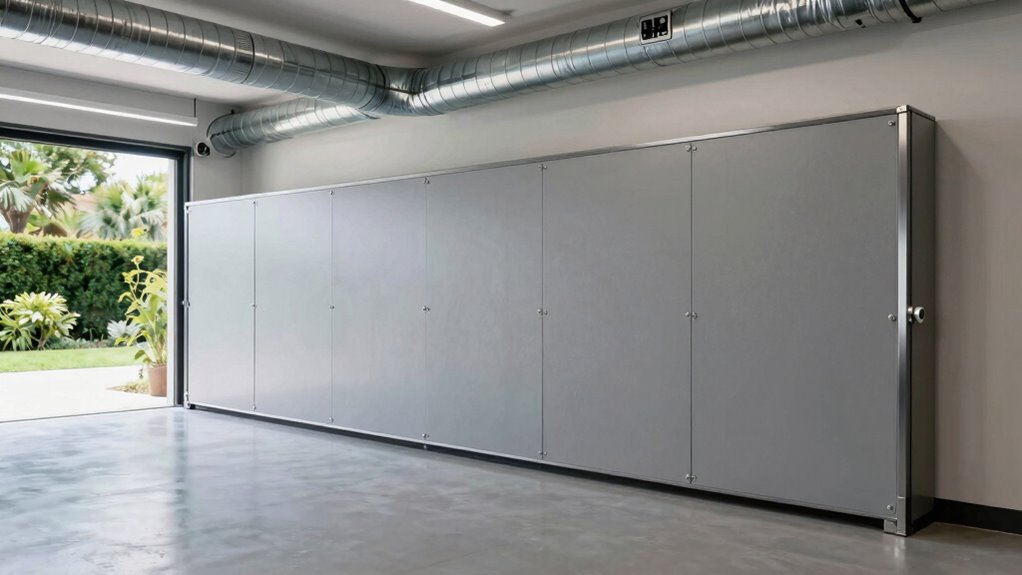
Your garage separation plan should also include physical barriers that prevent fumes from migrating into your home. For example, sealing gaps around doors, windows, and ductwork helps contain fumes within the garage. Adding a dedicated door or wall between the garage and living space can serve as an effective barrier, especially when combined with ventilation strategies that actively exhaust fumes outside. Incorporating physical barriers and ensuring they are well-maintained is crucial for long-term effectiveness in containing fumes. Regularly inspecting these barriers for leaks or damage guarantees they stay effective over time. Establishing clear safety protocols and training household members ensures everyone understands how to properly handle chemicals and maintain the separation system, reducing the risk of accidents.
Finally, educating everyone in your household about safety protocols is essential. Make sure everyone knows how to handle chemicals properly, turn on ventilation systems when needed, and recognize warning signs of fume accumulation. By creating a thorough garage separation plan that emphasizes both ventilation strategies and safety protocols, you’re safeguarding your family’s health and creating a safer, more organized space. This proactive approach not only keeps fumes out of your living areas but also helps maintain a tidy, efficient garage that supports your daily activities.

iLIVING 20" Wall Mounted Shutter Exhaust Fan, Automatic Shutter, with Thermostat and Variable Speed controller, 2.2A, 3368 CFM, 5000 SQF Coverage Area Silver (ILG8SF20V-ST)
POWERFUL AIR VENTILATOR – 3368 CFM, 115V, 2.2A, 1/5 Horse Power, 980 RPM, Coverage up to 5000 square…
As an affiliate, we earn on qualifying purchases.
As an affiliate, we earn on qualifying purchases.
Frequently Asked Questions
How Long Does It Take to Install a Garage Separation Plan?
Installing a garage separation plan typically takes a day or two, depending on your project’s complexity. You’ll need to meet ventilation requirements and safety standards, which can influence installation time. Planning ahead and hiring experienced professionals can speed up the process. Make certain all materials comply with safety standards to prevent fumes from entering living spaces. With proper preparation, you can have your garage separated efficiently and safely within a couple of days.
Can I DIY the Garage Separation System Myself?
Yes, you can DIY the garage separation system yourself if you’re comfortable working with garage materials and understand ventilation options. Start by choosing appropriate materials like drywall or partitions, and then install them securely. Make certain to include proper ventilation options, such as vents or exhaust fans, to effectively keep fumes out of your living space. Follow safety guidelines and plan carefully to ensure a safe, effective separation.
What Is the Cost Range for Implementing This Plan?
The cost of implementing this garage separation plan ranges from $500 to $2,500, depending on your project’s scope and materials. Cost factors like insulation, sealing, and ventilation influence the final price. Budget considerations play a crucial role, so weigh your needs against expenses. You can tailor the plan to fit your financial landscape, ensuring you create a barrier that keeps fumes out without breaking the bank.
Will This Plan Affect My Garage’s Insulation?
Yes, this plan can affect your garage’s insulation. You’ll need insulation compatibility to guarantee proper installation without compromising thermal performance. Proper separation helps maintain temperature control, preventing heat loss or gain between the garage and living spaces. You might need to upgrade or adjust your insulation to optimize energy efficiency. This approach ensures fumes stay out while keeping your garage comfortable, balancing safety and temperature management effectively.
How Often Should I Inspect or Maintain the Separation Barriers?
Think of your garage barriers as the guardians of fresh air—regular inspections are essential. You should check them every six months to guarantee ventilation effectiveness and barrier material durability. Look for signs of wear, cracks, or gaps, and replace or repair as needed. Consistent maintenance keeps fumes out and preserves your home’s air quality, turning your garage into a safe, sealed-off space that protects your living areas effortlessly.

IRIS USA WeatherPro 44 Qt Storage Bins with Lids, 2 Pack, BPA-Free Plastic Gasket Box with Tight Latch and Seal, Stackable Nestable Tote Tub – Clear/Blue
MADE IN USA: Quality you can trust. Our storage bins are proudly crafted in the USA using high-quality,…
As an affiliate, we earn on qualifying purchases.
As an affiliate, we earn on qualifying purchases.
Conclusion
Implementing a garage separation plan is a smart move to keep harmful fumes out of your living spaces. Did you know that improper garage ventilation can increase indoor air pollution by up to 50%? By taking these precautions, you not only protect your family’s health but also improve your home’s air quality. It’s a simple step that makes a big difference, ensuring your home remains a safe, healthy environment for everyone inside.

iLIVING 12" Wall Mounted Shutter Exhaust Fan, Automatic Shutter, with Thermostat and Variable Speed controller, 0.6A, 960 CFM, 1400 SQF Coverage Area Silver (ILG8SF12V-ST)
POWERFUL AIR VENTILATOR – 960 CFM, 115V, 0.6A, 1/20 Horse Power, 1650 RPM, Coverage up to 1400 square…
As an affiliate, we earn on qualifying purchases.
As an affiliate, we earn on qualifying purchases.

First Alert SMICO110, 10-Year Battery Combination Smoke & Carbon Monoxide Alarm, 1-Pack
First Alert's Precision Detection advanced sensing technology complies with new industry standards to reduce cooking nuisance alarms and…
As an affiliate, we earn on qualifying purchases.
As an affiliate, we earn on qualifying purchases.