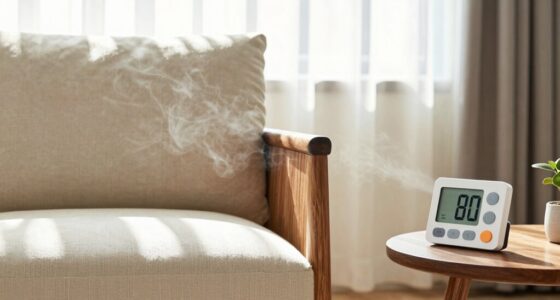
Radon gas interacts with other indoor pollutants by attaching radioactive decay particles to dust, smoke, and mold spores, increasing your exposure to radioactivity. When these particles settle in your lungs, they pose higher health risks, especially if you breathe in contaminated air regularly. Poor ventilation and accumulations of pollutants make this worse. Understanding how radon combines with other indoor pollutants can help you manage your indoor air quality better—keep exploring to find out more.
Key Takeaways
- Radon decay produces radioactive particles that can attach to dust, smoke, and VOCs, increasing radioactive exposure indoors.
- The presence of other pollutants can enhance the health risks associated with radon by facilitating deeper lung penetration.
- Poor ventilation leads to higher radon levels and pollutant buildup, worsening overall indoor air quality.
- Standard air filters often do not effectively trap radioactive radon decay products, prolonging their presence in the air.
- Interactions between radon decay particles and other pollutants may amplify respiratory health issues and complicate air quality management.
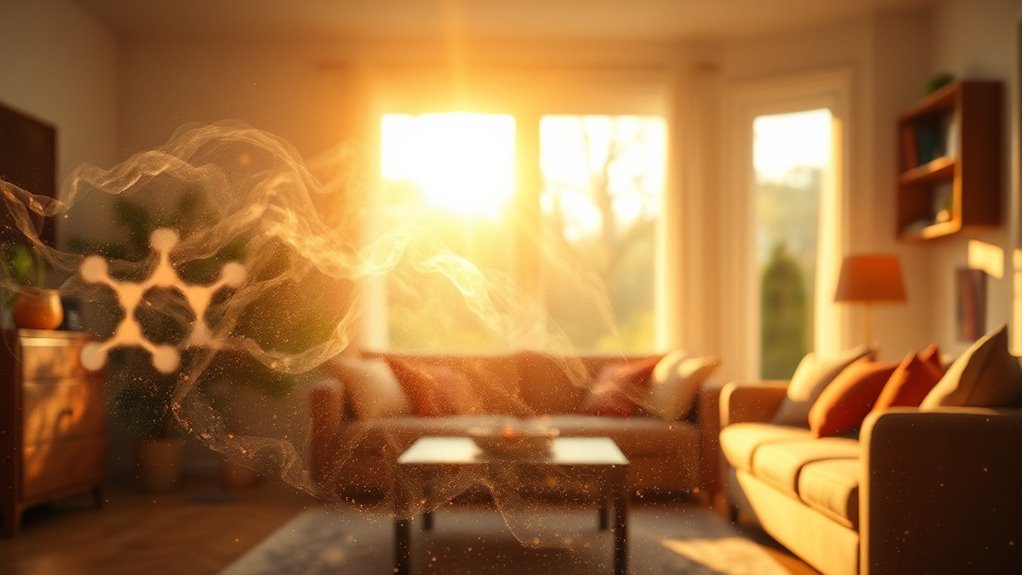
Radon gas is a colorless, odorless radioactive naturally occurring pollutant that can accumulate indoors, posing significant health risks. When you consider indoor air quality, radon exposure becomes a vital concern because it can quietly seep into your home through cracks in the foundation, gaps around pipes, or even the soil beneath your house. Unlike other pollutants, radon isn’t immediately noticeable, so you might not realize you’re exposed until health issues develop over time. Its presence can worsen the overall indoor air quality, especially when combined with other common indoor pollutants.
Radon is an invisible, odorless pollutant that can quietly infiltrate homes, posing serious health risks over time.
Indoor air isn’t just contaminated by radon; it often contains a mix of substances like volatile organic compounds (VOCs), tobacco smoke, mold spores, and dust particles. When radon interacts with these pollutants, the combined effect can be more harmful than exposure to each pollutant alone. For example, radon decay produces radioactive particles that can attach to dust or smoke particles suspended in the air. When you breathe, these radioactive particles can reach your lungs, increasing the risk of lung cancer. The presence of radon amplifies the health risks associated with tobacco smoke or household chemicals, creating a complex exposure scenario.
The interaction between radon and other indoor pollutants can also influence indoor air quality in ways that are hard to detect without proper testing. For instance, if your home has poor ventilation, radon levels can build up along with indoor humidity or mold spores. These conditions make it easier for radon-related particles to settle deep into your lung tissue, especially when combined with other irritants like dust or pet dander. Poor ventilation not only traps radon but also allows other pollutants to accumulate, compounding health risks. This interplay can lead to respiratory problems or exacerbate allergies, making your indoor environment more hazardous.
Furthermore, radon can contribute indirectly to indoor pollutant interactions by affecting the effectiveness of air filtration systems. Some filters might not be designed to trap radioactive particles, which means radon decay products can persist in the air longer, increasing your exposure. When combined with other indoor pollutants, this can result in a higher overall radioactive burden in your home. Consequently, maintaining good indoor air quality involves more than just reducing individual pollutants; it requires understanding how radon interacts with other contaminants and taking proactive steps, like testing for radon and improving ventilation. Recognizing these interactions helps you better protect your health, especially in environments where multiple indoor pollutants coexist.
Additionally, the use of proper air filtration systems with capabilities to trap radioactive particles can significantly reduce the risk of radon-related exposure indoors.

EPA-Approved Radon Test Kit for Home, Lab Analysis Included | Detects Radon Gas Levels in Basements & Living Spaces | Easy-to-Use Air Quality Test with Lab Report & Discounted Shipping| Radon Detector
✅ Detects Dangerous Radon Gas Levels at Home – Accurately measures radon concentration in indoor air to help…
As an affiliate, we earn on qualifying purchases.
As an affiliate, we earn on qualifying purchases.
Frequently Asked Questions
Can Radon Gas Cause Chemical Reactions With Household Cleaning Products?
Radon gas doesn’t typically cause chemical reactions with household cleaning products. Radon chemical reactions are rare because it’s an inert, radioactive gas that mostly just disperses in the air. However, household cleaning interactions with radon are minimal; they don’t produce harmful compounds. Your main concern should be radon exposure itself, not chemical reactions, as radon mainly poses health risks through inhalation of radioactive particles rather than reacting chemically indoors.
Does Humidity Affect How Radon Interacts With Other Indoor Pollutants?
Humidity influence plays a role in how radon interacts with indoor pollutants. When moisture levels are high, moisture effects can cause radon to dissolve or adhere to surfaces differently, potentially altering its movement and concentration indoors. Increased humidity might also impact how radon combines with other chemicals, possibly increasing or decreasing the health risks. So, maintaining balanced humidity helps manage radon’s behavior and reduces its potential for harmful interactions.
Are There Specific Building Materials That Influence Radon’S Interaction With Pollutants?
Certain building materials influence radon’s pollutant absorption dynamics through building material interactions. Materials like concrete, brick, and stone can either block radon entry or facilitate its movement, affecting how it interacts with indoor pollutants. If you choose porous or permeable materials, radon may escape more easily, reducing accumulation. Understanding these interactions helps you design spaces that minimize radon-related health risks by optimizing pollutant absorption dynamics.
How Does Temperature Variation Impact Radon’S Chemical Behavior Indoors?
They say “a change is as good as a rest,” and that’s true for radon indoors. Temperature fluctuation affects its chemical stability; warmer air can cause radon to become more mobile, increasing indoor concentrations, while cooler temperatures stabilize it. These variations influence how radon interacts with other pollutants, potentially impacting indoor air quality. You should monitor temperature changes to better understand radon’s behavior in your home.
Can Radon Gas Enhance the Toxicity of Other Indoor Air Contaminants?
Radon gas can have synergistic effects with other indoor pollutants, potentially increasing overall toxicity. When radon interacts with contaminants like tobacco smoke or volatile organic compounds, it may enhance their harmful impacts on your health. These indoor pollutant interactions can lead to greater respiratory issues or cancer risk. Being aware of radon’s role in these synergistic effects helps you better understand indoor air quality and take steps to reduce exposure for safer living environments.

Purivortex Air Purifiers for Bedroom, Quiet Air Purifier with HEPA Filter for Pollen, Smoke, Dust, Pet Dander, Odor, Hair, Ozone Free, Covers Up to 880 Sq Ft, PX500 Black
Cleaner Air In Minutes: Purivortex is proven to filter common pollutants from your home’s air. This air purifier…
As an affiliate, we earn on qualifying purchases.
As an affiliate, we earn on qualifying purchases.
Conclusion
Remember, a chain is only as strong as its weakest link. Radon gas doesn’t act alone; it interacts with other indoor pollutants, sometimes amplifying health risks. By understanding these interactions, you can better protect your indoor environment. Keep your home well-ventilated, monitor radon levels, and reduce other pollutants. It’s like tending a garden—you need to address each weed to keep your space safe and healthy. Stay vigilant, and your home will thank you.

16 in 1 Air Quality Monitor Indoor 7" Large Display 9 AQI+7 Alerts, CO2 Monitor Air Quality Tester for CO2, TVOC, PM2.5 PM1.0 PM10, HCHO Temperature Humidity AQI & Time Air Quality Meter for Home
【16-in-1 Air Quality Monitor Indoor】Experience the ultimate indoor air quality monitoring with our 16-in-1 Air Quality Monitor, offering…
As an affiliate, we earn on qualifying purchases.
As an affiliate, we earn on qualifying purchases.

MOOKA Air Purifiers for Home Large Room up to 1076ft², H13 True HEPA Air Filter Cleaner, Odor Eliminator, Remove Smoke Dust Pollen Pet Dander, Night Light, B-D02L White
MOOKA B-D02L AIR PURIFIER FOR LARGE ROOM: With the high-efficiency filtration system, the air purifier covers an area…
As an affiliate, we earn on qualifying purchases.
As an affiliate, we earn on qualifying purchases.