To build a low-cost DIY VOC detector, you need sensitive, stable materials like metal-oxide semiconductors such as SnO₂, combined with simple electronics. Focus on proper calibration using known VOC standards to guarantee accuracy over time, and regularly maintain your sensor to compensate for drift. Pay attention to environmental factors like temperature and humidity that affect readings. With careful selection and calibration, you can create a reliable air quality monitor—exploring these steps will guide you through each process.
Key Takeaways
- Choose affordable, sensitive materials like metal-oxide semiconductors (e.g., SnO₂) for detecting VOCs effectively.
- Integrate sensing materials with simple electronic circuits for easy DIY assembly and reliable operation.
- Calibrate your sensor regularly using known VOC standards to ensure accurate and consistent readings.
- Incorporate environmental compensation (temperature and humidity) to improve sensor accuracy over time.
- Prioritize careful construction and calibration practices to develop a low-cost, trustworthy VOC detector for air quality monitoring.
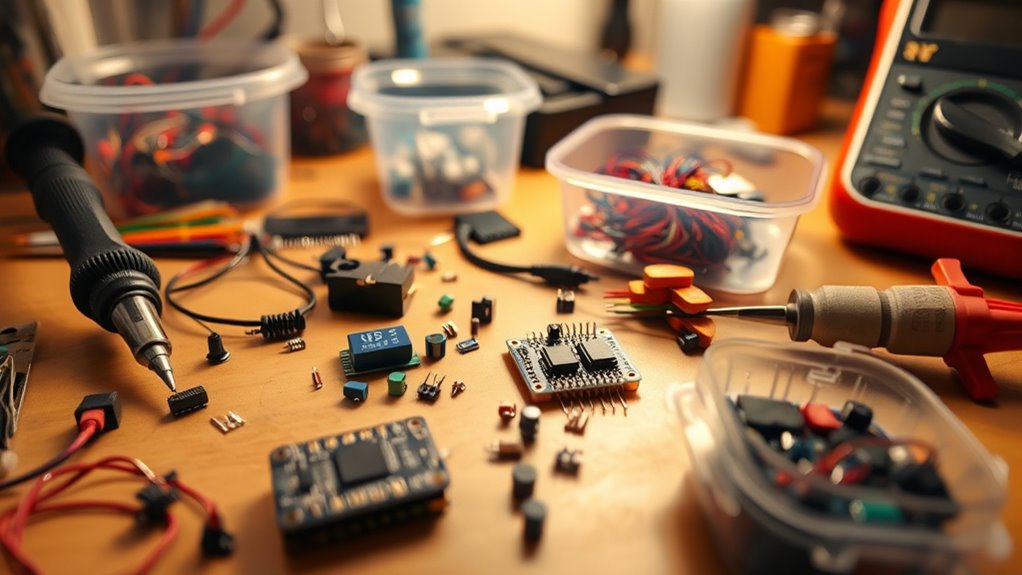
Creating your own VOC (volatile organic compound) sensors is a practical way to monitor air quality in your home or workspace. When building a DIY VOC detector, one of your first steps is understanding the importance of sensor calibration. Proper calibration ensures your readings are accurate and reliable, which is *essential* for *evaluating* air safety. You’ll want to calibrate your sensor against known VOC concentrations, often using calibration gases or reference standards. This process involves exposing your sensor to a controlled environment with a specific VOC level and adjusting its output accordingly. Regular calibration helps to compensate for sensor drift over time, maintaining consistent performance and trustworthy results.
Calibrate your DIY VOC sensor regularly for accurate, reliable air quality readings.
Material selection plays a *crucial* role in creating an effective VOC sensor. You need to choose sensitive, stable materials that respond well to VOCs and are compatible with your sensor design. Common choices include metal-oxide semiconductors, such as tin dioxide (SnO₂), which change resistance when exposed to VOC molecules. These materials are affordable and widely used in commercial sensors, making them suitable for DIY projects. Additionally, selecting a material with a high surface area enhances sensitivity, allowing your sensor to detect low concentrations of VOCs. It’s also *important* to *contemplate* the material’s stability and response time, as these factors influence your sensor’s durability and accuracy.
Once you’ve selected your materials, you’ll integrate them into your sensor setup, often as a sensing element connected to an electronic circuit. *Guaranteeing* proper sensor calibration during assembly is key—this involves exposing the material to known VOC levels and adjusting the device’s output to match expected values. You may need to experiment with different calibration procedures, depending on your sensor’s specific material and design. Keep in mind that environmental factors like temperature and humidity can affect sensor performance, so including compensation mechanisms or conducting calibrations under typical operating conditions improves accuracy.
Building your own VOC sensor requires patience and attention to detail, especially during material selection and calibration. By carefully choosing stable, sensitive materials and performing thorough calibration routines, you can develop a reliable device that provides real-time air quality insights. This DIY approach not only saves money but also deepens your understanding of air sensing technology. With consistent calibration and thoughtful material choices, your homemade VOC detector becomes a *valuable* tool for maintaining a healthier indoor environment.
Frequently Asked Questions
What Are the Best Calibration Methods for DIY VOC Sensors?
You should perform sensor calibration regularly using known VOC concentrations to improve accuracy. Start by exposing your sensor to a controlled environment with a standard gas or using calibration kits. Record the readings and adjust your sensor’s output accordingly. This process directly enhances accuracy improvement, ensuring your DIY VOC detector provides reliable readings over time. Consistent calibration helps account for sensor drift and maintains your device’s effectiveness.
How Long Do DIY VOC Sensors Typically Last?
Your DIY VOC sensor typically lasts between one to two years, depending on usage and environmental conditions. The sensor lifespan can be affected by factors like exposure to high humidity or contaminants, which may necessitate more frequent replacements. To guarantee accuracy, regularly calibrate your sensor and monitor its performance. Expect to replace the sensor every 12 to 24 months to maintain reliable readings and ideal functionality.
Can DIY VOC Sensors Detect Specific Volatile Organic Compounds?
Imagine you’re in a detective noir film, searching for clues. Your DIY VOC sensor can detect specific volatile organic compounds if it’s designed with proper materials. While many sensors focus on general air quality, achieving compound specificity and sensor sensitivity for particular VOCs is tricky but possible. You’ll need to calibrate your sensor carefully and choose sensitive components, but it’s doable with some tinkering and research.
What Safety Precautions Should I Take During Sensor Assembly?
When assembling your sensor, you should wear anti-static wrist straps to prevent electrostatic discharge that could damage sensitive components. Handle all chemicals with care, using gloves and working in a well-ventilated area to avoid inhalation or skin contact. Keep your workspace clean, and avoid touching circuit boards or sensors with bare hands. Always follow safety guidelines to guarantee both your safety and the proper functioning of your VOC detector.
How Accurate Are Low-Cost DIY VOC Detectors Compared to Commercial Models?
They say “you get what you pay for,” but DIY VOC detectors can be surprisingly accurate if you focus on sensor sensitivity and data interpretation. While commercial models often have more precise calibration, your DIY sensor can perform well for general monitoring. Keep in mind, accuracy varies with build quality and calibration, so regular testing helps ensure reliable readings, making your homemade device a handy, cost-effective tool for detecting VOCs.
Conclusion
Now that you’ve built your own VOC detector, you’re practically a superhero guarding your home from invisible, toxic villains! With this tiny device, you’ll catch dangerous vapors before they sneak into your lungs, saving your health and sanity. Who knew that a simple DIY project could turn you into a super-sleuth of air quality? Get ready to breathe easier, knowing you’ve got the power to detect and defeat VOCs like a true home hero!