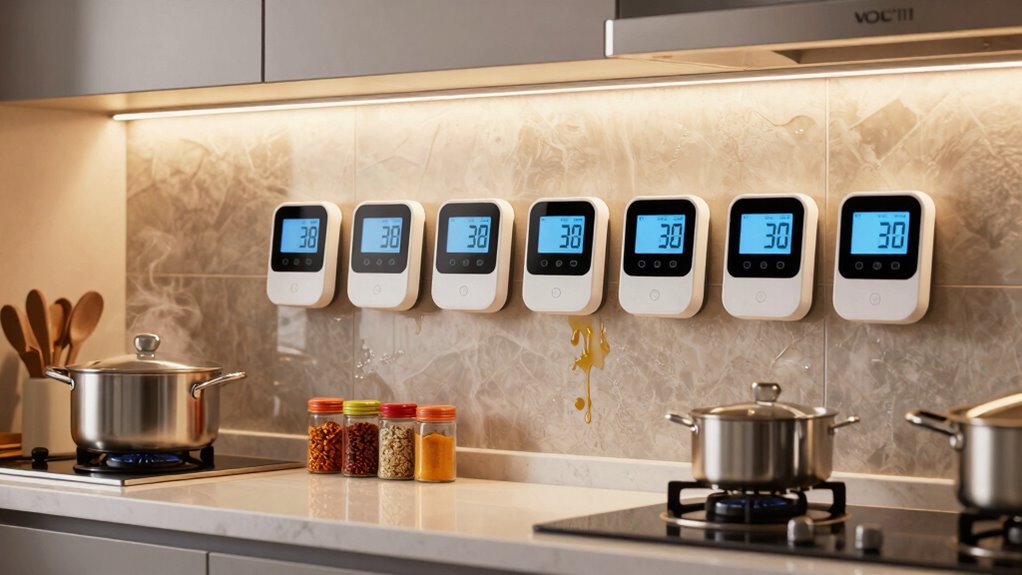

In your kitchen, VOC monitors often give false alarms because cooking, cleaning, and new building materials release transient vapors that overwhelm sensors. High VOC levels during cooking or cleaning can trigger alerts even when air quality is fine. Calibration issues and environmental factors like humidity and temperature also affect accuracy. Proper placement and maintenance help avoid false positives. If you want to understand how to reduce these false readings, keep exploring the details behind these common issues.

Get home appliances delivered free with Prime
- Fast, free delivery on millions of items
- Prime Video, Amazon Music and more included
- Member-only deals all year
Key Takeaways
- Transient vapors from cooking, cleaning, or building materials can temporarily trigger false VOC readings.
- Improper calibration causes sensors to misinterpret normal kitchen vapors as hazardous.
- Environmental factors like humidity and temperature fluctuations affect sensor accuracy and response.
- Poor sensor placement and inadequate air circulation lead to unreliable or delayed VOC readings.
- Sensor response time and environmental conditions often cause false positives during typical kitchen activities.
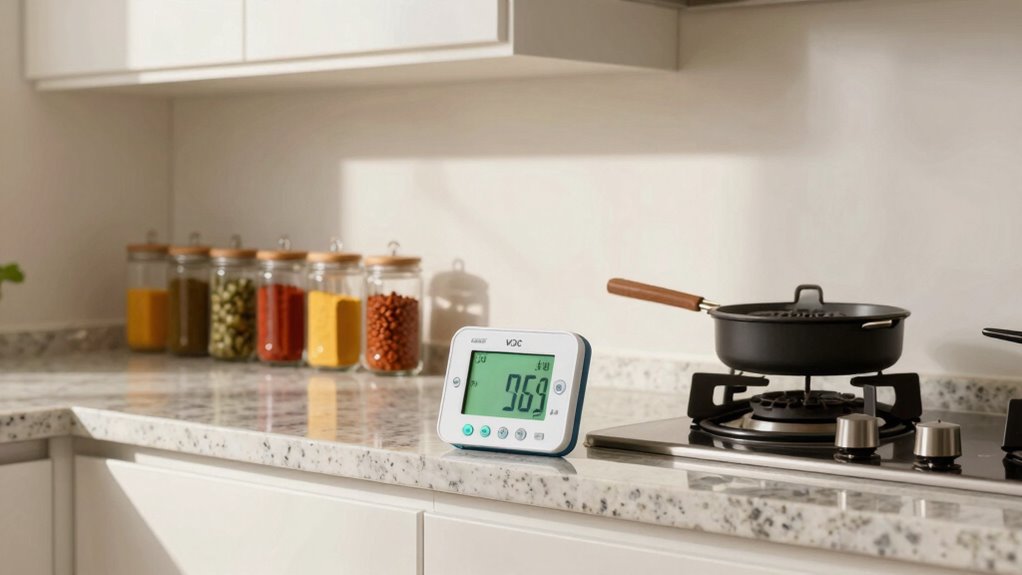
Many people assume that VOC (volatile organic compound) monitors in kitchens are unnecessary or overly sensitive, but in reality, they often get fooled into giving false readings. These devices are designed to detect VOCs—common emissions from cooking, cleaning products, and building materials—but they can be surprisingly unreliable if not properly maintained. One major reason for inaccurate readings is improper monitor calibration. If your VOC detection device isn’t regularly calibrated, it might either underestimate or overestimate the presence of harmful vapors, leading you to make unnecessary alarms or, worse, ignore real dangers.
Monitor calibration is vital to ensure your VOC monitor provides accurate data. Over time, sensors can drift, losing their ability to correctly identify VOC levels. If you don’t calibrate your device periodically—whether through professional service or using calibration gases—you risk getting false readings. For example, a poorly calibrated monitor might show elevated VOC levels after just a bit of cooking, even if the air quality is perfectly safe. Conversely, it might ignore actual spikes caused by fumes from cleaning agents or new furniture off-gassing. Regular calibration helps keep the sensor’s response aligned with real VOC concentrations, making your monitor a reliable tool rather than a source of confusion.
Additionally, environmental factors like humidity and temperature can influence sensor accuracy, so understanding sensor sensitivity is essential for trustworthy readings. You should also be aware that kitchen environments are naturally filled with VOCs, especially when cooking. The emissions from frying, grilling, or even boiling can temporarily spike VOC levels, but these should not necessarily trigger alarms if your device is functioning correctly. False positives often occur because the monitor is reacting to transient vapors or has been improperly calibrated. Sometimes, the sensor might get overwhelmed by high VOC concentrations during intense cooking sessions or cleaning, prompting false alerts that cause unnecessary concern.
It’s also helpful to familiarize yourself with the sensor response time, as a slow response can cause delays in detecting actual VOC spikes, leading to confusion or misinterpretation of the air quality. Furthermore, understanding environmental influences on sensor performance can help you better interpret the readings and avoid unnecessary alarms. To avoid being fooled, you need to understand that monitor calibration isn’t a one-time task. It requires regular attention, especially if you rely heavily on the device for safety. Proper placement of the monitor is equally important, as air circulation can greatly influence the accuracy of readings. Keep in mind that environmental factors like humidity and temperature can influence sensor performance, so a thorough approach to VOC detection involves both proper calibration and strategic placement. By taking these steps, you’ll ensure your VOC monitor truly serves its purpose—keeping you informed without giving false alarms that lead to unnecessary worry.
As an affiliate, we earn on qualifying purchases.
Frequently Asked Questions
How Do VOC Monitors Detect Different Types of Gases?
VOC monitors detect different types of gases through sensor sensitivity, which enables them to identify various volatile organic compounds. You’ll find that these sensors respond to specific gases by changing electrical signals or resistance levels. This gas detection process allows the monitor to distinguish between different VOCs, providing accurate readings. Fundamentally, the sensors are calibrated to recognize unique chemical signatures, ensuring reliable detection across a range of gases in your environment.
What Are the Health Risks of VOC Exposure?
Exposure to VOCs in indoor air can pose serious health risks, including respiratory problems, headaches, and eye irritation. Long-term exposure may lead to more severe health implications like liver and kidney damage or even certain cancers. You should monitor indoor air quality regularly to reduce these risks. Proper ventilation and using VOC monitors can help detect harmful gases early, safeguarding your health and preventing potential health issues.
Can VOC Levels Vary by Time of Day?
Yes, VOC levels can vary by time of day. Seasonal fluctuations and kitchen activity influence these changes, with levels often rising during peak cooking times or in warmer months. When you’re cooking or using appliances, VOC emissions increase, and during colder seasons, ventilation might decrease, trapping these chemicals indoors. Monitoring these fluctuations helps you better understand exposure risks and take steps to improve indoor air quality.
Are VOC Monitors Accurate in All Kitchen Environments?
Ever wonder if VOC monitors are truly reliable in every kitchen environment? They can be quite accurate, but factors like odor absorption and sensor sensitivity influence their performance. In spaces with high humidity or strong odors, sensors might struggle to detect low VOC levels accurately. While modern monitors are designed to adjust, understanding their limitations helps you interpret readings better and guarantees you’re making informed decisions about air quality.
How Often Should VOC Monitors Be Calibrated?
You should calibrate VOC monitors regularly, typically every 6 to 12 months, depending on usage and manufacturer recommendations. Calibration frequency helps account for sensor drift, which can affect accuracy over time. If your kitchen experiences high humidity or frequent VOC fluctuations, consider more frequent calibration. Consistent calibration guarantees your VOC monitor provides reliable readings, so you can accurately track air quality and respond promptly to any issues.
As an affiliate, we earn on qualifying purchases.
Conclusion
So, next time your kitchen’s VOC monitor blares, remember it’s just doing its job—like a vigilant guard in a bustling kitchen. While it may seem intrusive, it’s protecting you from hidden dangers, much like a chef’s sharp eye catching every detail. In this busy space, where smells and sounds blend, the monitor’s constant watchfulness is your silent partner—quietly ensuring safety amidst the chaos of culinary creativity.
As an affiliate, we earn on qualifying purchases.
professional VOC sensor calibration
As an affiliate, we earn on qualifying purchases.
As an affiliate, we earn on qualifying purchases.
NFL season / tailgating Picks
team gear
As an affiliate, we earn on qualifying purchases.