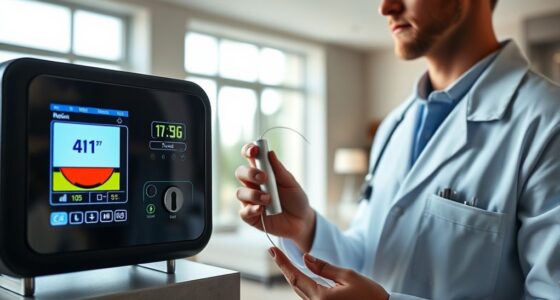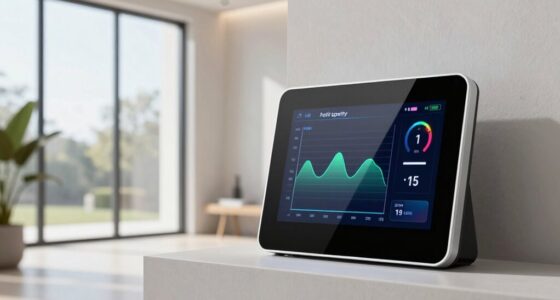
To make multi-room sensor data useful, start by calibrating each sensor to guarantee accuracy against known standards. Then, normalize the data to adjust for environmental differences and sensor placement biases, creating a common scale. This process helps you uncover true environmental variations and meaningful patterns across spaces. When you apply calibration and normalization, your data becomes consistently comparable, revealing insights that can improve building management and energy efficiency. Keep exploring to learn more about optimizing your sensor data.

Get home appliances delivered free with Prime
- Fast, free delivery on millions of items
- Prime Video, Amazon Music and more included
- Member-only deals all year
Key Takeaways
- Calibrate sensors to ensure accurate baseline readings aligned with known standards.
- Normalize data across sensors to account for environmental and placement differences.
- Use calibration followed by normalization to create comparable, reliable environmental data.
- This combined approach reveals true variations, enabling effective space management and energy efficiency.
- Consistent calibration and normalization improve data accuracy, facilitating better decision-making in multi-room environments.
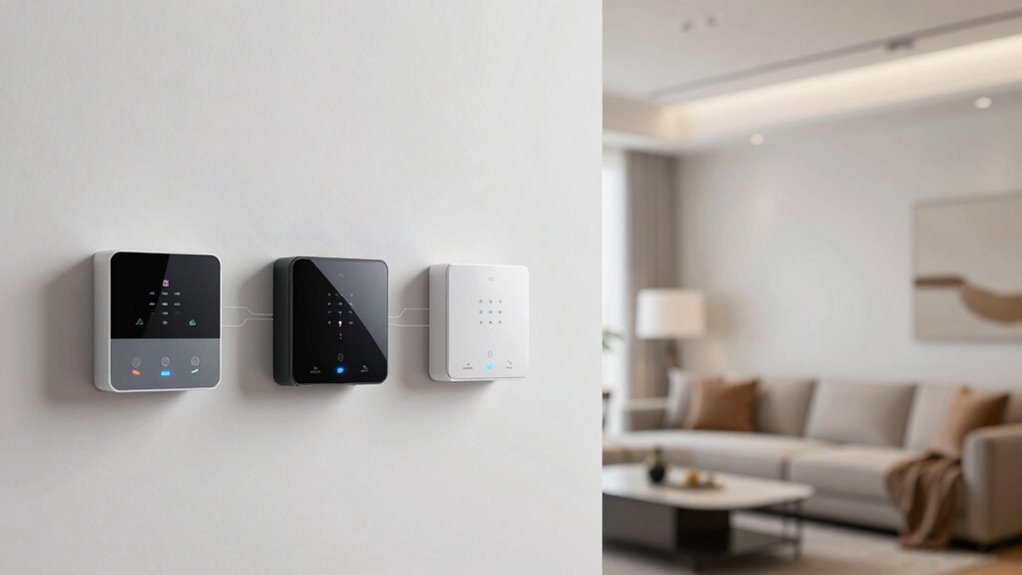
When working with multi-room sensor data, comparing readings across different spaces can be challenging due to variations in environment and sensor placement. Differences in room size, airflow, temperature, humidity, and even the positioning of sensors can skew raw data, making direct comparisons unreliable. To address this, you need to focus on two key steps: sensor calibration and data normalization. These processes help standardize readings, ensuring that your comparisons are meaningful and actionable. Proper calibration also involves understanding measurement errors and how environmental factors can influence sensor accuracy, which is critical for reliable data interpretation. Additionally, considering sensor drift over time is essential to maintain data consistency. Regular calibration checks can help identify and correct for sensor drift, ensuring ongoing accuracy.
Sensor calibration involves adjusting your sensors so they provide accurate readings relative to a known standard. If your sensors aren’t calibrated properly, their outputs might be inconsistent or biased, leading to flawed insights. Calibration can be as simple as comparing sensor readings against a trusted reference or using manufacturer guidelines to fine-tune each device. Proper calibration ensures each sensor’s baseline aligns with real-world values, reducing measurement errors that could otherwise distort your analysis. Incorporating standardization techniques during calibration can further improve data consistency over time. Moreover, understanding the performance characteristics of your sensors can help tailor calibration procedures for better accuracy.
Calibrate sensors against trusted references to ensure accurate, unbiased readings and reliable environmental insights.
Once your sensors are calibrated, the next step is data normalization. This process transforms raw data into a common scale, making it easier to compare across different rooms or sensors. Data normalization accounts for environmental differences and sensor discrepancies, allowing you to see true variations rather than artifacts of placement or calibration errors. For example, if one sensor consistently reads higher due to its position in a warmer corner, normalization can adjust for this bias, bringing all data onto a comparable scale. Techniques like min-max scaling or z-score normalization are commonly used here, depending on your specific needs. It’s also beneficial to understand the impact of environmental factors as they can influence your normalization approach, affecting the accuracy of your comparisons. In addition, selecting the appropriate normalization method based on your data distribution can significantly enhance your analysis.
The comparison trick that makes multi-room sensor data truly useful is applying a combined approach: first calibrate each sensor to ensure accurate individual readings, then normalize the data to standardize across all sensors. When you do this, you create a level playing field where differences reflect actual environmental changes rather than measurement inconsistencies. This approach allows you to detect patterns, identify anomalies, and optimize spaces based on reliable data. It’s especially valuable in smart building management, HVAC control, or energy efficiency projects, where understanding subtle differences can lead to significant improvements.
multi-room environmental sensor calibration kit
As an affiliate, we earn on qualifying purchases.
As an affiliate, we earn on qualifying purchases.
Frequently Asked Questions
How Does the Comparison Trick Improve Sensor Data Accuracy?
You improve sensor data accuracy by using the comparison trick, which involves calibrating sensors against each other. This method helps validate data, ensuring consistency across multiple sensors. When one sensor’s readings deviate, you can identify and correct errors through data validation, leading to more reliable measurements. This process enhances overall sensor calibration, reducing false readings and making your multi-room data much more accurate and trustworthy.
Can This Method Be Applied to Existing Multi-Room Sensors?
Yes, you can apply this method to existing multi-room sensors. Think of it as giving your sensors a quick tune-up through sensor calibration and data synchronization. By adjusting the calibration settings and aligning data streams, you improve accuracy without replacing hardware. It’s like syncing your favorite playlist—once everything’s harmonized, the data becomes more reliable and useful, making your smart system smarter and more responsive.
What Types of Sensors Benefit Most From This Comparison Approach?
You’ll find that sensors like temperature, humidity, and air quality sensors benefit most from this comparison approach. By using it, you improve sensor calibration, ensuring more accurate readings. It also enhances data validation, helping you identify anomalies or malfunctions across multiple sensors. This method creates a reliable data set, making multi-room sensor networks more effective for monitoring environments or optimizing HVAC systems.
Does This Trick Require Additional Hardware or Software?
You won’t need extra hardware; the magic lies in software implementation. Think of it as opening a secret door in your existing system, revealing the true story behind your sensor data. The trick uses smart algorithms to compare readings, so your setup only needs your current sensors and a well-crafted program. No need for costly upgrades—just software finesse to turn raw data into actionable insights.
How Does This Comparison Method Handle Inconsistent Sensor Readings?
You handle inconsistent sensor readings through sensor calibration and data synchronization. By calibrating sensors regularly, you guarantee their measurements stay accurate, reducing discrepancies. Data synchronization aligns sensor data in time, making comparisons more reliable. This approach helps you identify and correct outliers, maintaining consistency across multiple sensors. As a result, your multi-room sensor data becomes more trustworthy, enabling better decisions and more effective automation in your smart environment.
As an affiliate, we earn on qualifying purchases.
Conclusion
By comparing sensor data across rooms, you gain insights, spot patterns, and make smarter decisions. You see differences clearly, identify issues quickly, and optimize comfort effortlessly. This trick simplifies complexity, turns chaos into clarity, and transforms raw data into actionable knowledge. Embrace this method, and you’ll make your multi-room sensor data work for you—helping you understand, improving, and controlling your environment with confidence. Use this comparison trick, and experience the power of smarter, more informed living.
temperature and humidity sensors for smart home
As an affiliate, we earn on qualifying purchases.
As an affiliate, we earn on qualifying purchases.
building management sensor system
As an affiliate, we earn on qualifying purchases.
As an affiliate, we earn on qualifying purchases.
Halloween Picks
halloween
As an affiliate, we earn on qualifying purchases.